








"Interview with Executives of Crypto Concept Stocks" Huajian Medical: Reconstructing Globalization of Medical Assets with Web 3.0, Launching Global Enhanced Ethereum "ETH" Vault Strategy
 The heaviness of the medical industry and the agility of the Web 3.0 world are weaving an unprecedented picture in the strategy of Huajian Medical.
Article Author: Echo
Source: ME
The Web 3.0 strategies and layouts of publicly listed companies have become a hot topic of increasing public interest. Against this backdrop, ME officially launched the “Executive Interviews with Crypto Concept Stocks” series. We will engage in conversations with those business leaders who dare to lead in the wave of digital transformation, exploring their strategic layouts, business innovations, and financial innovations from the decision-makers' first perspective, providing forward-looking insights for industry participants.

On August 8, 2025, Hong Kong-listed company Huajian Medical IVD MEDICAL (01931.HK) issued a series of significant announcements on the Hong Kong Stock Exchange, announcing a global strategic cooperation with HashKey Exchange, Hong Kong's largest licensed virtual asset trading platform, and completing the first batch of HKD 149.47 million Ethereum (ETH) reserve procurement, officially launching the "Global Enhanced Ethereum 'ETH' Treasury" strategy with a downward protection mechanism.
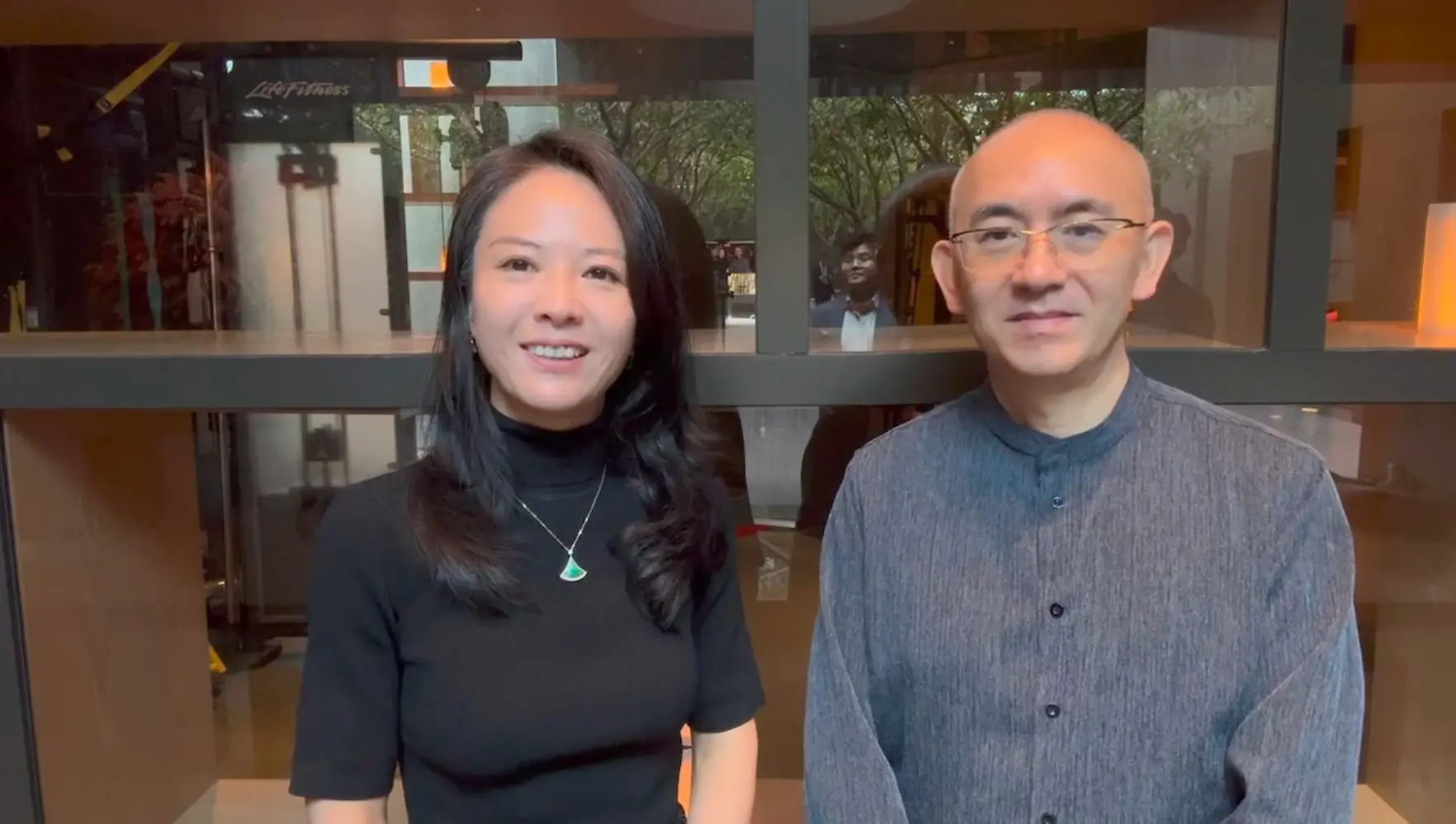
In this interview, Gary Deng, Chief Strategy Officer of Huajian Medical IVD MEDICAL (01931.HK), provided an in-depth interpretation of how the company strategically balances the "conservative" nature of the medical industry with the "radical" world of Web 3.0, and shared the global enhanced Ethereum "ETH" treasury strategy (referred to as the Ethereum "ETH" treasury strategy) and the ivd.xyz exchange ecosystem plan that Huajian Medical is promoting, attempting to open a new door for the globalization and capitalization of innovative drug assets.
Not "conflict," but "complement": How does Web 3.0 address the real pain points in the medical industry?
Is the medical industry conservative? Gary Deng believes the answer is no.
"The medical industry has its traditional part, but it also has a part of innovation. It is a high-demand, high-density, and highly compliant industry. Especially before the rise of AI, almost all breakthroughs relied on scientists—this industry is almost 'built' by PhDs."
However, this characteristic also brings challenges. The R&D cycle for innovative drugs is extremely long, requiring an average investment of one billion dollars and nearly ten years to complete the entire process from laboratory to commercialization. In recent years, the tightening global financing environment has made it even more difficult for many small and medium-sized innovative drug companies. "They have many high-quality pipeline assets, with R&D already in the mid-stage, and the product prospects are excellent, but it is very difficult to meet the listing requirements of Hong Kong Stock Exchange Chapter 18A and Nasdaq, making it impossible to gain support from the global capital market," Gary Deng pointed out.
On the other hand, there is extremely strong demand from overseas large pharmaceutical companies (such as Pfizer, Merck, etc.) for Chinese innovative drug assets. "In just the first half of this year, the amount authorized for overseas from Chinese innovative drug pipelines has reached nearly 70 billion dollars. But this is just 'top-tier cases' of cooperation; the vast majority of small and medium-sized pharmaceutical companies have no opportunity to connect with the global market."
It is this imbalance of supply and demand that has allowed Huajian Medical to see the integration opportunities that Web 3.0 and blockchain technology bring to the pharmaceutical industry.
"Web 3.0 is not an opposing existence but a powerful complement. It can help traditional medical assets achieve better global allocation, which is the starting point of our strategic thinking."
Dual-Engine Drive: Ethereum "ETH" Treasury Strategy + ivd.xyz Exchange Ecosystem
Huajian's Web 3.0 strategy did not come out of thin air but has evolved step by step based on its industrial ecosystem as a listed company.
- Ethereum "ETH" Treasury: Not just "holding," but "ecological feedback"
Currently, Huajian Medical has obtained board approval for a budget of HKD 880 million for purchasing Ethereum "ETH," and has already bought HKD 149.47 million. In the future, it will continue to increase its holdings through a "regular investment" approach. More notably, the company is promoting a higher amount plan of HKD 3 billion, which is pending shareholder approval.
Unlike many companies that simply "stockpile coins," Huajian Medical's Ethereum "ETH" treasury is "enhanced"—it is deeply bound to the innovative drug RWA exchange ecosystem.
"We will tokenize the innovative drug IP pipeline assets we acquire or cooperate with through the RWA exchange, promoting their development to a certain stage before selling them to global pharmaceutical companies or pushing for listing. The profits generated will be reinvested into the Ethereum 'ETH' treasury; and the profits from Ethereum 'ETH' itself will also be fed back into the acquisition of innovative drug assets—this forms a business closed loop."
- Why Ethereum "ETH" and not Bitcoin?
Gary Deng clearly responded: "We choose Ethereum 'ETH' primarily because it aligns better with our industrial attributes."
As an industrial listed company, Huajian Medical must consider the integration of technology, ecology, and business. The infrastructure of Ethereum "ETH," including smart contracts, DeFi, and asset issuance, can better support the tokenization and trading ecosystem of innovative drug IP, while Bitcoin currently lacks such application adaptability.
Who will become users of the ivd.xyz exchange? How to lower the entry threshold?
A practical question is: healthcare professionals, pharmaceutical scientists, and traditional investors—these groups are not familiar with blockchain. How will Huajian Medical attract them? Gary Deng stated that there are several key participants in the ivd.xyz exchange ecosystem:
Asset issuers: that is, innovative pharmaceutical companies, especially small and medium-sized enterprises, who are willing to obtain financing and liquidity through asset tokenization;
Platform parties: Huajian Medical and the exchange ecosystem;
Compliance service providers: auditing firms, law firms, regulatory agencies, etc.;
Investors: including medical professional investment institutions, Web 3.0 native funds, and ordinary investors who will be allowed entry under compliance conditions in the future.
"We do not expect every doctor or scientist to become a Web 3.0 user—they are more focused on scientific research itself. What we need to do is solve their real needs: difficulties in financing, low asset liquidity, and high globalization thresholds."
As for education and popularization? Gary Deng appeared very calm: "The acceptance of new things always requires a process, but in the global wave of digitalization, it is just a matter of time. We will let more people understand and trust this mechanism through compliance, transparency, and gradual advancement."
From Hong Kong to the world, Huajian Medical's ambitions have just begun
As a Hong Kong-listed company, Huajian Medical is currently actively promoting a secondary listing in the United States, which is also in line with its globalization strategy. Gary Deng emphasized that Huajian Medical's goal is to become "the benchmark for Ethereum 'ETH' treasury reserves in the Hong Kong and even Asian markets," and gradually occupy a place in the global Web 3.0 medical financial ecosystem.
The weight of the medical industry and the agility of the Web 3.0 world are weaving an unprecedented picture in Huajian Medical's strategy. Perhaps soon, we will see more traditional industry giants begin to rethink the future of assets, liquidity, and globalization with the same mindset.
 Risk warning Risk warning
Popular articles





