Understanding Pascal Protocol: The Liquidation Layer of DeFi

 Pascal positions itself as the LCH/CME of DeFi, capturing value from all scenarios accessing its clearing infrastructure. The project issued tokens on September 9.
Source: Alea Research
Compiled by: Zhou, ChainCatcher
In the past few years, DeFi has been building high-throughput trading venues, complex yield primitives, and on-chain money markets. However, one key feature has been largely missing: a neutral clearing layer that can balance risks between different positions and venues.
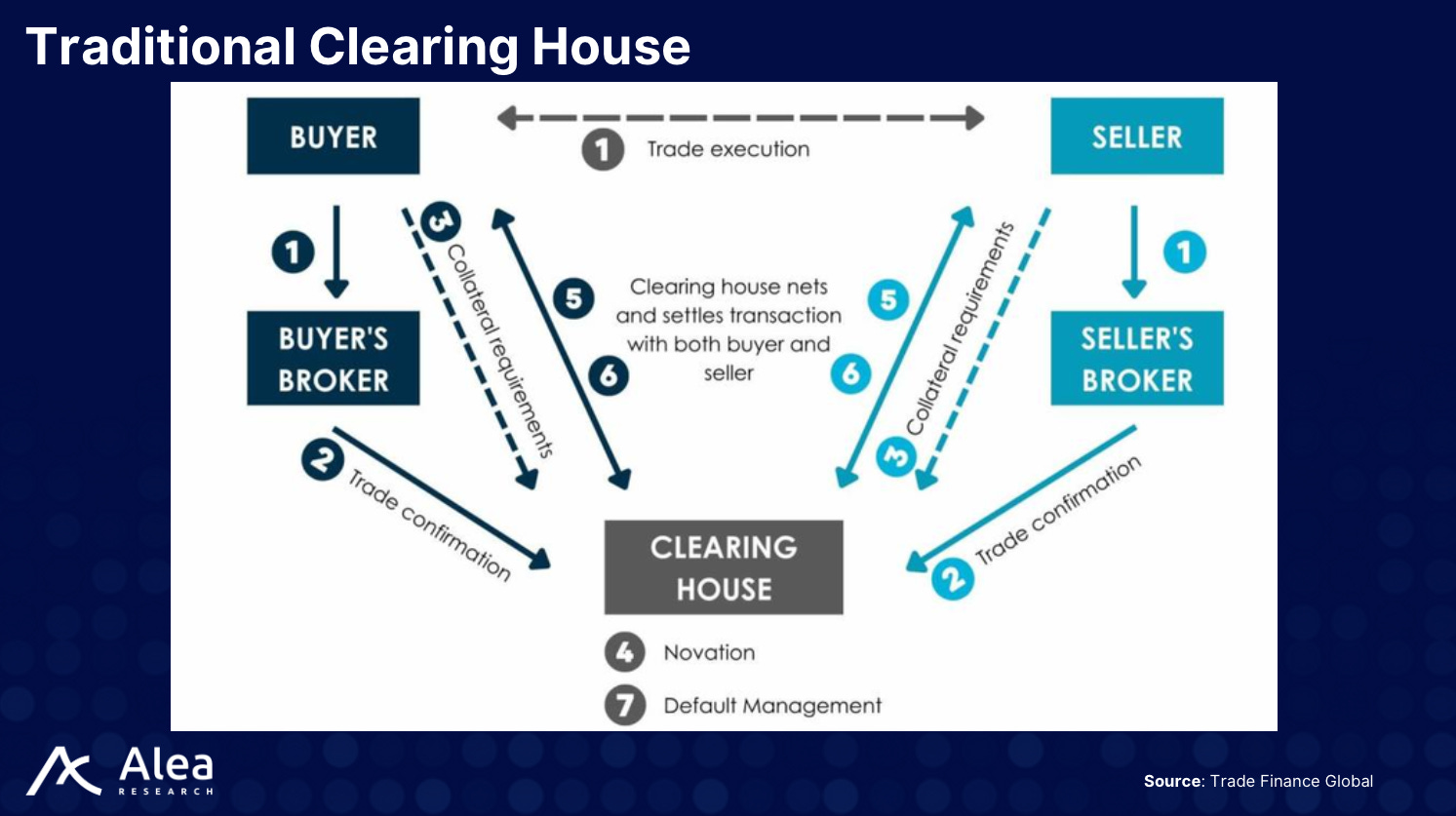
In traditional markets, clearinghouses like LCH and CME sit between counterparties, responsible for net exposures, executing margin rules, and sharing risks.
The fragmentation and over-collateralization in DeFi indicate that without proper clearing infrastructure, exchanges will sever risk logic, over-lock collateral, and still suffer from periodic crises. The potential $35 trillion opportunity in on-chain derivatives and RWA markets is being completely overlooked.
The Pascal Protocol aims to be the clearinghouse for DeFi, serving as a neutral middleware that calculates margin based on portfolio netting and VaR-based models, executes clearing in a deterministic manner, and allows for net exposure across platforms.
This article will explore clearing opportunities, Pascal's solutions, and the upcoming $PASC TGE.
Why DeFi Needs Clearing
Clearing occurs between the trade and its settlement, ensuring that funds and assets flow to the correct party at the right time, without counterparty risk. Clearinghouses net exposures at the portfolio level and calculate margins, ensuring that participants only need to post collateral for actual risks.
In DeFi, this layer is almost non-existent.
Each platform requires its own collateral, ignoring cross-asset correlations. Positions are managed independently, and when volatility spikes, liquidations cascade across protocols. To ensure safety, some platforms lock up 150% to 200% collateral, while others cut corners, leading to systemic fragility. This fragmentation prevents on-chain derivatives from realizing their true potential.
The Pascal team believes that unified clearing is crucial for unlocking capital-efficient DeFi products. By netting exposures across exchanges and products, margin requirements can be significantly reduced, similar to how portfolio margin in traditional finance releases capital for hedging strategies.
With a neutral clearing layer, traders can go long on BTC, short on ETH, and sell covered calls on both, only needing to post collateral for net risk. The result is deeper liquidity, lower capital costs, and a safer system for all participants.
Market Momentum and Opportunities
Pascal's ambitions extend beyond crypto perpetual trading. The protocol envisions a future where RWA derivatives, interest rate products, and cross-asset structured trades will all be cleared on-chain.
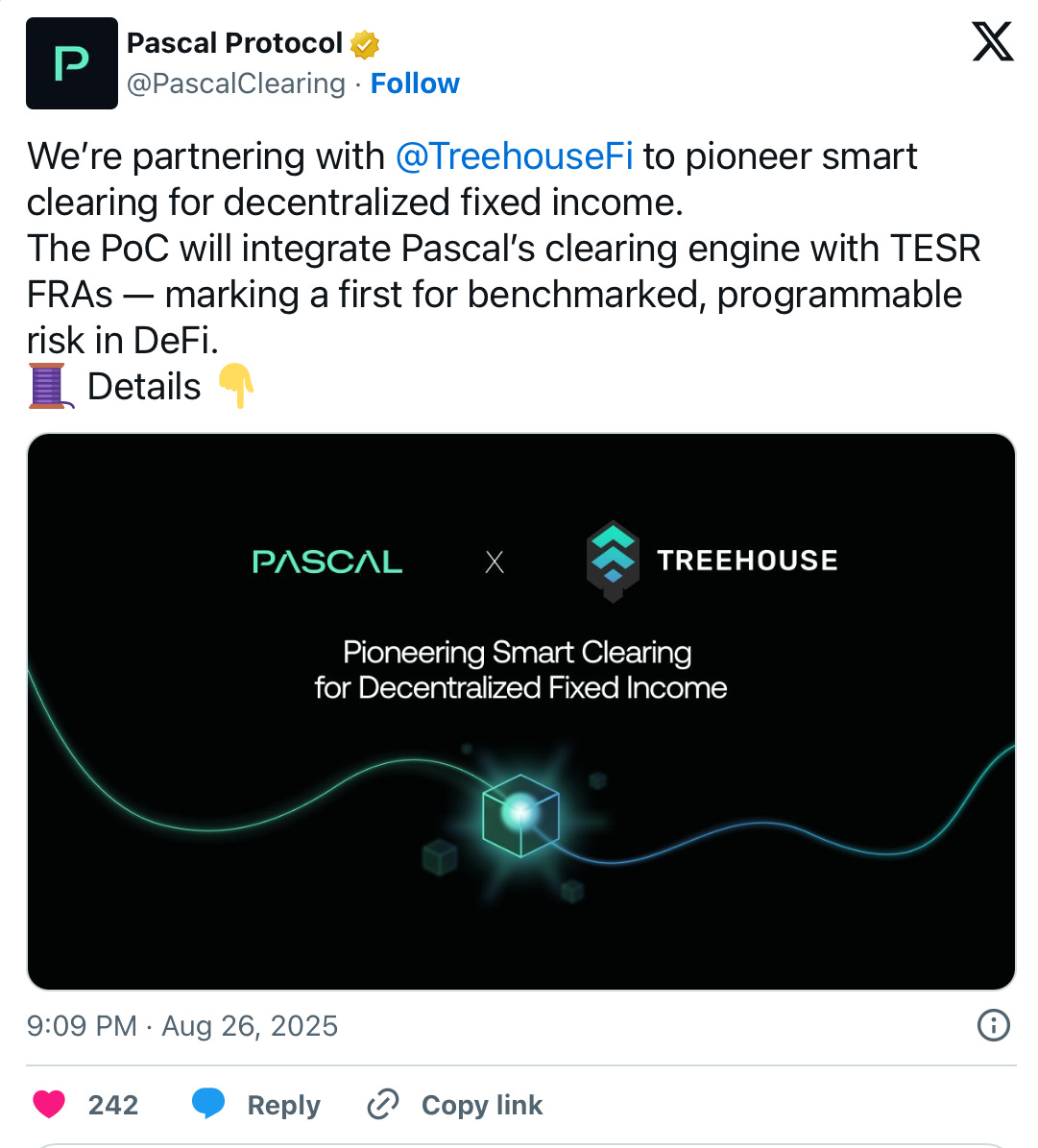
The company recently partnered with Treehouse to develop a decentralized fixed income market, indicating a product pipeline that requires complex margin mechanisms.
The nominal trading volume of the global derivatives market far exceeds that of the spot market, and traditional clearinghouses like LCH or CME charge billions in fees each year, presenting a massive opportunity. Specifically, LCH's Swapclear (interest rate swaps) division alone has a nominal trading volume exceeding $10 trillion annually.
By bringing these economic structures on-chain, Pascal positions itself as the LCH/CME of DeFi, capturing value from all scenarios that access its clearing infrastructure.
Pascal's Clearing Engine
Pascal's solution is to introduce a modular clearing engine that any exchange, DAO, or protocol can connect to. Key features include:
Portfolio netting: Netting risks across multiple positions and scenarios, hedging exposures, and reducing collateral requirements.
VaR-based margining: Moving away from fixed margin ratios to dynamically calculating margins based on Value-at-Risk, reflecting actual exposures and correlations.
Transparent logic: All settlement and clearing rules are enforced by smart contracts; risk parameters and calculations are auditable on-chain.
Composable infrastructure: From perpetual contract DEXs to structured product issuers, any DeFi protocol can integrate Pascal to outsource risk management.
This approach separates risk management from order books and automated market makers (AMMs), turning clearing into a shared service. For example, the decentralized derivatives exchange Jetstream clears every trade through Pascal, while partners like Treehouse are testing smart clearing for decentralized interest rate products.
$PASC's TGE and Governance
The $PASC token will undergo its TGE on September 9, granting holders rights to the clearinghouse. The token distribution is as follows:
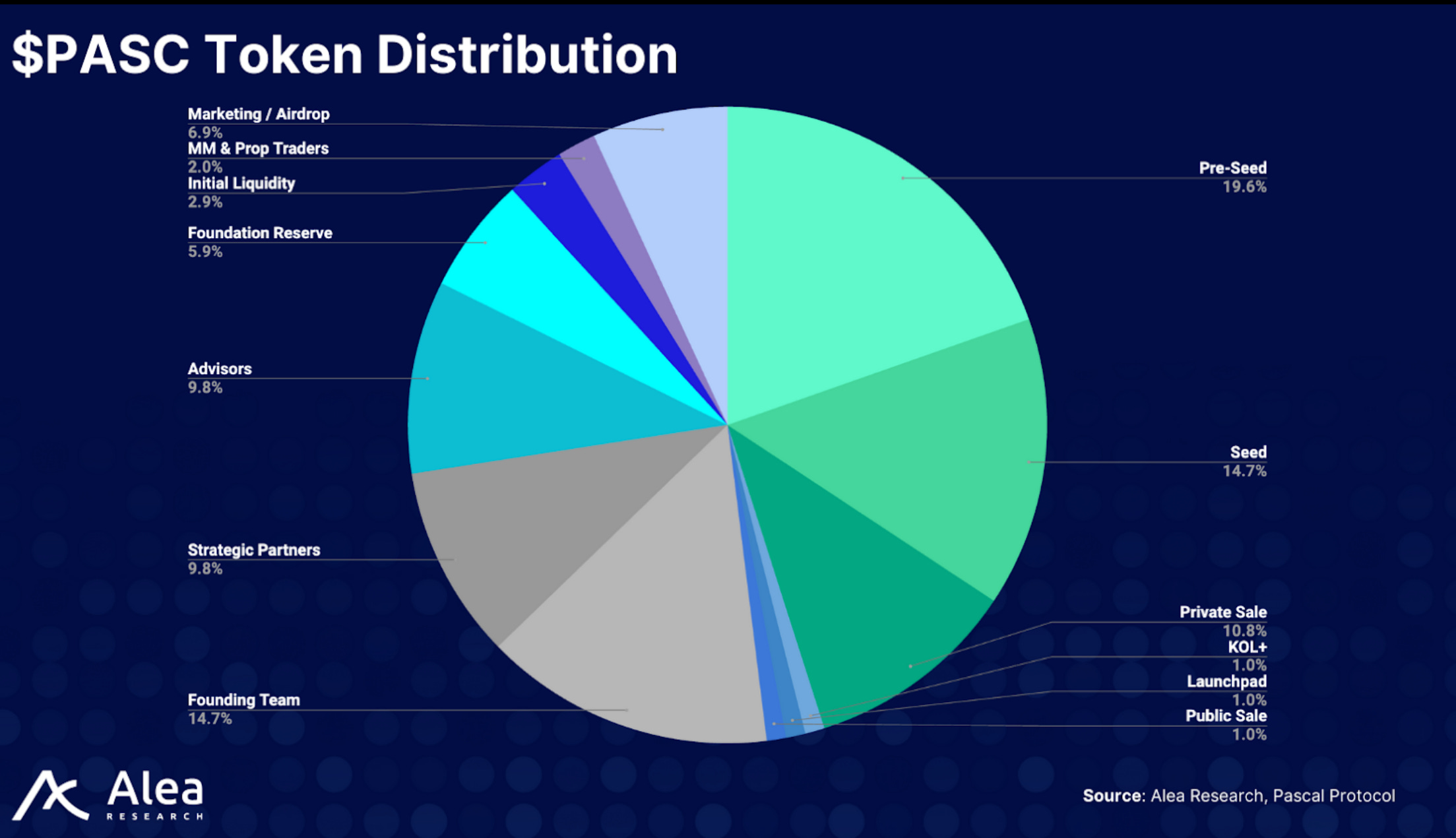
Additionally, $PASC stakers can earn an annual yield of 15-35% based on the staking duration, receive Jetstream points that can be exchanged for $JETS tokens during Jetstream's TGE, and share 20% of Pascal's fees in USDC.
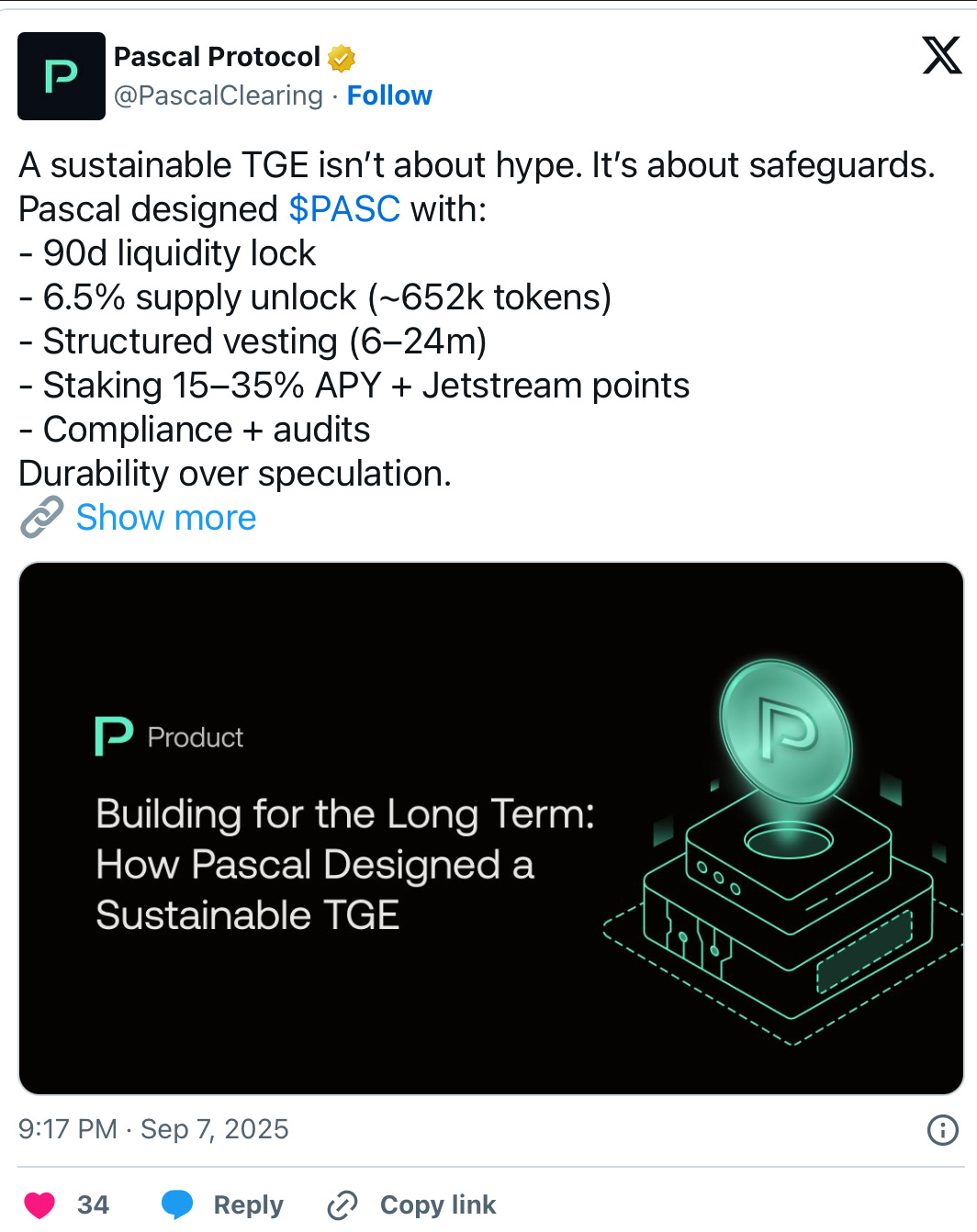
Initially, about 6.5% of the token supply will be unlocked, with the remainder smoothed out through vesting to mitigate sell pressure. Liquidity will be injected through Uniswap, with LP incentives provided to deepen the market.
$PASC holders can propose and vote on matters such as risk parameters, fee structures, new asset support, and cross-chain expansion.
 Risk warning
 Risk warning