








TRON Industry Weekly: "Significant Interest Rate Cuts" Expectations May Trigger Mainstream Coin Rebound, Shared AI Project Financing Exceeds 100 Million
 This week, the cryptocurrency market has shown significant trends in three aspects: macroeconomic factors, industry development, and regulatory policies.
# I. Outlook
1. Macroeconomic Summary and Future Predictions
Last week, inflation showed a slight rebound, with the August CPI annual rate rising to 2.9%, the core CPI steady at 3.1%, and the PPI annual rate at 2.6%. This "employment weakness + inflation stickiness" pattern puts the Federal Reserve in a dilemma, leading the market to strengthen expectations for a rate cut in September, with most betting on a 25 basis point cut, although some institutions have shifted to predicting a more aggressive 50 basis point cut.
Looking ahead, the Federal Reserve is likely to begin a rate cut cycle in September, but the statement may emphasize a "gradual, data-dependent" stance to avoid excessive easing that could trigger a resurgence of inflation. Overall, risk assets may receive short-term support from liquidity expectations, but without fundamental improvements, sustained increases may be difficult to achieve, while safe-haven assets like gold and U.S. Treasuries are expected to remain favored by investors.
2. Market Movements and Warnings in the Crypto Industry
Last week, the crypto market maintained an overall oscillating pattern. Bitcoin fluctuated around $110,000, with limited gains for Ethereum. Market sentiment was neutral but still benefited from expectations of a Federal Reserve rate cut, leading to a slight warming of risk appetite.
Looking ahead, there are significant risks in the market, with policy and inflation data being key variables affecting short-term trends. If the data weakens rate cut expectations, risk assets may come under pressure. Additionally, historically, September tends to be a weak month for the crypto market, and combined with the high valuations and profit-taking risks of some new projects, volatility may be amplified, necessitating cautious defense from investors.
3. Industry and Sector Hotspots
DeAgent AI, which raised $6 million led by Momentum, focuses on trusted, autonomous, cross-ecosystem smart infrastructure and is the largest AI Agent infrastructure in the SUI, BSC, and BTC ecosystems; USD.AI, which raised $13.4 million led by Framework, is a stablecoin lending protocol designed to convert computing hardware into standardized financial assets, specifically designed for AI startups with GPU collateral.
# II. Market Hotspot Sectors and Potential Projects of the Week
1. Overview of Potential Projects
1.1. Analysis of DeAgent AI, which raised $6 million led by Momentum, focusing on trusted, autonomous, cross-ecosystem smart infrastructure
Introduction
DeAgent AI is the largest AI Agent infrastructure in the SUI, BSC, and BTC ecosystems, capable of rapidly deploying AI models in various segmented scenarios to achieve autonomous decision-making and execution. By adopting a minimal entropy consensus mechanism, DeAgent AI ensures the consensus, identity, and continuity of AI Agents, promoting the application of decentralized intelligent consensus mechanisms and accelerating humanity's transition to an AI-driven society.
Architecture Overview
The De(cision)Agent framework (DeAgent) is proposed to address three core challenges faced by AI Agents in distributed systems. It provides a structured framework for creating, running, and interacting with AI Agents.
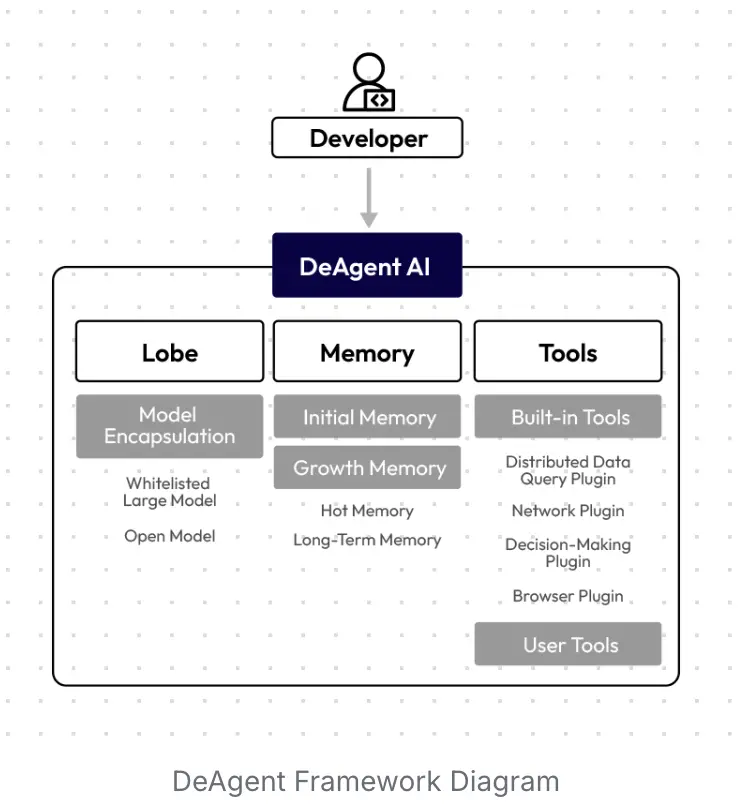
The definition of a DeAgent instance includes the following parts:
Lobe (Brain): Represents the cognitive engine of the Agent. It encapsulates the logic for invoking one or more large language models (LLMs), processing inputs, and generating outputs. The Agent creator must specify the Lobe used, which can be predefined or custom implementations.
Memory: Contains the initial state of the Agent (genesis memory) and its accumulated interaction history (evolution memory), providing a foundation for the Agent's continuity.
Tools: Specifies a set of capabilities that the Agent can invoke, such as accessing external data, interacting with other systems, or executing specific operations in a distributed environment. It also includes instructions on how the Lobe calls these tools.
Creation: DeAgent instantiates by publishing its definition (Lobe URI, initial memory state, tool specifications) at a specific address or identifier in a distributed system (such as a blockchain mainnet or decentralized storage network).
Inherited Properties: DeAgent naturally inherits the properties of its underlying distributed system. If the system guarantees the immutability of published data, then the core definition of the Agent will also be immutable. If the system provides strong consistency and ordering guarantees (finality), it lays the foundation for the Agent's identity and continuity.
Technical Neutrality: The DeAgent framework remains neutral regarding the specific encoding formats, publishing methods, or advanced features (such as native immutability) of the underlying distributed system. However, developers and communities adopting DeAgent on specific platforms should establish clear standards and norms. The minimum requirement for the host system is to achieve a unique final state recognized by participants (i.e., possessing endogenous consensus and identity).
Interaction: Users interact with DeAgent by submitting operations to the Agent address (e.g., transactions in a blockchain context). These operations contain interaction payloads (text, images, audio, video inputs, or references to immutable data when the payload is too large). Different platforms need to establish specific operational standards.
Execution: The DeAgent framework relies on Executors. These nodes are responsible for processing interactions and may be centralized, operated by multiple trusted parties, or fully decentralized. Executors monitor interactions targeting DeAgent in the distributed system, retrieve the Agent's definition and current state (memory), and use the specified Lobe and tools to execute the interaction, generating potential outcomes.
Consensus and Finalization: Executors submit results and execution proofs. Subsequently, a network composed of Committers (validators) applies a consensus protocol (to be detailed later) to select a unique normative result for each interaction cycle, thereby ensuring identity. This result updates the Agent's state (memory) in the distributed system, establishing continuity.
How It Works
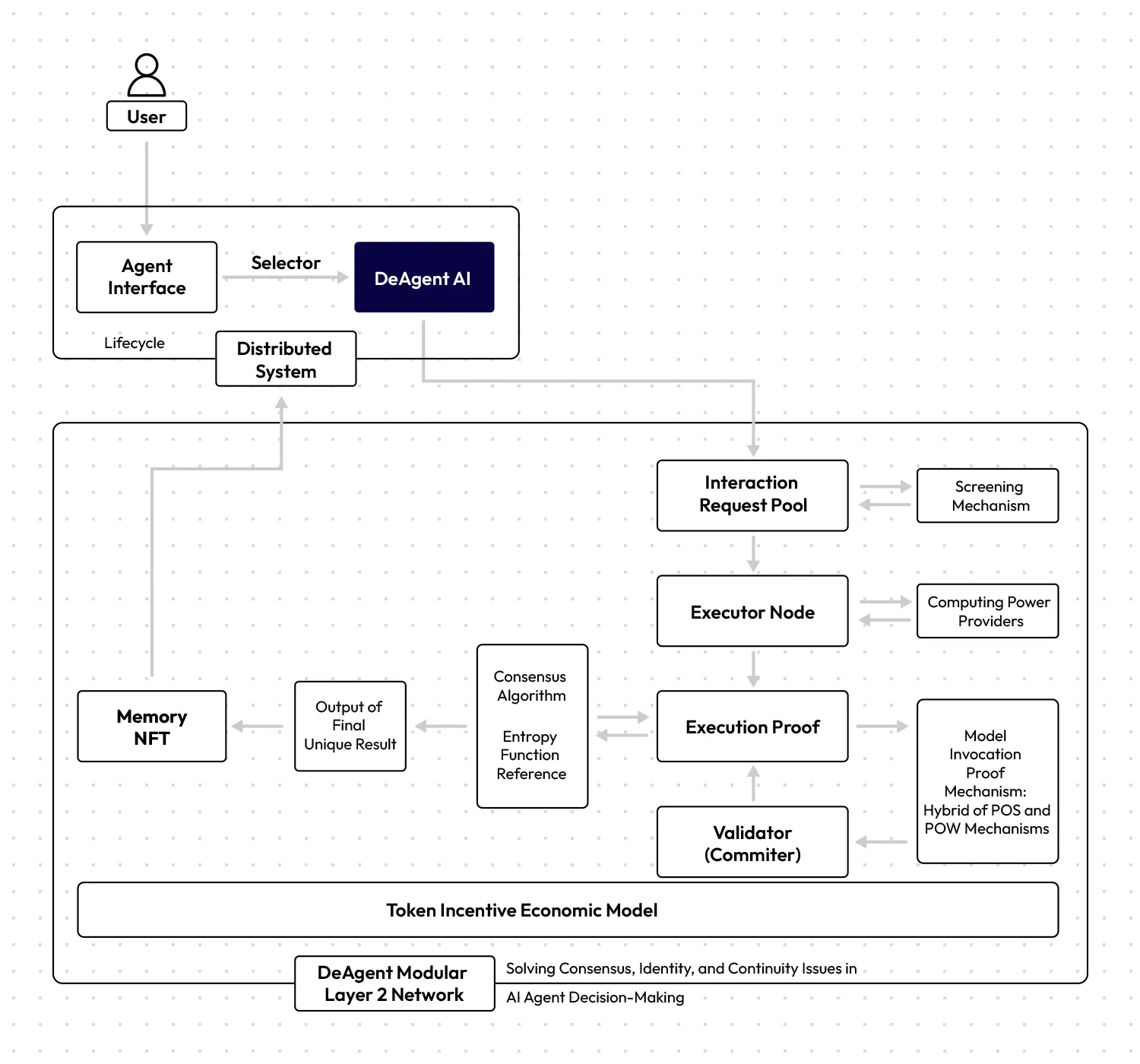
1. Lifecycle and Roles: Creator, Executor, Validator
The DeAgent ecosystem involves several key roles:
Agent Creator: Defines the Agent's Lobe, initial Memory, and Tools, and publishes this definition to the distributed system, allowing the Agent to exist.
Agent User: Interacts with the Agent by submitting queries or task operations on the distributed system.
Framework Operators: Responsible for maintaining the operational integrity of the DeAgent ecosystem, including:
Executors: Nodes that run the Agent logic (Lobe + Tools + Memory), which can be private nodes (e.g., running in TEE) or open participants.
Compute Providers (optional): Specialized nodes providing execution services for specific (usually open-source) models, potentially forming a sub-network with its own incentive mechanism.
Committers (Validators): Nodes responsible for verifying the execution proofs submitted by Executors and reaching consensus on the interaction results of each step. They select the final result based on the consensus mechanism (e.g., minimal entropy principle) and submit it to the Agent state chain in the distributed system.
2. Agent Lifecycle
Creation:
The Agent creator publishes the Agent's definition on the distributed system.Interaction Request:
Users submit interaction requests targeting specific Agents (or Agent groups). These requests may contain parameters, such as specified Executors (selectors) or incentive mechanisms (gas fees/tips). Requests enter the interaction pool (similar to a transaction memory pool).State Dependency:
Unlike typical transaction pools where transactions may remain valid across multiple blocks, Agent interaction requests are highly dependent on their current state. The Agent's response heavily relies on its current Memory. Once the Agent's state is updated due to a confirmed interaction, previous interaction requests targeting the old state become invalid and are discarded.Execution:
Executors select requests from the interaction pool (based on incentives, selectors, or internal strategies) and use the specified Lobe, the Agent's current Memory state, and available tools to execute the logic.Candidate Submission:
Executors submit their results (responses, Memory updates, tool usage, execution proofs) to the candidate pool. Multiple Executors may process the same interaction request, resulting in multiple candidate outcomes.Consensus & Finalization:
Within a defined time window (related to the Agent's "tick rate" or timeout), Committers evaluate the results in the candidate pool. Through a consensus mechanism (such as PoS voting, PBFT) and possibly heuristic selection methods (such as the minimal entropy principle), a unique normative result is ultimately selected.State Update:
The selected result is submitted to the distributed system, updating the Agent's official Memory/state chain. This ensures:
Identity: Only one result is confirmed at each step.
Continuity: The evolution of the state is predictable.
- Death:
If the Agent remains inactive within the scheduled time (no confirmed interactions), it may be considered "dead" or dormant. Subsequently, interaction requests targeting it may be ignored by Executors.
Tron Comments
The advantage of DeAgent AI lies in its provision of decentralized AI Agent infrastructure, capable of rapid deployment across multiple ecosystems like SUI, BSC, and BTC, and ensuring identity, continuity, and trusted execution through a minimal entropy consensus mechanism, thus achieving autonomous decision-making and distributed intelligent collaboration. The disadvantage, however, is its reliance on the performance and consensus efficiency of the underlying distributed system, leading to higher execution costs and complexity, while still needing further improvement in standardization and cross-platform compatibility.
1.2. Interpretation of USD.AI, which raised $13.4 million led by Framework, aiming to convert computing hardware into standardized financial assets
Introduction
USD.AI, developed by Permian Labs, is a GPU-collateralized stablecoin lending protocol specifically designed for AI startups. It issues USDai (a token pegged to the U.S. dollar) and sUSDai (a yield-generating variant), allowing computing resources (GPUs) to be used as collateral.
Architecture Analysis
Decentralized Stargate: A yield-generating synthetic dollar supported by government bonds, AI infrastructure, and DePIN network assets.
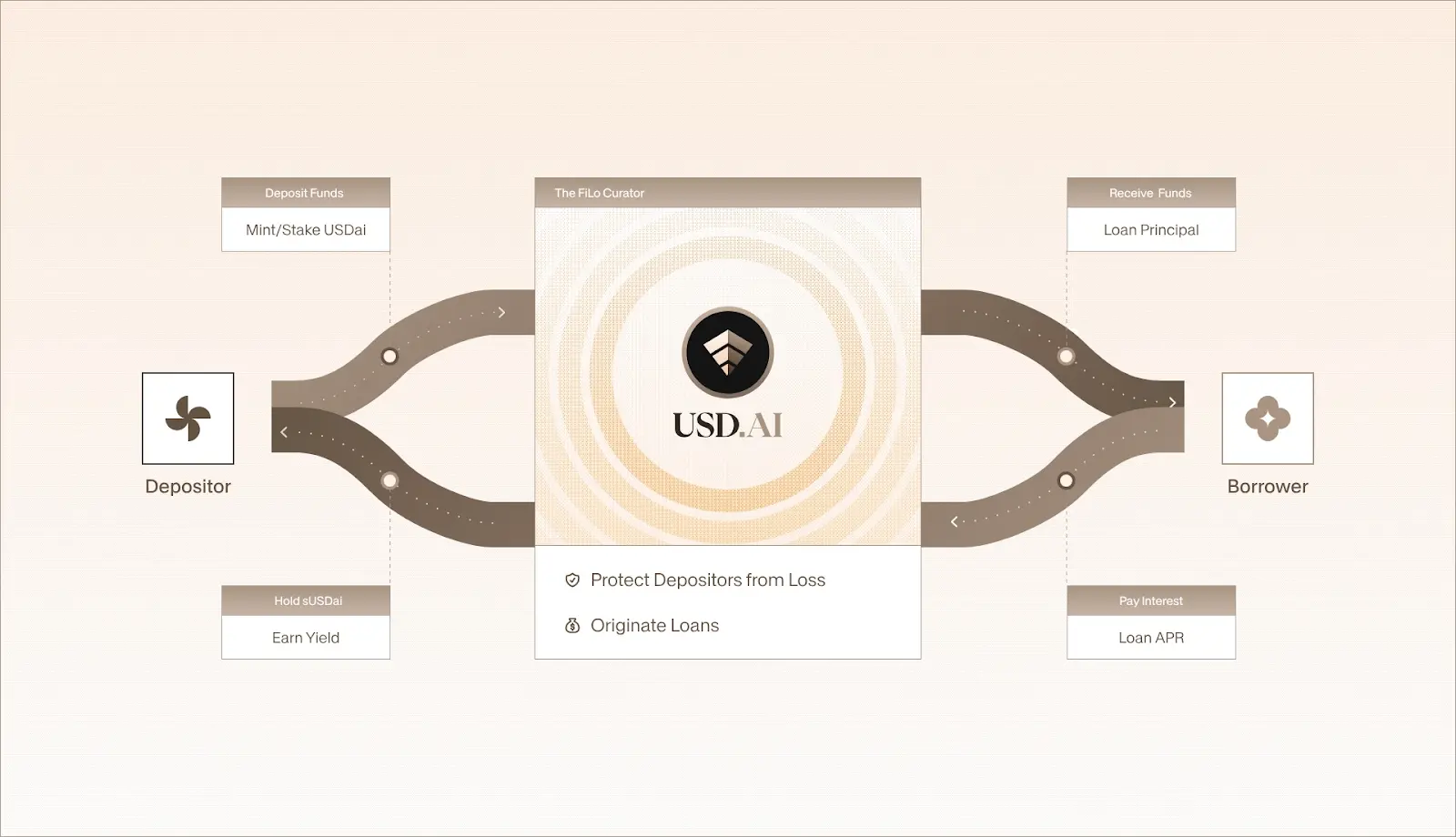
The USD.AI protocol operates around three core participant categories:
Depositors ------ Deposit USDC/USDT into the protocol, earning yields by minting USDai and staking it as sUSDai.
Borrowers ------ Typically non-super-scale infrastructure operators needing hardware financing.
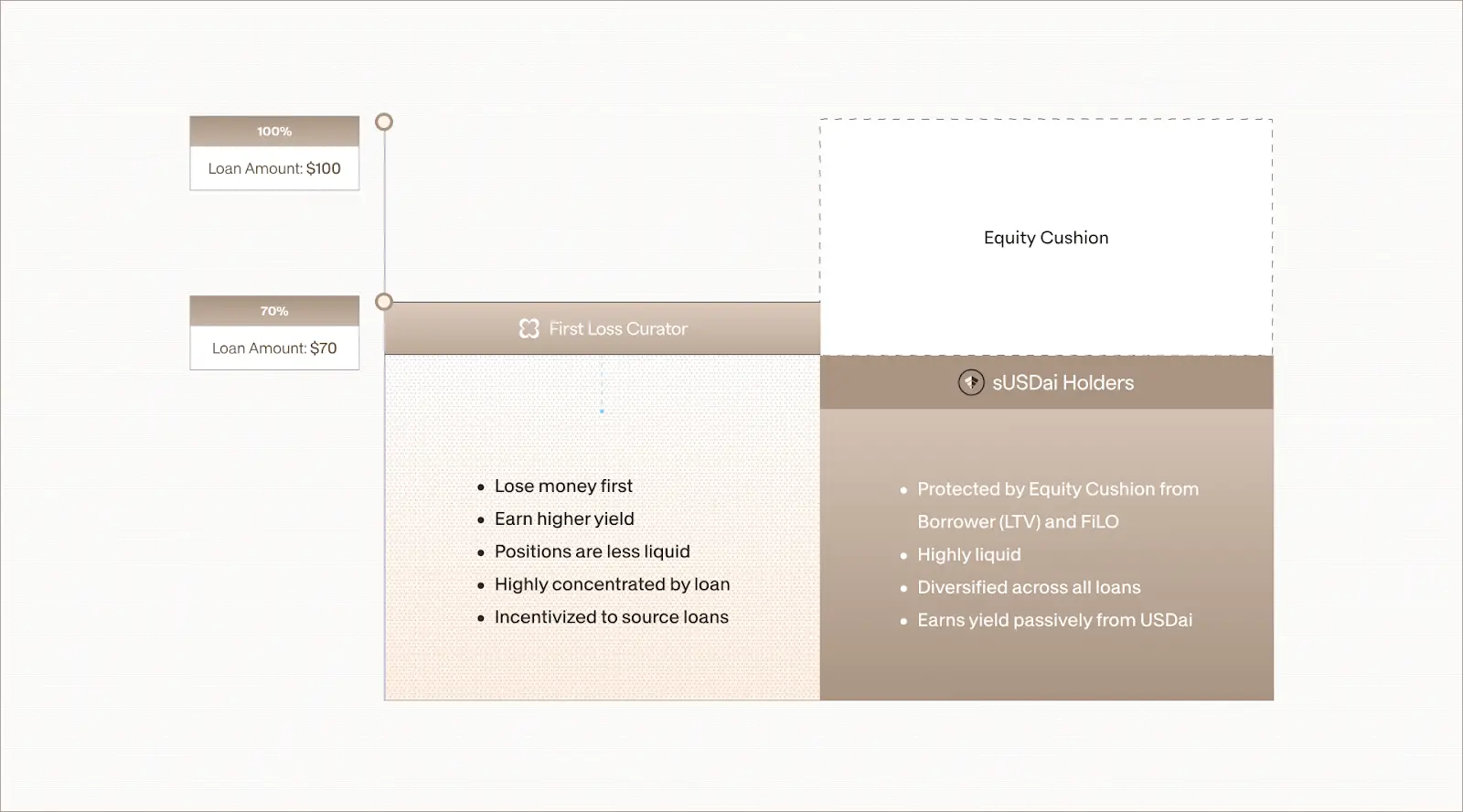
Curators ------ Provide first-loss capital, receive corresponding premiums, and separate capital from operators through a tokenization mechanism (CALIBER).
The uniqueness of this structure lies in its separation of capital from operators through CALIBER. The collateral is the hardware itself, while the risk is restructured into a standardized, investable form. This is similar to how "mortgage-backed securities" unlock the scale of real estate finance. Through this abstraction mechanism, converting computing power into an asset class usable for credit, USD.AI opens previously inaccessible capital sources for long-tail infrastructure and transforms an overlooked scenario into a new frontier for revenue and tax optimization.
Three Pillars of the USD.AI Protocol
CALIBER ------ A tokenization framework for yields, enabling traditionally non-tokenizable assets to be tokenized.
FiLo ------ A risk curation process aimed at scalability, allowing future asset financing needs to be audited and publicly financed.
QEV ------ A liquidity system for redemptions, ensuring fair and transparent liquidity acquisition.
The three core stages of the USD.AI protocol operation process
Asset Creation
Hardware assets (e.g., GPUs) are produced and delivered by Original Equipment Manufacturers (OEMs), at which point the assets remain on the borrower's balance sheet.Tokenization and Isolation
Assets are tokenized via the CALIBER standard, structuring capital into a standardized, investable form while removing the assets from the borrower's balance sheet, achieving separation of capital from operators.Liquidity and Yield Generation
Tokenized assets enter the USD.AI protocol, being used to issue USDai/sUSDai, providing yield channels for depositors and releasing new capital liquidity for hardware infrastructure.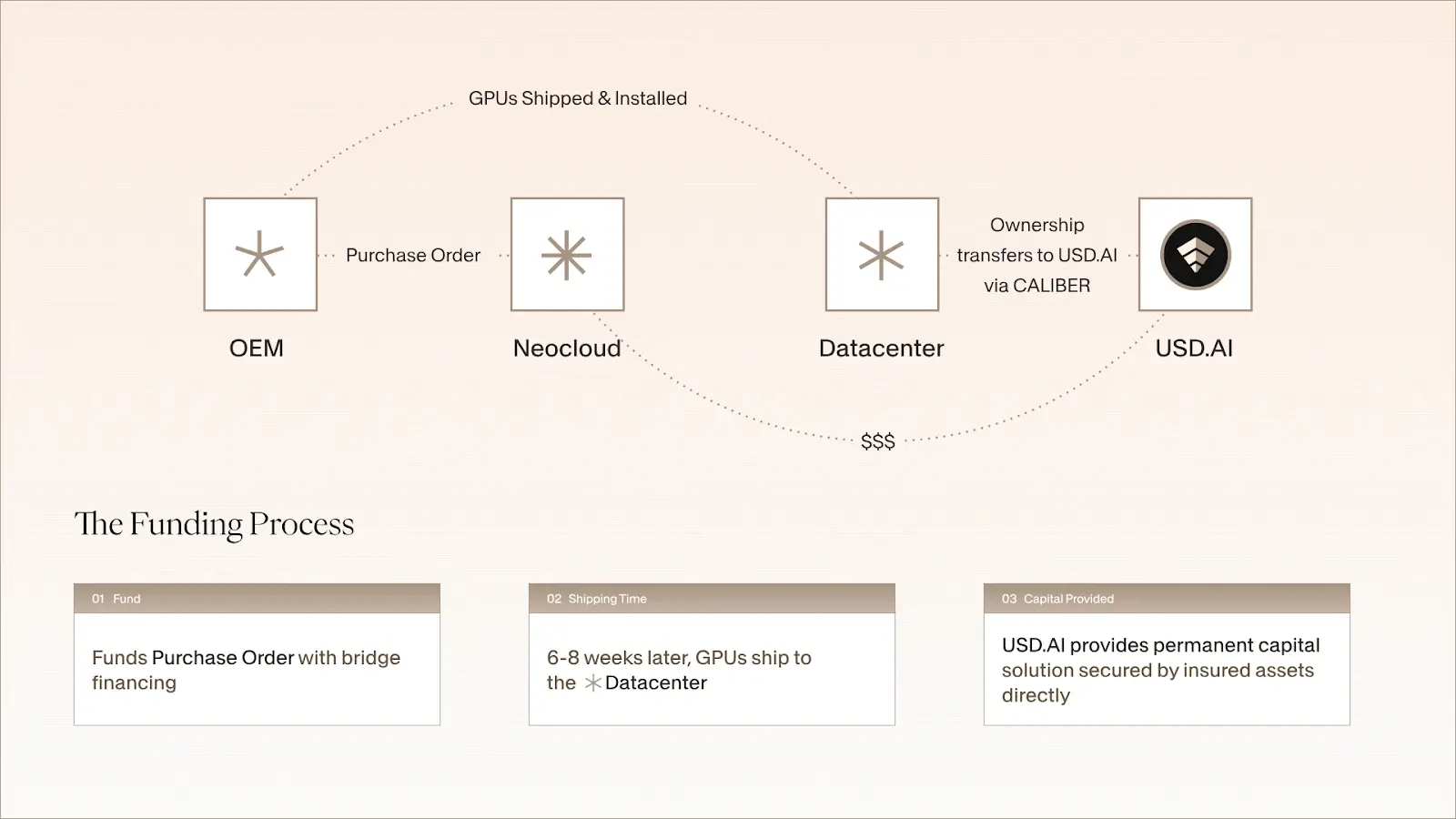
Why are these three stages necessary? The reason is that USD.AI is not a "credit protocol." "Credit," by definition, is an assessment of a business or counterparty's ability to repay a loan. USD.AI does not issue loans to businesses or individuals—it merely provides liquidity for the assets themselves.
This is similar to Aave: Aave does not care who the borrower is; it only cares what you have collateralized.
Core Content of the Three Pillars
1. CALIBER ------ A Tokenization Framework for Yields
Core Content:
CALIBER is the foundational abstraction layer of USD.AI, used to convert traditionally non-tokenizable assets (e.g., GPUs, AI infrastructure, DePIN nodes) into standardized, investable tokenized assets.
Through CALIBER, asset ownership is removed from the operator's (Borrower's) balance sheet, transforming into standardized financial assets on-chain.
Operational Mechanism:
Hardware assets are provided by Original Equipment Manufacturers (OEMs).
Borrowers/operators submit assets to the CALIBER framework for collateralization and tokenization.
Assets are converted into on-chain tokens (e.g., the collateral asset pool behind USDai).
Capital is thoroughly separated from operators: operators are only responsible for using the assets, while capital participants (depositors, curators) earn returns through tokenized assets.
2. FiLo ------ Risk Curation and Scalability Mechanism
Core Content:
FiLo serves to audit and curate future asset financing needs, enabling them to be publicly financed.
Through a transparent risk assessment process, FiLo helps investors identify high-quality asset financing opportunities and achieve scalable expansion.
Operational Mechanism:
Borrowers submit financing needs (e.g., GPU procurement, AI node deployment).
Curators audit the need, providing first-loss capital and assuming initial risk.
Approved asset financing needs enter the public market, attracting larger-scale funding participation.
Depositors can choose to deposit USDC/USDT in exchange for USDai and further stake it as sUSDai to earn yields.
Through first-loss capital + curation mechanisms, the risk exposure for ordinary investors is reduced, achieving scalable infrastructure financing.
3. QEV ------ Liquidity and Redemption System
Core Content:
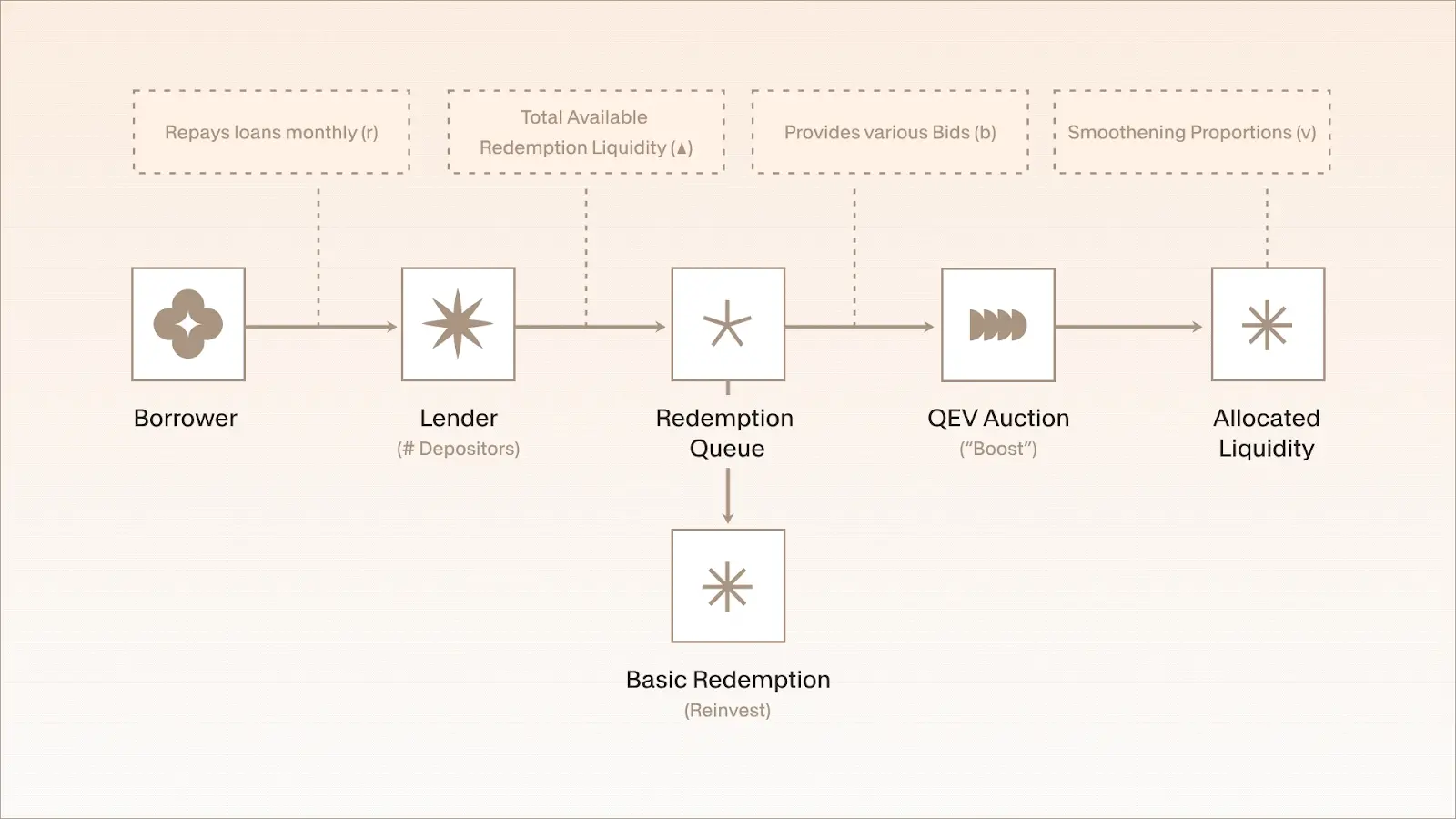
QEV is the liquidity assurance layer of USD.AI, ensuring that tokenized assets can be redeemed fairly and transparently.
It provides exit mechanisms for depositors and liquidity providers, maintaining the peg of USDai/sUSDai to the dollar value.
Operational Mechanism:
Depositors can redeem their held USDai/sUSDai at any time.
The QEV system executes redemptions or rebalances based on market liquidity and collateral asset conditions.
When certain assets mature or generate yields, QEV allocates funds and yields to relevant participants (depositors, curators).
Ensures transparent and predictable liquidity exits, avoiding liquidity gaps due to the unique characteristics of underlying assets (e.g., hardware depreciation or usage cycles).
Tron Comments
The advantage of USD.AI lies in its unique design of three pillars (CALIBER, FiLo, QEV), which can tokenize assets like GPUs and other AI infrastructure, strictly isolating capital from operators, achieving risk layering and scalable financing, while providing stable yields and transparent redemption mechanisms for depositors. The disadvantage, however, is its relatively complex process, with a time lag from asset generation by OEMs to tokenization, and a strong dependence on the value fluctuations and liquidity of underlying hardware, which may affect capital efficiency and market acceptance.
2. Key Projects of the Week in Detail
2.1. Detailed Explanation of the Innovative Project XMAQUINA---Empowering Global Communities to Share Physical AI Dividends
Introduction
XMAQUINA is a decentralized autonomous organization (DAO) with the mission of "ensuring that every member has true rights in the intelligent era." In the face of rapidly advancing automation, XMAQUINA gathers pioneers and doers, providing them access and opportunities to core enterprises and systems of the future.
Here, members are not just observers but participants and beneficiaries. Through the DAO mechanism, XMAQUINA enables members to collectively shape the upcoming "humanoid intelligent era" and share the value and outcomes it brings.
Architecture Analysis
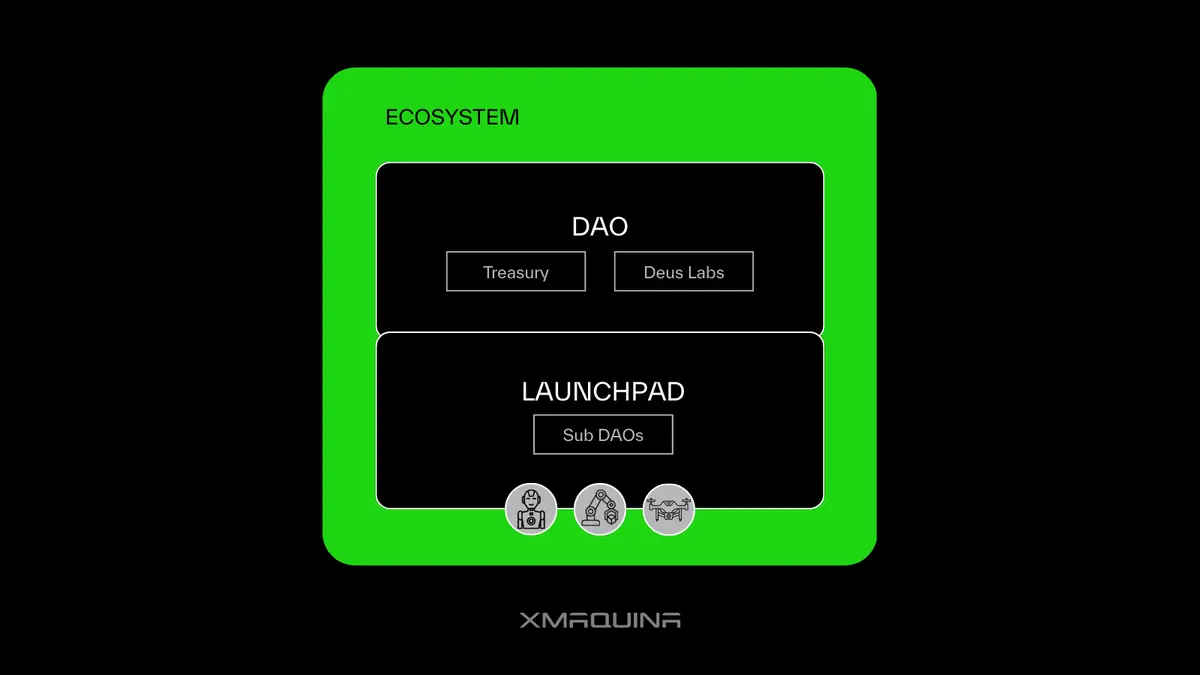
This is a global community built on two core pillars.
1. The DAO
A decentralized autonomous organization (DAO) born for "decentralized physical artificial intelligence (Physical AI)."
The DAO is driven by a global community that brings together builders, technical experts, and forward-thinking individuals, united by the common mission of decentralizing the next technological revolution—physical artificial intelligence (Physical AI).
The DAO manages a multi-asset treasury, with funds strategically allocated to projects related to robotics, physical artificial intelligence, and decentralized infrastructure. Every decision is made under a mechanism of strategic focus and community oversight.
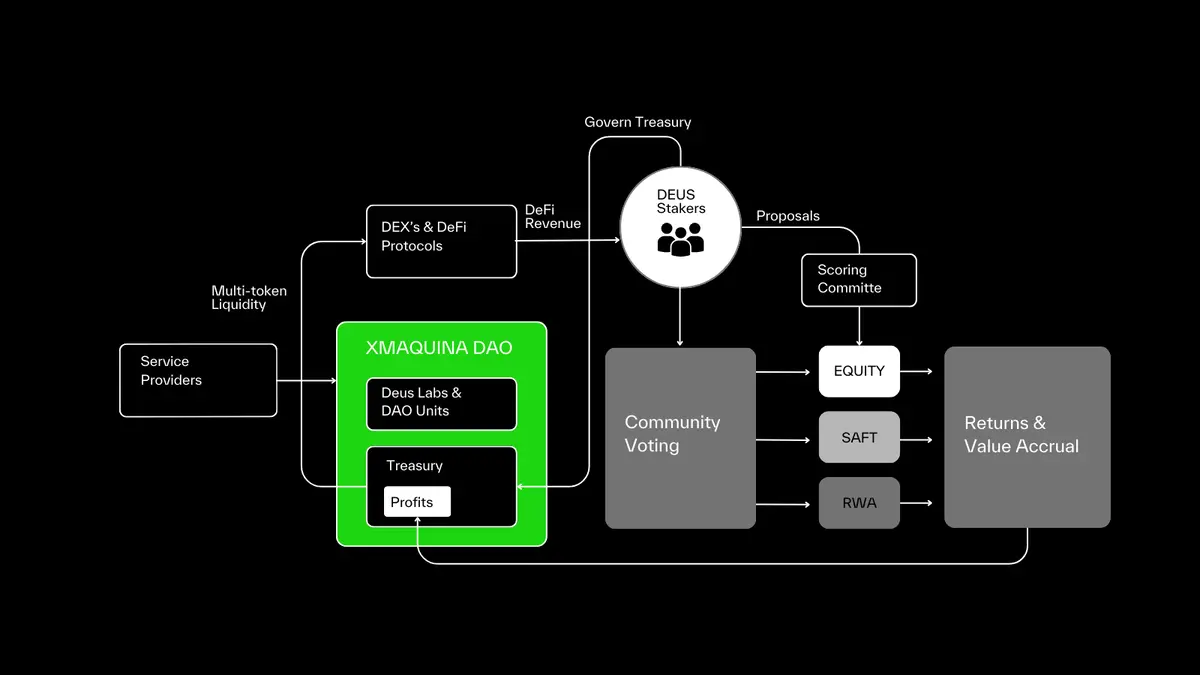
DAO Contributors
Community Members: Gain governance rights by staking DEUS tokens, participating in voting and decision-making. Influence depends on the amount and duration of staking.
Northstar Council: Composed of up to six representatives, responsible for overseeing the DAO's direction and long-term strategy, ensuring alignment with the DAO's mission and charter.
Scoring Committee: Composed of experts from venture capital, robotics, decentralized technology, etc., responsible for evaluating proposals, writing memos, providing strategic advice, and helping the DAO make informed decisions when voting to allocate resources.
Execution Engine: The operational team entrusted by the DAO, responsible for implementing key plans, covering investment screening, legal compliance, tokenomics design, governance optimization, operations and communications, as well as treasury and DeFi management. It will gradually decentralize in the future, with more responsibilities taken over by the community and automated systems.
DEUS Labs: XMAQUINA's innovation incubator, focusing on the intersection of robotics and Web3. Open to all members, it promotes open-source projects and application incubation, expanding the utility and ecological value of DEUS tokens.
Main Functions of the Execution Engine
Project Sourcing: Discover and evaluate high-potential opportunities in robotics, DePIN, etc.
Legal: Ensure the DAO complies with relevant legal and tax regulations.
Tokenomics & Incentives: Optimize the DEUS token economic model, incentivize community contributions, and maintain long-term sustainability.
Governance: Promote transparent and fair governance processes, proposing improvements for community voting.
Operations & Communications: Responsible for daily operations, marketing, community growth, and engagement.
Treasury & DeFi: Develop asset management and DeFi strategies, ensuring transparency and robustness of funds.
Mission of DEUS Labs
Incubate innovative projects at the intersection of Web3 and robotics, developing new products or derivative projects to enhance the value of DEUS tokens and the strength of the DAO.
Promote media and research to enhance XMAQUINA's visibility in the field of physical artificial intelligence (Physical AI).
Collaborate with universities, research institutions, and industry partners to transform early concepts into marketable products. Projects that achieve a minimum viable product (MVP) can submit proposals to the DAO for funding support, ultimately creating lasting value for the ecosystem.
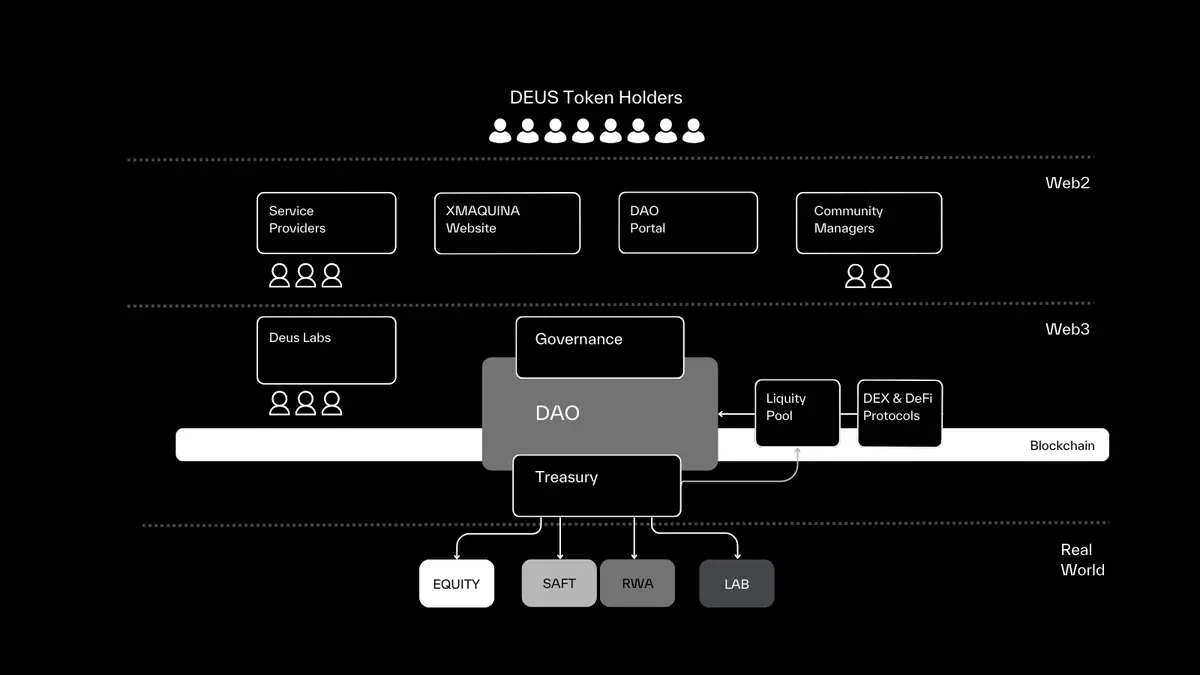
Core Assets of the DAO
The DAO manages and jointly governs tokens, equity, and other strategic assets, forming a diversified value foundation.
Multi-Token Treasury
Accumulated from the Genesis Auction, it includes ETH, BTC, PEAQ, stablecoins, and other high-quality DePIN and DePAI tokens. When not directly used, these assets can generate yields through DeFi.Humanoid Companies
Holds equity in rapidly growing humanoid robotics and physical artificial intelligence (Physical AI) companies.Robotics Supply Chain
Invests in and supports innovators driving the robotics ecosystem, including actuators, sensors, chips, and related infrastructure.DePIN & DePAI Protocols
Early layout of decentralized physical AI and infrastructure networks, laying the foundation for a future decentralized machine economy.Machine RWAs
Autonomous machines deployed in the real world, capable of continuously generating tangible and stable value.
2. DAO Treasury
Initial Asset Allocation
70% Humanoid Company Equity
Invest in rapidly growing private companies, focusing on humanoid robotics and physical AI. The market expects the number of active humanoid robots to grow tenfold annually over the next six years. The DAO builds a diversified portfolio by holding equity in companies across regions and scenarios.15% DePIN and DePAI Tokens
Early layout of decentralized physical infrastructure (DePIN) and decentralized physical AI (DePAI) projects, typically intervening through SAFT before and after seed rounds. These assets play a key role in data collection, positioning, and spatial computing, forming the basis for the scaling of physical AI.15% Machine RWAs
Holds tokenized autonomous systems (robot fleets, vertical farms, service robots, etc.), managed by the DAO and governed on-chain, directly generating stable economic value.Liquidity
A portion of funds is retained in stablecoins to flexibly respond to community proposals and avoid passive asset liquidation.
Treasury Evolution Stages
Stage One: Accumulation
Focus on acquiring equity in the most promising humanoid robotics companies, aiming for long-term growth.Stage Two: Expansion & Diversification
As robotics enter the actual deployment phase, the investment scope expands to AI cloud, coordination protocols, fleet operations, etc., with more funds flowing into Machine RWAs.Stage Three: Tokenization & Maturity
Machine assets owned by the DAO generate on-chain income, which can be used as collateral to participate in Machine DeFi, ultimately achieving a machine economy owned and governed by the community.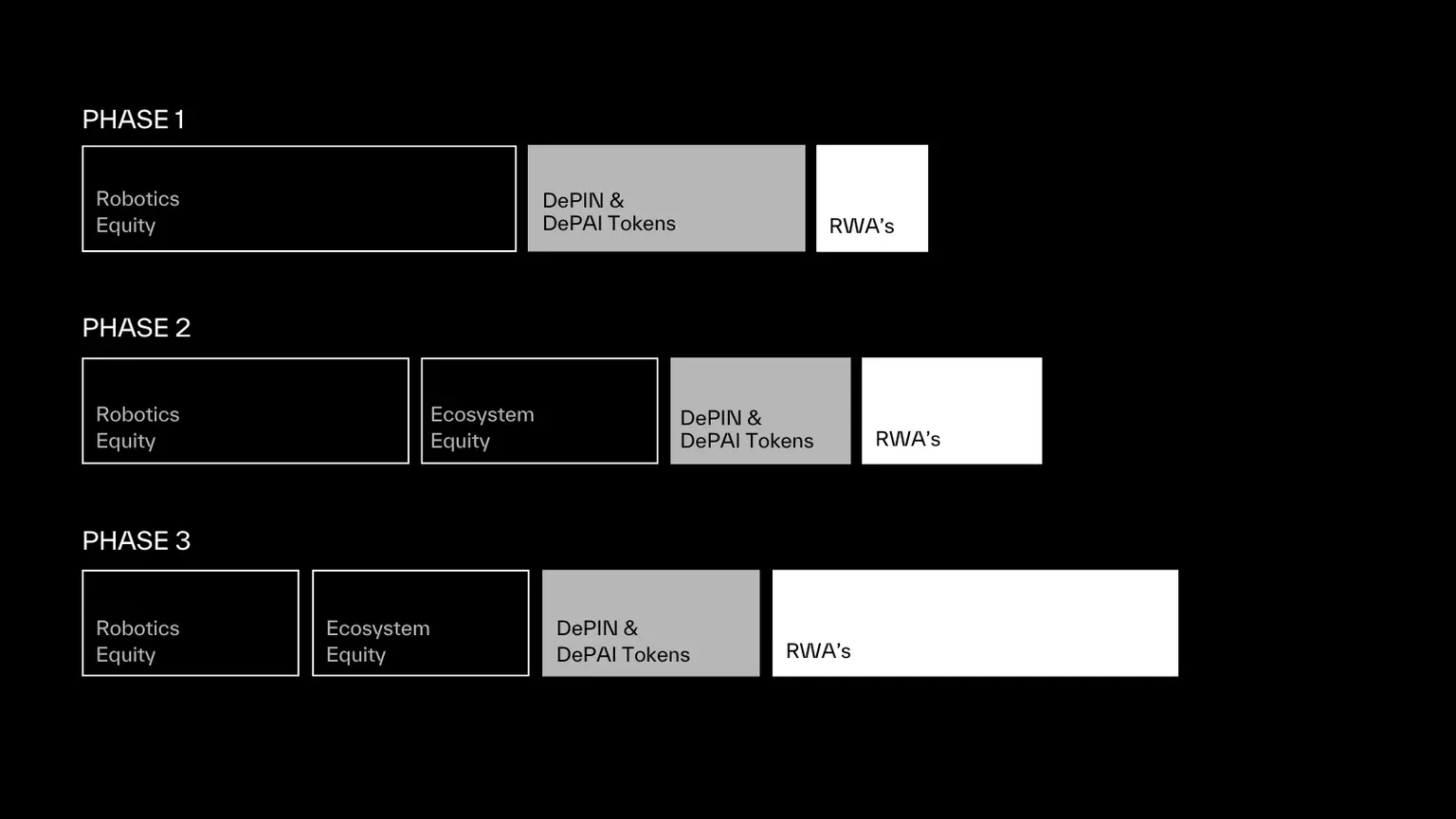
Revenue Sources and Distribution
On-Chain Crypto Yield
Comes from staking crypto assets, stablecoin DeFi strategies, and DEUS liquidity pools.
Revenue distribution mechanism (during the accumulation phase):
50% enters the treasury (expanding holdings in robotics and DePAI);
50% flows into the Profit Bucket (governed by DEUS holders for buybacks, staking rewards, etc.).
Machine Yield
Comes from real-world autonomous systems (vertical farms, robot cafes, service machines, etc.).
Revenue is denominated in fiat currency and converted into stablecoins through decentralized bridging, transparently distributed on-chain.
Distribution mechanism is consistent with crypto yield:
50% returns to the treasury, expanding strategic assets;
50% is allocated to the Profit Bucket, benefiting DEUS holders.
Core Goals
Through a combination of equity, tokens, and machine assets, the DAO treasury achieves:
Long-term value growth (robotics and DePAI equity/tokens);
Stable cash flow (machine assets and on-chain yields);
Governance and community consensus-driven value distribution.
3. The Machine Economy Launchpad
Launchpad and SubDAOs
The Launchpad is a decentralized infrastructure layer owned by the community, used to create SubDAOs (sub DAOs).
SubDAOs are independent, asset-oriented decentralized autonomous organizations with their own governance systems, assets, and operational models.
Leveraging XMAQUINA's legal and technical framework, SubDAOs can hold real-world machine assets, equity in robotics companies, and coordinate funding to promote the deployment of physical AI.
The Launchpad is planned to launch in the first quarter of 2025, providing a seamless entry for the community and builders into the machine economy ecosystem.
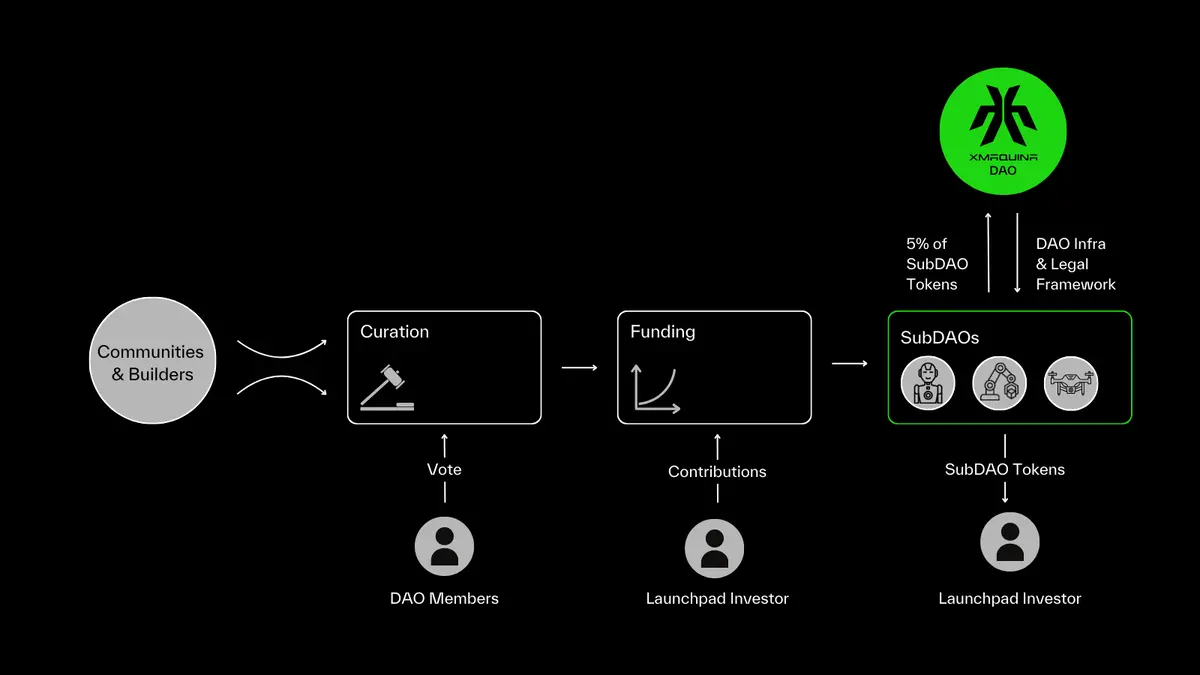
Example Application Scenarios
- Private Market Access SubDAO
Example: The community can form a SubDAO through the Launchpad to jointly invest in a Chinese robotics company, Engine AI.
Participants pool funds, and the SubDAO manages the investment process, issuing tokens representing ownership stakes and granting governance rights.
Model Advantage: Allows retail investors to transparently and collaboratively access high-barrier market opportunities.
- Machine RWA SubDAO
Example: In partnership with iFarm, the community forms a SubDAO to jointly invest in a vertical strawberry farm in the UAE.
The SubDAO holds the farm's machine assets and receives revenue from agricultural sales. Token holders can govern operations, reinvest, or receive dividends.
Model Advantage: Lowers the entry barrier to capital-intensive industries, opening high-performance machine assets (e.g., autonomous fleets, drone agriculture, and even future humanoid robots) to a broader community.
Core Functions
SubDAO Formation: Can set exclusive governance and operational logic based on assets or mission objectives.
Fund Coordination: Supports on-chain crowdfunding, referencing the Genesis Auction model, to transparently raise funds for robotics deployment and asset acquisition.
Asset Holding and Tokenization: SubDAOs can hold physical AI assets and issue tokens representing ownership, access, or revenue rights.
Ecological Integration: SubDAOs can operate independently while accessing XMAQUINA's legal templates, development tools, and DeFi infrastructure, and can submit funding proposals to the main DAO.
Fee and Distribution Strategy
Each SubDAO created through the Launchpad contributes value to the main DAO:
5% of SubDAO tokens → Allocated to the XMAQUINA DAO treasury.
5% of crowdfunding capital → Enters the DAO treasury as a service fee.
These fees directly enhance the DAO's treasury and strategic execution capabilities, ensuring that the success of each SubDAO not only advances its own mission but also benefits the entire XMAQUINA ecosystem.
Expected Impact
The Launchpad will bring new capital to the ecosystem, driving growth and innovation.
It will attract diverse participants, including developers, researchers, operators, and users, forming an active community around the decentralized robotics economy.
Tron Comments
The advantage of XMAQUINA lies in its forward-looking entry into the "physical artificial intelligence (Physical AI) + Web3" sector, combining DAO governance, multi-asset treasury, SubDAO mechanisms, and machine RWA innovations, providing the community with genuine asset participation rights and long-term growth potential. It not only focuses on the future applications of robotics and AI but also enhances community cohesion through token economics and decentralized governance, possessing a unique advantage in establishing a global machine economy ecosystem.
Potential disadvantages or challenges include its high dependence on the development of cutting-edge industries (humanoid robotics, DePIN/DePAI are still in early stages), the risk of long technology and commercial landing cycles, regulatory and legal compliance uncertainties, and the complexity of community governance. How to maintain transparency, compliance, and robust execution while rapidly developing will be a key test for XMAQUINA's long-term success.
# III. Industry Data Analysis
1. Overall Market Performance
1.1. Spot BTC vs ETH Price Trends
BTC
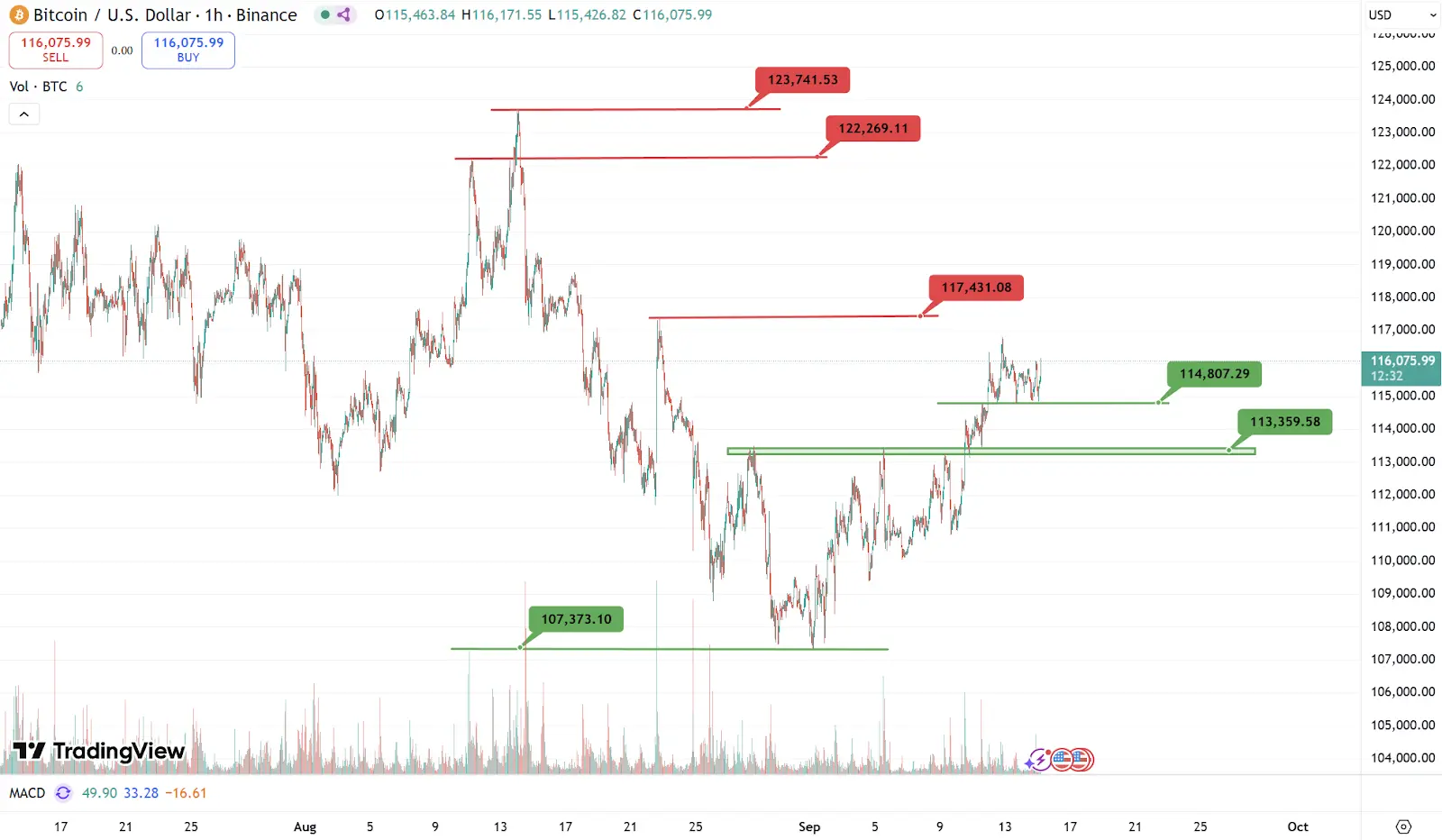
Analysis
Key resistance this week: $117,400, $122,200, $123,700
Key support this week: $114,800, $113,300, $107,300
ETH
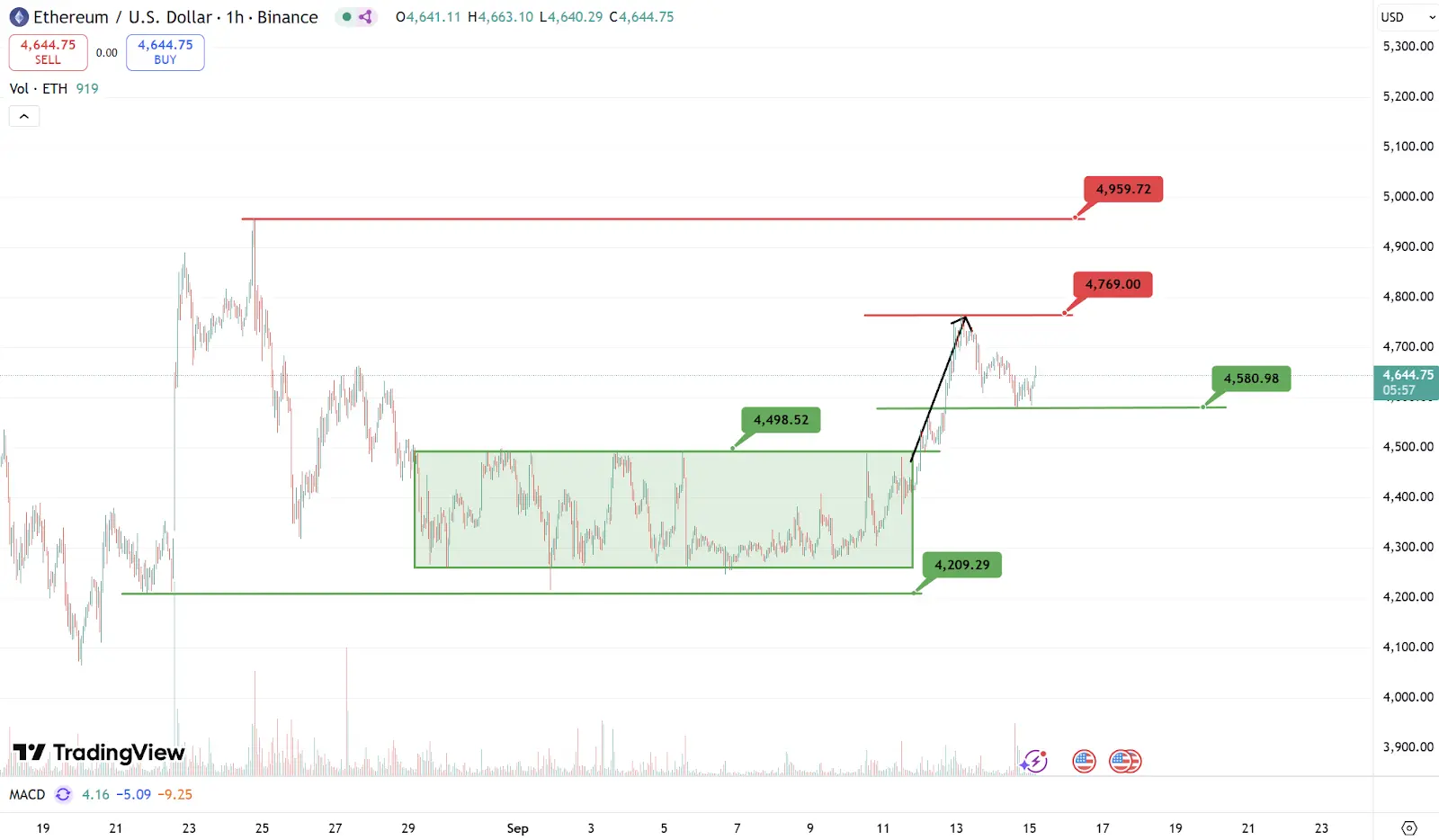
Analysis
Key resistance this week: $4,770, $4,960
Key support this week: $4,580, $4,500, $4,200
2. Public Chain Data
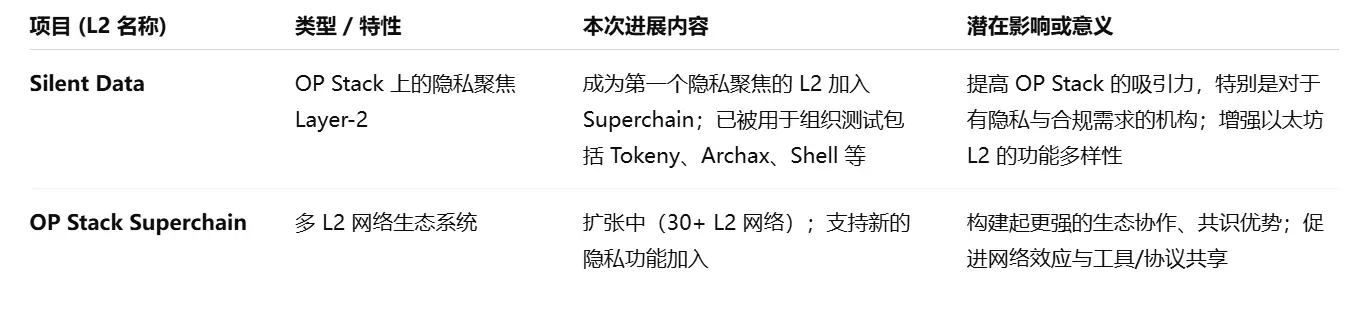
2.1. BTC Layer 2 Summary
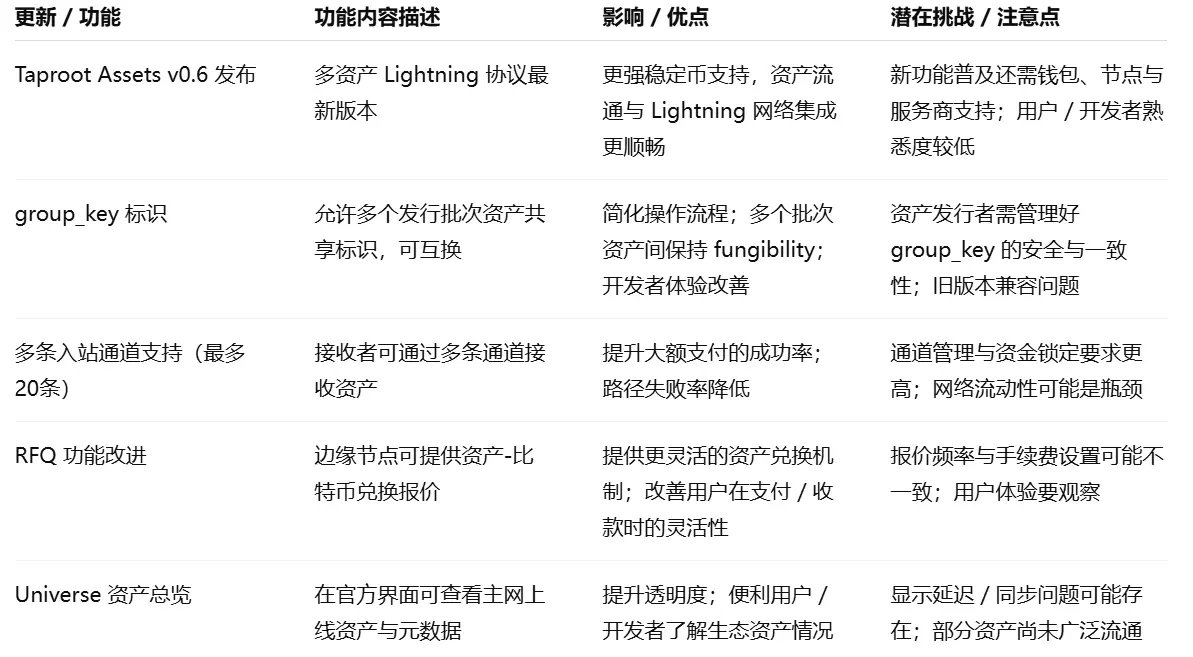
2.2. EVM & Non-EVM Layer 1 Summary
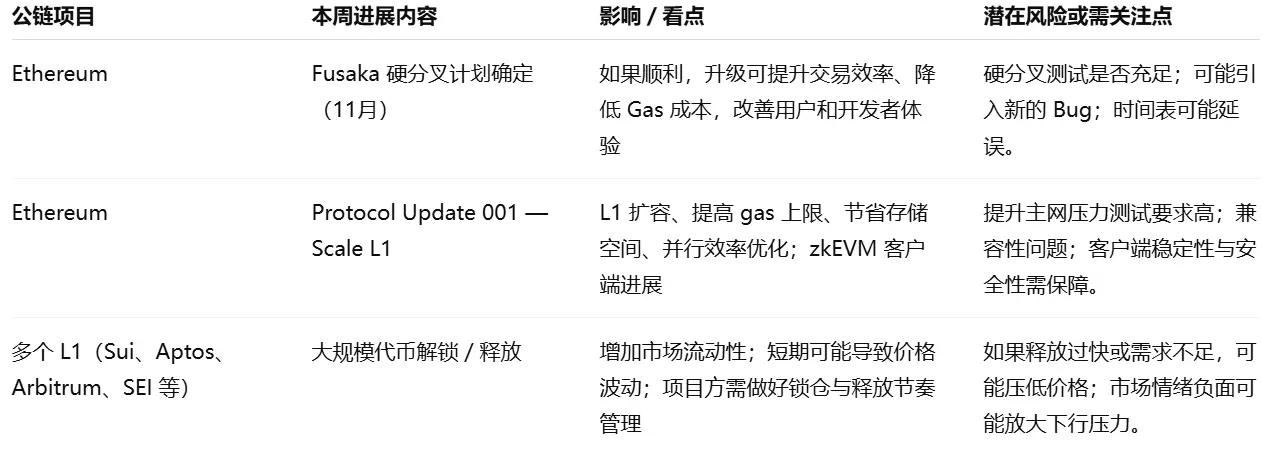
2.3. EVM Layer 2 Summary
# IV. Macroeconomic Data Review and Key Data Release Nodes for Next Week
The August CPI annual rate rose from about 2.7% in July to 2.9%, while the core CPI (excluding food and energy) remained at around 3.1%. This indicates a rebound in price pressures on the consumer side. The PPI (Producer Price Index) weakened: unlike the consumer side, upstream wholesale prices showed a month-on-month decline in August, with a monthly drop of -0.1% in PPI, and the annual rate is about 2.6%, with core PPI also showing weakness. This suggests that inflation pressures on the supply side and wholesale level are diminishing.
Important macro data nodes for this week (September 15-19) include:
September 16: U.S. August Retail Sales Month-on-Month
September 18: U.S. Federal Reserve Rate Decision (Upper Limit) as of September 17
# V. Regulatory Policies
United States
Nasdaq Promotes Tokenized Securities Trading: Nasdaq has submitted a proposal to the SEC seeking permission to trade "tokenized securities" on its main market. If approved, it will become the first mainstream exchange in the U.S. to deeply integrate traditional and digital assets.
Senate Democratic Legislative Framework: Twelve Democratic senators have proposed a legislative framework aimed at regulating the issuance and trading of digital assets, focusing on consumer protection, preventing illegal activities, and enhancing transparency.
India
Refusal of Comprehensive Legislation: Government documents indicate that India does not plan to introduce comprehensive cryptocurrency legislation at this time, citing that "legalization may bring systemic risks" and that regulations alone are insufficient to fully mitigate risks. Current regulation remains focused on registration and taxation.
Investor Attitude Survey: The latest survey shows that 93% of Indian crypto investors wish for a regulatory framework, and 84% believe the current tax system is unfair, indicating strong public demand.
Kazakhstan
- Proposal to Establish a Crypto Reserve Fund: President Tokayev proposed the establishment of a "crypto reserve fund" in the national report, as an important part of modernizing the management of national funds and promoting the digital asset ecosystem.
UAE
- Real Estate Supports Crypto Payments: Developers in Ras Al Khaimah (RAK) have partnered with fintech company Hubpay to allow international buyers to purchase real estate using cryptocurrency, implementing this first in the Mina waterfront community.
Japan
- Tax Reform Plan: Considering reducing the tax rate on crypto assets from as high as 55% to about 20% to attract Web3 innovation and investment.
Belarus
- Promoting Digital Token Rules: The president has called on regulatory authorities to expedite the formulation of token rules to strengthen investor protection, planning to make Belarus a crypto-friendly innovation center.
Overall Trends
Global Regulatory Orientation: Shifting from "prohibition/restriction" to "establishing clear rules + promoting innovation."
Focus Areas: Stablecoin regulation, investor protection, anti-money laundering measures, and how to balance promoting innovation with risk prevention.
Regional Differences:
Asia: Japan leans towards incentives, while India remains cautiously observant;
Middle East/Central Asia: UAE and Kazakhstan actively promote the crypto ecosystem;
Europe and America: More focused on legislative frameworks, legal clarity, and market structure.
 Risk warning Risk warning


Popular articles





