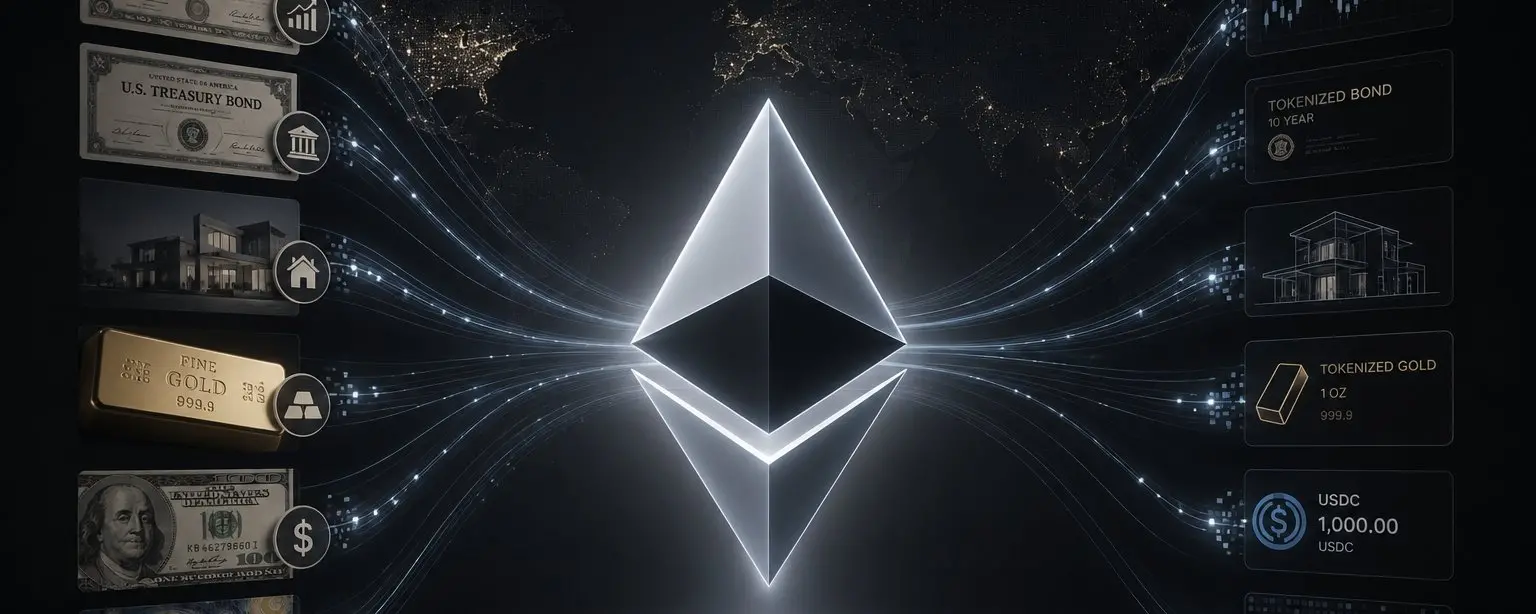
RWA Entrance Battle: A Comprehensive Guide to Tokenizing US Stocks with Web3 Wallets
 Core Viewpoint

 Who has a stronger determination? A panoramic overview of the layout paths of mainstream wallets in the tokenization of US stocks.
Written by: Tyler
Web3 wallets are rapidly boarding the train to tokenized US stocks.
Imagine a scenario where you can manage on-chain native assets like ETH and USDC in the same wallet, while also being able to buy and sell tokens for Apple (AAPL), Tesla (TSLA), and other RWAs at any time. The role of the wallet transcends being merely a Crypto entry point, evolving into a new prototype of an account system.
The catalyst driving this transformation is the large-scale implementation of RWAs, with tokenized US stocks being at the forefront. Mainstream wallets have intensively entered this space during the same period—some have dedicated "stocks" sections, while others have integrated entry points through DEX protocols, and so on.
The mutual desire for quality assets and traffic entry points is pushing Web3 wallets into an unprecedented strategic hub for RWAs.
The End of an Era, the New Ship of RWA Tokenization
What was the first US stock you held?
Whether it’s tech giants like AAPL and NVDA or emerging dark horse stocks like HOOD and OPEN, the growth certainty and return on investment in the US stock market generally surpass most high-risk altcoins, maintaining a strong allure for investors.
However, the reality is that, on one hand, the account opening process with traditional brokers is cumbersome. Even though there exists an ideal path of "Interactive Brokers + offshore banks," this channel is continuously tightening due to increasingly stringent global compliance requirements (see further reading: “SafePal Practical Guide: Transfers, Deposits and Withdrawals with Brokers/CEX, the Most Comprehensive Guide to Bridging Crypto and TradFi”); on the other hand, high deposit and withdrawal costs, slow fund arrival periods, and the T+N settlement system are not friendly to the vast majority of small and medium investors.

These deeply rooted pain points have made stock tokenization the best narrative for the integration of TradFi and Web3 by 2025. Its logic is simple yet powerful: traditional stocks are mapped into digital tokens through blockchain technology, with each token backed 1:1 by real stocks, representing ownership of the underlying assets for free trading on-chain.
This not only breaks geographical and identity limitations but also elevates the trading experience to the "second-level settlement" dimension on-chain, making it feel more natural for crypto-native users compared to the lagging processes of traditional brokers. Thus, when this door is opened, industry giants sense the opportunity.
In addition to CEX-native players like Kraken and Bybit, Robinhood has also announced it will support US stock trading on the blockchain, and even Nasdaq has thrown out tentative signals. The direction of industry giants is highly convergent, namely attempting to unify all asset classes, including cryptocurrencies, stocks, ETFs, and gold, into a panoramic trading system.
For every user, this means an unprecedented investment experience: with just one crypto wallet and stablecoins, they can buy US stock assets on DEX anytime and anywhere, seamlessly connecting to the world’s top capital markets.
This is both the freedom that RWAs grant users and the value of Web3 wallets as core entry points. From this perspective, tokenized US stocks and wallets are playing out a "sunshine conspiracy" where quality assets and traffic entry points mutually fulfill each other:
- For RWAs, there is an urgent need to leverage wallets as natural traffic entry points and liquidity hubs;
- For wallets, there is also a desire to utilize quality RWA assets to break through user growth bottlenecks and escape the singular speculative nature;
Overview of Web3 Wallets & RWA Layout
Therefore, when the possibility of RWA tokenization is validated, wallets, as the core entry point for users into the Web3 world, have already begun to seize the central position in this feast.
Currently, besides vertical trading platforms like Mystonks that focus specifically on tokenized US stocks, and the stock sections launched on CEX platforms like Bybit and Bitget, mainstream wallets are almost all present in the RWA space. From tokenized US stocks to tokenized gold and other assets, they are rapidly being incorporated into core service offerings.
This article selects four mainstream wallets with broad coverage in the Chinese-speaking region—OneKey, SafePal, Bitget Wallet, and imToken—for comparison. It can be observed that they exhibit distinctly different strategic focuses in their integration paths and entry strategies, which can basically be divided into three tiers: "strategic - integrated - compatible," forming a clear distinction of "prominent focus - available but not necessary - only supports trading."

From left to right, the US stock token trading pages of OneKey, SafePal, Bitget Wallet, and imToken.
However, before comparing, it is essential to clarify one premise: as downstream channels for issuers, the number of covered stock tokens is not entirely dictated by wallets. The differences mainly lie in integration methods and entry designs, so a horizontal comparison of quantity itself holds little significance.
First, the first tier views RWA trading as a core strategic direction, giving the highest priority in product design, with a UI that is very intuitive for users. Bitget Wallet and SafePal are typical representatives of this tier:
- Bitget Wallet: In both the "Market" and "Trading" primary navigation bars, dedicated "Stocks" section pages are set up, allowing users to intuitively filter and trade US stock tokens just like browsing native crypto assets;
- SafePal: Similarly, in the "Market" primary navigation bar, a dedicated "xStocks" category entry is opened, where users can browse market trends and discover investment opportunities; for users with clear goals, they can directly search for stock codes (like TSLAx) in the core "Swap" function to complete exchanges in one step without needing to navigate away;
The design behind this undoubtedly aims to deeply bind users' mindset of "investing in US stocks" with their products. Thus, one will find that the specific stock trading pages of Bitget Wallet and SafePal are equipped with detailed K-line charts, market capitalization, trading volume, and other information, with SafePal even aggregating relevant news, resulting in a high level of product completeness.

From left to right: Detailed trading pages for stock tokens in SafePal and Bitget Wallet.
Secondly, the second tier has a "lukewarm" attitude towards RWA, treating it as a functional supplement. It does not design additional dedicated entry points for tokenized US stocks, adhering to the philosophy of "available but not necessary," integrating it into the "built-in Swap" channel.
OneKey is a typical representative of this tier, as it places stock trading within the existing "Trading/Swap" page rather than opening a dedicated entry. This means users need to actively search for stock codes (Tickers) in the Swap interface, which, to be honest, poses a certain usage barrier for users unfamiliar with US stocks, diminishing the experience.
Finally, there is the third tier represented by imToken, which adopts a rather conservative following strategy in this round of RWA layout, essentially only providing a browser entry, belonging to "can do," leaning more towards "compatible" rather than "integrated."—Based on my testing, users need to manually open DApps like CowSwap in the "Browse" page, and even during the first use, they need to manually enable the token lists of issuers like Ondo to search for relevant assets.
Frankly speaking, the stock trading entry in imToken is somewhat too obscure. The entire process is not only cumbersome but also has additional barriers like network settings (I tested that under certain IPs, its built-in browser couldn't even search for the CowSwap protocol), and this method is almost equivalent to what any wallet with a DApp browser can achieve, failing to reflect a product-level design layout.
From the comparison, it is clear that SafePal and Bitget Wallet have already regarded tokenized US stocks as a core strategy, focusing on capturing the traffic and trading demand brought by RWAs; while OneKey and imToken seem more like they are adding a "side note" to their existing functionality, maintaining ecological compatibility but not actively pushing forward.

In summary, from a comprehensive assessment of entry intuitiveness and trading convenience, we can clearly perceive who exhibits stronger strategic determination and product completeness in the current RWA layout of Web3 wallets.
The Actual Trading Experience of Tokenized US Stocks
However, after horizontally comparing the strategies and entry tactics of various wallets, we must return to the most fundamental question—users' actual trading experience.
Let’s take SafePal Wallet as an example to intuitively feel how to freely trade tokenized US stocks in a Web3 wallet.
It is important to note that while tokenized stocks can circulate on-chain 24/7, some issuers are still linked to US stock trading hours, with the main trading time currently being from 21:30 to 04:00 Beijing time; additionally, it is necessary to ensure that the wallet has enough stablecoins (such as USDT/USDC on the Solana chain) as trading capital, along with a small amount of SOL for network gas fees.
- First, open the SafePal Wallet app, click on "Market" at the bottom, and find and select the "xStocks" tag at the top. This will take you to a dedicated section for US stock tokens, displaying a list of all 48 US stock tokens available for trading;
- For example, to purchase Tesla (TSLAx), find TSLAx in the list, click to enter, and you will see the dedicated page for that asset, including K-line charts, market trends, and trading entry;
- Then click Swap, select the Solana network, and you can enter the actual trading page;

Upon entering the trading interface, you will find that the operation logic is completely consistent with familiar DEX operations like Uniswap, making it extremely user-friendly for crypto users:
- In the "Pay" section, select SOL or USDT/USDC or other currencies with a balance, and enter the corresponding amount;
- In the "Get" section, the corresponding number of US stock tokens to be purchased will be automatically calculated; you can also enter the number of TSLAx shares you wish to buy (supporting decimals, e.g., 0.1 shares), and the system will reverse calculate the amount to be paid;
- After verifying the information is correct, click "Swap" and confirm, then confirm the transaction in the pop-up window of the SafePal wallet;

After entering your security password or verifying through biometrics, the transaction will be submitted to the blockchain. Wait patiently for a moment (usually within 1-5 minutes), and the transaction will be completed.
Once confirmed, the TSLAx tokenized stock asset will appear in the asset list of the SafePal wallet, where you can check its price fluctuations at any time or sell it back to SOL or USDT/USDC through the same operational process when needed.
Thus, a real "on-chain US stock transaction" has been completed without the need for account opening or cross-border remittance. The viewing, management, and trading of assets can all be done in one-stop within the wallet.
In Conclusion
Objectively speaking, all Web3 wallets are still in the early stages of exploring RWA trading, especially in presenting and trading traditional assets like US stocks, where there remains a significant gap compared to mature TradFi applications.
It is precisely for this reason that attempts by non-custodial wallets like SafePal hold real value—not in replicating old paradigms but in exploring and shaping new rules—providing a disruptive experience that is "plug-and-play" compared to the cumbersome account opening and fund allocation processes of traditional brokers.
This also means that even if tokenized US stocks may not be the ultimate answer for the large-scale implementation of RWAs, the evolution of Web3 wallets' identity is a foregone conclusion, transitioning from a singular entry point for crypto assets to a key hub where real assets and on-chain liquidity intersect.
 Risk warning Risk warning