Fever, Fall, and Escape: The Disillusionment History of Classical VC in Web3
 Core Viewpoint
 This article reviews the participation of classical VC (traditional venture capital institutions) in the cryptocurrency market over the past decade, revealing their cyclical changes from "pioneers of the wild era" to "All in" during the bull market, and then to "marginalization" in the bear market, while exploring the current contraction of the primary market and the future prospects.
Original authors: Ada & Liam, Deep Tide TechFlow
"All in Crypto"!
In 2021, Shen Nanpeng, the head of Sequoia China, typed a few words in a WeChat group, and the screenshot was quickly forwarded to countless investment groups, like a war drum, pushing the market's enthusiasm to a higher point.

At that time, the market atmosphere was almost euphoric. Coinbase had just gone public on Nasdaq, and FTX was hailed as "the next Wall Street giant." Almost all classical VCs were scrambling to label themselves as "crypto-friendly."
"This is a technological wave that comes once in thirty years," some described it. Sequoia's declaration became the most iconic footnote of that bull market.
However, just four years later, this statement sounds ironic. Many institutions that once vowed "All in Web 3" have either quietly exited, sharply contracted, or turned to chase AI.
The capital's repeated jumps are essentially a cruel reminder of the cycle.
How are those classical Asian VCs who ventured into Web 3 back then faring today?
Pioneers of the Wilderness Era
In 2012, when Coinbase was just established, Brian Armstrong and Fred Ehrsam were merely a pair of entrepreneurial youths in San Francisco. At that time, Bitcoin was still seen as a geek's toy, priced at only a few dollars.
At a YC roadshow event, IDG Capital cast an angel round vote for Coinbase, and by the time Coinbase landed on Nasdaq in 2021, the return on this investment was estimated to be in the thousands of times.
The story in China is equally exciting.
In 2013, OKCoin received investments from Tim Draper and Mai Gang; in the same year, Huobi also secured investment from ZhenFund, and the following year received backing from Sequoia China. In the information disclosed by Huobi in 2018, Sequoia China held a 23.3% equity stake in Huobi, making it the second-largest shareholder after founder Li Lin.
Also in 2013, Cao Dayong, a partner at Lightspeed Venture Partners, introduced Bitcoin to a person named Zhao Changpeng for the first time at a card table, saying, "You should dive into Bitcoin or blockchain entrepreneurship."
Zhao Changpeng sold his house in Shanghai, went all in on Bitcoin, and the rest is history. He founded Binance in 2017, and within just 165 days, Binance became the world's largest cryptocurrency spot trading platform, with Zhao Changpeng later becoming the richest Chinese person in the crypto world.
Compared to the other two exchanges, Binance's early financing path was not smooth, mainly receiving investments from KuaiDi's founder Chen Weixing's Pan City Capital, R&F's son Zhang Liang's Black Hole Capital, and several internet & blockchain founders.
A small story is that in August 2017, Sequoia China had a chance to acquire about 10% of Binance at an $80 million valuation, but this investment was not completed due to reasons on Binance's side. Later, Sequoia Capital even sued Binance, and the two sides had a rather unpleasant dispute.
Also in 2014, angel investor Wang Lijie invested 200,000 RMB in the domestic blockchain NEO (Antshares), becoming the most important investment of his life.
From 2012 to 2014, when crypto-native VCs were still in their infancy, classical VCs supported half of Web 3, whether it was the three major exchanges or Bitmain, imToken… behind them were traditional capital figures like Sequoia Capital and IDG.
Everything went crazy in 2017.
Under the ICO wave, countless tokens experienced explosive growth. Having already made a substantial profit, Wang Lijie chose to sell NEO at a price of 1.5, only to see NEO's upward momentum continue, peaking at over 1,000, with a cumulative increase of over 6,000 times in three years.
Stimulated by this, Wang Lijie began to bet wildly on blockchain, claiming, "I sleep at one in the morning and get up at five, meeting project parties and reading white papers from morning till night, averaging $2 million worth of Ethereum invested daily." So much so that when someone invited him for tea, he replied, "You're wasting my time making money."
In January 2018, at a blockchain summit in Macau, Wang Lijie stated: "In the past month, I earned more than in the past seven years."
Also in early 2018, ZhenFund founder Xu Xiaoping delivered a "do not spread" speech in a 500-person internal WeChat group, stating that blockchain is a great technological revolution where those who follow will thrive and those who resist will perish, predicting it would be more rapid and thorough than the internet and mobile internet, urging everyone to learn and embrace this revolution.
Their speeches became the most well-known peak markers of that bull market cycle.
In 2018, the ICO bubble burst, and the prices of thousands of tokens approached zero, with once-celebrated star projects losing almost all their market value. Bitcoin also fell from nearly $20,000 to just over $3,000, a drop of more than 80%.
By the end of that year, the crypto circle became a dirty word in the investment circle.
"I was at a venture capital event in Beijing at the time, and a certain VC partner joked, 'If your startup fails, it doesn't matter; you can just issue a token,' and the audience burst into laughter, but I felt embarrassed," recalled former blockchain entrepreneur Leo.
In the second half of 2018, the entire industry seemed to be pressed on pause. The once vibrant WeChat groups fell silent overnight, and project discussion groups were filled with links to Pinduoduo's group-buying. By March 12, 2020, the market experienced a brutal blow, with Bitcoin's price dropping by 50%, as if it were the end of the world.
"Don't say classical VCs looked down on the crypto circle; I felt at that time that the industry was gone," Leo said.
Whether entrepreneurs or investors, they were all treated as jokes by the mainstream narrative. Just as Sun Yuchen recalled, he would never forget the look of "fraud" in Wang Xiaochuan's eyes when he looked at him.
In 2018, the crypto circle fell from the center of wealth creation myths to the very bottom of the contempt chain.
Classical VCs Re-enter
Looking back, March 12, 2020, was the darkest low point for the crypto industry in nearly a decade.
The WeChat moments were filled with blood-red candlesticks, and people thought this was the final blow, that the industry would end here.
But the turning point came unexpectedly and violently. The Federal Reserve's flood of liquidity pushed the once-dying market to the forefront. Bitcoin soared from its low point, increasing by more than six times in a year, transforming into the most dazzling asset post-pandemic.
However, what truly made classical VCs reassess the crypto industry was perhaps Coinbase's listing.
In April 2021, this nine-year-old exchange rang the bell on Nasdaq. It proved that "crypto companies can also go public," allowing early investors like IDG to reap thousands of times returns.
The sound of Coinbase's bell echoed between Wall Street and Liangmaqiao. According to crypto journalist Liam, many classical VC practitioners approached him afterward for offline discussions to understand the overall situation of cryptocurrencies.
But in Leo's view, the return of classical VCs was not solely due to the wealth effect.
"This group of people inherently wears an elite mask; even if they secretly bought some coins during the bear market, they wouldn't publicly admit it," he said. What truly helped them remove the mask was the upgrade of the narrative: from Crypto to Web 3.
This was a conceptual transformation vigorously promoted by Chris Dixon, head of a16z crypto. Directly saying "invest in cryptocurrencies" was seen as speculation by many, but changing the wording to "invest in the next generation of the internet" immediately added a sense of mission and moral legitimacy. By lamenting the monopolies of Facebook and Google and emphasizing decentralization and fairness, they could garner support and applause. The craziness of DeFi and the explosion of NFTs could easily fit into this grand narrative framework.
The popularization of the Web 3 narrative allowed many classical VCs to shed their moral burdens.
Will, a crypto fintech investor at a leading institution, recalled: "We experienced a cognitive shift. Initially, we viewed it as an extension of consumer internet, but that logic was debunked. What truly changed our perspective was fintech."
In his view, the timing of the Web 3 heat explosion coincided perfectly with the tail end of mobile internet and the early stage of AI. Capital needed a new story, so blockchain was forcibly stuffed into the internet framework; but what truly helped the industry escape the death spiral was the awakening of its financial attributes. "Look at successful projects; which ones are not related to finance? Uniswap is an exchange, Aave is lending, Compound is wealth management. Even NFTs are essentially the financialization of assets."
Another catalyst came from FTX.
Founder SBF emerged as a "financial genius boy," almost capturing the hearts of all major classical VCs. His positive persona and rapidly expanding valuation ignited FOMO among global VCs.
At a venture capital gathering in Beijing, investment moguls were once inquiring everywhere about "who could buy old shares of FTX and Opensea," enviously eyeing those lucky enough to have already purchased.
During this period, an interesting phenomenon also emerged: the talent flow between classical VCs and crypto VCs.
Some left Sequoia and IDG to join emerging crypto funds; others transitioned from crypto VCs to traditional institutions, directly taking on titles like "Web 3 Head." The two-way flow of capital and talent allowed the crypto market to truly enter the narrative of mainstream investors for the first time.
The bull market of 2021 was like a carnival.
WeChat groups were bustling, and unlike before, this time they included classical VCs, family offices, and people from major internet companies.
NFTs were all the rage, and VC bigwigs changed their avatars to monkeys, Punks, and other high-value NFTs. Even Zhu Xiaohu, who once sang the blues about cryptocurrencies, switched to a monkey avatar. At offline conferences, alongside crypto-native entrepreneurs, elite classical VC partners began to appear.
Classical VCs entered Web 3 in various ways: directly investing in crypto projects, causing valuations to soar; investing in crypto VCs as LPs, with Sequoia China, which had previously been at odds with Binance, becoming an LP of Binance Labs after both sides reconciled; directly buying Bitcoin in the secondary market…
Crypto VCs, classical VCs, exchanges, and project parties intertwined, continuously pushing project valuations higher, with everyone anticipating an even more glorious bull market. But behind the noise, risks were quietly brewing.
The Fall of VCs
If the bull market of 2021 was paradise, then 2022 instantly turned into hell.
Success came from FTX, and failure also came from FTX. The collapse of LUNA and FTX not only destroyed market confidence but also directly dragged a group of classical VCs down with it. Institutions like Sequoia Capital and Temasek suffered heavy losses, with state-owned Temasek even being held accountable in the Singapore Parliament.
After the bull market bubble burst, many once-overvalued crypto projects were brought back to reality. Unlike the "fractional" probing of crypto-native VCs, classical VCs were accustomed to making large bets, with single investments often reaching tens of millions of dollars. They also purchased large amounts of SAFT from crypto VCs, becoming an important source of exit liquidity in the previous cycle.
What chilled classical VCs even more was the rapid change in the crypto industry's narrative, which exceeded their investment logic. Projects that were once highly anticipated could be completely abandoned by the market within months, leaving investors with only deeply trapped equity and liquidity dilemmas.
The Ethereum L2 track is a typical case. In 2023, Scroll completed financing at an $1.8 billion valuation, with Sequoia China and Qiming Venture Partners on the investor list. However, on September 11 of this year, Scroll announced a pause in DAO governance and the resignation of its core team, with a total market value of only $268 million, resulting in an 85% loss for VC investments.
Meanwhile, the strong position of exchanges and market makers made VCs increasingly redundant.
Investor Zhe bluntly stated: "Those projects valued below $30-40 million that can finally get listed on Binance can still make some money, locking in two to three times after the lock-up period ends. Anything slightly more expensive can only get listed on OKX or smaller exchanges, and that's a loss."
In his view, the logic of making money has long been unrelated to the projects themselves; it depends only on three things:
Can it get listed on Binance;
Is the chip structure favorable;
Is the project party willing to "feed meat."
"Anyway, exchanges have the biggest say and can eat the biggest piece of meat. How much is left to share depends on luck."
Zhe's words articulated the pain of many classical VCs.
They found that their role in the primary market increasingly resembled that of "movers": spending money to invest in projects, only to have the largest value harvested by exchanges, leaving them with only scraps. Some investors even lamented: "Actually, the primary market is no longer needed; project parties can make money by listing on Binance Alpha themselves. Why should they still share profits with VCs?"
As the capital logic became ineffective, the focus of classical VCs also shifted. As Will mentioned, the heat of Web 3 coincided with the tail end of mobile internet and the early stage of AI, marking a "gap period." When ChatGPT emerged, the true North Star appeared.
Funds, talent, and narratives suddenly changed course, heading towards AI. In WeChat moments, VC practitioners who once actively shared Web 3 financing news quickly donned the identity of "AI investors."
According to former classical VC investor Zac's observations, during the industry's peak from 2022 to 2023, many classical VCs were still looking at Web 3 projects, but now, 90% of them have stopped. He also predicted that if the primary market for cryptocurrencies in Asia remains as quiet as it is now for another six months to a year, even more people will abandon it.
No Longer Gambling Big
The Web 3 primary market in 2025 looks like a shrinking chess game.
The excitement has faded, leaving only a few players, but the landscape is being reshaped in the shadows.
As a bellwether for classical VCs, Sequoia Capital's movements remain noteworthy.
According to Rootdata, Sequoia China has cumulatively invested in seven projects by 2025, including OpenMind, YuanCoin Technology, Donut, ARAI, RedotPay, SOLO, and SoSoValue. Following them are IDG Capital and GSR Ventures, while Qiming Venture Partners, which was previously active, made its last Web 3 investment in July 2024.

According to Zac's observations: "Now, you can count on one hand how many classical VCs are still looking at Web 3 projects."
In his view, the quality of crypto projects has severely declined.
"Teams that strive to find PMF and create long-term value for users receive far less positive feedback than those studying attention economics and actively market-making," Zac said.
Additionally, crypto treasury companies represented by MicroStrategy and BMNR have become a new investment option, but this has further caused a vampiric effect on the increasingly depleted crypto primary market.
"Do you know how many PIPE projects are on the market now?" said Wang Yuehua, a partner at Draper Dragon. "At least 15, each needing an average of $500 million. That's $7.5 billion. Most of the big funds are on Wall Street, and they are participating in PIPEs."
PIPE (Private Investment in Public Equity) refers to the issuance of stocks or convertible bonds by publicly traded companies to specific institutional investors at a discounted price for rapid financing.
Many publicly traded companies that were originally unrelated to cryptocurrency business have obtained large financing through PIPEs, then purchased large amounts of BTC, ETH, SOL, etc., transforming into crypto treasury companies, with investment firms entering at a discount often making substantial profits.
"This is why there's no money in the primary market now," Wang Yuehua said. "Big funds are playing with the more certain PIPEs; who still wants to take risks investing early?"
Some leave, while others hold firm. Will still chooses to believe and persevere; he believes in Web 3 and AI, and is even willing to invest in seemingly "non-commercial" public goods.
"Not everyone has to do business," Will said. "Truly great projects often start from a simple public good. Just like Satoshi Nakamoto created Bitcoin, he didn't pre-mine or raise funds, but created the most successful financial innovation in human history."
The Dawn of the Future
Several significant events happening in 2025 are changing the rules of the game.
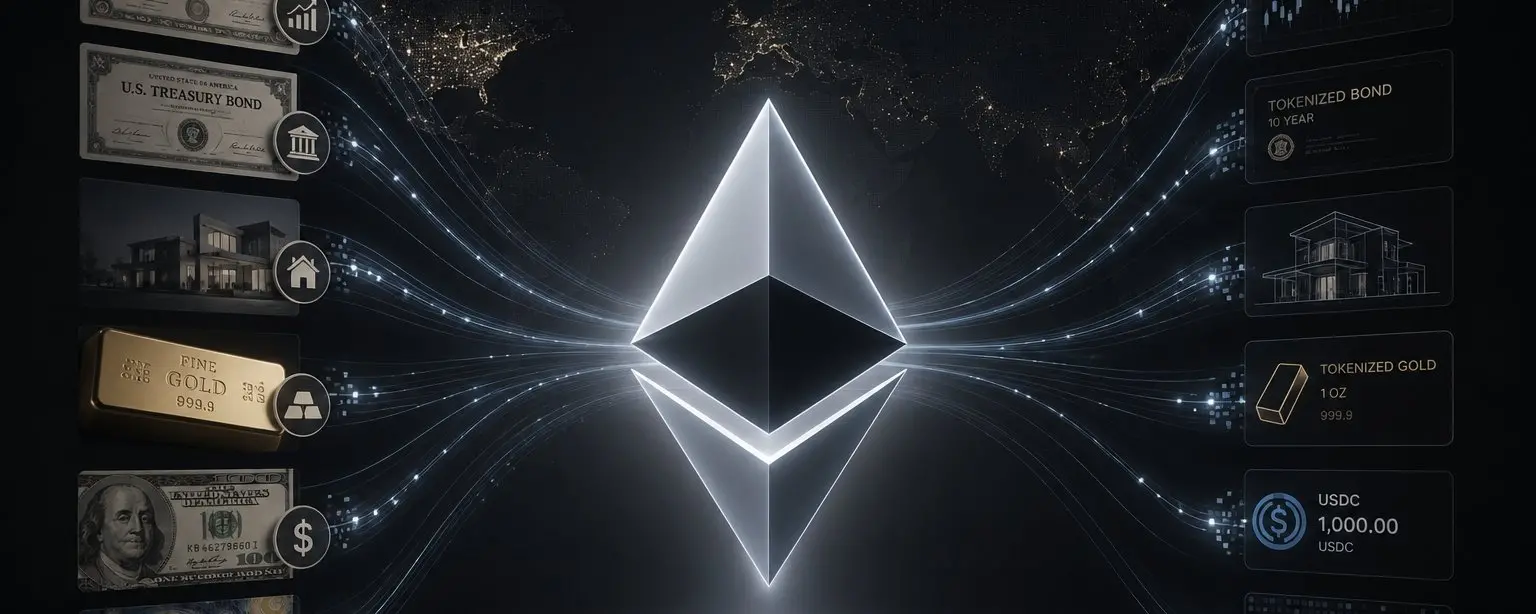
Circle's listing is like a spark, igniting stablecoins and RWA (Real-World Assets on-chain) together.
This stablecoin issuer landed on the NYSE with a valuation of about $4.5 billion, providing classical VCs with a long-awaited "non-tokenized" exit sample. Subsequently, Bullish, Figure, and others went public, boosting investor confidence.
"We don't touch pure token primary and secondary markets, but we will look at stablecoins and RWA," multiple classical VC investors provided the same judgment. The reason is simple: there's enough space, visible cash flow, and clearer regulatory paths.
The business model of stablecoins is more "bank-like," with potential for sustainable profitability from reserve interest spreads, issuance/redemption and settlement fees, compliance custody, and clearing network service fees.
RWA moves receivables, government bonds, mortgages/real estate, fund shares, etc., "on-chain," generating income from issuance/matching/custody/circulation and various fees and spreads.
If the previous generation of crypto companies listed in the US stock market was dominated by exchanges, mining companies, and asset management firms, then the new generation of prospectuses belongs to stablecoins and RWA.
At the same time, the boundaries between stocks and tokens are becoming blurred.
The "MicroStrategy" style treasury strategy has attracted a batch of imitators, with publicly traded companies financing through equity or PIPEs to allocate BTC/ETH/SOL and turning into "coin stocks."
Behind the leaders in this track, one can see the presence of many classical VCs like Peter Thiel, and some institutions have even entered the fray, such as Huaxing Capital announcing a $100 million purchase of BNB, choosing to participate in crypto asset allocation through the public market.
"Traditional finance is embracing crypto," Wang Yuehua said. "Look at Nasdaq investing $50 million in Gemini; this is not just a capital move but a shift in attitude."
This shift is also reflected at the LP level. According to multiple interviewees, traditional LPs such as sovereign funds, pension funds, and university endowment funds are beginning to reassess the allocation value of crypto assets.
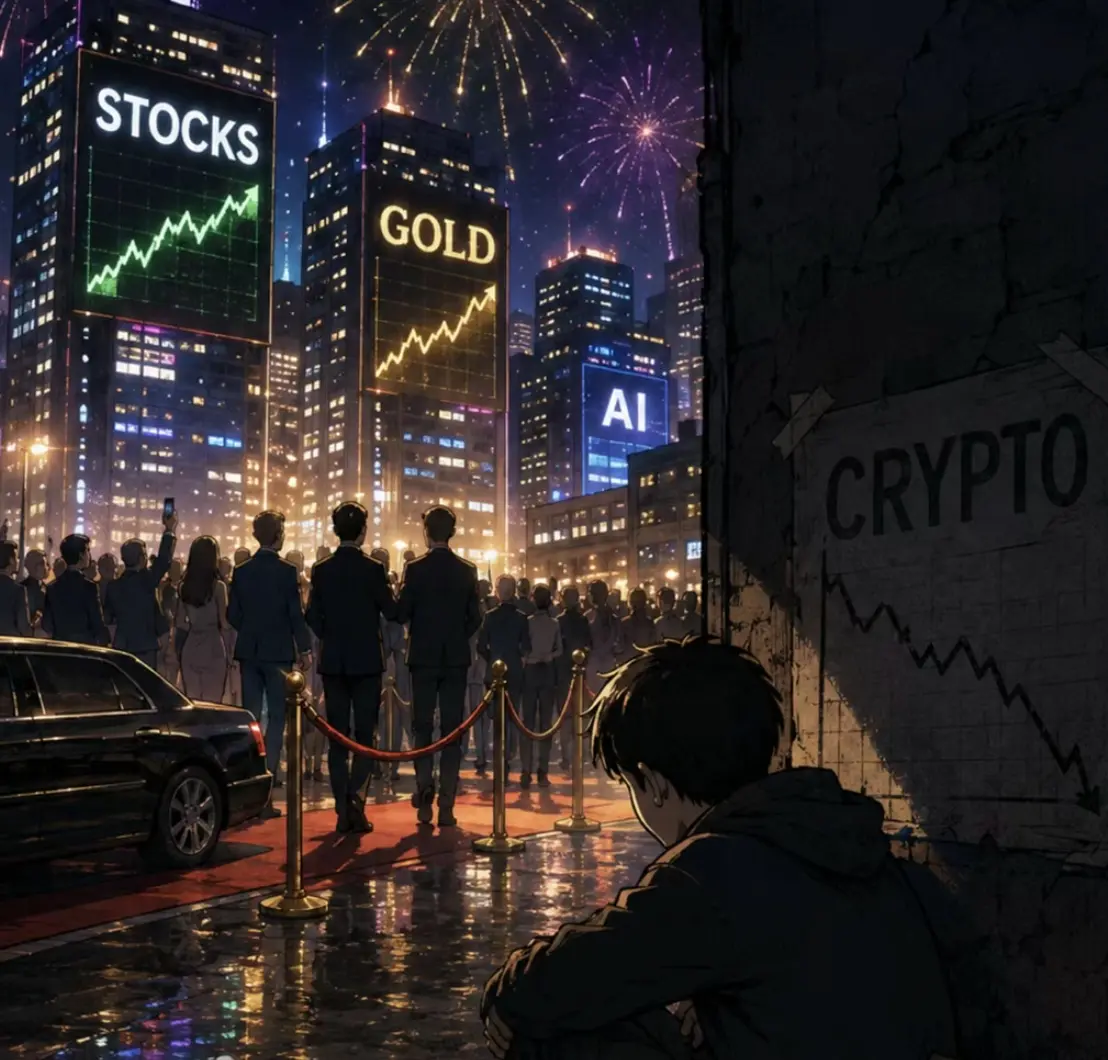
A decade of capital history has ebbed and flowed like the tide. Classical VCs in Asia once pushed exchanges onto the stage and shouted "All in" during the bull market, only to become marginal figures in the crypto world.
Currently, although the reality is bleak, the future may not be without dawn.
Just as Will firmly believes: "Classical VCs will definitely allocate more to fintech investments related to crypto."
Will classical VCs re-enter on a large scale in the future? No one dares to assert. The only certainty is that the pace of progress in the crypto world will not stop.
 Risk warning Risk warning