








TRON Industry Weekly Report: "Stalemate Crisis" May Continue to Pressure the Crypto Market, Interpretation of Verifiable Computing Engine RISC Zero & On-chain Credit Market Credit Coop

# I. Outlook
1. Macroeconomic Summary and Future Predictions
Last week, the core PCE year-on-year rate for August was expected to remain in the range of 2.8% to 3.0%, indicating that inflationary pressures have eased somewhat but remain sticky; meanwhile, retail and consumption data show that U.S. household spending remains resilient. However, combined with previous signs of a weak labor market, the overall economy is in a delicate state of "consumption support, employment drag." After the 25bp rate cut, market trends have been moderate, with the stock market and gold continuing to perform strongly, bond yields maintaining a downward trend, and the dollar under pressure.
Looking ahead, whether the Federal Reserve will continue to cut rates in November or December will depend on two factors: first, whether core inflation can decline further, especially in sticky areas such as services and housing; second, whether employment and wage data continue to weaken. If both inflation recedes and employment weakens simultaneously, the Fed may accelerate the pace of rate cuts; if inflation remains stubborn or consumption exceeds expectations, it may slow the easing path. Overall, the market is likely to continue oscillating between "downward economic pressure vs. support from easing policies," with risk assets potentially benefiting in the short term, but volatility will clearly increase.
2. Market Changes and Warnings in the Crypto Industry
After the Fed's rate cut, U.S. stocks continued to show strong fluctuations, but Bitcoin and Ethereum faced significant selling pressure, with BTC dropping to around $111,000 and ETH dipping to $4,000, leading to a market-wide liquidation wave of billions of dollars in leverage. Meanwhile, altcoins generally declined, with more funds flowing into leading assets like BTC and ETH, indicating a cautious market structure.
In stark contrast to the strength of U.S. stocks, the pullback in the crypto market reflects the characteristic of "funds struggling to chase after good news." Especially against the backdrop of most holders being in profit, the pressure to take profits has intensified, compounded by the effects of leverage liquidation, amplifying market volatility. Looking ahead, if macro data is unfavorable or risk appetite continues to weaken, the crypto market may still maintain a weak oscillating pattern, making it difficult to replicate the strong performance of U.S. stocks in the short term.
3. Industry and Sector Hotspots
Raised $65.7 million, with well-known institutions such as IOSG, Galaxy, and Blockchain Capital participating. RISC Zero is committed to developing scalable and developer-friendly blockchain infrastructure using Zero-Knowledge Proofs (ZK); raised $4.5 million, with Coinbase participating. Credit Coop is a smart contract-driven on-chain credit market that expands from peer-to-peer lending to a multi-depositor treasury, serving multiple borrowers.
# II. Market Hotspot Sectors and Potential Projects of the Week
1. Overview of Potential Projects
1.1. Analysis of the $65.7 Million Financing, with Participation from IOSG, Galaxy, and Blockchain Capital, Zero-Knowledge Proof Driven Verifiable Computing Engine RISC Zero
Introduction
RISC Zero is a crypto startup dedicated to developing scalable and developer-friendly blockchain infrastructure using Zero-Knowledge Proofs (ZK).
Boundless is a verifiable compute layer built by RISC Zero, aimed at introducing zero-knowledge capabilities to all blockchains. As a general ZK protocol, Boundless enables verifiable computation across various blockchain ecosystems, allowing developers to offload heavy computations off-chain using zero-knowledge proofs, enabling any chain to verify results without needing to repeat executions—unlocking more scalable, efficient, and interoperable applications.
Features of Boundless include:
Decentralized Prover Marketplace
Support for scaling features:
Steel ------ Computation offloading for Solidity, achieving gas cost savings
Kailua ------ Providing fast finality
Launching Mainnet Beta on Base, offering real deposits, proofs, and rewards
Architecture Overview
1. Overview of the Proof System
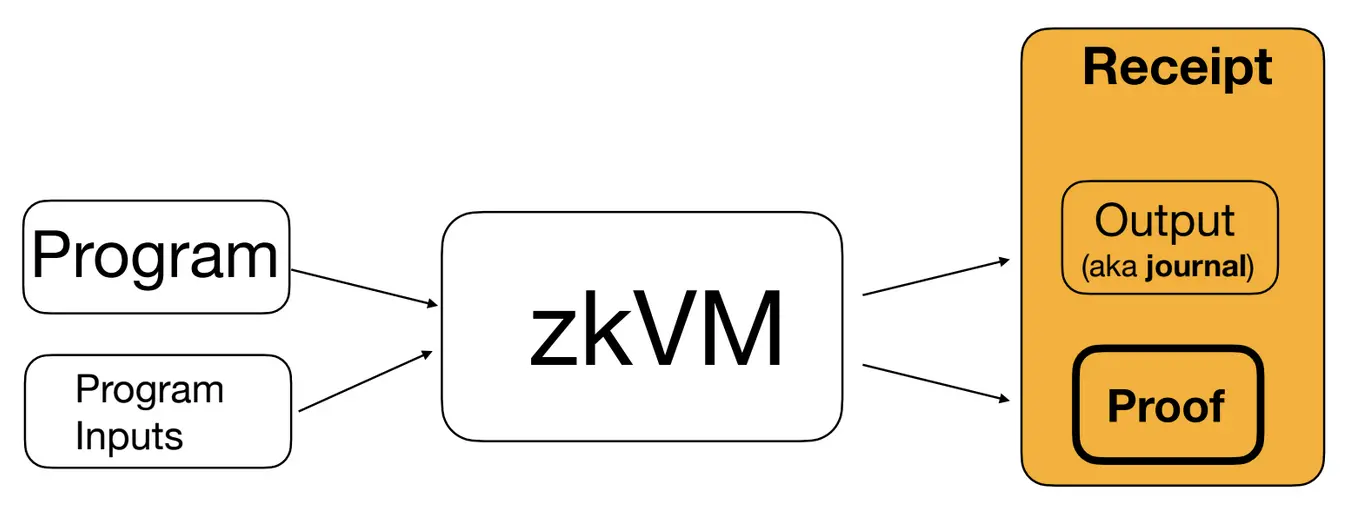
When RISC Zero zkVM executes, it generates a Receipt, which serves as proof of the validity of a session.
To confirm that a receipt is honestly generated, Receipt::verify() can be used.
The receipt contains a journal that records the public outputs of the session. The content of the journal is specified by calling env::commit() and env::commit_slice() in the guest code.
In addition to the journal, the receipt makes several claims about the program execution process, summarized in ReceiptClaim.
Types of Receipts
There are mainly four forms of receipts:
- Composite Receipt
A ZK-STARK vector, with each segment corresponding to a proof.
Segments and segment proofs are constructed by RISC-V circuits.
- Succinct Receipt
A single ZK-STARK that proves the entire session.
Aggregated from multiple proofs in the composite receipt, using a Recursion Circuit.Users can also aggregate multiple succinct receipts into a new succinct receipt through proof composition.
- Groth16 Receipt
A single Groth16 proof covering the entire session.
Groth16 receipts are generated by verifying succinct receipts through RISC Zero's Groth16 circuit.
- Fake Receipt
Contains no proof.
This feature is provided for rapid prototyping.
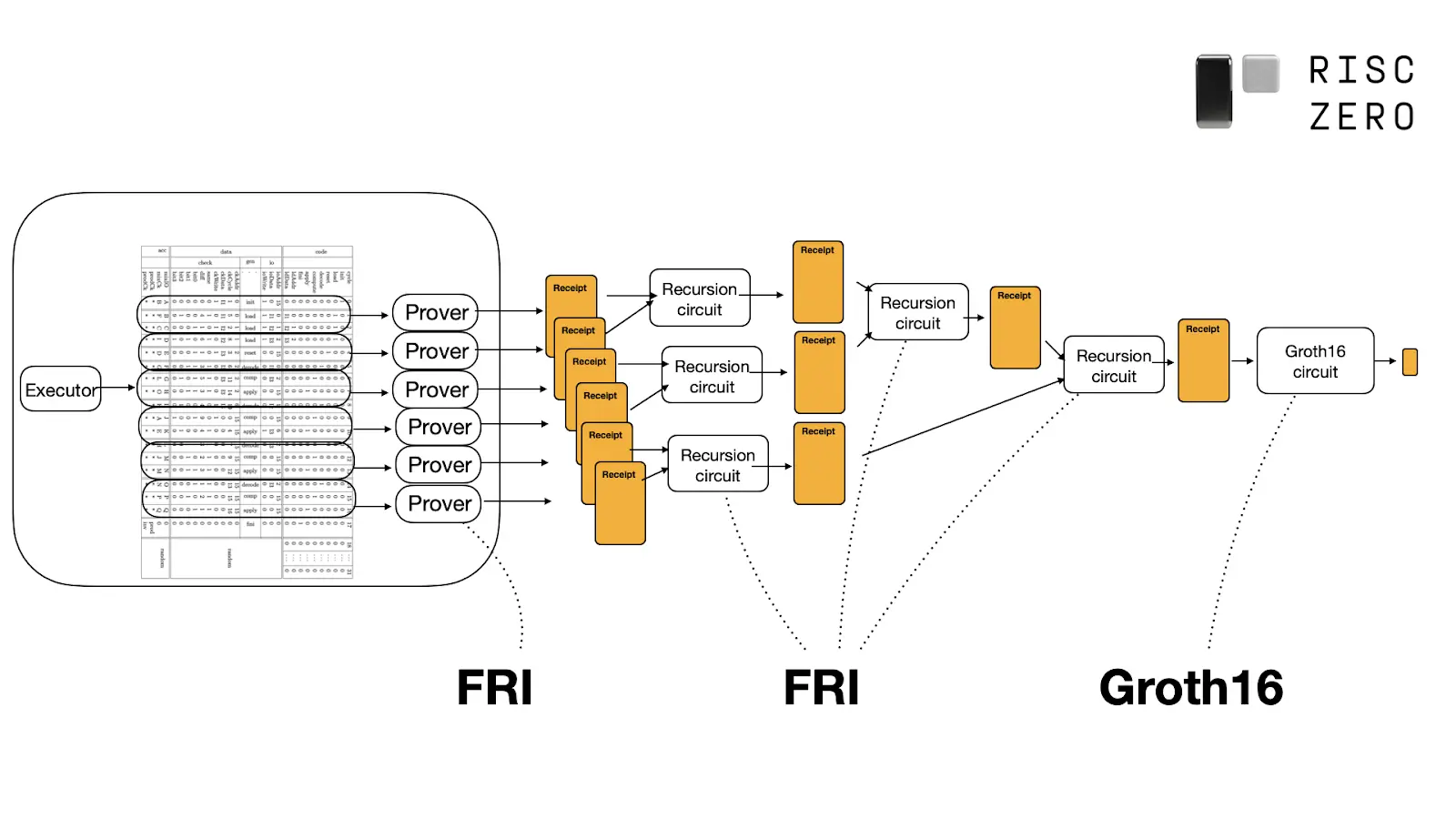
The diagram shows the complete proof stack of RISC Zero, including RISC-V circuits, Recursion Circuits, and Groth16 circuits.
Composite Receipt: Composed of 6 stacked receipts
Succinct Receipt: A single receipt generated after the last use of FRI
Groth16 Receipt: A minimal receipt generated by the Groth16 circuit
All three circuits are open-source and permissionless; anyone can use the implementations on GitHub to generate proofs on their own hardware. Users can also choose to delegate the work of proof generation to Bonsai.
2. Boundless Protocol
Boundless is a universal protocol that introduces zero-knowledge proof (ZK) capabilities to every blockchain. Through Boundless, developers can create more expressive, high-throughput applications that break through traditional block size and gas fee limitations.
In Boundless, developers submit proof requests, and provers compete to fulfill the requests, earning direct rewards and protocol-level incentives through proof of verifiable work.
By abstracting the complexities of proof generation, aggregation, and on-chain settlement, Boundless allows developers to focus on application building without worrying about the underlying infrastructure. Meanwhile, provers provide high availability guarantees, censorship resistance, and continuously optimize cost curves driven by an open market dynamic.
This architecture decouples execution from consensus, introducing a new paradigm for verifiable computation. As the number of Boundless proof nodes increases, the overall computational capacity of the protocol grows, achieving scalability for cross-chain computation.
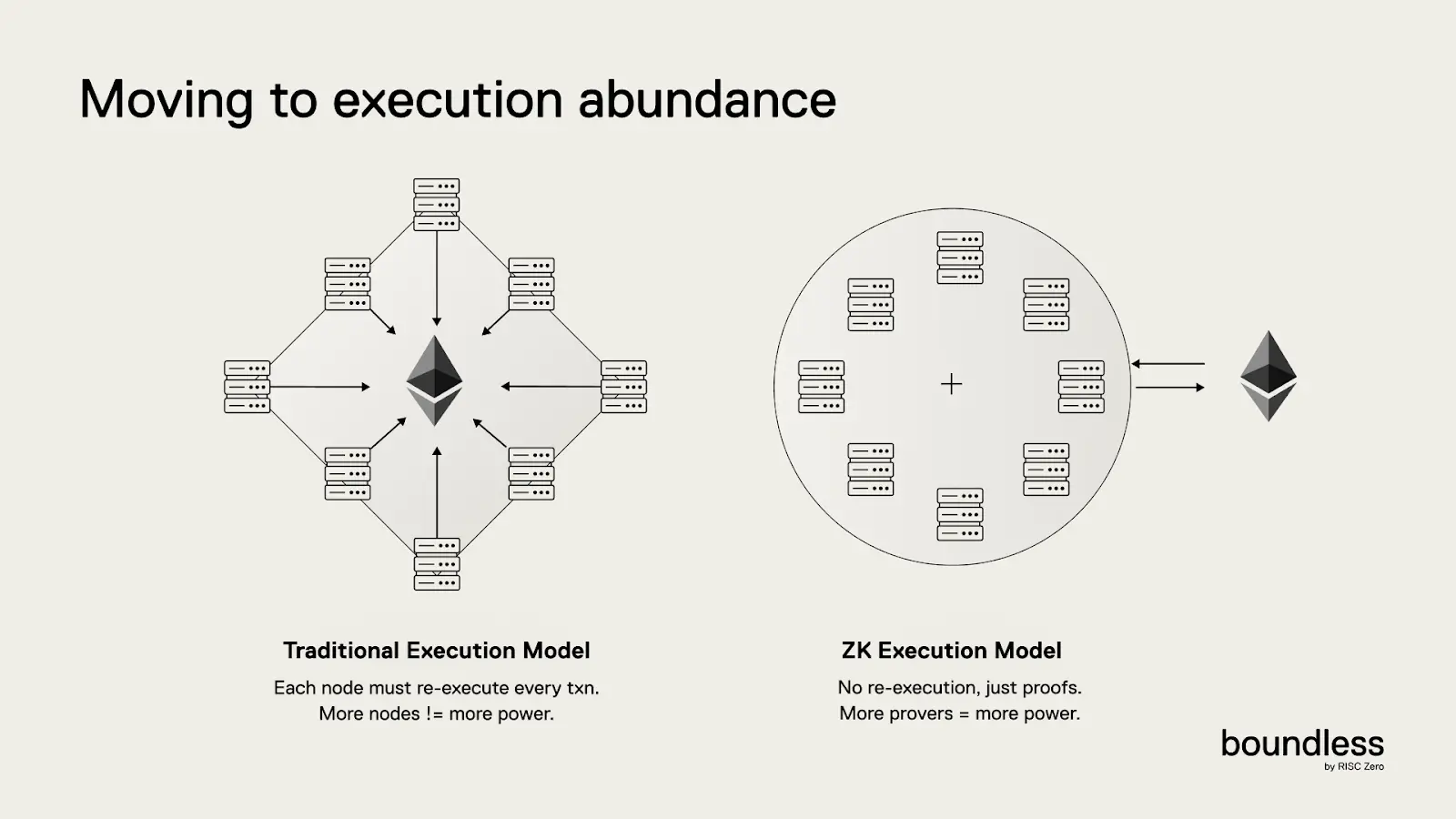
Boundless allows the network to no longer be limited by the slowest nodes but to leverage the overall computational power of all nodes. Each node generates execution proofs, enabling any blockchain to verify without needing to repeat executions. The underlying network maintains its security and consensus mechanism while eliminating redundant computations.
Boundless processes complex computations and generates concise, reusable proofs through a decentralized marketplace, providing ample computational capacity on any blockchain. These proofs are verified on-chain, serving as innovative building blocks and enhancing efficiency through aggregation when demand increases.
With each new prover node added to the market increasing capacity, new applications continuously amplify their value, allowing the entire network to be strengthened and expanded, forming a self-reinforcing system that achieves higher efficiency while continuously enhancing computational power.
Lifecycle of Proofs
In Figure 1, the complete lifecycle of a proof in the Boundless market is illustrated:
From the initiation of a proof request, to the submission of bids by provers and lock-in, to proof submission, and finally to proof verification.
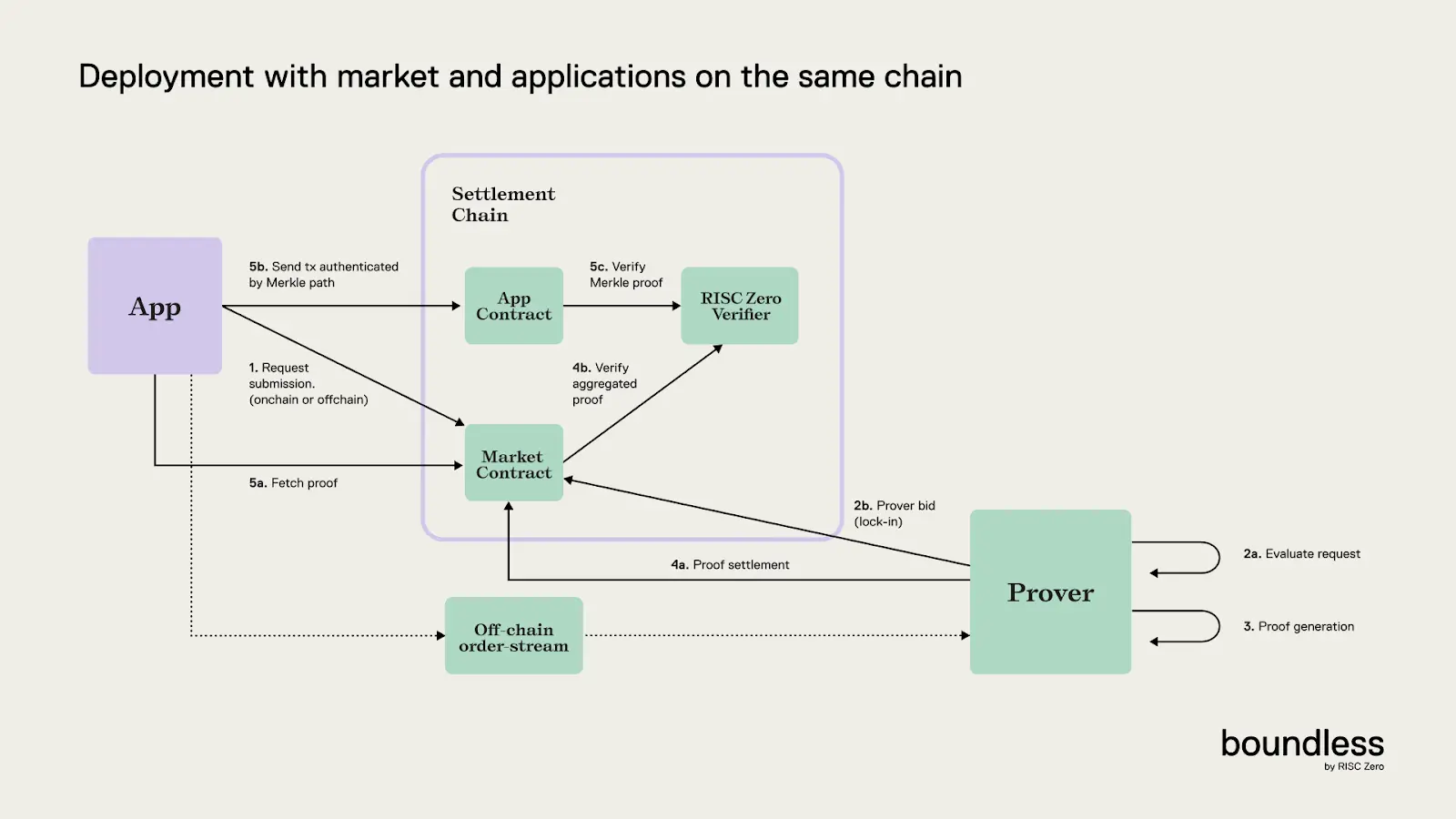
Figure 1: A flowchart showing the lifecycle of a proof in the Boundless market in chronological order.
Tron Comments
The advantage of RISC Zero and its Boundless protocol lies in utilizing zero-knowledge proofs (ZKP) to provide verifiable computation, breaking through the performance and scalability bottlenecks of traditional blockchains. RISC Zero's zkVM allows developers to build ZK applications directly using mature languages like Rust and C++, lowering the technical barrier; while Boundless, through a decentralized prover marketplace, offloads heavy computations, generating concise and reusable proofs, achieving cross-chain scalability and efficient computation, promoting the richness and composability of Web3 applications.
Its disadvantage is that the technical ecosystem is still in its early stages, and the performance and cost optimization of proof generation still require continuous improvement. Additionally, developer education, cross-chain integration, and large-scale application deployment still face challenges.
1.2. Interpretation of the $4.5 Million Financing, with Coinbase Participating, Smart Contract-Driven On-Chain Credit Market Credit Coop
Introduction
Credit Coop is an on-chain credit market that expands from peer-to-peer lending to a multi-depositor treasury, serving multiple borrowers. Its structured financial protocol enables Web3 enterprises to collateralize future cash flows through smart contracts. Utilizing its proprietary Spigot system, Credit Coop transforms income streams into programmable collateral, automating loan services, real-time settlement, and transparent credit monitoring.
Core features of the Credit Coop protocol include:
Programmatic Recourse: The Spigot smart contract can automatically collect cash flows from borrowers without relying on trust for repayment and can monitor loan performance in real-time.
Flexible Collateralization: Credit Coop supports "free combination" collateralization methods, allowing enterprises to use both traditional assets and future cash flows to obtain credit.
On-chain Execution: All lending activities are executed on-chain, ensuring transparency, efficiency, and programmability.
Composability: The protocol is designed to interoperate with existing DeFi ecosystems, supporting the construction of complex financial products and services.
Product Analysis
Secured Line of Credit
The first native on-chain debt-based financing tool
A Secured Line of Credit is a credit financing method supported by on-chain cash flows and/or asset collateral.
Benefits for Borrowers
Flexible Financing: Can be used for operating expenses (OpEx) and long-term growth plans without a fixed repayment schedule.
On-Demand Liquidity: Use funds only when needed.
Ability to leverage future cash flows/income (unrealized assets) to drive growth.
Syndication: Credit lines are not limited to USDC provided by a single lender and can support multi-asset and multi-lender participation.
Benefits for Lenders
Ability to assess borrower risk and price through specific interest rates.
Even if the borrower does not withdraw funds, deposited funds can still generate returns.
If the borrower does not withdraw funds, lenders can withdraw deposited funds as needed.
Credit lines are collateralized by borrower cash flows (via the Spigot system) for automated debt repayment.
Recourse protection: Achieved through priority repayment and enforced automatically by the program.
1. Line of Credit Features
Currently, there are two ways to secure a line of credit:
Borrower's cash flow
Collateral of assets deposited by the borrower
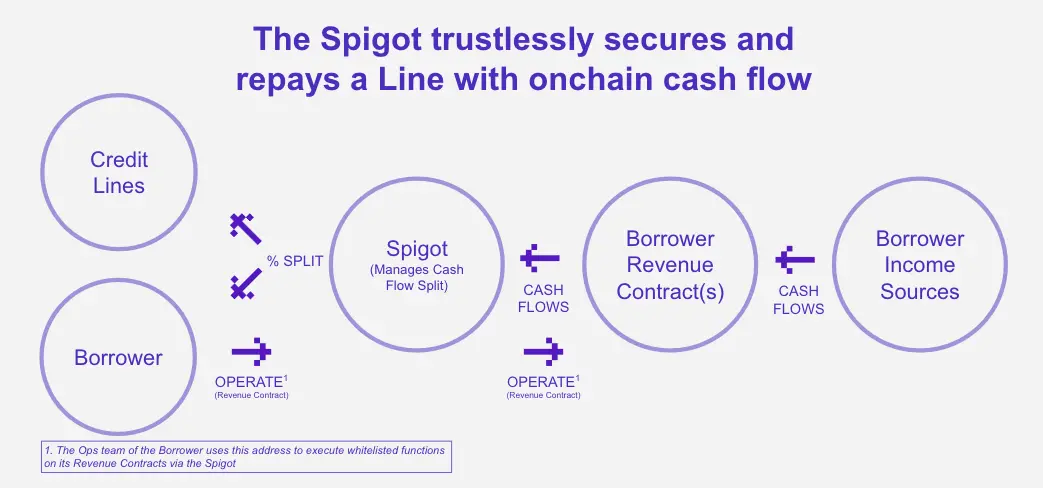
Cash Flow Financing
Utilizes the borrower's cash flow to repay and secure the line of credit.
The Spigot system locks in on-chain cash flows and automatically repays interest and principal to the line of credit.
If the borrower fails to fully repay the line of credit by the agreed deadline or defaults, the Spigot will begin to extract 100% of the income from the borrower's Revenue Contract into an escrow account.
This is a crypto-native secured loan: it achieves on-chain native generation and servicing of income-based credit without intermediaries.
Advantages
Lender Protection: Enforced through on-chain programmatic means.
Lender Confidence: Ensures loans are backed by verifiable on-chain income.
Borrower Advantages: Can obtain larger loans at lower interest rates.
Flexibility: Borrowers can obtain the most flexible, low-interest loans without needing to collateralize in advance.
2. Spigot
A Breakthrough Innovation in On-Chain Finance Ecosystem
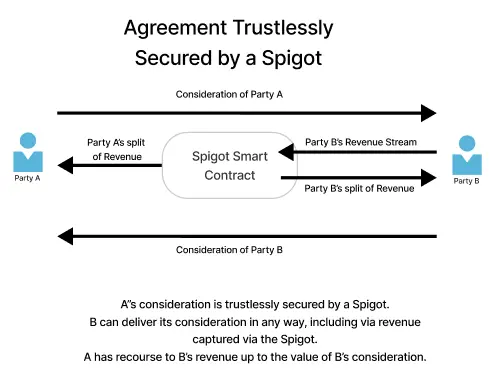
Spigot is a new type of smart contract that can securely allocate on-chain cash flows based on agreements between parties (or multiple parties).
Most importantly, when one party (the obligor) fails to fulfill its obligations to another party, Spigot provides a trustless recourse mechanism.
Roles in Spigot
In each deployment of Spigot, there are two key roles:
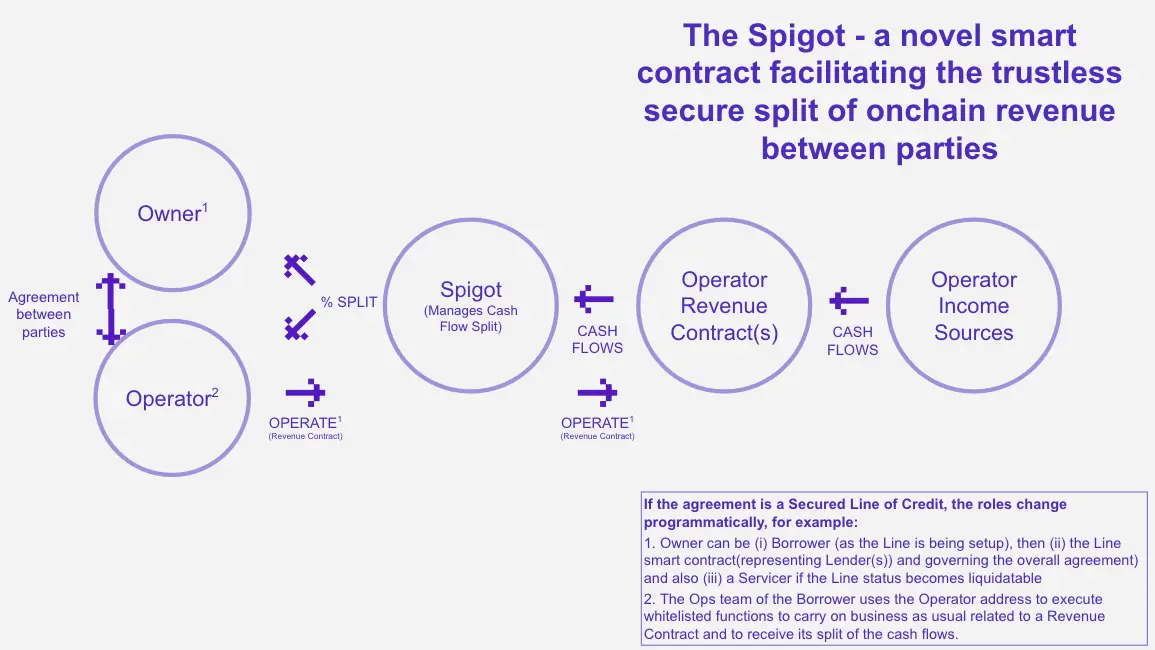
- Owner and Operator:
These two roles are controlled by addresses of the parties participating in the agreement, enabling Spigot to achieve automated payments and security guarantees.
The flow of revenue tokens generated by the borrower's Revenue Contract, as well as the distribution relationship of these revenues between the owner and operator, is illustrated in the following diagram.
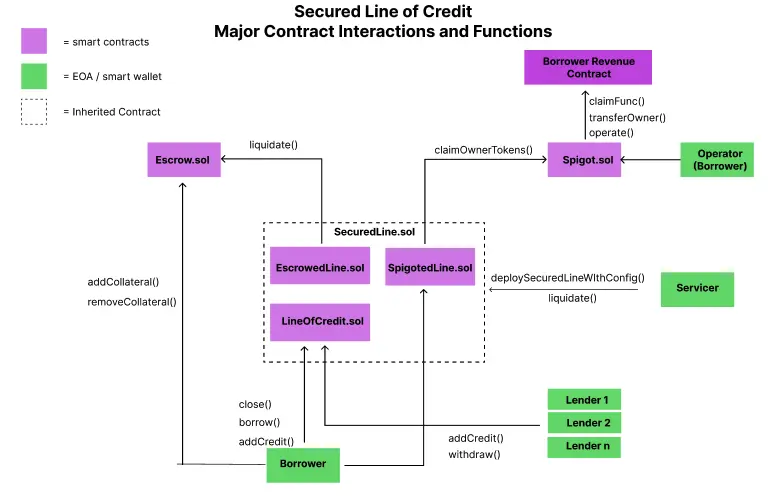
Technical Architecture Display (v1)
This architecture displays the main smart contracts supporting Secured Lines of Credit, their core functions, and the interaction relationships between contracts.
In version v1, the Servicer operates through the blockchain address of the Arbiter role, which is used for some key system functions in the protocol.
Tron Comments
The advantage of Credit Coop lies in its innovative Spigot smart contract mechanism, which transforms future cash flows into programmable collateral, achieving on-chain native income collateral financing with transparency, automation, and real-time tracking capabilities. At the same time, it supports flexible collateralization, composability, and multi-lender, multi-asset syndication, providing more efficient financing tools for Web3 enterprises and the DeFi ecosystem.
Its disadvantage is that the overall ecosystem is still in its early stages, and the model relying on on-chain cash flows requires high verifiability and stability of enterprise income. Additionally, user education costs, protocol adoption, and the complexity of cross-chain expansion remain challenges for promotion and scaling.
2. Detailed Explanation of Key Projects of the Week
2.1. Detailed Analysis of Mysten Labs Leading $15 Million Financing, First Open-Source Video Foundation Model and Super Multimodal Ecosystem Lyn
Introduction
Lyn is the first open-source foundational video model and super-agent multimodal ecosystem, aiming to bring an open "dream machine" to the world. Lyn's flagship open-source model Everlyn-1 is reshaping the capabilities of video AI in terms of output duration, interactivity, generation latency, and hyper-realistic visual quality.
Lyn's video creation engine and platform Everworld are revolutionizing the way humans interact with their photo-realistic virtual avatars. These personalized and interactive video agents can perform any task.
The combination of Everlyn-1 and Everworld will profoundly change what humans can achieve online, taking over tasks and activities that people are either unwilling to do or cannot complete independently.
Architecture Analysis
The Lyn protocol addresses these challenges by building a decentralized video generation infrastructure, significantly reducing costs while enhancing scalability. The core of Lyn's success lies in integrating advanced technologies such as superpipeline-quantization and xDiT, which optimize video generation through parallelized diffusion-based Transformers.
The core of Lyn's innovation is a leading open-source autoregressive video foundational model capable of generating high-quality, unlimited-duration videos, particularly focused on human-centered content. Compared to centralized platforms, this model can reduce video generation costs to one-tenth of the original, making high-quality video AI accessible.
Additionally, Lyn's decentralized AI infrastructure leverages community participation and flexible architecture to ensure scalable and efficient video generation, continuously growing beyond the limitations of traditional systems.
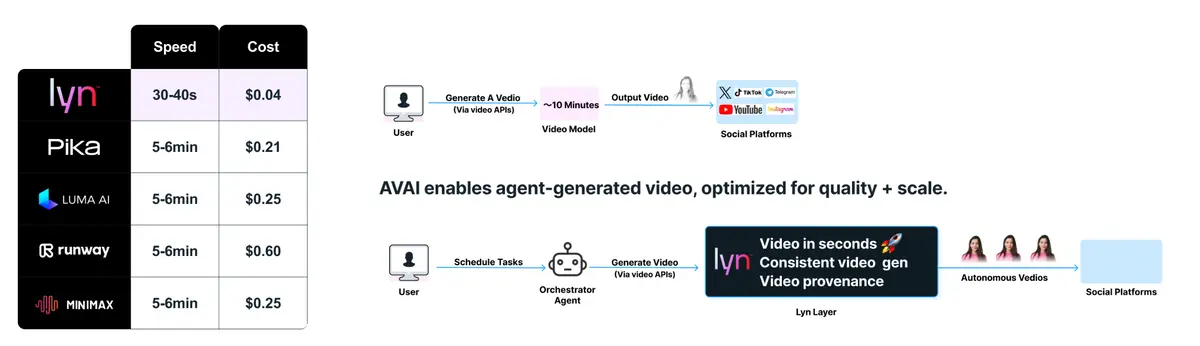
Left image: Comparison of video generation speed and costs across platforms, with Lyn significantly outperforming other centralized models in both speed and cost efficiency.
Right image: Human-generated videos (approximately 10 minutes each) versus contract-based agent-generated videos (which can autonomously generate and publish), with the latter further enhancing speed and efficiency.
Lyn Ecosystem: Agent Video Generation and Smart Contracts
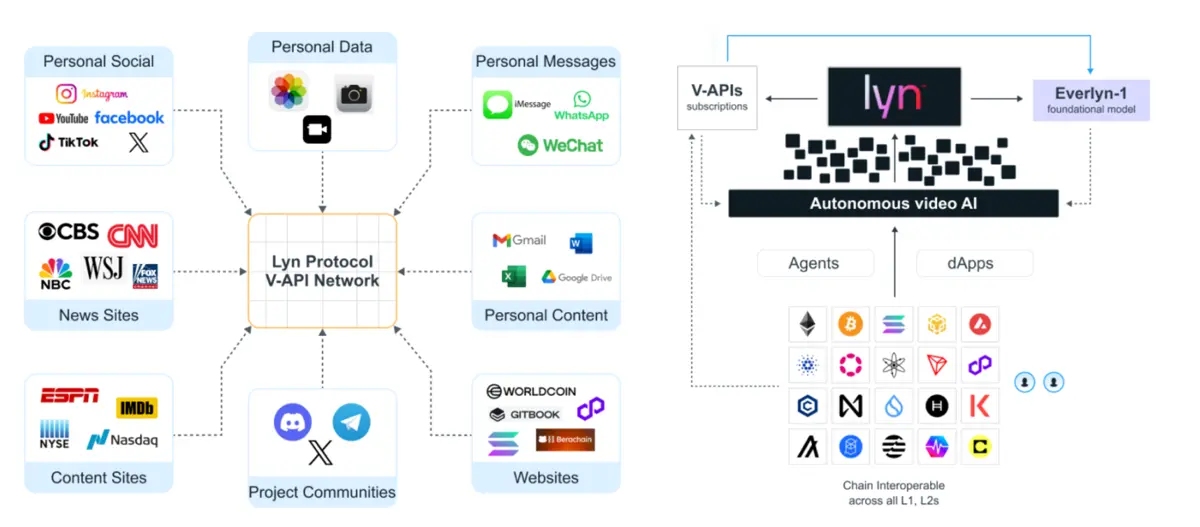
Left image: The V-API network within the Lyn ecosystem, encompassing external data oracles, personal memory, and project community integration.
Right image: Lyn's autonomous video AI infrastructure driven by the foundational model Everlyn-1 and V-API subscriptions, featuring multi-chain interoperability and dApp support.
At the core of the Lyn protocol is its support for agent-driven video generation. Decentralized applications (dApps) and autonomous agents can generate videos based on user input or preset instructions. This process is supported by Lyn's video API (v-APIs), enabling smart contracts and dApps to autonomously request video generation services.
These agents generate high-quality, customized videos by invoking contextually relevant prompts, combined with external data sources, personal memory storage, and real-time oracles. Each video is recorded on-chain, ensuring that creators have secure, tamper-proof provenance of their content. On-chain records not only allow creators to maintain control over intellectual property but also provide transparent, real-time tracking mechanisms for video usage and distribution, enabling content monetization.
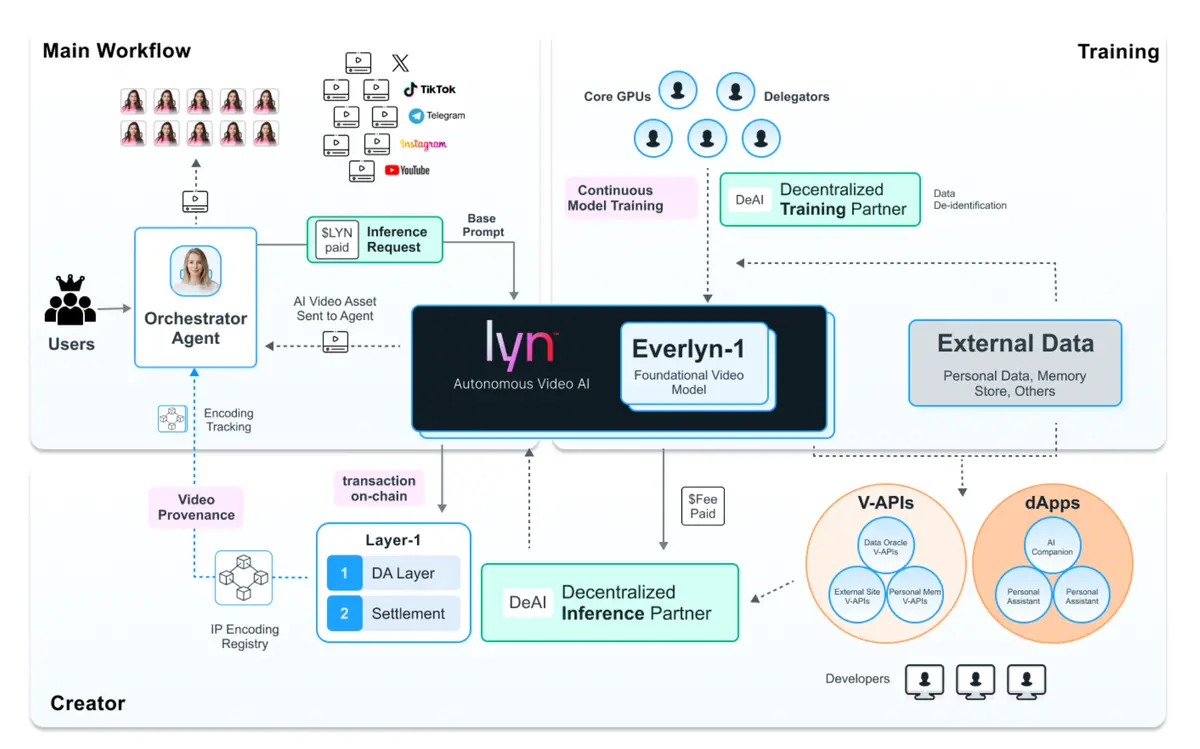
The autonomous video AI workflow of the Lyn protocol demonstrates how to orchestrate agents to collaborate with the Everlyn-1 model, generate videos based on external data, and record provenance and transaction records on-chain, while decentralized partners are responsible for training and inference stages.
The Lyn protocol further expands its utility by supporting videos generated by agents, which can autonomously create, manage, and distribute content without human intervention. Agents can seamlessly integrate into mainstream video platforms and messaging clients, automatically publishing content and streamlining distribution processes, thereby enhancing user engagement.
In addition to agent-generated content, Lyn also supports human-generated video production, applicable in various fields, including Web3 project marketing, community management (such as Telegram, Discord), entertainment, education, dating, and real-time virtual avatars and interactive chatbots. This cross-platform adaptability makes Lyn a highly versatile solution for decentralized video AI, bridging the gap between human-generated content and agent-generated content.
Integration of Lyn Protocol with Web3
In the Web3 domain, Lyn also provides advanced video AI capabilities for decentralized applications (dApps), enabling them to autonomously generate and interact with video content on demand. As the first fully integrated video AI protocol in Web3, Lyn offers multi-chain interoperability, allowing dApps on any layer (Layer-1 or Layer-2) blockchain to seamlessly access video generation services (see Figure 11 right).
With a permissionless architecture, developers can integrate Lyn's video AI capabilities into applications without centralized approval. By providing universal data coverage and robust support for agent-based dApps, Lyn is establishing itself as the preferred protocol for decentralized video creation, ushering in a new era of collaboration among dApps, creators, and agents in an open, transparent ecosystem.
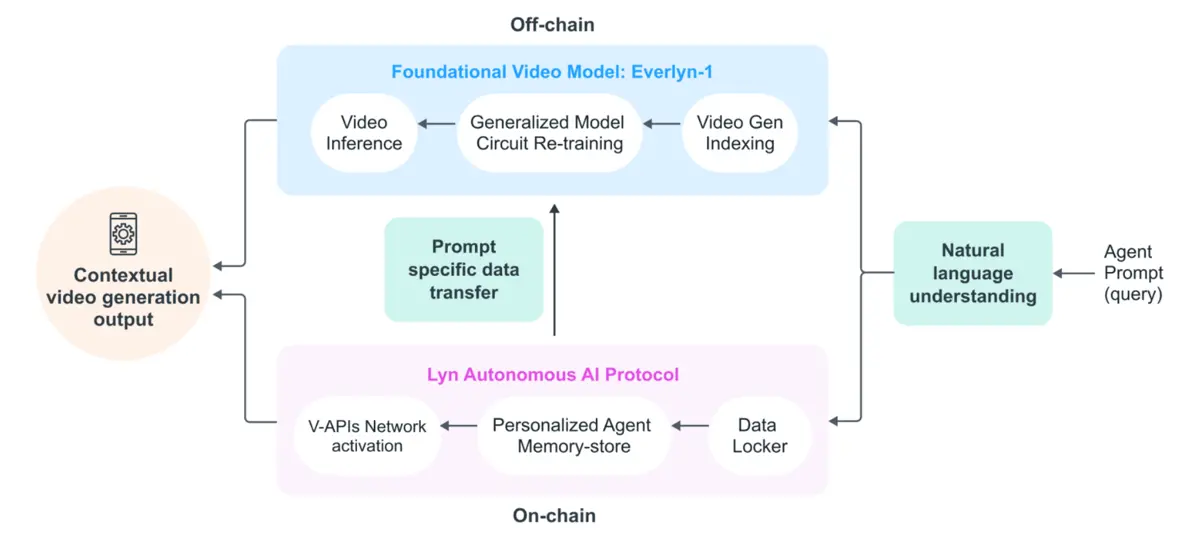
In the Lyn protocol, data flows bidirectionally between on-chain and off-chain:
Off-chain processes: Driven by the Everlyn-1 foundational video model;
On-chain processes: Relying on Lyn's autonomous AI protocol, V-API activation, and agent memory storage, outputting contextually relevant customized video generation results.
Driving the Ecosystem with Lyn Tokens
The Lyn protocol operates on the $LYN token, which is the core currency driving all transactions within the ecosystem. The $LYN token is used to pay for fees related to video generation, smart contract execution, and v-API activation, enabling seamless interactions between dApps, agents, and decentralized services.
When a dApp or agent initiates a video generation request, the transaction is processed through the $LYN token, covering everything from inference requests to the orchestration process of the Everlyn-1 video model. Everlyn-1 extracts information from external data sources to generate videos.
Creators and developers can also stake $LYN tokens on specific agents or v-APIs to unlock advanced features, such as:
Faster processing speeds
Better personalized experiences
Higher video quality
This staking mechanism allows them to participate in the revenue generated by these agents or APIs, opening up new income sources.
Additionally, the $LYN token also supports payments to decentralized inference and training partners, who continuously contribute to the ongoing optimization of the model.
The decentralized and token-driven nature of the entire system ensures a transparent, secure, and community-oriented ecosystem, where the provenance of content is recorded on-chain. This not only guarantees creators' control over intellectual property but also provides them with new monetization opportunities.
Tron Comments
Lyn's advantages lie in its open-source foundational video model and decentralized architecture, combined with Everlyn-1 and Everworld, which can generate hyper-realistic, long-duration videos at lower costs and higher efficiency. It also enables automated, scalable application scenarios through v-APIs and smart contracts, empowering various fields such as Web3, entertainment, and education. Its token economic model ($LYN) further ensures transparency and incentive mechanisms within the ecosystem, providing revenue channels for creators and developers.
Its disadvantages include that decentralized video AI is still in its early stages, facing challenges such as dispersed computational resources, insufficient ecosystem maturity, and high user education and adoption barriers, requiring time to build sufficient community and infrastructure support.
# III. Industry Data Analysis
1. Overall Market Performance
1.1. Spot BTC vs. ETH Price Trends
BTC

Key resistance this week: $114,000------$114,800------$118,000
Key support this week: $110,600------$108,700------$107,400
ETH
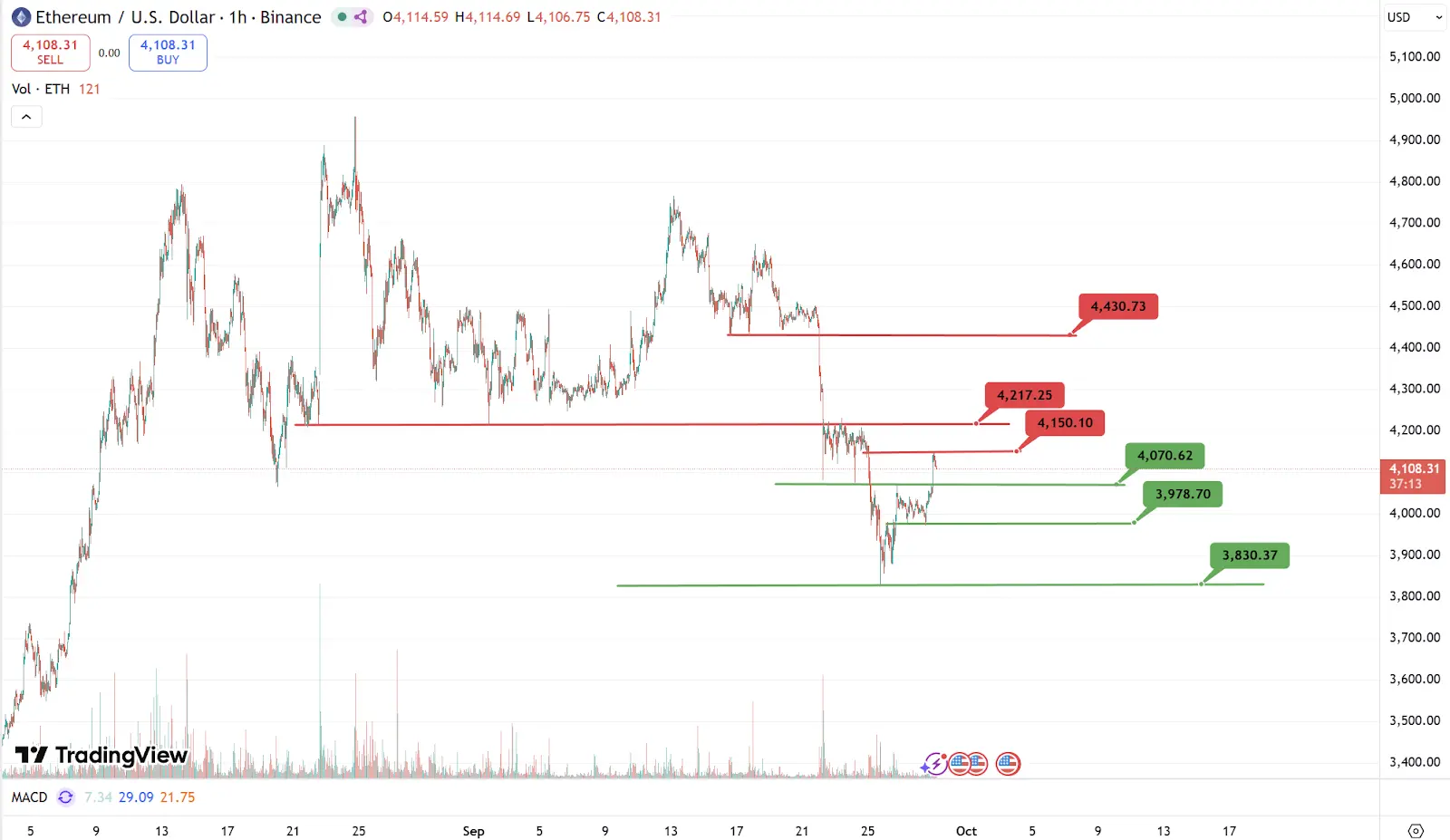
Analysis
Key resistance this week: $4,150------$4,210------$4,430
Key support this week: $4,070------$3,980------$3,830
2. Sector Analysis
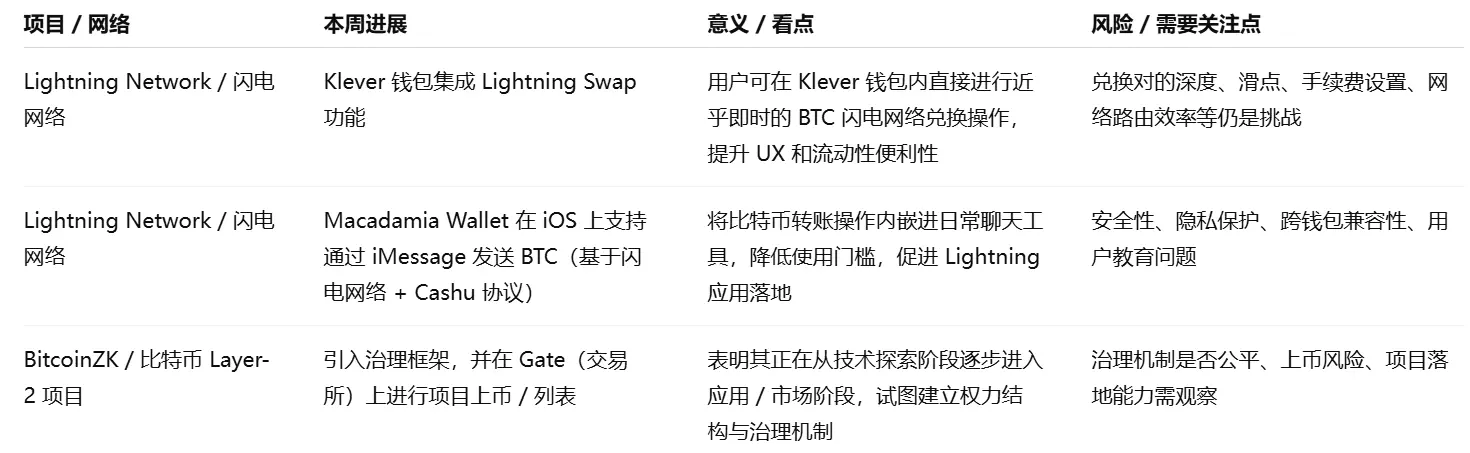
2.1. BTC Layer 2 Summary
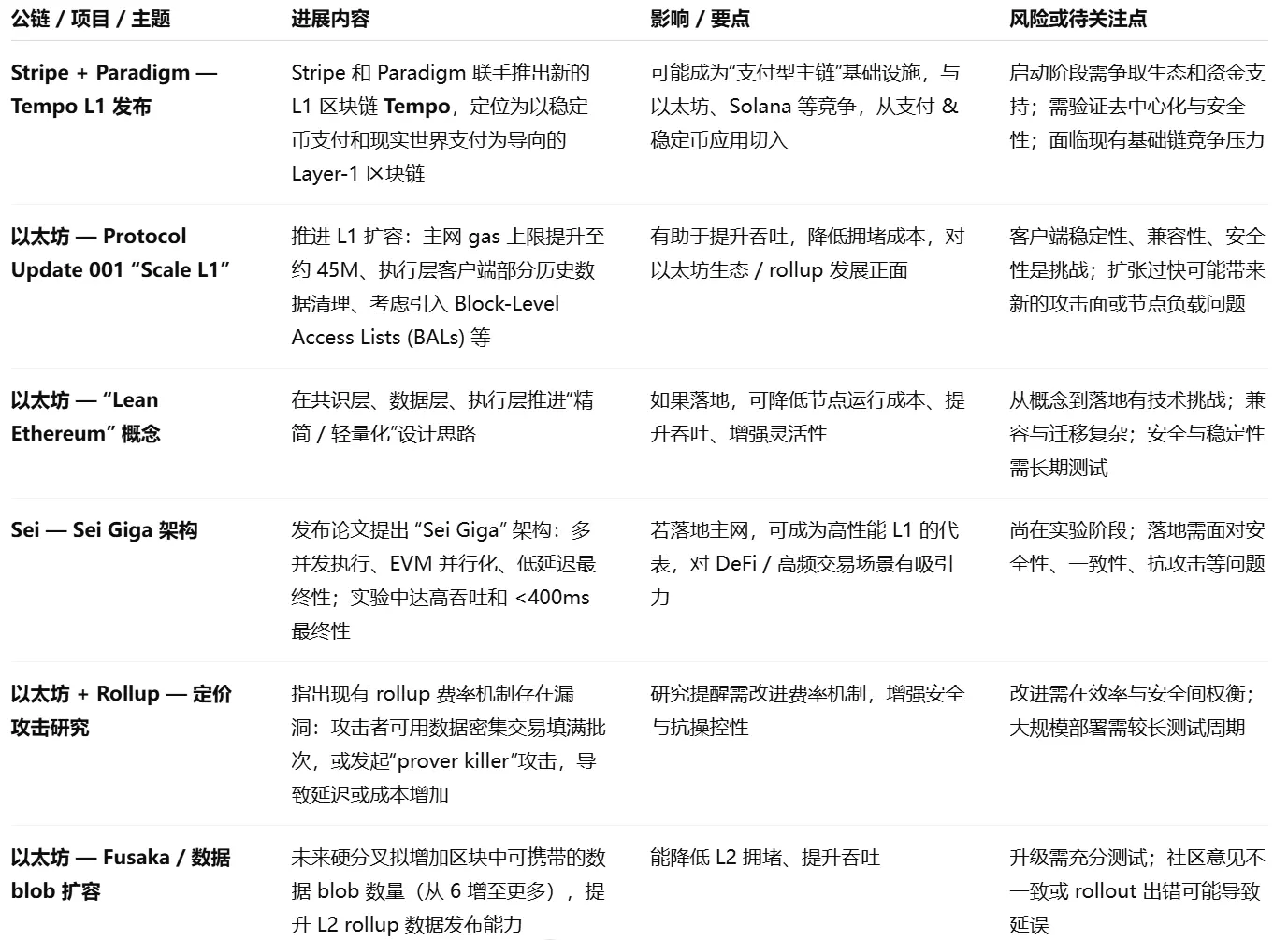
2.2. EVM & non-EVM Layer 1 Summary
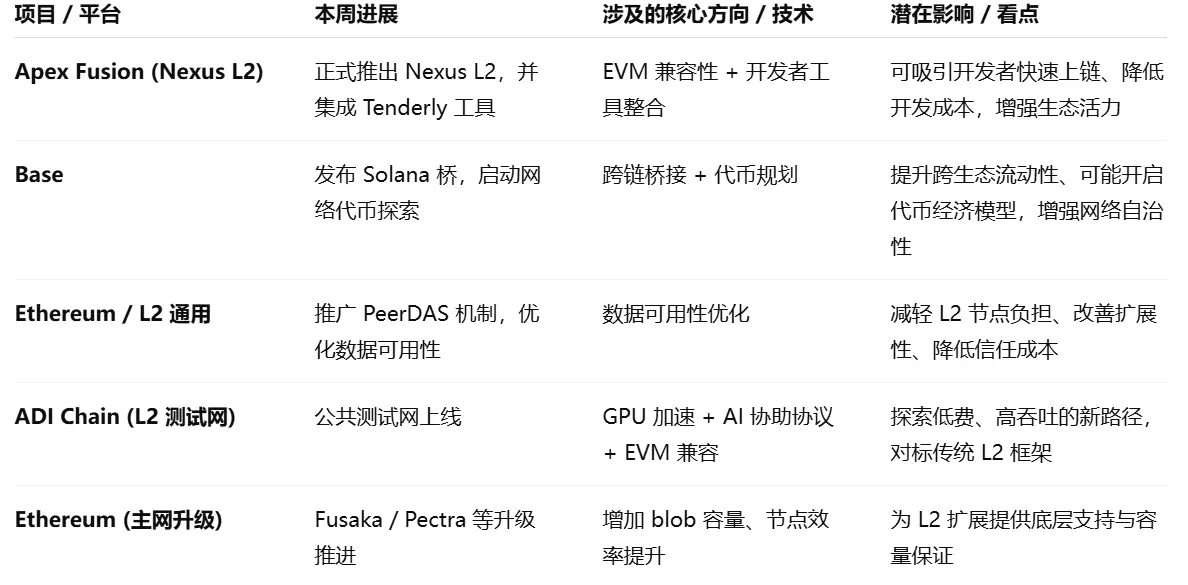
2.3. EVM Layer 2 Summary
# IV. Review of Macroeconomic Data and Key Data Release Nodes for Next Week
Last week, the core PCE year-on-year rate for August stabilized at 2.9%, indicating that inflationary pressures have not worsened but remain sticky. As a result, the Federal Reserve opted for a cautious rate cut rather than aggressive easing. This outcome conveys to the market that "the easing cycle has begun, but it will not happen overnight."
This week (September 29 - October 3), important macro data nodes include:
October 1: U.S. ADP employment numbers for September
October 2: U.S. initial jobless claims for the week ending September 27
October 3: U.S. unemployment rate for September; U.S. non-farm payrolls for September (seasonally adjusted)
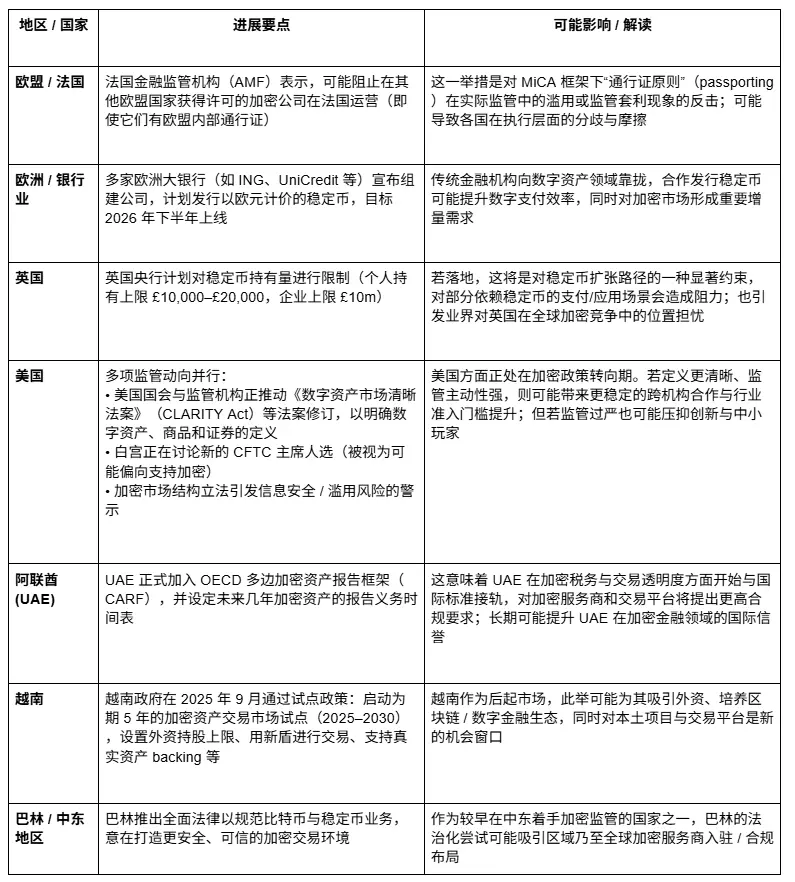
# V. Regulatory Policies
 Risk warning Risk warning



Popular articles





