Forbes: Is Ethereum the Best Choice for Reshaping Wall Street's Financial Infrastructure?
 Core Viewpoint
 This article presents the views of Danny Ryan, co-founder of Etherealize, that Ethereum, with its unique security, neutrality, privacy, and modularity, is the best and perhaps the only choice for reshaping Wall Street's financial system.
Original Title: https://www.forbes.com/sites/jonegilsson/2025/09/25/the-race-to-rewire-wall-street-is-ethereum-the-safest-bet/
Original Author: Jón Helgi Egilsson, Forbes
Original Translation: Shenchao TechFlow
Ethereum co-founder Vitalik Buterin, along with his foundation, Electric Capital, and Paradigm, is backing Etherealize's $40 million launch—this startup has a single mission: to reshape Wall Street on the Ethereum foundation. (© 2024 Bloomberg Finance LP)
Every day, Wall Street's financial system handles trillions of dollars in capital flows—many of which still operate on systems built decades ago. Mortgage and bond trades can take days to settle. Intermediaries add layers of costs, tie up capital, and amplify risks. For the world's largest banks and asset management firms, choosing the wrong technological infrastructure could lock in a new generation of inefficiencies. Blockchain technology has the potential to change this status quo. But the question is, which blockchain is the best choice?
Critics argue that Ethereum is slow and costly, while competitors claim to have higher throughput. Moreover, fintech giants have even begun building their own blockchains. However, Danny Ryan, co-founder and president of Etherealize and a core architect of Ethereum's evolution, led the coordination of the historic "Proof of Stake" "Merge" project. He insists that Ethereum's security, neutrality, and cryptographic privacy make it exceptionally suited to bear the weight of global finance. Indeed, Wall Street needs to be reshaped—Ryan believes Ethereum is the only blockchain capable of doing so.
Ryan has worked at the Ethereum Foundation for nearly a decade, closely collaborating with Vitalik Buterin and shaping the Ethereum protocol at its most critical turning points. Today, Etherealize has secured a $40 million investment from Paradigm, Electric Capital, and the Ethereum Foundation, along with initial funding from the Ethereum Foundation, and he firmly believes Ethereum is ready to enter the Wall Street market.
Ryan's response—direct, precise, and somewhat surprising—goes far beyond the hype of cryptocurrency, but he also elaborates on why Ethereum may be the safest choice for reshaping the financial system.
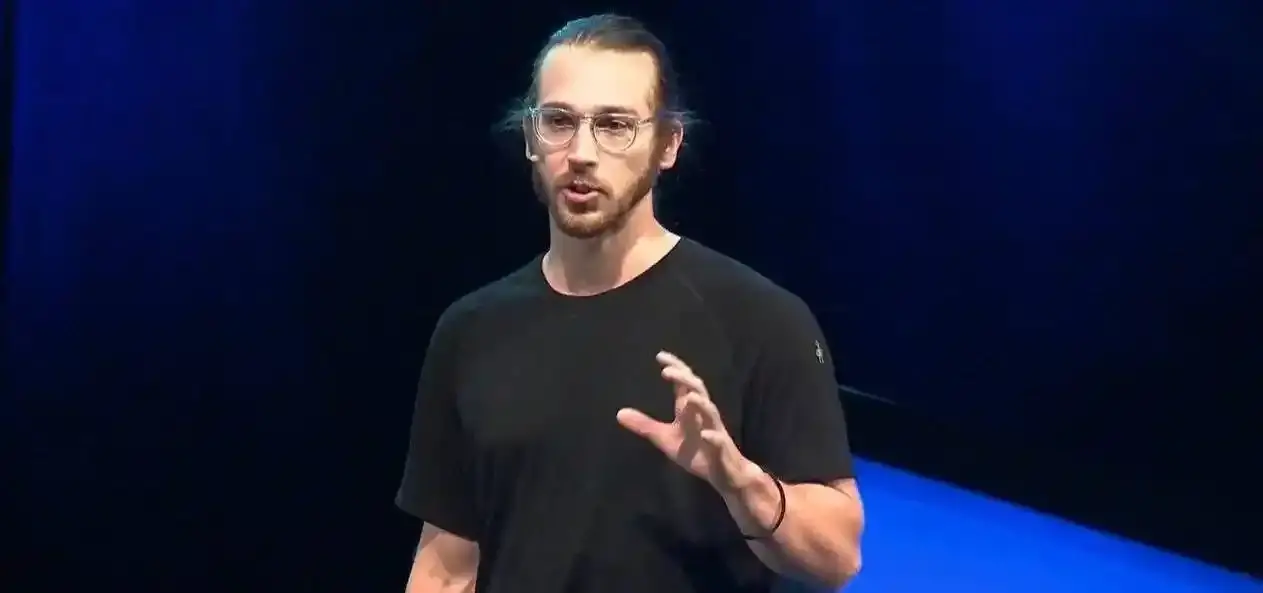
Etherealize co-founder and president Danny Ryan believes Ethereum is the only blockchain with the security and neutrality to reshape Wall Street.
Security is a Scarce Resource
I started with an obvious question: Given Ethereum's congestion and high fees, why would Wall Street trust it?
Ryan did not hesitate: "Cryptoeconomic security is a scarce resource." In a proof-of-stake system, validators need to lock up capital to make the cost of an attack prohibitively high. Today, Ethereum has over a million validators, with a total staked value close to $100 billion. "You can't just achieve this overnight," he added.
In contrast, newer blockchains can create faster networks but often rely on a few institutional backers. "This looks more like a consortium model," Ryan explained. "You trust the companies, contracts, and legal recourse involved. This is a different type of security assurance. It’s not the same as maintaining a neutral global network involving billions of dollars."
Data supports his claims. According to Etherealize's latest research, Ethereum secures over 70% of stablecoin value and 85% of tokenized real-world assets. If the scale of security is crucial, then Ethereum undoubtedly has this advantage.

The Ethereum network has over a million validators and more than $120 billion in staked value, making it the safest blockchain—a "scarce resource" for institutions managing counterparty risk. (getty)
Privacy: Commitment and Mathematics
Privacy is another key issue. No bank would place customer transactions on a completely public ledger. Is this also why projects like Canton, backed by large financial institutions, are gaining attention?
Ryan's response was sharp. "Canton relies on an assumption of integrity—trusting that counterparties will delete sensitive data. This is a sleight-of-hand form of privacy protection. With cryptography, you can fundamentally solve the privacy issue."
He referred to zero-knowledge proofs (ZKP), a field of cryptography developed before the advent of blockchain but now being applied at scale on Ethereum. ZKP has become a pillar of "rollups," a technology that can compress thousands of transactions and settle them on Ethereum. The same technology is expanding into the privacy realm: enabling selective disclosure, allowing regulators to verify compliance without publicly disclosing all transaction details.
"You solve the privacy problem with mathematics," Ryan added—this statement feels like a guiding principle for how Ethereum meets institutional demands.

Institutional financing requires confidentiality. Ethereum's zero-knowledge tools are designed to ensure privacy through cryptographic techniques rather than intermediaries. (getty)
Modularity: Institutions Control Their Infrastructure
I pressed him on Ethereum's architecture. Does it seem overly complex compared to Stripe and Circle, which are now trying to build streamlined blockchains from scratch?
Ryan countered that the seemingly complex architecture is actually an advantage. "Institutions like the L2 model," he explained. "It allows them to customize their infrastructure while inheriting Ethereum's security, neutrality, and liquidity. They can control their infrastructure while still tapping into the global network effects."
He pointed out that Coinbase's Base network is a proof of concept. Built on Ethereum's L2, it generated nearly $100 million in serialized revenue in its first year, demonstrating its economic viability and institutional-scale.
For Ryan, modularity is not a technical detail but a blueprint for how institutions can build their blockchain infrastructure without losing the advantages of a shared network.

Ethereum's scaling strategy combines rollups with data availability sampling—this path aims to achieve over 100,000 TPS without sacrificing security. (getty)
Neutrality and Throughput
So what about speed? Solana and other competitors claim to handle thousands of transactions per second. Isn't that more practical for global finance compared to Ethereum's relatively limited throughput?
Ryan redefined the question. "When financial institutions consider blockchains, they don't just ask, 'How fast is it?' They also ask: Can this system execute correctly and stay online, and who do I need to trust? On Ethereum, the answer is: You don't need to trust anyone."
This is what he calls "trustworthy neutrality," meaning the underlying protocol does not favor insider rules guarantees. Ethereum has never experienced a day of downtime since 2015—this record is worthy of recognition in the financial system.
As for scalability, Ryan mentioned the roadmap laid out by Ethereum co-founder and think tank architect Vitalik Buterin. He emphasized that the key lies in the capacity coming from the many L2s running on Ethereum, rather than a single chain. Today, this already means the entire system can handle tens of thousands of transactions per second—Ryan stated that with upcoming upgrades like data availability sampling, total throughput is expected to exceed 100,000 TPS in just a few years. "Scalability is here—and without sacrificing trust," he said.
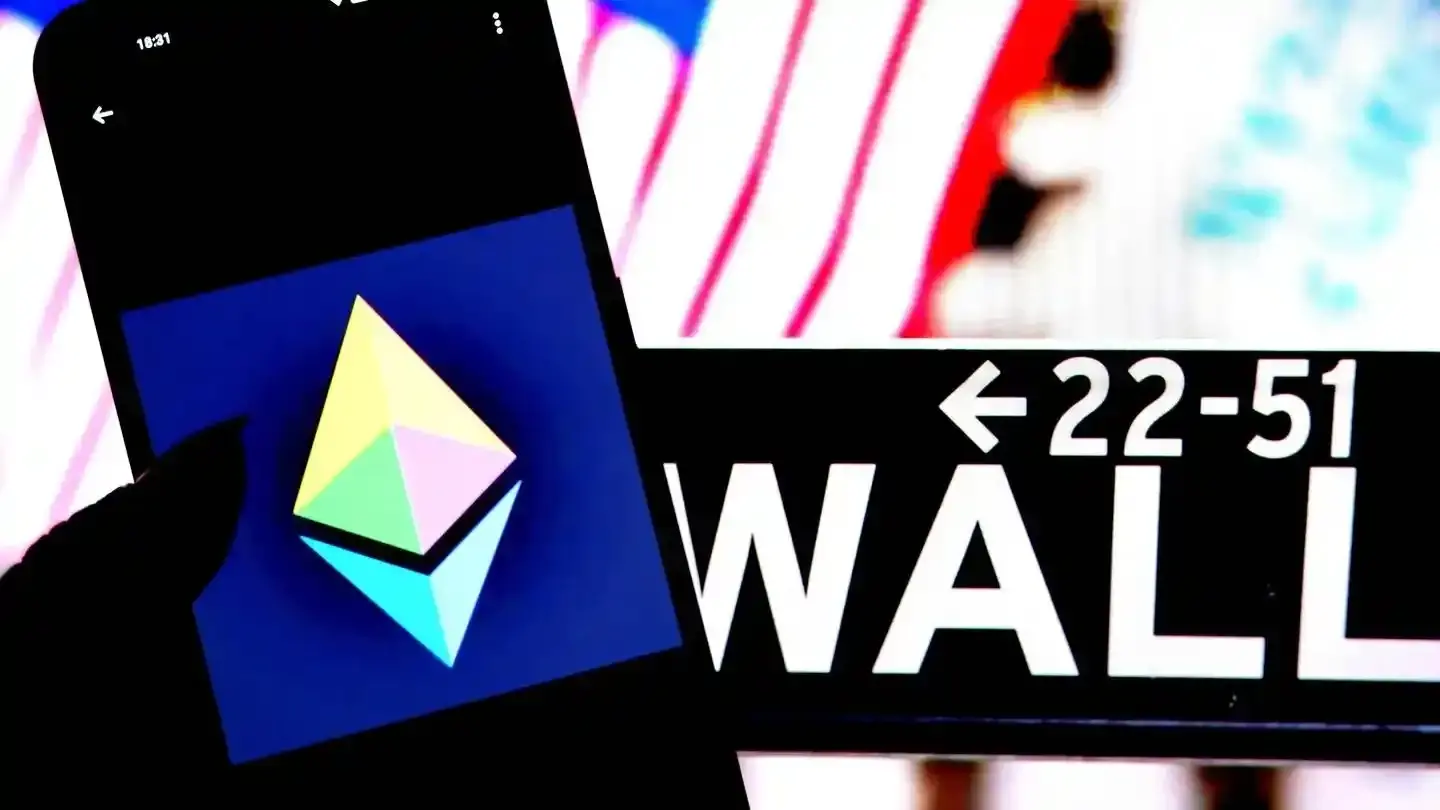
As Wall Street's financial channels modernize, the real question is which blockchain can meet institutions' needs for scale, security, and privacy. (SOPA Images/LightRocket via Getty Images)
The Bigger Picture
Ryan does not claim that Ethereum is perfect. His point is that only Ethereum possesses the comprehensive advantages of security, privacy, modularity, and neutrality that institutions truly care about.
Stripe, Circle, and other companies may attempt their own blockchains. But Ryan insists they will ultimately face a harsh reality: "Most companies will need to reconnect to Ethereum. Because security is not free—it is a scarce resource."
For Wall Street, this may be a decision point: to choose to build on proprietary system islands or to connect to a neutral global network that has proven its resilience for a decade? Ethereum's underlying architecture may not be the fastest blockchain yet, but for Wall Street, it may be the safest choice—a rapidly expanding architecture that ensures privacy through mathematics rather than commitments that could be broken by institutions. ```
 Risk warning Risk warning




Popular articles