








ZEC rose against the trend by 37%. Which projects in the privacy sector are worth paying attention to?
 Core Viewpoint
 This article analyzes the strong rebound momentum in the privacy sector after the maximum clearing date of the 10.11 contract, particularly the astonishing nearly 400% increase of $ZEC in less than half a month. It also examines the driving forces behind this sector's rebound under regulatory pressure, its historical process, as well as the current main investment opportunities and risks.
Original Author: San, Deep Tide TechFlow
On October 11, 2025, the crypto market experienced the largest contract liquidation day in history, with a single-day contract liquidation volume reaching $19.1 billion.
This crash served as a baptism for the crypto market, and it also acted as a mirror, reflecting which assets exhibited greater resilience under such extreme conditions.
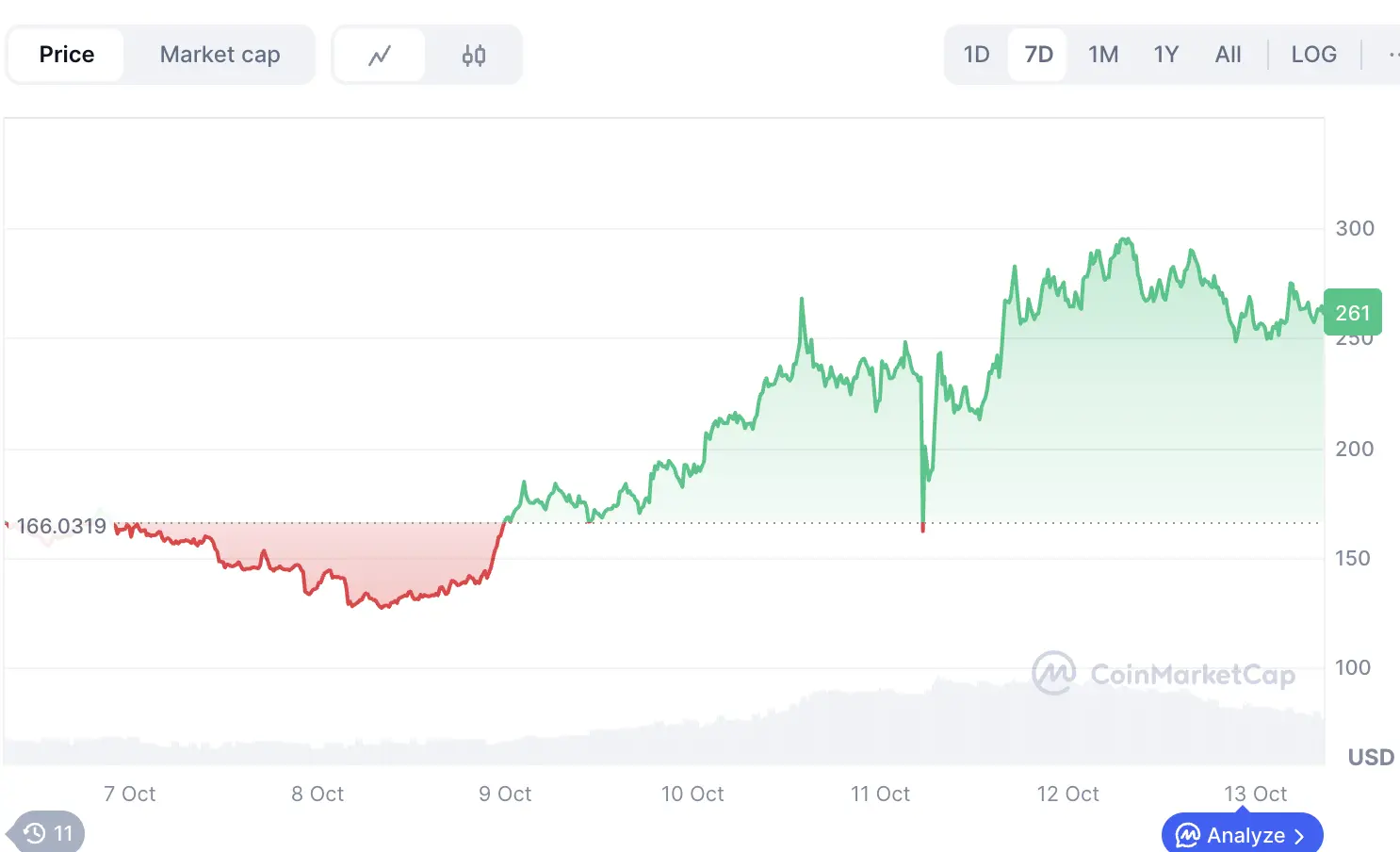
Among them, the privacy sector's $ZEC attracted significant market attention. On the day of the crash, $ZEC briefly fell from $268 to below $200, but quickly recovered in the following two days, rising to a peak of $293, an increase of 37% from its pre-crash high, leading the "post-disaster reconstruction" after this black swan event.
The rapid rebound after the black swan was impressive, but what is even more noteworthy is that at the beginning of October, $ZEC was only $74, and in less than half a month, its increase approached 400%.
The privacy sector behind it, after experiencing regulatory crackdowns in 2024, seems to be gradually showing signs of a strong rebound. Analyzing investment targets in this sector at this time may bring significant returns for investors.
Historical Progress of the Privacy Sector
Looking at the development history of the privacy sector, it is clear that it has gone through four stages.
Pre-Crypto Stage (1980-2013): The Proposal of Crypto-Punk Philosophy
The demand for privacy currencies was first proposed in the late 1980s.
A loose collective of cryptographers, activists, and tech experts combined "cryptography" with "cyberpunk," proposing the idea of using strong cryptography to protect personal privacy and challenge centralized surveillance.
Subsequent publications of "The Crypto Anarchist Manifesto" and "The Crypto-Punk Manifesto" laid the ideological foundation for the birth of the privacy sector: "We, the crypto-punks, are committed to building anonymous systems. We defend privacy with cryptography."
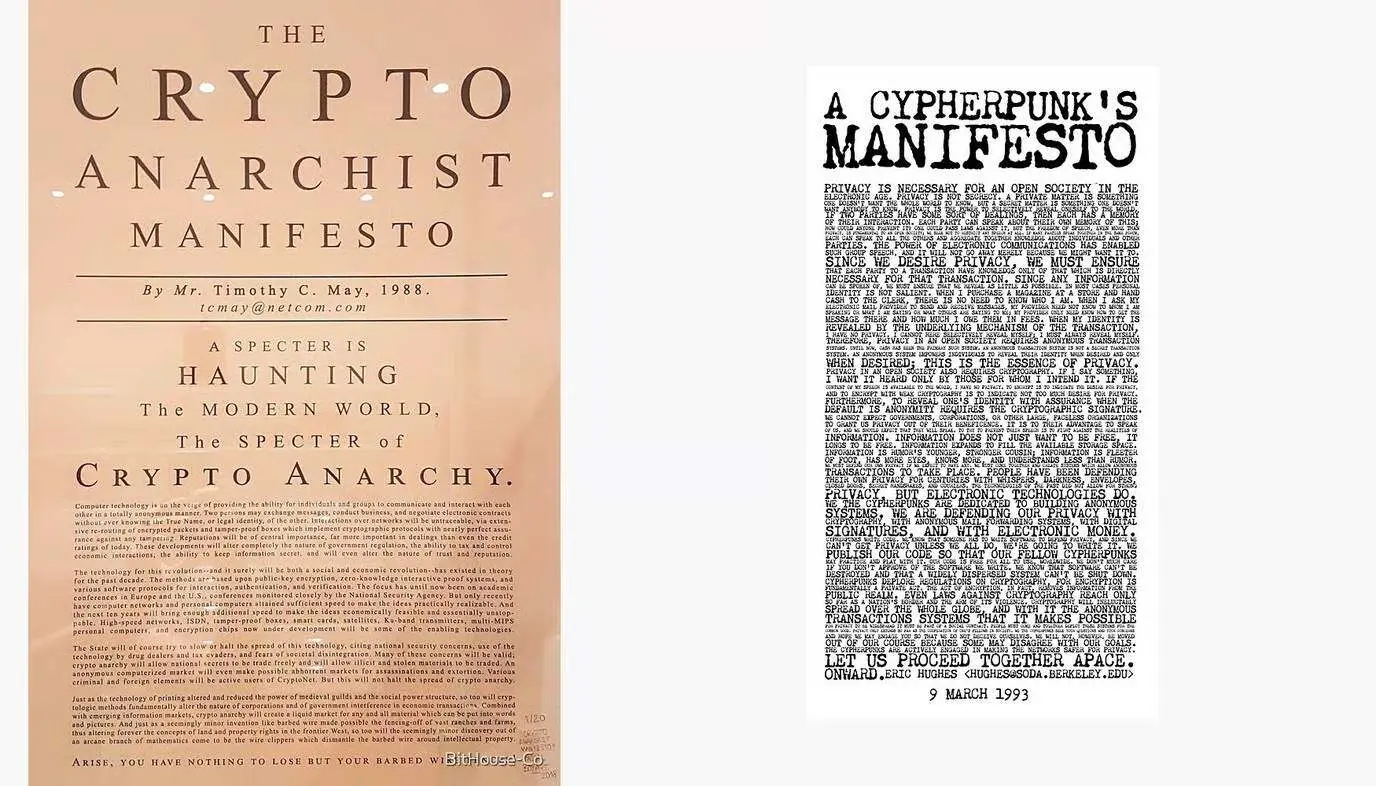
"The Crypto Anarchist Manifesto" and "The Crypto-Punk Manifesto"
Second Stage (2014): Initial Appearance
2014 was the birth year of the privacy coin sector, with Dash ($Dash) and Monero ($XMR) emerging that year. Both tokens achieved significant price increases that year but quickly retraced and returned to calm.
Among them, $XMR was integrated into the notorious dark web's economic system due to its enforced anonymity feature. While this created a unique use case, it also laid the groundwork for the subsequent devastating blow to the privacy coin sector.
Third Stage (2017-2021): From Marginal to Mainstream
During this period, the privacy sector benefited from the rapid development of the crypto market and an influx of capital.
Privacy coins stood out due to their unique value propositions. During this time, the narrative of "privacy is a right" began to spread from the tech circles to the mainstream cryptocurrency investor community.
During this stage, $Dash saw a peak increase of up to 135 times, far exceeding the core $BTC of the crypto world during the same period, with a peak market cap of $11 billion that year. $XMR increased by 24 times, and due to its core position in the dark web's economic system, the average daily trading volume of $XMR reached 450,000 transactions in Q4 of 2017.
It was also during this period that $ZEC emerged, introducing the concept of zero-knowledge proofs, which was enthusiastically embraced by tech-savvy investors and institutions. Its price increase once reached 29 times, with a peak market cap of $4.2 billion, further proving the market's attention to the privacy sector.

It was during this time that major exchanges rushed to list privacy coins, further boosting the entire sector. Additionally, during the DeFi Summer, the privacy coin sector successfully transformed, growing from a market cap of $2 billion at the beginning of 2020 to $14 billion by mid-2021.
However, the sword of Damocles hanging over the privacy coin sector began to show itself, ultimately falling in 2022.
Fourth Stage (2022-2025): Darkest Hour, Survival, and Long-term Regulatory Pressure
From 2022 to 2024, the privacy coin sector faced unprecedented regulatory crackdowns, entering its darkest hour.
On August 8, 2022, the U.S. Treasury sanctioned the ETH mixer Tornado Cash, sending a clear regulatory signal, officially marking the transition of privacy coins from the "gray area" to "under the red line."
The subsequent wave of delistings from exchanges became the first "domino" to topple the tower, with Binance announcing the delisting of $XMR (Monero) on February 6, 2024, citing "regulatory compliance requirements." Following this, mainstream exchanges like Kraken and OKX also followed suit, leading to a global crackdown on the privacy coin sector. By 2024, there were fewer than 10 exchanges globally supporting privacy coin trading, all of which were small exchanges. The liquidity crisis for privacy coins fully erupted.
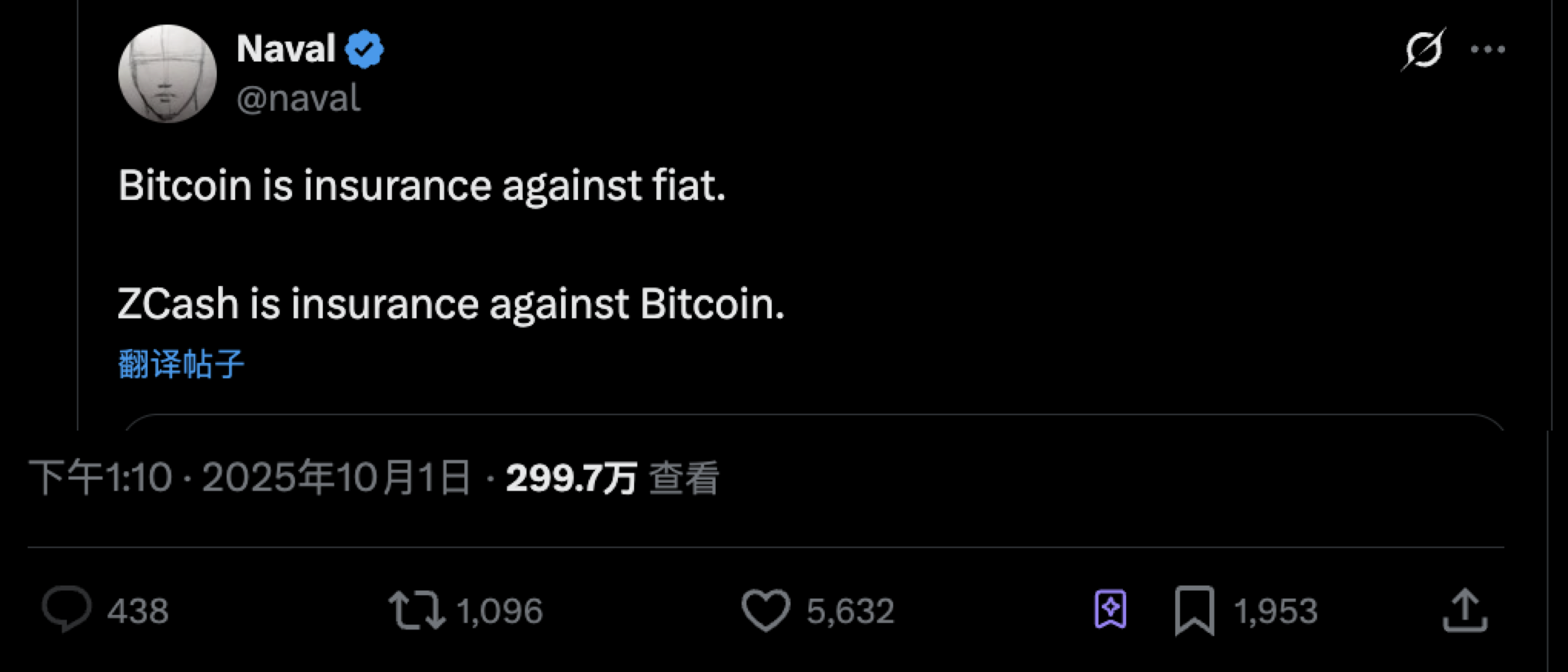
Although Naval's recent endorsement caused $ZEC to rise nearly 400%, the EU also announced at this time that it would fully ban anonymous cryptocurrency transactions by 2027, indicating that long-term regulatory pressure on privacy coins still exists.
Drivers of the Privacy Sector's Rebound
Beyond the surface-level market buying driven by Naval's endorsement, the privacy sector has deeper underlying reasons.
The simplest reason is the rebound from an oversold condition. The total market cap of the privacy sector fell from a previous $40 billion to $10 billion, a decline of 75%. In this context, any positive news can lead to exponential effects, and Naval's tweet happened to serve as this "random good news."
Another direct reason is the actual buying pressure brought by Grayscale's reopening. At the beginning of October, Grayscale Zcash Trust reopened for subscriptions. Although the specific amount was not disclosed, this move attracted a large influx of follow-on funds, bringing real buying pressure to $ZEC.
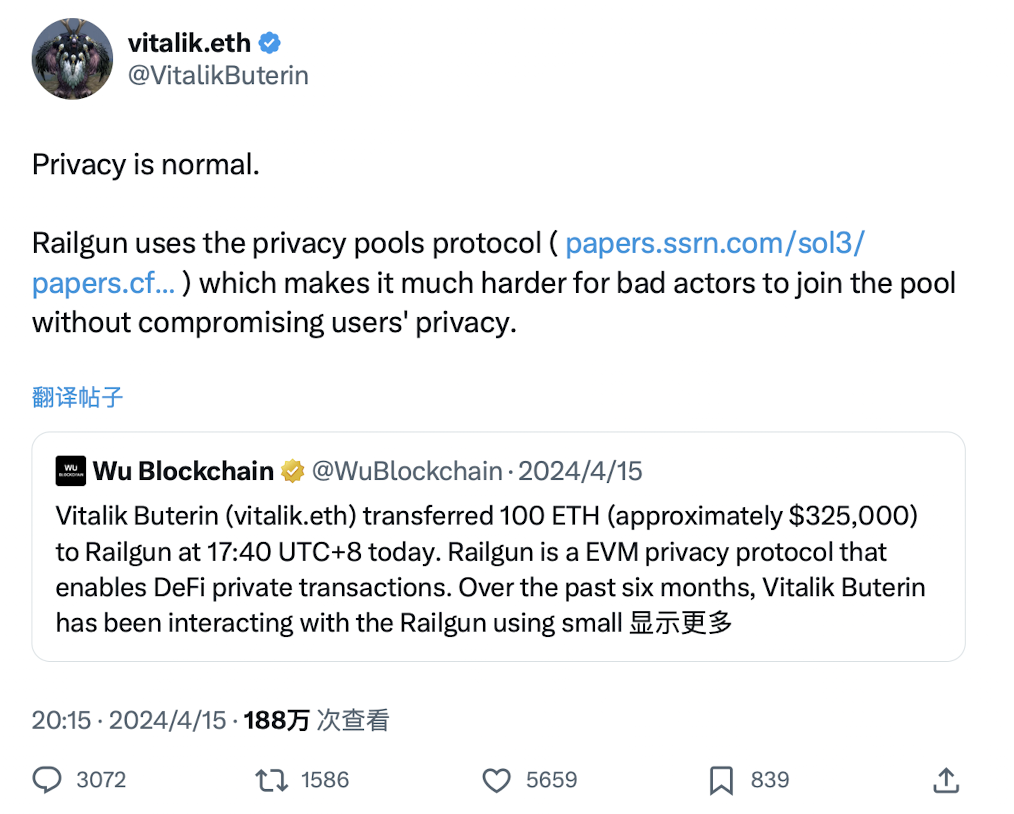
Recently, the ETH Foundation also stepped in to support Railgun. On October 9, the ETH Foundation announced that the Kohaku roadmap required the integration of Railgun technology. Additionally, Vitalik's previous $300,000 transfer to Railgun further strengthened market confidence in the privacy sector, with $RAIL quickly rising 270% on that day, validating the logic behind this phenomenon.
The liquidity scarcity caused by the previous delistings of privacy coins made the chips very scarce. In the absence of supply, any slight demand fluctuation can lead to rapid price increases.
On a larger scale, the ongoing geopolitical conflicts around the world and the uncertainty brought by Trump have also catalyzed a growing demand for financial privacy among various institutions and investors, coinciding with the black swan crash that directly brought this demand to the forefront.
Current Investment Opportunities in the Privacy Sector
$ZEC
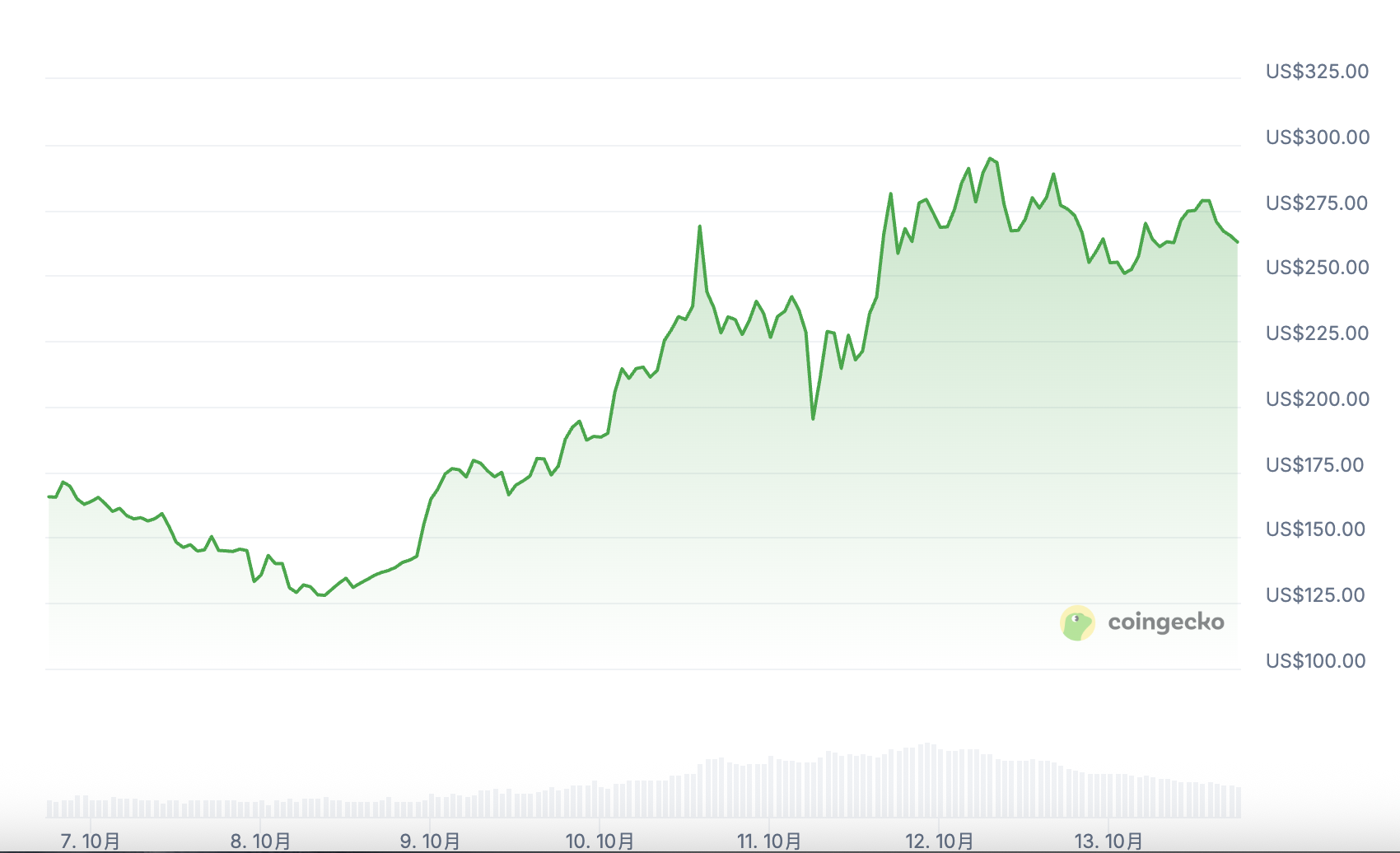
As a recently outstanding star project, $ZEC is undoubtedly a leading asset in the industry, reaching a recent high of $293, with a 7-day increase of 295% and a market cap of $4.26 billion.
However, its rapid rise throughout the period has recently faced a slight correction, with the current price falling to $262. Moreover, $ZEC's increase largely stems from Naval's influence, and as an early investor in Zcash, Naval has many undisclosed interests involved. It may face significant correction pressure in the short term.
$XMR
Compared to the recent exaggerated increase of $ZEC, $XMR, another leading asset in the privacy coin sector, may have higher upside potential.
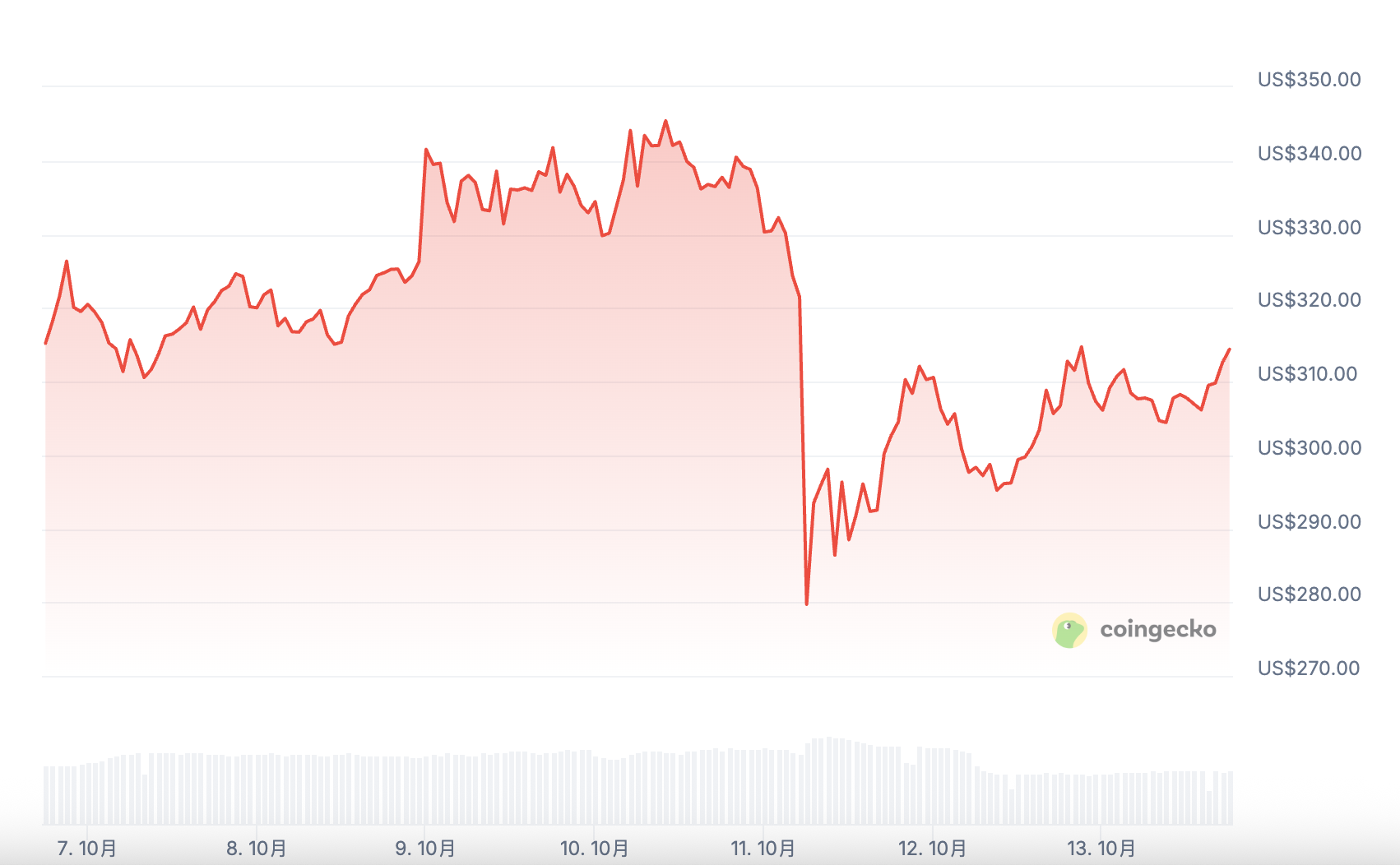
$XMR is currently priced at $305, with a market cap of approximately $5.64 billion, and a 7-day increase of only 48%, clearly lagging behind $ZEC, but also showing a trend of following suit.
On the other hand, as the most "pure" asset in privacy technology, $XMR is dedicated to creating strongly anonymous transactions, possessing unique narrative charm within the privacy coin sector.
According to CoinGecko data, the trading volume of $XMR has increased by nearly 170% compared to the previous period over the past 10 days, indicating its potential for further price increases.
$Dash
As a veteran project in the privacy coin sector that emerged around the same time as $XMR, Dash focuses on the intersection of privacy and payment, which is closely related to the currently popular stablecoins and crypto payment sectors. More popular tags mean that $Dash can gain more opportunities for market attention.
On the other hand, unlike Monero's enforced anonymity, Dash adopts optional privacy features, making it one of the few "regulatory-friendly" assets in the privacy coin sector, giving it a significant advantage in regulatory sensitivity.
Currently priced at $38.2, with a market cap of approximately $655 million and a 7-day increase of 48.5%, it is almost on par with $XMR and also shows a trend of catching up.
Other Small Market Cap Assets
In addition to the high market cap projects mentioned above, there are several small market cap projects in the privacy sector that are worth paying attention to, theoretically offering stronger price appreciation potential, but their current price performance is uneven, requiring careful consideration by investors.
Secret Network ($SCRT)
Secret Network is a privacy-focused Layer 1 blockchain that provides customizable privacy features for dApps through encrypted smart contracts.
Its core competitiveness lies in combining privacy attributes with the currently popular tag of AI. Its 2025 roadmap focuses on the integration of infrastructure, AI models, and privacy computing, aiming to build decentralized, privacy-first AI applications.
Currently, the price of $SCRT is $0.19, with a market cap of approximately $6.184 million, a 24-hour trading volume of $14.85 million, and a 7-day price change of a decrease of 10.91%.
Related Reading: “Secret Labs Mid-Year Roadmap Update”
Pirate Chain ($ARRR)
Pirate Chain is a pure privacy blockchain dedicated to providing completely anonymous transactions.
Currently, the price of $ARRR is $0.4316, with a market cap of approximately $84.69 million, a 24-hour trading volume of $588,000, and a 7-day price change of an increase of 41.02%.
PirateChain is built on the Komodo platform's asset chain, combining Zcash's zero-knowledge proofs with Monero's privacy features. All its transactions default to using shielded addresses, ensuring the highest level of financial anonymity.
During the recent black swan crash, $ARRR, like mainstream privacy coins, demonstrated strong resilience, experiencing nearly a 10% decline before quickly rebounding 37% on the 12th. Coupled with its current small market cap characteristics, it may offer investors unexpected returns.
Sector Outlook: Moving Forward Amidst Contradictions
Although the privacy sector currently shows strong rebound momentum, investors should also be aware of Naval's past role as a board member of the Zcash Foundation and other related interests during this rise, while the shadow of regulation has never been far from the privacy coin sector.
The investment logic in the privacy sector has shifted from idealism to practical application; only projects that genuinely address user pain points can possess stronger vitality.
Investors looking to invest in the privacy sector need to prioritize whether to choose projects with strong anonymity that face regulatory pressure or regulatory-friendly projects that align more closely with the essence of "privacy."
 Risk warning Risk warning




Popular articles





