








Bitcoin falls below $110,000. Is the market turning bearish?
 Core Viewpoint

 Even Tom Lee has stated that the crypto treasury bubble may have burst.
Original Title: "Bitcoin Falls Below $110,000, Whose Wallet is Losing Money Again?"
Original Author: 1912212.eth, Foresight News
After the black swan crash on October 11, the market is generally worried about a "second dip." Just a few days later, another crash occurred. On October 17, Bitcoin fell from a rebound of $116,000, experiencing four consecutive daily declines. Around 4 PM today, it briefly dipped to around $104,500, just a stone's throw away from the crash low of $102,000 on October 11. ETH also could not escape, dropping to $3,706, while SOL fell to around $175, with many altcoins experiencing widespread declines.
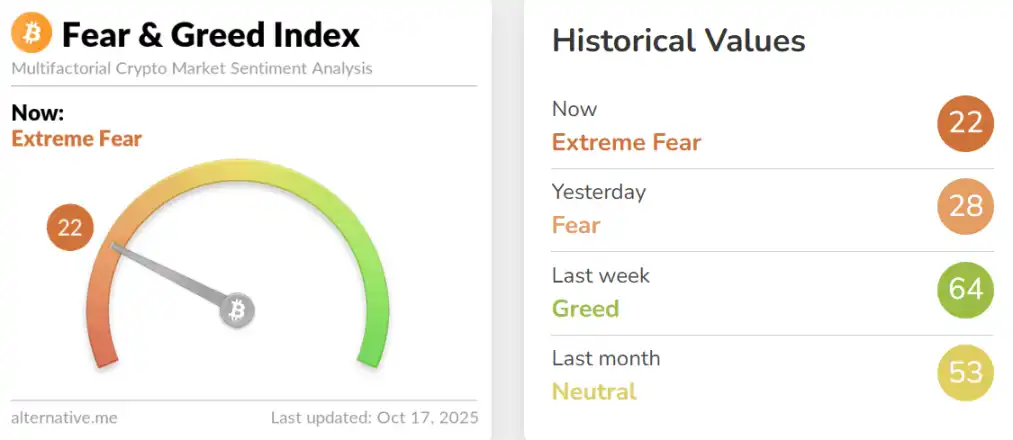
Coinglass data shows that in the past 24 hours, the total liquidation of open contracts across the network reached $1.189 billion, with long positions liquidating $935 million. The largest single liquidation occurred on Hyperliquid - ETH-USD, valued at $20.4274 million. Alternative data indicates that the current market fear index has dropped to 22, entering extreme fear.
Significant Net Outflows from US BTC and ETH Spot ETFs
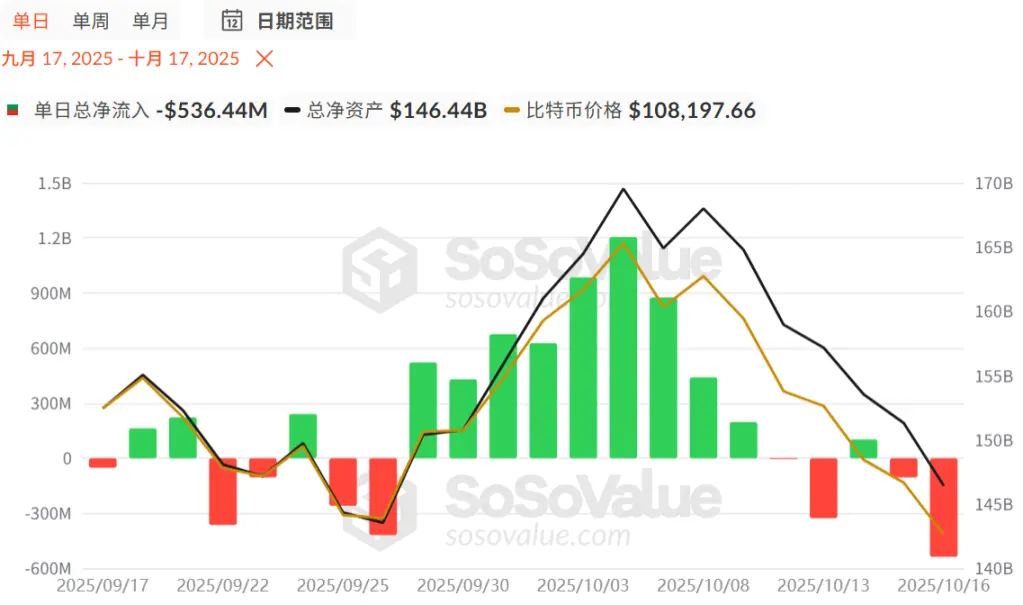
Since the crash event, US BTC spot ETF data has shown significant net outflows. From October 10 to October 16, only October 14 recorded a net inflow of $102.58 million, while the rest were net outflows. The net outflow on October 1 even exceeded $536 million, setting a new low since August this year.
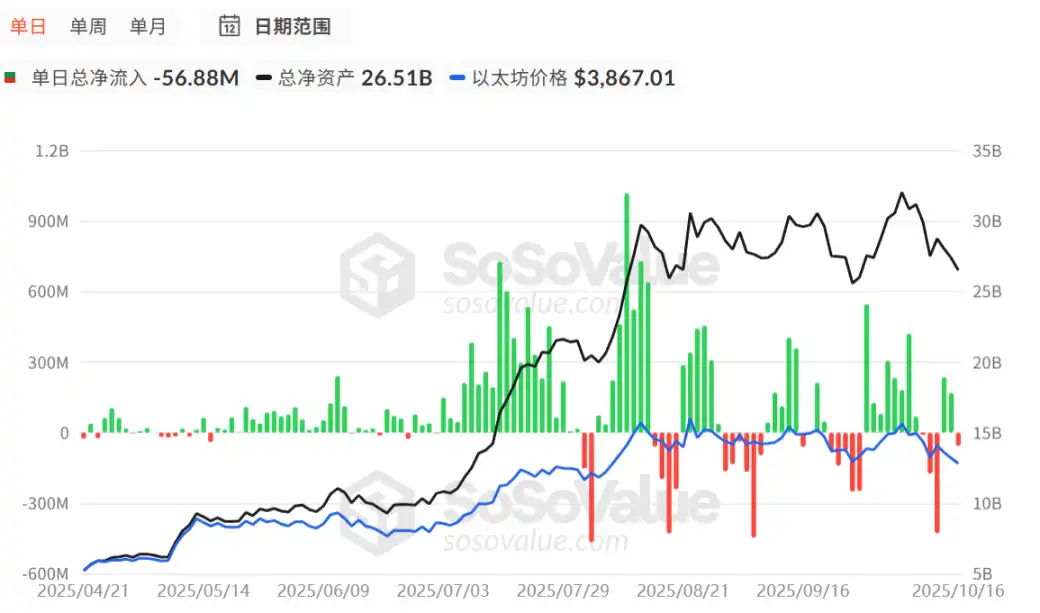
The situation for Ethereum spot ETFs is similarly bleak, with large net outflows continuously occurring since October 9. On October 13, the net outflow exceeded $428 million, marking a new high for net outflows since September this year.
Market Confidence Weakened by the Crash Event
DeFiance Capital, which once thrived by betting on multiple DeFi projects, suffered losses in this crash event. On October 14, its founder Arthur posted on social media, stating, "We are fine; the fund has incurred some losses, but it does not rank among our top five days of profit and loss fluctuations. I am just very angry and disappointed; this crash has set the entire crypto field back significantly, especially for the altcoin market, as most price discovery processes occur on offshore CEX."

He even pessimistically believes that this crash event represents the end of the crypto era.
The previously hyped DAT trend has also cooled down. Tom Lee, chairman of BitMine, the largest Ethereum holding institution, stated that this bubble may have burst.
Previously, the US Nasdaq-listed company QMMM Holdings announced on September 9, 2025, its intention to invest $100 million to establish a cryptocurrency reserve, with its stock price rising 9.6 times in three weeks. The US Securities and Exchange Commission (SEC) deemed at the end of September that the company was suspected of manipulating stock prices using social platforms, ordering it to suspend trading from September 29. The company has been suspended ever since. Caixin visited its Hong Kong headquarters on October 16 and found the office empty. When inquiring with employees from a nearby company, they stated that the company moved away in September and they were unaware of its new location.
Zhao Changpeng commented, "All crypto treasury (DAT) companies should use third-party crypto custody institutions and have their accounts audited by investors."
US Small Banks Face Crisis, Market Sells First and Asks Questions Later
Zions Bancorp and Western Alliance Bancorp, two US regional banks, disclosed on Thursday that they suffered losses due to fraud involving bad commercial mortgage investment funds. Although the scale of their losses is relatively small compared to recent credit crisis events, involving only tens of millions of dollars, the market's reaction was exceptionally severe.
The German DAX index fell by 2.13%, the UK FTSE 100 index dropped by 1.6%, the Nikkei 225 index decreased by 1.44%, the Australian S&P/ASX 200 index fell by 0.81%, and all three major US stock index futures declined.
Panic sentiment quickly spread, dragging down the entire banking sector, with the total market value of 74 large US banks erasing over $100 billion in a single day.
This "sell first and ask questions later" mentality spread rapidly. JPMorgan analysts Anthony Elian and Michael Pietrini pointed out in a report that they are also questioning "why all these credit 'isolated incidents' seem to be happening in a short period." However, the sell-off did not spare large bank stocks, with Citigroup and Bank of America both seeing their stock prices drop by over 3%.
The 2023 US banking crisis once triggered a significant pullback in the crypto market.
Is the Market Turning Bearish?
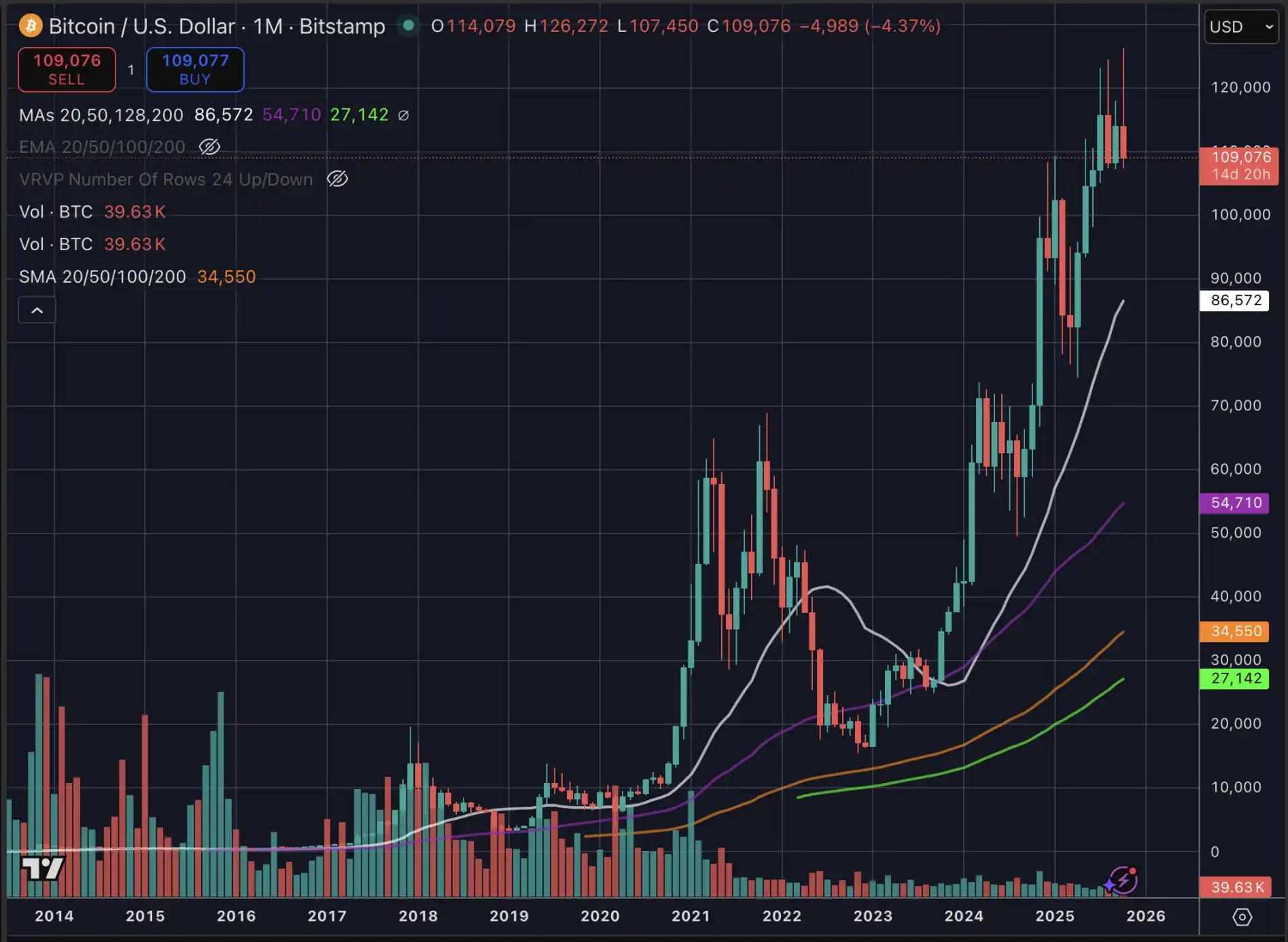
Chris Burniske, a partner at Placeholder VC, stated, "I increasingly feel that last Friday's crash has put the crypto market in a state of stagnation in the short term. After such a crash, it is difficult to quickly form sustained buying pressure. This cycle has been disappointing for most people, which may limit actions as everyone is waiting for the market to warm up or return to previous historical highs. It is easy to get caught up in the minutiae of charts, but if you look at the monthly charts of BTC and ETH, they show we are still in a high range (although there are cracks), if you consider taking profits."
MSTR is falling, gold is sending warnings, and the credit market is also showing signs, while stocks will be the last to react. We can always expect a weak rebound, but I have taken action (remember, cashing out is never all or nothing). I will observe BTC's reaction to $100,000, but when BTC reaches $75,000 or lower, I may become interested in the market again. This bull market is different from previous ones, and the next bear market will also be different."
McKenna, a partner at Arete Capital, stated that the market is in the process of forming a bottom, which will take 40-60 days to establish. All price actions during this interval are oscillatory and shakeout. "By mid-November, we should start expecting constructive results and welcome a positive December and the first quarter of 2026."
Glassnode tweeted that Bitcoin is currently at a critical support level, with the price below the 200-day moving average ($107,400) and just above the 365-day moving average ($99,900), while facing resistance from the 111-day moving average ($114,700).
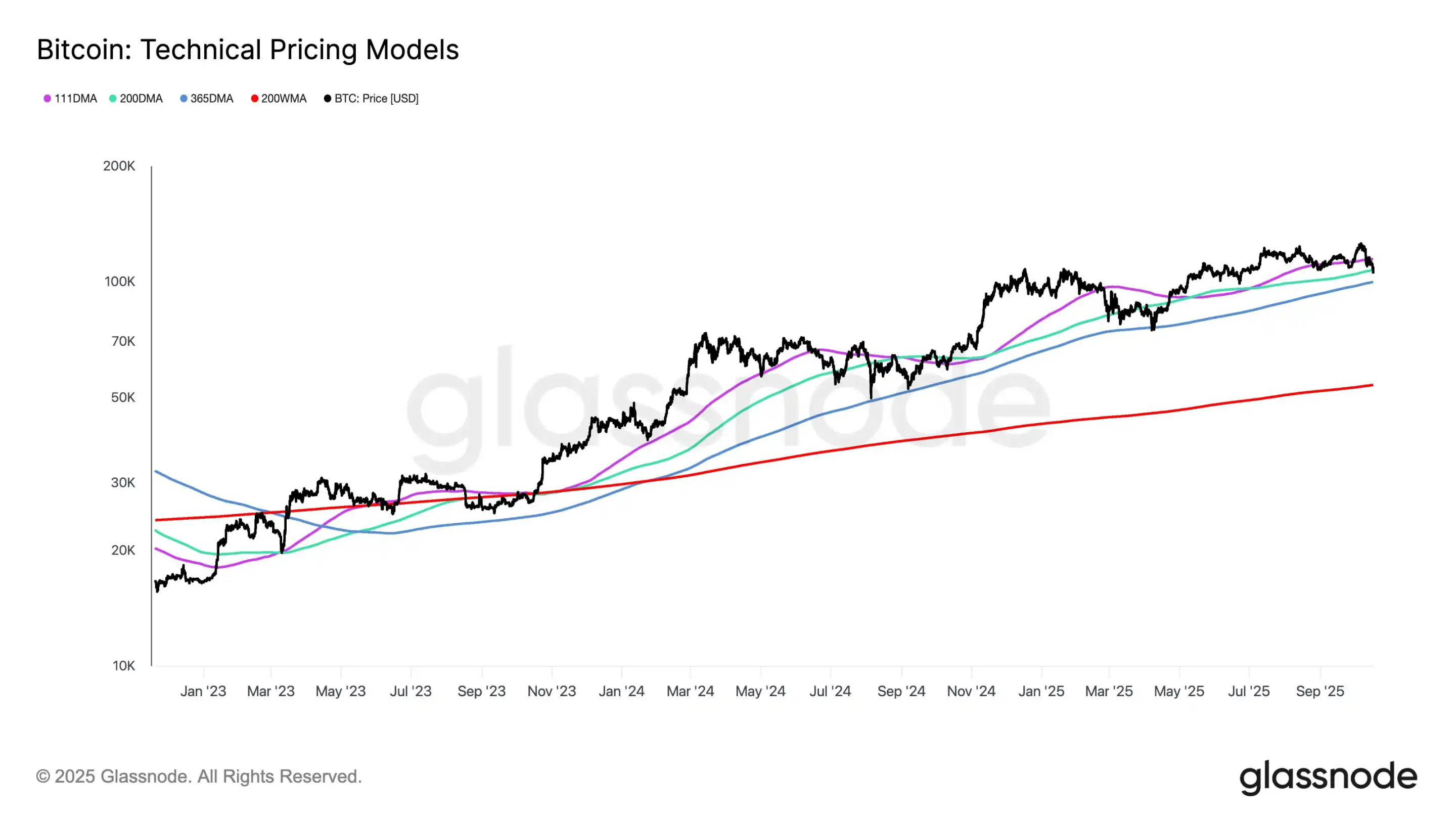
If it can hold above the 365-day moving average, the trend may stabilize; if it falls below this level, it may face deeper pullback risks.
 Risk warning
 Risk warning



Popular articles





