








CEEX launches VASP license application in Dubai, officially strategizing its layout in the Middle East cryptocurrency market

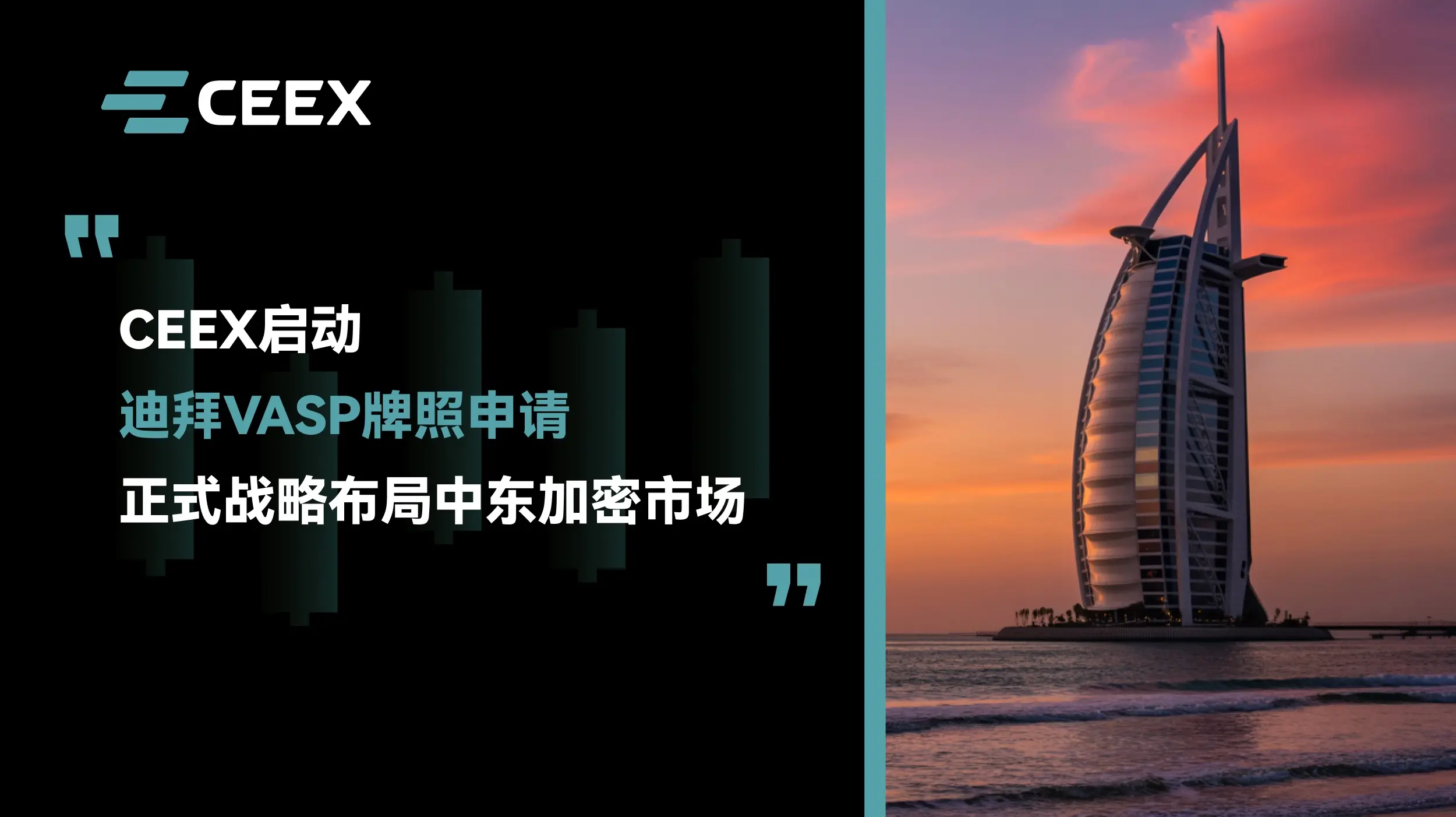
The globally leading cryptocurrency trading platform CEEX has officially submitted its Virtual Asset Service Provider (VASP) license application to the Dubai Virtual Assets Regulatory Authority (VARA), marking a key step in its globalization strategy. This application aims to obtain compliance permission for conducting virtual asset trading, custody, and settlement services in Dubai, laying an important foundation for entering the Middle Eastern market.
CEEX is a globally leading exchange driven by brokers. Since the launch of its broker system, the number of daily active brokers has exceeded 300,000, forming the industry's largest broker ecosystem. To reward contributors, CEEX has launched a significant Broker Incentive Program + Platform Token CMC mining mechanism, empowering the community that drives the platform's rapid development with a long-term, sustainable incentive model.
Since its establishment in 2019, CEEX has adhered to a dual-driven approach of "technological innovation + compliant operations." Its platform token CMC possesses three attributes: MEME token + mining token + platform token, carrying traffic consensus while also having real mining value and ecological application scenarios. CMC has been widely used in areas such as trading fee deductions, ecological project incubation, and community governance, becoming the core engine of CEEX's global ecosystem.
Currently, CEEX has obtained regulatory licenses in multiple regions, including Canada and the U.S. MSB, and is making every effort to secure the Dubai VASP license. Once approved, CEEX will be among the first Asian exchanges to operate with compliance licenses in the Middle East, further solidifying its global leading position.
In recent years, Dubai has continuously improved its regulatory framework for virtual assets, and the licenses issued by VARA are regarded as a global high-standard compliance certification. The penetration rate of cryptocurrencies in the Middle East is rapidly increasing, with the UAE planning to raise the proportion of the digital economy to 20% by 2030. CEEX's layout not only takes advantage of Dubai's geographical position as a financial hub in the Middle East but also aligns with the region's urgent demand for transparency in digital asset regulation.
It is noteworthy that CEEX plans to launch Sharia-compliant trading products that adhere to Islamic financial rules after obtaining the license, which will create a compatible channel between traditional cryptocurrencies and the Islamic financial system. The platform will also collaborate with local Dubai institutions to launch an Arabic service interface and establish a Middle East headquarters for localized operations.
As the value carrier of the platform ecosystem, CMC has initiated a liquidity incentive program targeting the Middle Eastern market. It is reported that after obtaining the license, CMC will connect to Dubai's local payment system, supporting direct recharge and settlement in dirhams, and participate in the construction of local metaverse and Web 3.0 infrastructure.
Industry analysts point out that there is a significant demand for institutional-level cryptocurrency asset allocation in the Middle East. With its first-mover compliance advantage, CEEX is expected to become an important bridge for digital asset connectivity between China and the Middle East. If this application is approved, it will significantly enhance CEEX's competitiveness among global compliant exchanges and provide a safer trading environment for platform users.
As the application process progresses, CEEX plans to establish a compliance office in the Dubai International Financial Centre, initially recruiting over 50 local compliance and technical talents. The platform's co-founder stated: "The Middle Eastern market holds an open attitude towards blockchain innovation, and we will strictly adhere to VARA's regulatory requirements to provide institutional-level security services for regional users."
 Risk warning Risk warning
Popular articles





