








Cryptocurrency Compliance Lone Warrior: How Circle CEO Breaks Through the Double Squeeze of Tether's Siege and Falling Interest Rates?
 Core Viewpoint

 Circle's upcoming financial report will be a new opportunity for it to demonstrate the effectiveness of its strategy.
Written by: Olga Kharif
Translated by: Saoirse, Foresight News
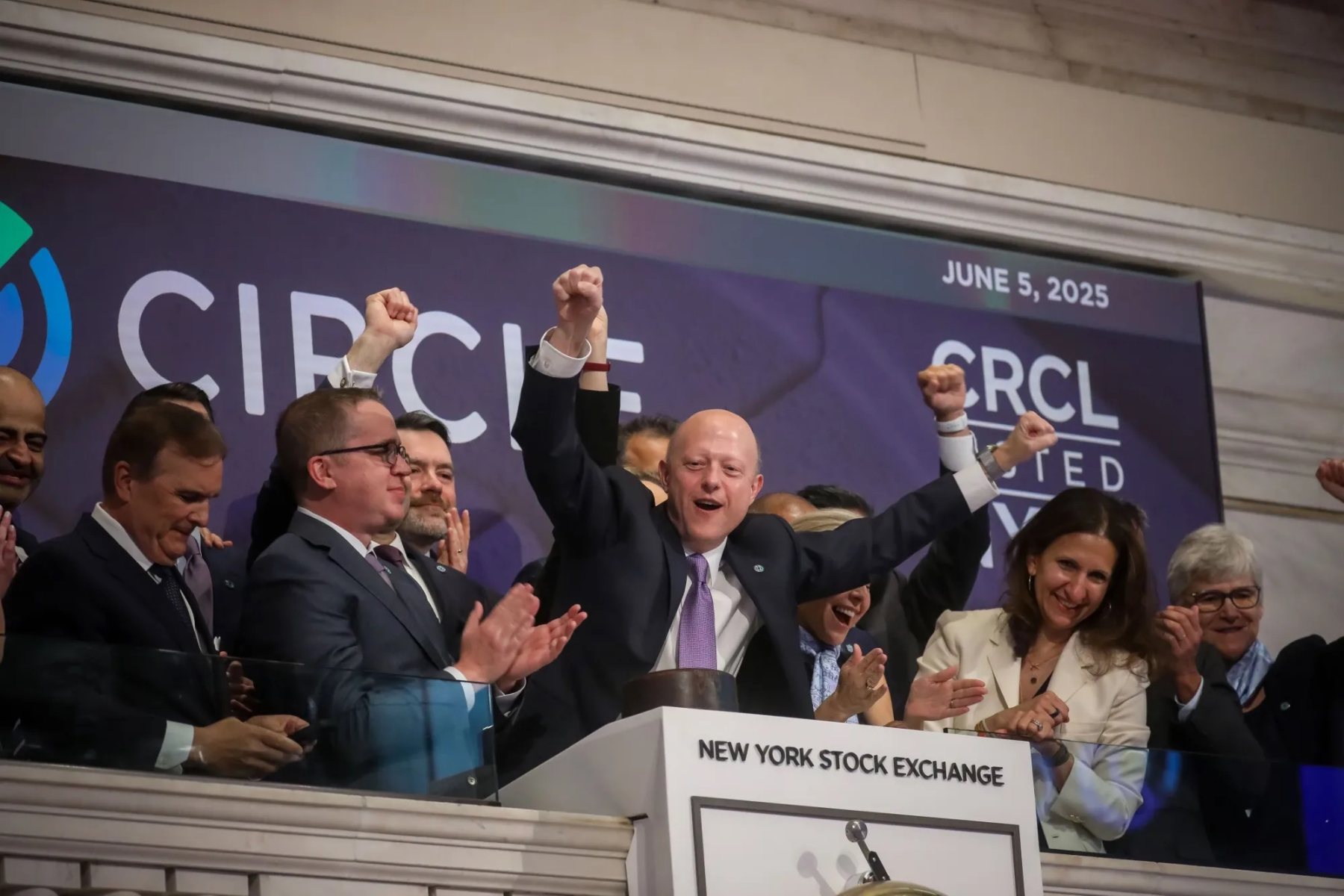
On June 5, Circle CEO Jeremy Allaire (center) attended the company's IPO ceremony at the New York Stock Exchange. Photographer: Michael Nagle / Bloomberg
Key Points:
- Despite Circle being one of the most mature companies in the stablecoin sector and CEO Jeremy Allaire joining the ranks of billionaires, he still has an unfinished path of proof.
- Circle is facing multiple challenges: intense market competition, core revenue sources at risk due to declining interest rates, and its main competitor Tether returning to the U.S. market.
- Allaire firmly believes that his strategy and Circle will ultimately prevail, with the company set to release its financial report on Wednesday, providing him a new opportunity to prove the effectiveness of his strategy.
Jeremy Allaire still has an unfinished path of proof.
As the CEO of Circle Internet Financial, his company is one of the leading enterprises in the latest cryptocurrency trend—the stablecoin sector. The business model he has promoted for years has been formally incorporated into the legal framework through legislation signed by President Trump; thanks to Circle's IPO launched in June, which has sparked a wave of listings in the cryptocurrency industry in 2025, Allaire has now become a billionaire.
However, the 54-year-old CEO still struggles to gain widespread recognition in the industry, and Circle is facing multiple pressures. The market competition is exceptionally fierce, and core revenue sources are at risk of shrinking due to declining interest rates; meanwhile, the main competitor—Tether, which has far superior profitability and valuation compared to Circle—is returning to the U.S. market, which is undoubtedly a dangerous signal for Circle's domestic position.
Traditional bankers view Allaire as a threat, fearing that stablecoins will siphon off bank deposits; meanwhile, his peers in the cryptocurrency field keep their distance from him. At industry conferences filled with hoodie-clad attendees, he is always the one in a suit, a "misfit." More critically, he not only insists on compliant operations but also actively promotes the establishment of industry regulations by legislative bodies.
In an industry that prides itself on anonymity, unique personalities, and disrupting traditional financial systems, such ideals clearly do not win Allaire the "popularity contest."
"Jeremy Allaire's strategic path has always been contrary to the Bitcoin ecosystem," said Cory Klippsten, head of the Bitcoin investment platform Swan Bitcoin. "The goal of Bitcoin is to separate money from the state, while his core work is to integrate crypto technology into the existing fiat currency system."
Despite the ongoing skepticism, Allaire remains confident that his strategy and Circle will ultimately prevail. The company is set to release its financial report on Wednesday, which will be a new opportunity for him to prove the effectiveness of his strategy.
"To persevere, you must have a firm belief in the importance of what you are doing and a strong moral foundation," Allaire said in an interview. "You will face setbacks, and everyone will tell you 'you are wrong' and 'you will fail.' But for me, this is not just a business plan—I'm doing this because I genuinely believe it can improve the world."
Allaire's career at Circle has been full of ups and downs; the company was founded in 2013.
Circle initially started as a payment platform based on the Bitcoin network, and it has adjusted its strategy multiple times, coming close to bankruptcy and facing funding difficulties due to the collapse of Silicon Valley Bank. To maintain the operational structure of its core stablecoin USDC, Allaire ultimately had to sell assets and lay off hundreds of employees to keep the company afloat.
"At Circle's crisis moment, no one believed I could pull through," Allaire recalled. "But I gave it my all."
Challenges in Revenue Growth
Now, Allaire's challenges have shifted from "survival" to "proving growth capability."
Stablecoin issuers like Circle primarily generate revenue by investing reserves in short-term cash-like assets such as U.S. Treasury bonds. As interest rates decline, even if Circle's revenue grows, the unit investment returns will almost inevitably decrease.
Additionally, the revenue-sharing agreement Allaire reached with Coinbase Global Inc. has significantly squeezed Circle's profit margins. In the second quarter of 2025, the distribution fees payable to Coinbase will be more than three times Circle's adjusted profit of $126 million. In contrast, Tether, which does not have to comply with the same rules and auditing requirements, reported profits of up to $4.9 billion during the same period.
Top 5 Stablecoins by Market Capitalization
Unit: Billion USD
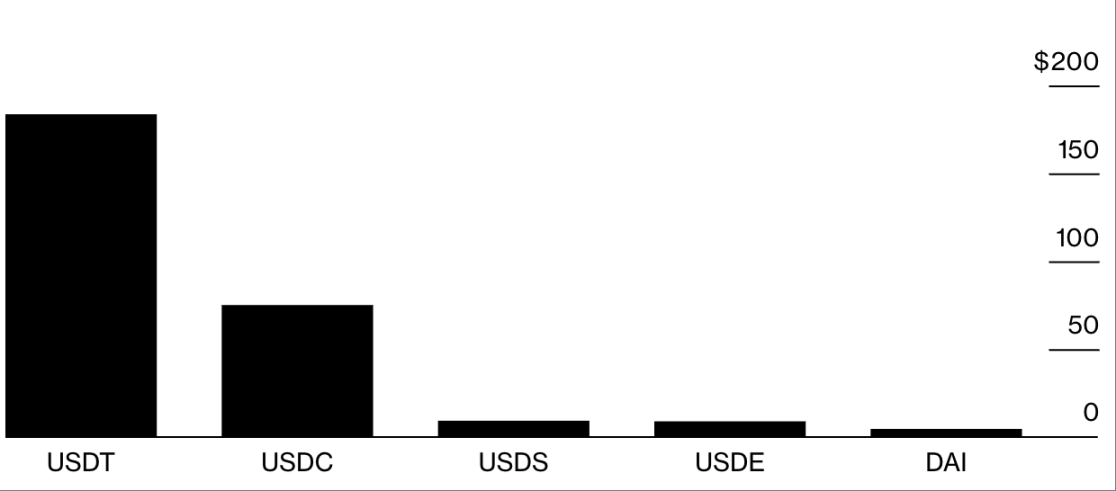
Data Source: CoinGecko
Tether's USDT was launched several years earlier than Circle's USDC and has a much larger scale—USDT's market capitalization is $183 billion, while USDC is only $76 billion—thus having stronger revenue-generating capabilities. Additionally, Tether has ties to Cantor Fitzgerald, where U.S. Secretary of Commerce Howard Lutnick previously worked.
Another new stablecoin competitor, World Liberty Financial Inc., is associated with the Trump family. As the usage of stablecoins surges, hundreds of companies, including Tether and World Liberty, are vying for Circle's market share. Allaire admitted in a recent earnings call that this field is a "winner-takes-all market."
Currently, Allaire is trying to open new revenue sources for Circle through other businesses, but Wall Street analysts are generally skeptical about the effectiveness of this initiative. His recent attempts include launching blockchain, payment networks, and tokenized money market funds.
Despite this, Mizuho Securities analyst Dan Dolev bluntly stated, "USDC is just another stablecoin, nothing special. Circle's stock is overvalued; it's that simple." Among the analysts tracking Circle, four have given "sell" ratings, eleven have given "buy" ratings, and ten have given "hold" ratings.
Currently, Circle's stock price is about $104, which is far above the IPO issue price of $31 but less than half of its peak after listing. Its market capitalization of $24 billion pales in comparison to Tether's current fundraising activities, which suggest a valuation of $500 billion.
Background as a Tech Entrepreneur
Although Allaire has previously led two companies to IPO—software company Allaire Corp. and video platform Brightcove Inc.—Circle is almost certain to become the core legacy of his career.
Allaire's interest in technology began in childhood: when he was 11, his family moved to the small town of Winona, Minnesota, and he and his brother JJ were seen as "a bit nerdy"—they would take machine language printouts and type them into computers to create games. "If you misspelled even one letter, the program wouldn't run, so you had to be extremely focused," he recalled.
As an adult, Allaire fully immersed himself in the internet field. He even helped political activist Noam Chomsky digitize his works. Subsequently, he founded several startups. Shortly after leaving Brightcove, he co-founded Circle with his friend Sean Neville.
"I used to hang out at his house a lot," Neville recalled. "Our ultimate goal was to create a whole new financial system."
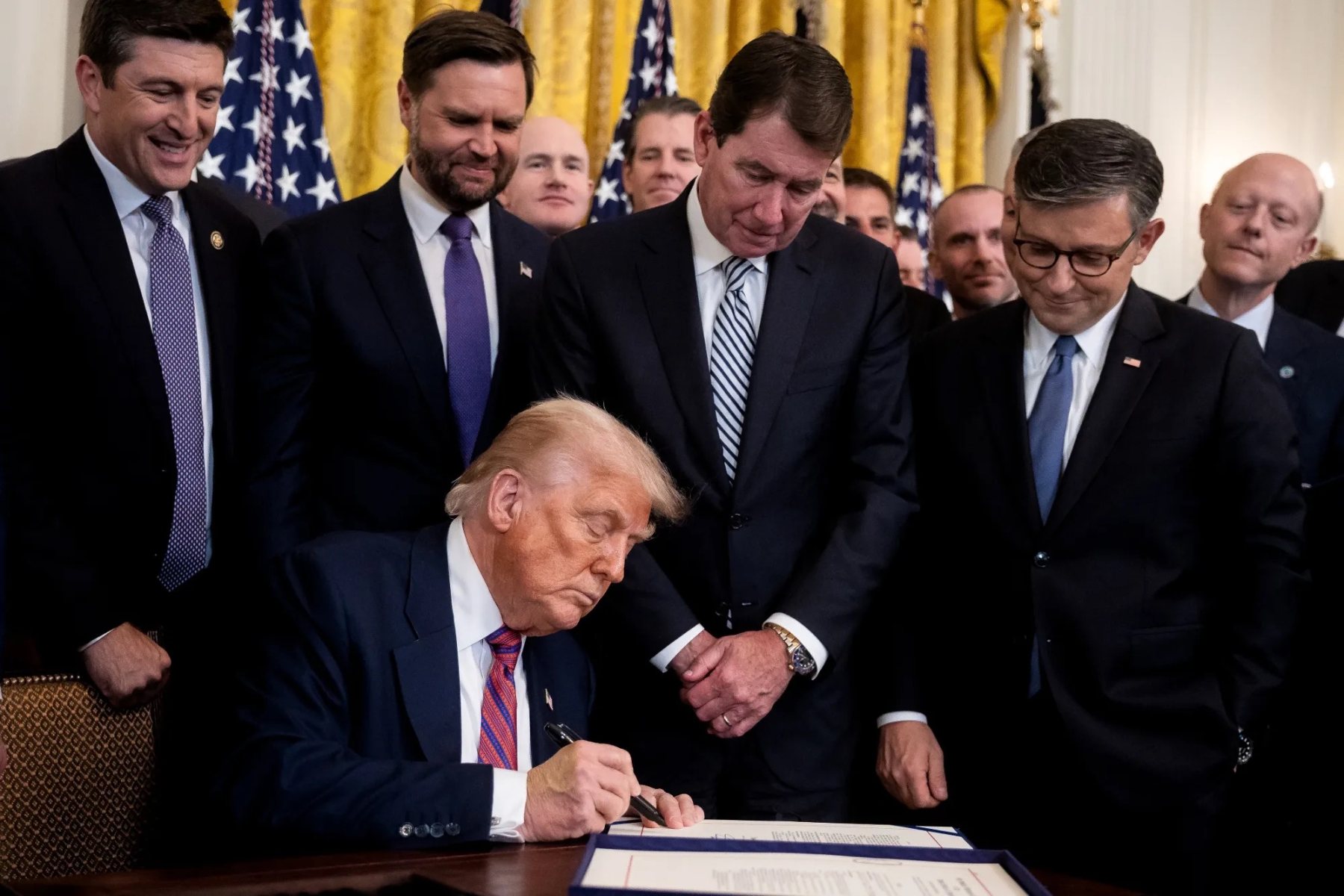
On July 18, 2025, President Trump held a signing ceremony for the "GENIUS Act" at the White House, attended by Circle CEO Jeremy Allaire (top right). Photographer: Francis Chung / Politico / Bloomberg
According to the Bloomberg Billionaires Index, Allaire's current personal wealth is $2.1 billion, primarily from his stake in Circle. This figure, while far below Tether CEO Paolo Ardoino's $5.6 billion, is comparable to well-known figures in American business such as Apple CEO Tim Cook and BlackRock CEO Larry Fink.
Allaire stated that he grew up in a family with "progressive values"—both parents worked in social services and activism—but he spoke highly of his experience attending the signing ceremony for the "GENIUS Act" at the White House and shaking hands with Trump. The act establishes a federal regulatory framework for stablecoins.
"I felt incredibly honored and excited to be part of it," Allaire said. "The pen hit the paper, the act took effect, and I was able to play an important role in this process—this is one of the most meaningful moments of my life."
Public records show that Allaire has primarily supported the Democratic Party for a long time, but Circle donated $1 million to Trump's inauguration committee.
Fitness Lifestyle
A few years ago, Allaire started a fitness regimen: he quit alcohol, began focusing on healthy eating, and according to health app data, he now averages seven hours of sleep per night.
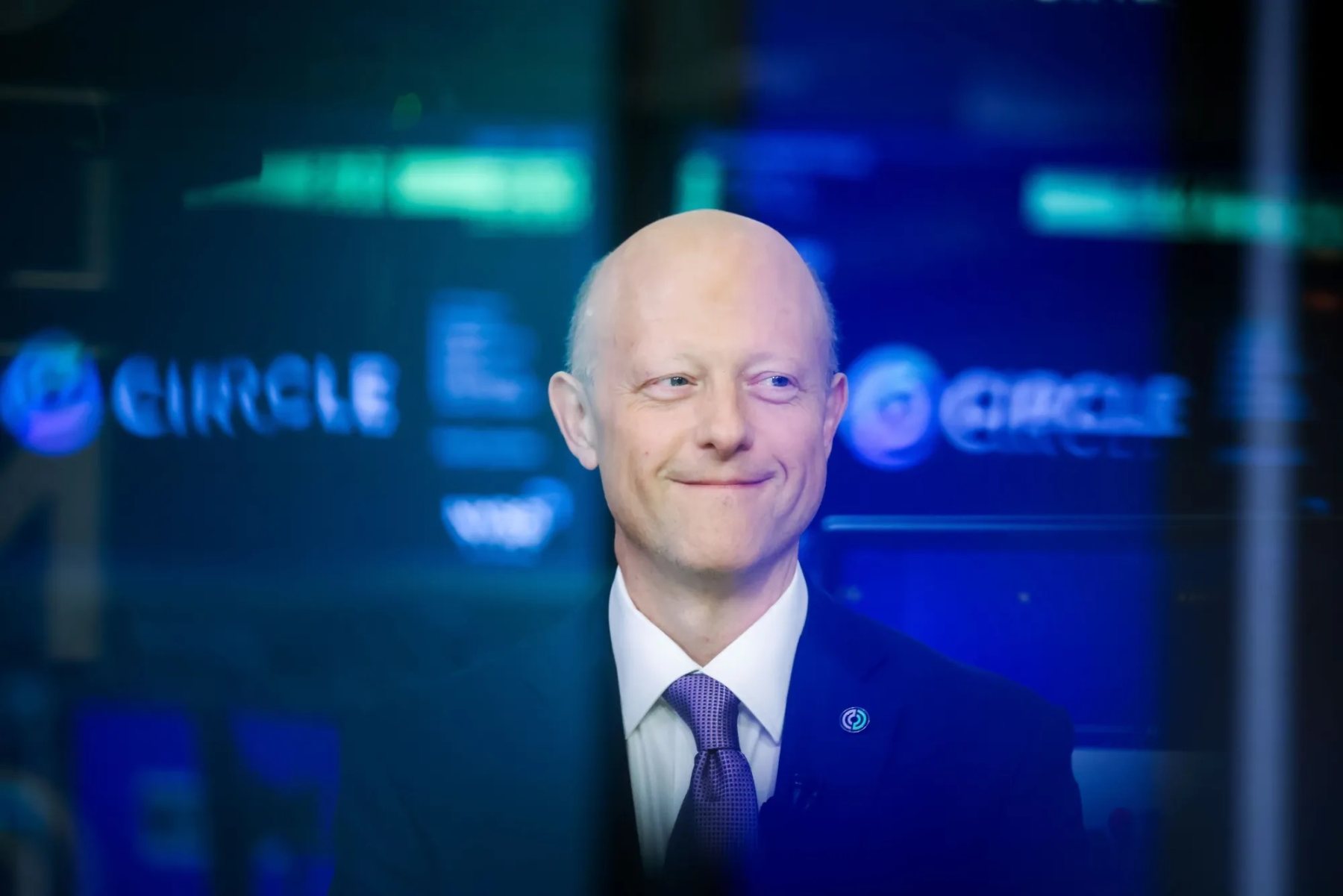
On June 5, Jeremy Allaire attended Circle's IPO ceremony at the New York Stock Exchange. Photographer: Michael Nagle / Bloomberg
Current and former employees both describe Allaire as a "gentle but strict" boss—he does not shout or slam tables, does not stay late in the office, but is almost always quick to respond to messages. Some recall having strategic meetings with him while walking in the woods.
Now, Allaire is planning the next steps.
"Building a monetary layer on the internet is the goal of phase 1.0," Allaire said. "We have achieved this step, and now we are advancing the planning for phases 2.0 and 3.0."
 Risk warning Risk warning


Popular articles





