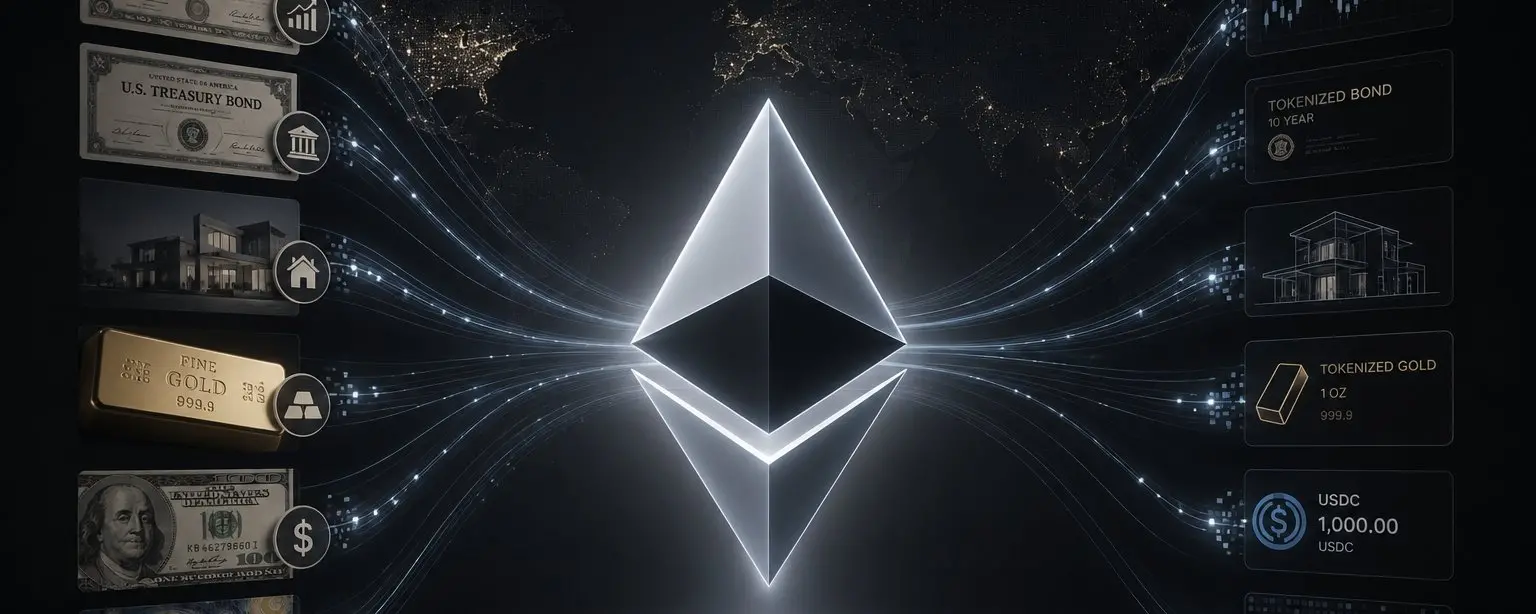
Dialogue with StakeStone founder Charles: "Preterm" for 28 years, x402 has endured to welcome its "future bank" era

 The intersection of blockchain and AI has given the long-dormant 402 status code, which has been asleep for 28 years, a chance to be "needed."
Written by: Web3 Farmer Frank
Years-old technology colliding with a new computing paradigm, evolving into a financial behemoth beyond anyone's expectations?
Don't get it twisted, I'm not talking about Bitcoin, but x402.
As an HTTP status code that was "designed ahead of its time" back in 1997, 402 was born in an era when the internet belonged solely to humans. At that time, there was no high-frequency payment demand from machine accounts, nor was there a low-cost, trustworthy on-chain settlement mechanism, which is why it has never been truly utilized in the past 28 years.
Until this year, when Coinbase, in collaboration with giants like Cloudflare, Google, and Visa, began to attempt to establish it as a universal industry standard x402. This long-dormant protocol has finally been awakened, and in some ways, it resonates with Bitcoin.
After all, BTC is not the starting point of technological breakthroughs, but rather a critical explosion of various mature technologies under the right historical conditions—including cryptographic signatures, peer-to-peer networks, timestamps and hash chains, as well as proof-of-work mechanisms (PoW), etc. In other words, Bitcoin arrived at the right time and place, combining these technologies in an unprecedented way.
And x402 seems to be standing at a similar historical juncture: As AI begins to possess autonomous intent, and as blockchain provides verifiable settlement and identity systems, the "Payment Required" channel that has slept for 28 years is finally reawakened, revealing the embryonic form of a new future on-chain banking system.
This interview also hopes to understand, through the perspective of StakeStone founder Charles, why 2025 may be the intersection of "machine economy × blockchain × financial standardization," and how, in his view, the cryptonative digital bank hidden behind x402 could become a key piece of the next narrative.
1. The "Premature" 402 and the Timely "Future Bank"
In other words, in Charles's view, "there is only the era of x402, not an era without x402."
Frank: "There is only the era of x402, not an era without x402," this viewpoint is quite interesting. Let's start with the most basic question: why do you say that HTTP 402 is a "premature" technological concept?
Charles: Because it was born too early, so early that there was no soil for its existence at that time.
When HTTP 402 (Payment Required) was written into the web standards in 1997, the core demand of the internet was still "to allow humans to share information," rather than "to enable value transfer between machines."
So its logic was actually very advanced; it reserved a "payment" interface at the web protocol layer, which can be seen as a future imagination of "digital payments." But the problem was that there was no stable electronic currency, no on-chain ledger, and no economic activities involving machine entities at that time.
In simple terms, it was designed for a world that did not yet exist in 1997.
Frank: It sounds like HTTP 402 was born ahead of its time. This story of "waiting for the right moment" is quite similar to Bitcoin's early path?
Charles: You could say that. Technology often does not truly disappear or suddenly explode; it just waits for the "right moment."
This is indeed similar to Bitcoin, because BTC was not a new technology that appeared out of nowhere, but rather an integration of multiple already mature mechanisms, such as cryptographic signatures, peer-to-peer networks, timestamps, hash chains, proof of work (PoW)… Many of these technologies existed as early as the 1990s, but it wasn't until the 2008 financial crisis that people began to question the sustainability of centralized trust from a systemic perspective, and it was then that they were reassembled into a self-consistent operating system.
In other words, Bitcoin is not the starting point of a technological revolution, but a critical explosion of long-term technological accumulation under the right historical conditions.
Frank: So why has HTTP 402 suddenly become "needed" today? What has it waited for?
Charles: Because we are at a historical juncture similar to 2009 for Bitcoin.
Since the new wave of AI was ignited by ChatGPT at the end of 2022, AI has gradually begun to possess autonomous intent, IoT devices are becoming the main entities of economic activity, and the integration of AI × blockchain is visibly accelerating—the on-chain payment system is providing a foundational framework that allows machines to have accounts, settle, and establish identities. When machines start "paying for themselves," the HTTP 402 channel that has slept for 28 years is naturally awakened.
So, this time HTTP 402 has actually waited for its era, and it is expected to become the "payment syntax" of the machine economy era.
More critically, it has awakened our reimagination of the "future bank."
Frank: You mentioned that x402 is just the introduction, and the focus is actually on the "future bank." What does this "future bank" refer to? Is it just an upgrade of the traditional banking system that cannot meet the needs of the AI era?
Charles: What we mean by "future bank" is not about improving existing forms of "mobile banking" or other internet banking applications, but rather to fundamentally rewrite the bank from an "institution" to a "protocol," building a new type of financial infrastructure that is fully compatible with AI entities and machine payment needs.
From a ground-up perspective, consider this: in the face of today's AI upheaval and the wave of the machine economy, if the traditional banking system had never existed, what kind of payment, settlement, and financial system would we need?
Undoubtedly, it must possess the following four core characteristics:
- Programmable accounts as the main body: Accounts themselves have strategy and execution capabilities, rather than relying on a customer system with manual approval;
- Default real-time settlement: Transactions are settled immediately, and settlement equates to rights confirmation, no longer relying on cross-institution batch processing logic;
- Code-based trust replacing human trust: Regulatory and permission execution is automated through smart contracts and zero-knowledge compliance;
- Serving both human accounts and machine accounts: Adapting to the high-frequency, small-amount, automated trading scenarios of the AI era;
In short, what AI and the machine economy need is "high-frequency, small-amount, real-time, automated," it is "Bank as Protocol," not "a better online banking experience."
Unfortunately, the design logic of traditional banks is "low-frequency, large-amount, human-led, batch processing," where the three major functions of custody, credit, and settlement rely on human intervention and multi-layer trust chains. The settlement system depends on interbank transfers and end-of-day batch processing, which is inherently designed for humans to "occasionally conduct business," not for a world that operates in real-time for intelligent entities.
This is fundamentally misaligned with the immediate, automated, decentralized settlement required in the AI era, which also means that the traditional banking system is difficult to adapt to the AI and machine era. This is precisely why we focus on x402—we must build a "cryptonative" financial network for humans and machines to jointly allow value to flow automatically between intelligent entities.

Frank: If you had to summarize it in one sentence, what do you think is the relationship between 402 and the "future bank"?
Charles: 402 is the "payment language" of the AI and machine economy, while the future bank is the underlying operational framework that carries this language. Only by overlapping the two can machines and humans collaborate within the same financial stack.
This is also the focus of our current efforts, which is how to engineer "bank as protocol" into a runnable system. Taking StakeStone as an example, we provide a runnable system design from four layers: "account and identity layer → yield layer (yield certificates) → payment and settlement layer → compliance and regulatory layer," making "shared accounts for humans and machines, real-time settlement, compliance as code" a reality.
2. What Kind of "New Banking System" Do AI and the Machine Economy Need?
Frank: Since we need to build a "bank as protocol" financial system for the AI era, can you break down how this architecture can transition from concept to runnable?
Charles: We believe that future banks will no longer be traditional financial intermediaries centered around human and centralized systems, but rather a "cryptonative digital bank"—it is not an improvement of traditional banks, but a systematic architecture that rewrites the foundational logic of banking.
In short, it will be a system that uses a high-performance blockchain network as the settlement layer, creating a fully self-custodial on-chain account system through easy identity creation, and using account abstraction to achieve on-chain intelligent interactions, application of AP2 (Agent Payments Protocol), and x402 and other machine payment protocols, making intelligent accounts fully compatible with AI entities and machine payment needs.
The entire system can be understood as a stack composed of four levels: account and identity layer → yield layer (yield certificates) → payment and settlement layer → compliance and regulatory layer, which together form a financial network that allows "human accounts and machine accounts to coexist."
Frank: Why start with the "account layer"?
Charles: Because the account is the origin of the bank.
In the traditional system, an account is a static database entry—you can only log in, transfer, or check your balance; but in the AI and machine economy, accounts must have decision-making and execution capabilities to support autonomous trading and real-time settlement by machines.
StakeStone employs three core technology modules at the account layer to build a new account and identity system:
- EIP-7702 (Account Abstraction): Allows user self-custodied accounts (EOA) to temporarily have the capabilities of smart contract accounts. Accounts are no longer just passive storage but can execute strategies, such as automatically executing limit rules, reconfiguring funds, or responding to payment intents triggered by intelligent entities.
- Social Login: Lowers the account creation and login experience to Web2 levels, allowing users to have on-chain identities (like Google or Apple ID login) without needing mnemonic phrases, combined with MPC or smart contract custody of private keys, achieving a truly integrated experience of "account as identity";
- Gasless (Seamless Transactions): Through relay services or protocol-level payment, users do not need to hold native tokens to pay gas fees, allowing any user or intelligent entity to initiate interactions under zero friction conditions from registration, login to payment;
This means that in StakeStone's system, "accounts" are no longer just wallets for humans, but programmable entities (Programmable Agents) that can be you personally, an AI model, an IoT device, or an algorithmic program.
You can understand that through this system, every AI entity or IoT device can have an "identity, programmable" on-chain account, laying the foundation for machines to participate in economic activities.
Frank: What is the concept of the "yield layer" in this new banking system? Traditional banks earn from credit and interest spread; how is "deposit yield" achieved in a cryptonative system?
Charles: What we aim to achieve is a further step towards "equal treatment" than traditional financial systems—through the on-chain yield layer, allowing anyone to participate in the global yield network with minimal barriers. Moreover, since the marginal cost of providing services through code approaches zero, the cryptonative digital bank makes inclusive finance possible on a global scale for the first time.
The core lies in redefining "deposits" as "the generation of on-chain yield certificates."
For example, in StakeStone's system, when users or machine accounts deposit assets, they will automatically select the corresponding yield path based on asset attributes and generate the corresponding STONE series certificates:
- STONEUSD/STONEBTC: Aimed at stablecoins / BTC and other assets without on-chain native yield, funds are allocated through smart contracts to strategies such as Ceffu custody, neutral arbitrage in exchanges, and all yield distributions and net value changes (R value) will be periodically transparently settled and updated on the L1 chain;
- STONE (StakeStone Ether): Aimed at ETH and other on-chain native yield assets, yield comes entirely from on-chain staking and restaking through DeFi protocols, with the underlying strategy controlled by OPAP (On-chain Proposal Allocation Protocol), allowing STONE holders to vote on fund strategies, ensuring transparency and decentralization;
This allows users, regardless of their location or the amount of assets they hold, to participate equally in the same yield system.
Frank: How does the "payment and settlement layer" ensure that AI entities can achieve real-time, efficient, and low-cost payment settlements?
Charles: This is thanks to AP2, x402, and layered settlement, supporting the construction of a closed loop for machine payments in this cryptonative digital banking system.
First, it integrates Google AP2 (Agents-to-Payments Protocol) to define payment intent and authorization semantics and integrates x402 to provide standardized verification and on-chain settlement, achieving a fully automated closed loop from intelligent entity decision-making to on-chain settlement.
Secondly, by applying Gasless and abstracted payments, intelligent entities can pay transaction fees with any stablecoin without needing to hold native tokens, achieving cross-chain neutrality and asset independence. Additionally, the layered settlement system allows "transactions to be settled immediately, and settlements to equate to rights confirmation"—large amounts are completed on L1, while small, high-frequency (machine micropayments) occur on L2 Rollup or application chains to achieve real-time availability and low costs.
Through this structure, StakeStone's accounts can make autonomous decisions and settle, allowing AI and human accounts to collaborate within the same financial stack: AI or IoT devices generate payment intents through account abstraction; x402 facilitators verify and execute settlements; payment results and compliance statuses are synchronized to the chain and regulatory interfaces.
Frank: It sounds like a SWIFT tailored for machines?
Charles: You could say that. But it is more fundamental and real-time than SWIFT—it's not a messaging system, but the settlement protocol itself.
This means that machines can truly achieve near real-time settlements with each other, rather than inter-institutional reconciliation.
Our core goal at this layer is that transactions no longer require manual review, settlement, and compliance to be executed simultaneously, and both human and machine accounts can seamlessly collaborate within the same settlement channel.
Frank: Even a future-oriented bank must be regulatory compliant. How do you balance "cryptonative" with "compliance and regulation"?
Charles: We believe that compliance and innovation should not be opposed.
StakeStone's compliance and security layer adopts a "regulation as code" approach, embedding regulatory logic directly into the system's foundation. This layer includes two key modules:
- On-chain KYC/AML Module: After users complete identity verification, they generate encrypted credentials through ZKP, allowing them to interact on-chain by only presenting compliance hashes without exposing plaintext identities. The compliance status is written into the account permission layer and can be dynamically adjusted (e.g., Compliant / Restricted / Pending), compatible with standards from multiple jurisdictions, and can be recognized across chains;
- Programmable Regulatory Interface: Regulatory agencies or compliance nodes can directly define rules (transfer limits, blacklists, reporting frequency, etc.) through APIs, and the system automatically verifies compliance before transactions, with data reported encrypted and synchronized to regulatory endpoints, achieving real-time visibility and immutability;
Frank: It sounds like you are also protocolizing "regulation"?
Charles: Our goal is to make regulation a native capability of the system, rather than an external pressure. It can also be understood as "regulation as protocol," with compliance being executed automatically.
From an overall perspective, we are building a financial operating system with four native attributes:
Account autonomy—every account is an intelligent entity; transparent yield—yield sources are verifiable; real-time settlement—transactions equate to settlement; embedded compliance—regulation is code.
These four dimensions collectively define the form of the "future bank." When accounts become intelligent entities, when settlement becomes a protocol, when regulation and yield are both written into code, the future banking system will no longer be a term for an institution, but a network. It will operate like the internet, be as transparent as blockchain, and run autonomously like AI.
3. From x402 to the Future: The Trend of Banking Protocolization
Frank: What do you think the reactivation of HTTP 402 this year signifies?
Charles: I believe this is not just a technical signal, but the beginning of a new trend. After all, HTTP 402 was originally designed as an entry point for "charging for web pages," but it was never used. Today, it is finally "needed," not because we want to price web pages, but because human society is entering an era where machines can act independently, pay independently, and settle independently.
After all, when AI models possess autonomous intent and IoT devices begin to participate in economic activities, we must redefine "payment." In simple terms, payment is no longer just a human action, but becomes a network behavior.
This is the true significance of x402—it is actually very suitable as the payment language of the machine economy.
Frank: What is the fundamental difference between a cryptonative digital bank and Neo Banks or traditional DeFi?
Charles: The biggest difference lies in the structural direction. Traditional finance, including Neo Banks, still centers around institutions and centralized systems, while the cryptonative digital bank we are building aims to make banks protocols rather than institutions.
Taking the previously mentioned StakeStone's cryptonative digital bank architecture as an example, it no longer relies on manual approval, centralized settlement, or multi-level reconciliation, but embeds all these functions into the code.
StakeStone focuses on this direction because it represents a structural shift, where banks are no longer "providers of trust," but "protocols for executing trust."
Frank: So, in your view, what will the future banking system look like?
Charles: The form of banks will undergo fundamental changes.
For the past two hundred years, we have been accustomed to viewing banks as a "center"—the center of funds, the center of trust, the center of settlement. In the context of blockchain, AI, and the machine economy, banks will become a more fundamental financial operating system that runs in the background.
We can liken it to the TCP/IP protocol of the internet; ordinary people won't care about it, but all data flows are based on it. The future bank will be similar; it will be the foundational protocol for value flow, rather than a visible service institution.
This means that settlement will no longer rely on specific banks, but will be completed at the network layer, compliance will not be "reports," but real-time executing code, so that yield distribution, risk control, and settlement all become native capabilities of the system.
In other words, the "function" of banks remains, but their "form" will completely disappear.
When human accounts and machine accounts collaborate within the same economic stack, banks will no longer be service providers, but a public network for global value flow.
Frank: Since the vision of the future bank is to become a public network for global value flow, how will STO tokens capture value within this public network?
Charles: Our goal is to give STO real intrinsic value support and a sustainable growth loop, rather than merely serving as governance tokens. This is primarily achieved through the veSTO governance mechanism and a unique Swap & Burn mechanism to create a value capture closed loop.
First is governance and rights. Users will convert STO into veSTO (with a lock-up/return period, e.g., 30 days) to participate in governance and rights acquisition of the protocol, including deciding key parameters of the protocol, such as fee ratios and incentive distributions, controlling the direction of protocol development; obtaining "yield bonuses" to enhance their return rates in the yield layer; and enjoying refunds on platform fees for transfers and deposits based on holding levels.
Secondly, the value capture and destruction mechanism (Swap & Burn) will allow the StakeStone cryptonative digital bank to continuously accumulate a public treasury through diversified platform revenues, with treasury assets composed of mainstream blue-chip crypto assets, providing long-term value support for STO.
STO holders can use the Swap & Burn mechanism to exchange STO for proportional shares of diversified assets in the treasury. Upon completion of the exchange, the system will permanently destroy the corresponding number of STO tokens, achieving a value capture closed loop of "protocol growth → treasury accumulation → Swap & Burn buyback and destruction → remaining token value enhancement," providing an asset-backed exit path for STO.
Frank: Finally, how do you predict the next step along this path?
Charles: We may be at the starting point of "financial standardization for the machine economy." In the coming years, AI, IoT, and on-chain finance will gradually converge—machines will begin to pay for computing power, data, and bandwidth, while payment, settlement, and compliance will all be automated.
In Conclusion
On January 3, 2009, when the first Bitcoin was mined, Satoshi Nakamoto left a message in the first block:
"The Times 03/Jan/2009 Chancellor on brink of second bailout for banks."

This is the prologue of Bitcoin and the awakening of decentralized trust for the first time.
Now, more than a decade later, when we look back at the history of HTTP 402, it is like watching the prequel to Bitcoin. They are not new technologies created out of thin air, but rather the result of a collective effort of an era.
If Bitcoin freed "currency" from centralized trust for the first time, then x402 and the architecture of the cryptonative digital bank are also leading "banks" towards de-intermediation and protocolization.
History resonates at this moment.
 Risk warning Risk warning