(The) $7 Billion Cryptocurrency Lending Boom and Bust | Interview with Yang Zhou, Founder of PayPal Finance | Bill It Up Memo
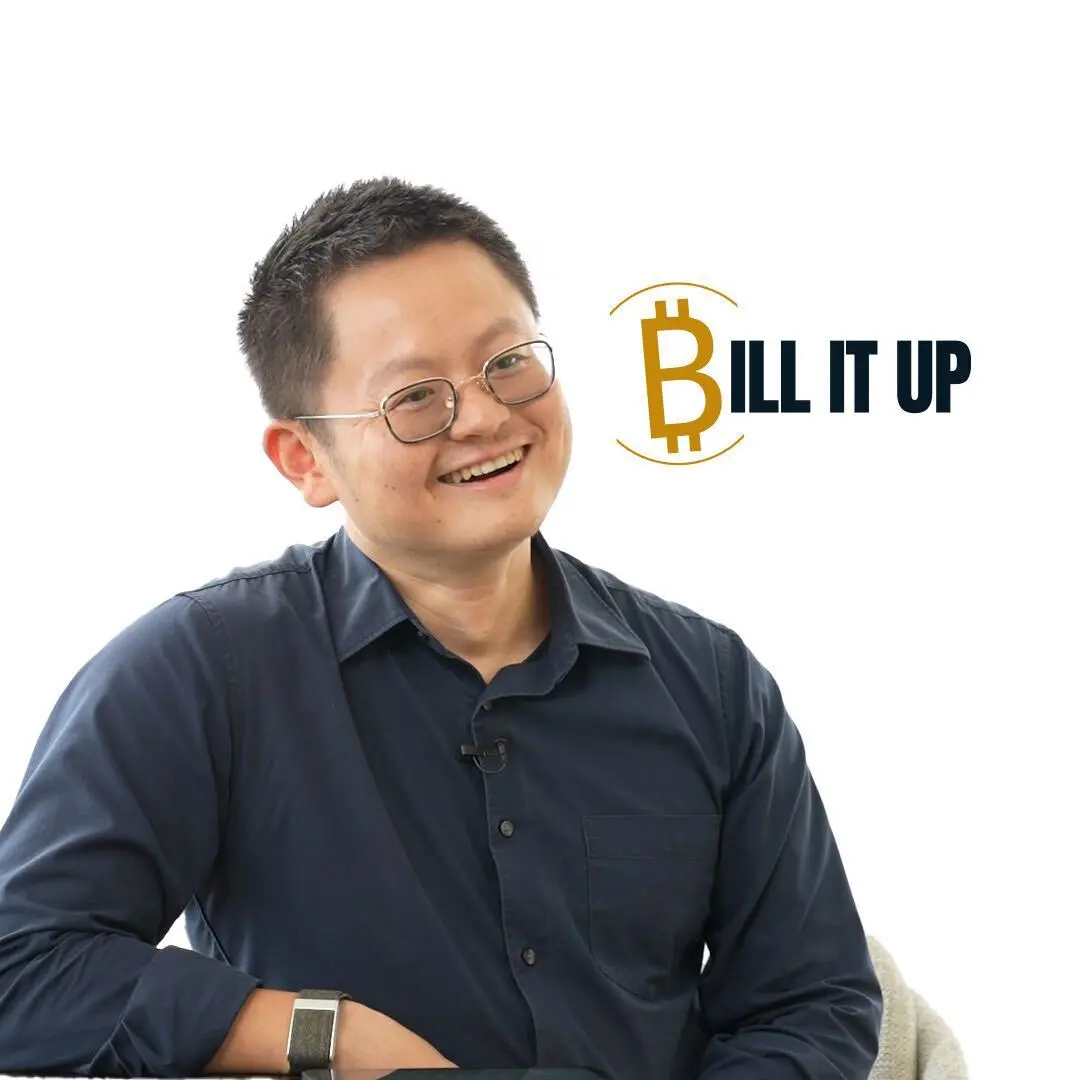
 Yang Zhou deeply analyzes the future landscape of stablecoins, Hong Kong dollars, and Web3+AI.
At the beginning of this year, I had an in-depth conversation with Yang Zhou, the founder of original Beepay Financial. This was also his first time openly expressing his thoughts in a public program after many years. We have organized this interview into a written transcript, hoping to showcase the intellectual exchanges at that time and present a more three-dimensional Yang Zhou, as well as the stories behind Beepay back then.
For friends who haven't read the previous two articles, I recommend starting here:
++ Interview with Yang Zhou, Founder of Beepay Financial (Part 1) ++
++ Interview with Yang Zhou, Founder of Beepay Financial (Part 2) ++
Bill: So starting from 2022 and 2023, you have also embarked on a new chapter. Now your stablecoin is ranked ninth globally. I also want to talk to you about stablecoins. As I understand it, stablecoins can be roughly divided into three types: one for payments, one for trading pairs, and one for wealth management. Some stablecoins may serve one or two functions simultaneously. Can you introduce the characteristics of the stablecoin you are currently working on?
Yang Zhou: There are indeed three types of stablecoins: payment-type, trading-type, and wealth management-type. I believe the ultimate destination of stablecoins must be payments. However, the entry paths are different; some start from wealth management, while others start from trading.
For example, the trading-type stablecoin in DeFi is DAI. It was initially created to facilitate smoother DeFi trading. However, as it developed, the Maker behind DAI continuously evolved—from initially reserving USDC to gradually reserving T-Bills, it slowly transformed into a yield-bearing stablecoin. We do not have the historical accumulation of DAI, nor do we have as many contributions, so it is actually difficult for us to enter from the trading-type. Looking at another trading-type stablecoin, the previous BUSD, which was based on Paxos, was later halted due to regulation. After that, FDUSD was launched in Hong Kong, which actually has both trading and wealth management attributes: many transactions on Binance are zero-fee, encouraging trading; at the same time, it can also be staked to participate in Binance's Launchpool, which encourages its wealth management aspect. For ordinary projects, without the support of large platforms, they usually can only start from "pure wealth management." Projects like Terra from the previous cycle, and some projects between the last and this cycle, are basically yield-oriented. In this cycle, this has become even clearer. For example, Ethena's USDe, our own USDX, and USUAL's USD0 essentially emphasize wealth management attributes. But I think the wealth management attribute, for most stablecoins, is more of a way to enter the market rather than the end goal. Ultimately, everyone still hopes to move towards payments.
For platforms like ours, the positioning must be: first do wealth management. By combining the yields from CeFi, DeFi, and even TradFi's RWA, we can launch a stablecoin. As liquidity gradually improves, exchanges will be willing to use it as collateral, allowing it to enter the trading-type stablecoin category. With even better liquidity, it may enter payment scenarios. So I believe the ultimate goal for all stablecoins is payments.
Bill: Let's take USDT as an example. How much of the global payment volume do you think is in non-Crypto scenarios?
Yang Zhou: From a payment perspective, I think USDT is now a very semi-mainstream payment tool. Especially in the past few years, as the U.S. tightened anti-money laundering regulations and increased sanctions, particularly after the events in Russia, USDT has become a payment tool very close to mainstream. It allows people to bypass U.S. sanctions. The U.S. is a world power with significant rule-making authority. But are all these rules correct? Is it right to sanction ordinary Russians? Now the U.S. is also imposing more sanctions on China, and many state-owned enterprises and central enterprises are already on the list, unable to use U.S. dollars. Will there be further sanctions on DeepSeek, Douyin, or Toutiao in the future? It's entirely possible. Therefore, I believe stablecoin payments will become increasingly mainstream. Especially in Asian regions like Hong Kong and Singapore, they are promoting the implementation of regulatory-compliant stablecoins, preparing for the future. If we look back at history, the earliest and most successful "stablecoin" is the Hong Kong dollar, which we are all familiar with.
Bill: How should we understand this?
Yang Zhou: The Hong Kong dollar has been pegged to the U.S. dollar since 1983. At that time, the Hong Kong Monetary Authority reserved U.S. Treasury bonds (both long-term and short-term) and then issued Hong Kong dollars, distributed by HSBC, Bank of China, and Standard Chartered. So you will see that some Hong Kong dollar banknotes have the HSBC logo, while others have the logos of Bank of China and Standard Chartered. Those are actually the promissory notes of these banks, not fiat currency. Strictly speaking, the Hong Kong dollar we usually use is actually "USDT"—a proof signed by Tether.
Bill: So essentially, these are promissory notes minted by several commercial banks?
Yang Zhou: Yes, they mint them from the Hong Kong Monetary Authority and then issue them to the market. The Hong Kong Monetary Authority itself rarely issues directly; only later were the 10 Hong Kong dollar banknotes issued by the Monetary Authority, which is the only "fiat currency." The remaining 20, 50, and 100 banknotes are all commercial bank notes. So the Hong Kong dollar is essentially the most stable stablecoin that has been in circulation for a long time, pegged to the U.S. dollar for 40 years, with a scale far exceeding Tether (Note: at the time of our conversation, Tether's scale was $130 billion, and it has now exceeded $150 billion), with over $500 billion; however, Tether is growing rapidly, and it may surpass the Hong Kong dollar by the end of this cycle.
Bill: In the next year or two?
Yang Zhou: Yes, perhaps by then it will surpass it.
Bill: So you are saying that the Hong Kong dollar is essentially a minted "paper Token," a stable paper Token of the U.S. dollar.
Yang Zhou: Yes, it is essentially a stablecoin backed by the U.S. dollar. So the Hong Kong dollar is used for payments. Historically, there has always been this demand: people want to use something other than the U.S. dollar for payments, primarily to avoid some of the U.S.'s arbitrary regulations. Because the U.S. dollar is currently the most widely circulated currency in the world, on one hand, it is backed by the strong credit of the U.S. government, and on the other hand, the world's highest quality assets—NASDAQ, U.S. Treasury bonds, and stocks on the New York Stock Exchange are all priced in U.S. dollars. Therefore, global financial institutions and banks must have U.S. dollar licenses to conduct related businesses. This is a very magical thing; it can restrict many of your actions. Obtaining a U.S. dollar license means you must comply with U.S. standards. For example, if the U.S. labels Iran as a bad actor, you cannot do business with Iran; if the U.S. labels Venezuela as a bad actor, you cannot do business with Venezuela. In my value system, sanctions against human trafficking and drug trafficking are certainly reasonable. But when you sanction ordinary people, like ordinary Russians trying to buy things, who can't even use a Visa card, that is very inhumane.
This excessive use of power is actually too aggressive; after being overly domineering, more and more people do not want to use the Swift system. Because using Swift is not only slow but also requires going through intermediary banks like JPMorgan, which can restrict and scrutinize your transactions. Therefore, in the future, even if the U.S. dollar remains the pricing currency, in the payment aspect, stablecoins will become a more core alternative.
Bill: I particularly like what you just said. Can we still use the U.S. dollar for pricing? Just like Rome is gone, but many road widths around the world are still based on Roman standards. This means that thing can actually be passed down. So as an empire, many of the systems of the U.S. may become ineffective in the future, but its currency—the U.S. dollar, as a pricing tool in users' minds, will continue to exist. Creating new assets on the blockchain, this "dollar unit" mindset may still be usable for a long time.
Yang Zhou: Exactly. It means that we don't necessarily have to use Swift, but the "Dollar unit" will continue to exist. The example you just mentioned about Rome is a great point, and another is: we must lower the user threshold. For example, if you try to create a stablecoin for the "Venezuelan bolívar," no one would dare to use it; using the renminbi, not everyone would use it either. Perhaps ten years later, when our country becomes great again—"Make China Great Again," someone might use it. But at least for now, very few people would easily accept the renminbi. As for the euro, it always seems to be lacking a bit. Therefore, using the U.S. dollar for pricing is the most direct and simplest. This is not because of a reverence for the dollar, but because that is the current situation. Creating a good product is fundamentally about lowering the threshold. There is no need to change users' mindsets. Of course, there will always be events that trigger change in the future, but now is not the time. However, now is the time for Swift. Don't use Swift anymore; use blockchain—this is a very direct and good answer, which is to replace Swift.
Bill: It's like we use the mindset of the U.S. dollar, but we reshape an international order, which is a new payment system on the blockchain. I have one last question. I want to discuss with you how you view AI in Web3. Do you think it's reliable? Or are most people just using this hat to issue tokens?
Yang Zhou: Currently, indeed, most people are issuing tokens under this hat. But I think that's okay. Because what I see more is that many people are working hard to use AI to enhance cryptocurrencies. In fact, cryptocurrencies and AI complement each other. Cryptocurrencies themselves are a coded system, a code-driven world. The "smart" in DeFi or smart contracts is not for humans; it's for computers. Therefore, for agents or AIs that can naturally use code, DeFi is inherently an easy-to-use scenario.
I believe AI brings about real change in two aspects: the first is the enhancement of user experience. Blockchain is not meant for humans; it is meant for robots. For AI, "using the chain" is as natural as browsing the internet. We can make an analogy: before Netscape appeared, the internet was very niche and very technical; and now cryptocurrencies are in that stage. You have to understand Ethereum, understand Solana, and have a technical background. Only young people like us who are particularly eager to get rich will break through numerous obstacles to engage. But for ordinary people, these thresholds are meaningless. AI agents, like the Netscape browser of the past, will truly popularize crypto. You just need to tell the AI, "Help me buy some Ethereum," or "Help me find the highest-yielding product in DeFi and invest in it." The AI will help you create transactions, route quotes, and perform risk control checks; you just need to nod: "Sign it." The transaction will be completed. This will fundamentally change the user structure. Previously, our industry's users were all about "trading Trump" or "trading CZ dogs." But in the future, low-risk users like my mom can also come in. When the users change, liquidity will naturally come in. The second aspect is the transformation of the financial system. Traditional financial institutions find it difficult to use public AI because their systems are too old. With architectures from the 1990s and a pile of customer data, let alone AI, even Excel can't run. But if you use a public chain and a public ledger, like Solana, you can allow AI to interact directly with assets. In the future, fund managers and investment advisors could be AI. There may be two forms: one is "one for all," where one AI serves everyone; the other is "all for one," where many AIs serve one person. Your master AI will mobilize other AIs to help you with asset allocation and portfolio investment, even operating like a fund of funds (FOF). This will fundamentally change the financial industry. For example, BlackRock currently has thousands of people managing trillions of assets; in the future, a few dozen people could manage tens of trillions. The profit margins will be extremely high. This is also why Larry Fink has been pushing for AI; they have already seen this opportunity—replacing humans with AI, pouring knowledge into machines, reducing costs and increasing efficiency, saving huge costs. Ultimately, human intermediaries will be replaced by AI intermediaries. AI not only saves costs but is also a new source of value creation.
So I often say that the new New York in the future is not in New York; it is on the chain.
Bill: Right, it becomes a capital market of the internet, or an open market. All finance can run on it.
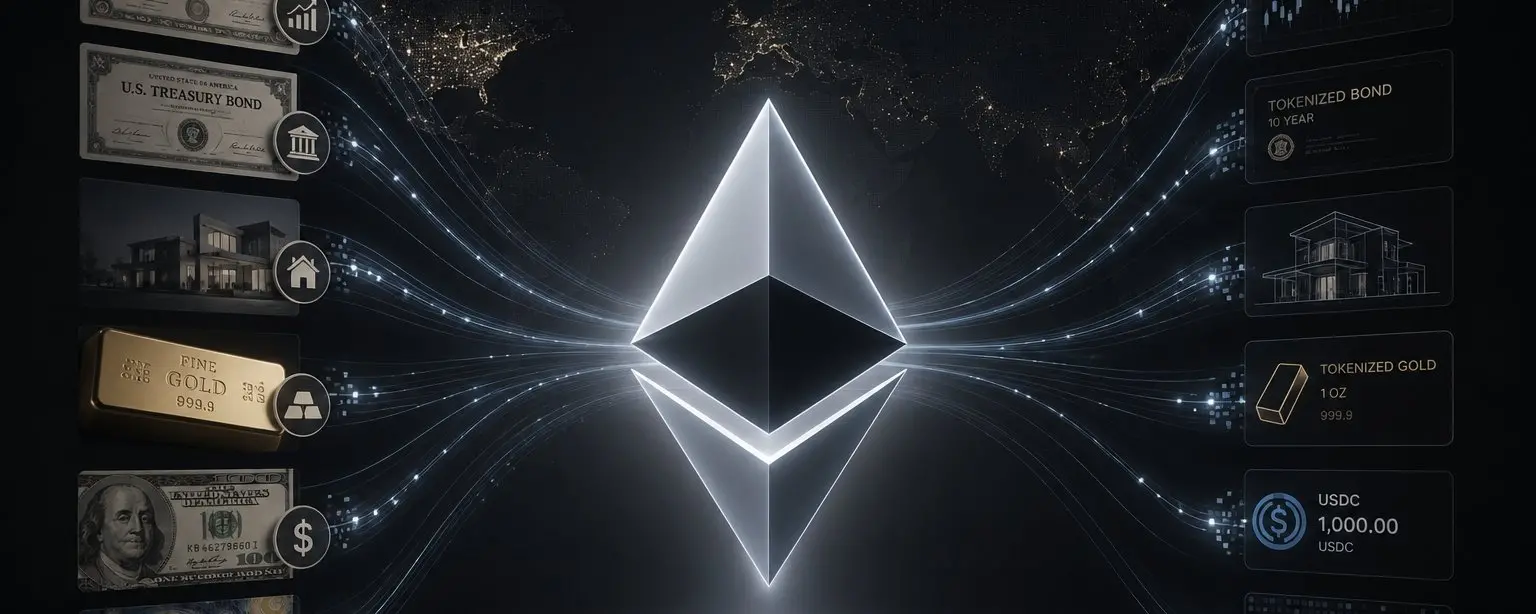
Yang Zhou: Exactly. With the development of AI, logistics and warehouses are still human-operated now; but in the future, they will also be taken over by AI. Fraud risks will become lower and lower. This will also make it easier for traditional assets to go on-chain. This means that the cryptocurrency industry can finally escape the "four-year cycle" curse—no longer working for a year and resting for three years. The so-called "eternal bull market" is not the bull market of BTC, but the bull market of blockchain.
Bill: Your point just reminded me of another thing. We always say that blockchain, as a new type of internet, still has very low active users. For example, Binance has only 250 million registered users, and there are only a few million active individuals on-chain. But in the future, as large-scale applications emerge, all internet users may eventually go on-chain—that's 5 billion users. There may even be 50 billion or 100 billion AI agents actively on the chain together.
Yang Zhou: Exactly. So I believe that cryptocurrencies and blockchain will be larger than traditional finance. Because there will be more users. The embryonic form has already appeared—like TON, there are already many bots on Telegram. Although they are still very primitive now, the future trend is already very clear.
Bill: Well said, thank you for your sharing. Let's stop here for today. You are welcome to come back next time.
Yang Zhou: Okay, thank you, Bill.
 Risk warning Risk warning