








TRON Industry Weekly Report: The expectation of a rate hike by the Bank of Japan hinders the rebound, but the subsequent trend still depends on the Federal Reserve's December decision. Dynamic, which integrates Web3 identity and wallets, is favored by A16z
 Core Viewpoint
 TRON Industry Weekly Report
# I. Outlook
1. Macroeconomic Summary and Future Predictions
Last week, U.S. macro data continued to be intermittently released due to the previous shutdown, with overall economic signals remaining weak. Consumer confidence continued to decline, manufacturing and service activities slowed down, and pre-holiday consumption was not strong, raising concerns about "weakening demand"; inflation still hovered around 3% without significant alleviation or further deterioration, putting the Federal Reserve in an awkward wait-and-see position.
U.S. stocks were under pressure due to the dual impact of weak economic signals and unclear policies, with the three major indices generally experiencing slight declines, led by the technology and consumer discretionary sectors, while safe-haven assets continued to attract capital. Looking ahead, the market will focus on the upcoming employment and GDP data: if a comprehensive confirmation of economic slowdown occurs, the Federal Reserve may be closer to cutting interest rates; if inflation and consumption rebound, policies may remain cautious, and short-term volatility is likely to intensify.
2. Market Changes and Warnings in the Crypto Industry
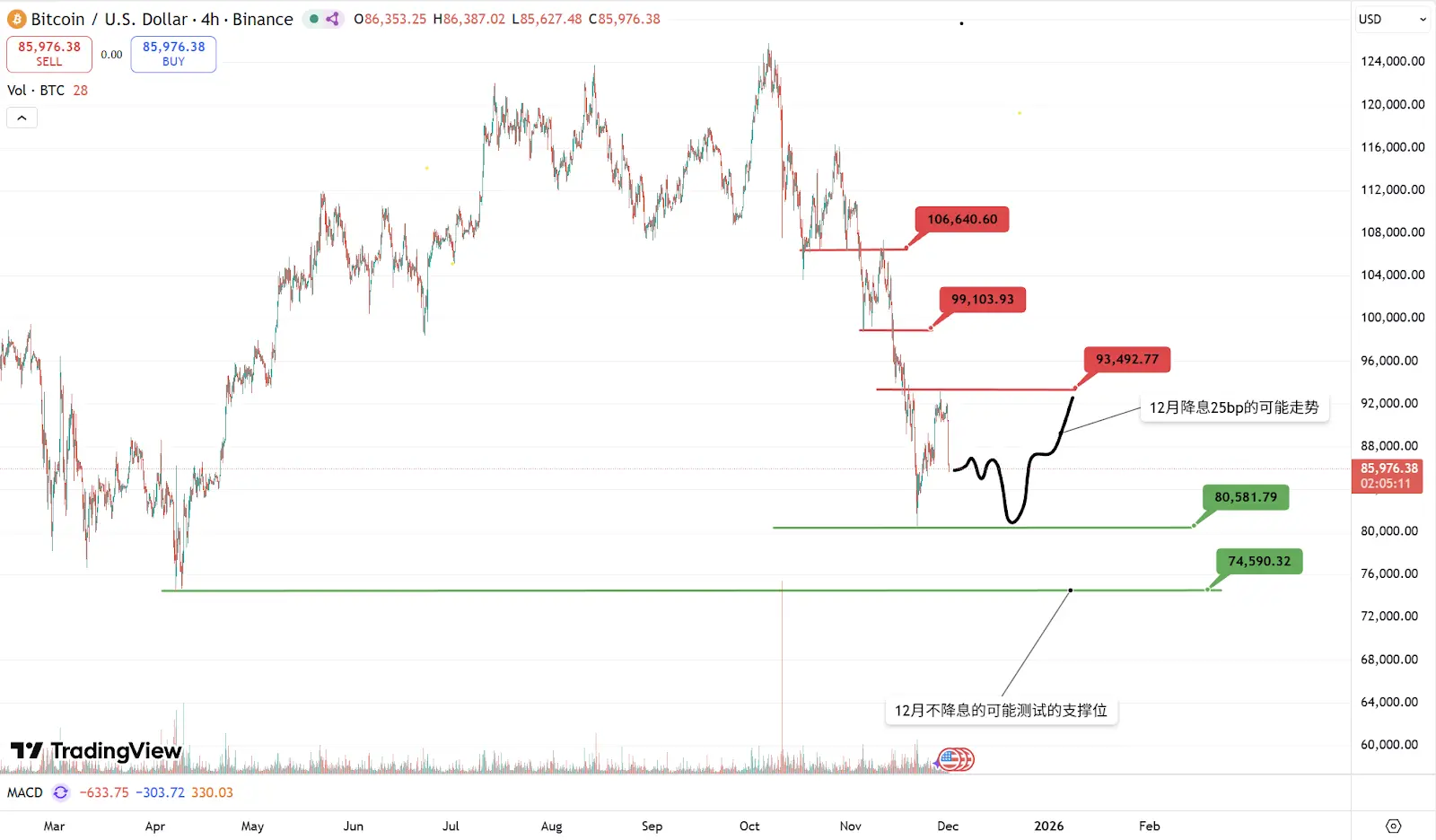
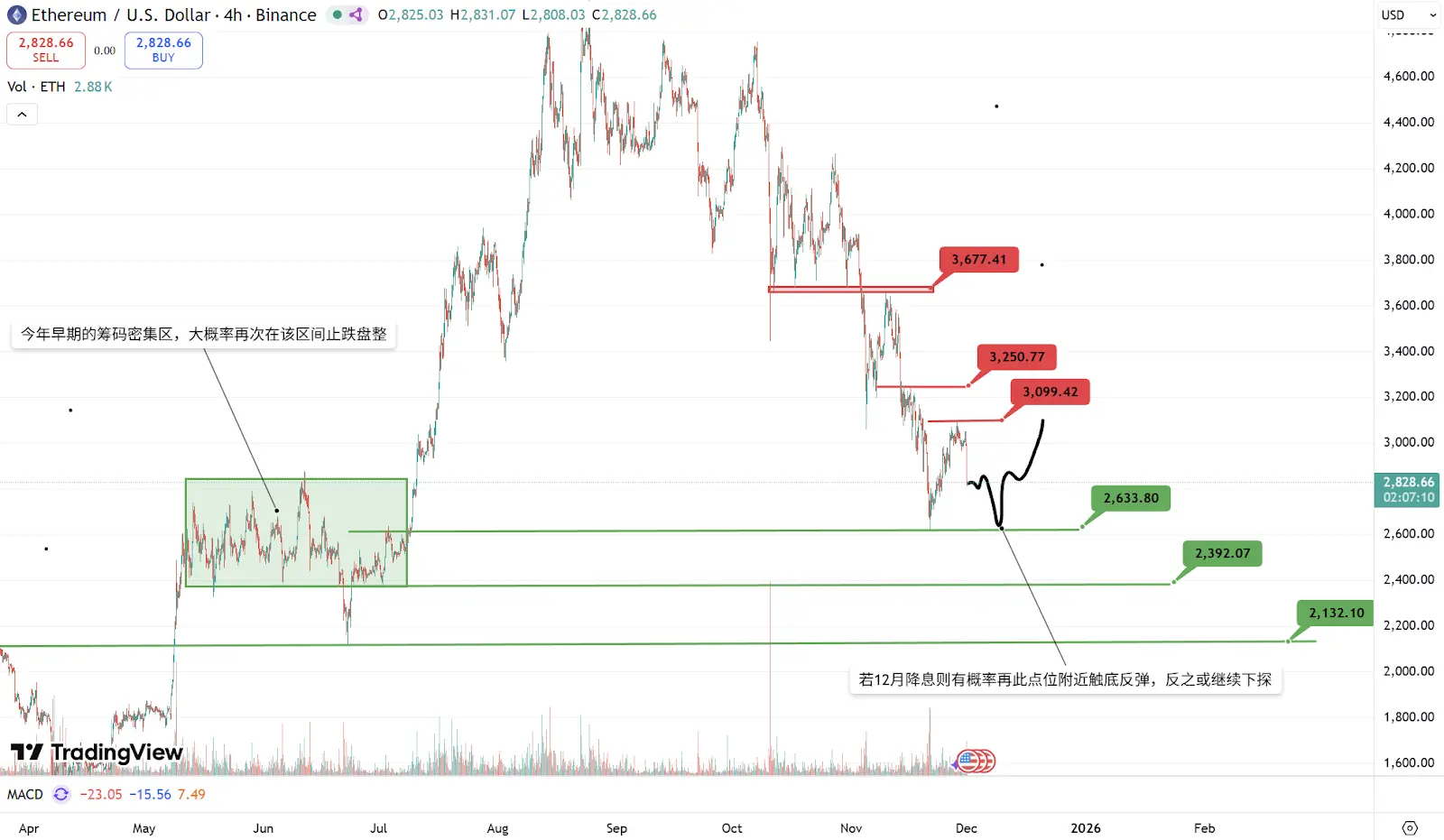
Last week, the overall crypto market maintained a volatile trend. The weekend was expected to see a technical recovery, but ultimately closed down on Sunday, indicating extreme weakness in market buying and a broadly bearish sentiment.
If Bitcoin cannot quickly return above $100,000, the market may continue to accelerate into a mid-term downward channel, potentially leading to a deeper "technical bear market" pricing. On the macro level, key U.S. economic data will be concentrated in release this week; if inflation is strong or employment exceeds expectations, it will further suppress risk assets; if data confirms economic slowdown, it may ease short-term pressure. Overall, the crypto market is in a weak and sensitive phase, with fragile liquidity and strong selling pressure, necessitating vigilance against the risk of retesting lower levels or even expanding declines in the short term.
3. Industry and Track Hotspots
The platform Dynamic, which integrates Web3 identity and wallet infrastructure to reshape multi-chain secure login experiences, has raised a total of $21 million, led by A16z, with participation from Solana and Circle; Printr, the first token issuance platform to achieve chain abstraction, has raised a total of $4.5 million, with investments from Mantle and Sui.
# II. Market Hotspot Tracks and Potential Projects of the Week
1. Overview of Potential Projects
1.1. Analysis of the $21 Million Funding, Led by A16z, with Participation from Solana and Circle ------ Dynamic, a platform that integrates Web3 identity and wallet infrastructure to reshape multi-chain secure login experiences
Introduction
Dynamic provides a multifunctional and secure authentication solution for Web3, offering a smart login process for crypto users while allowing non-crypto users to easily register and use the platform.
It focuses on simplifying wallet interactions, providing a non-custodial embedded wallet with the following features:
Passkey login and Secure Enclave protection for private keys;
Pre-generated wallets and user-friendly account recovery processes;
On-ramp integration for fiat deposits;
With these features, developers can build seamless and secure user experiences across multiple blockchains.
Core Mechanism Overview
Dynamic wallets adopt a multi-party computation (MPC) architecture combined with a threshold signature scheme (TSS), representing the next generation of wallet security and user experience standards.
1. Core Principles of TSS-MPC
Unlike traditional wallets controlled by a single private key (creating a single point of failure), TSS-MPC splits the key into multiple encrypted "key shares." These shares collaborate in calculations during signing but never reconstruct the complete private key.
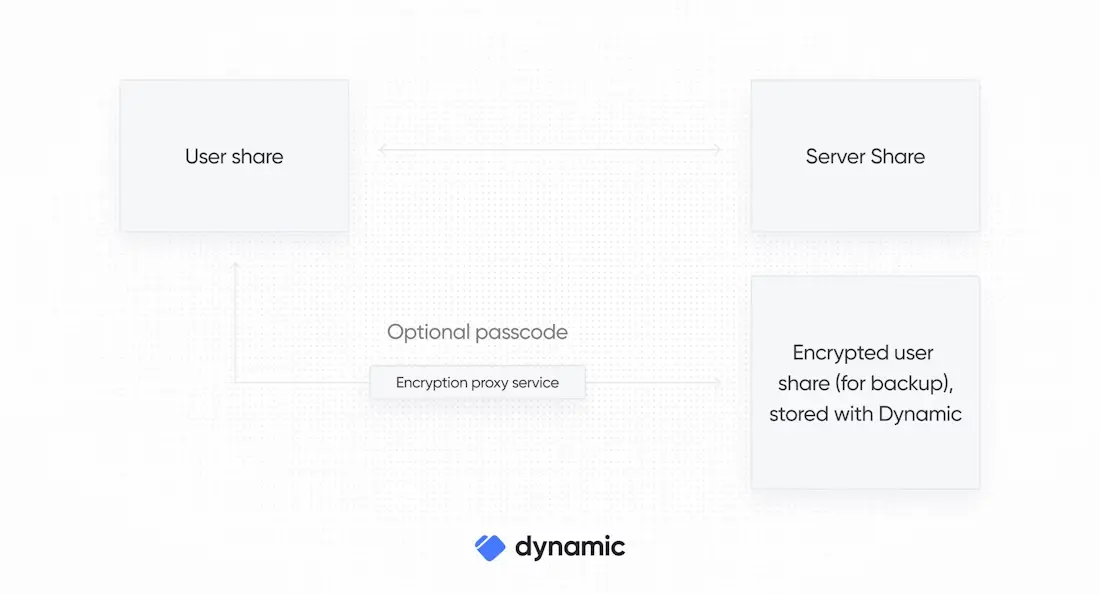
Dynamic's TSS-MPC implementation defaults to a 2-of-2 threshold signature scheme, with the following mechanism:
The user holds one user key share;
The Dynamic server holds one server key share;
Both key shares must be used simultaneously to complete the signing operation.
This means the complete private key is never generated or exposed, and neither party can sign or control the wallet independently, maximizing security and protection.
Key Share Management in Dynamic
Dynamic's wallet employs a TSS-MPC dual key architecture, generating two key shares during wallet creation:
The user share is stored on the local device;
The server share is encrypted and stored by Dynamic, participating in signing within a Trusted Execution Environment (TEE).
During transaction signing, both key shares collaborate in their respective secure environments, and the complete private key is never reconstructed or exposed.
The system also supports encrypted backups, passcode encryption, and key recovery mechanisms, ensuring user self-custody, no single point of failure, and maintaining security even when under attack.
Multi-Chain Support
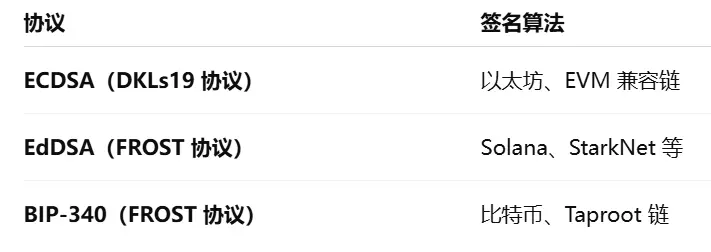
Dynamic's TSS-MPC supports three mainstream signature algorithms to cover different public chain ecosystems:
2. Non-Custodial Architecture
Dynamic's embedded wallet is non-custodial, meaning:
The wallet is fully owned and controlled by the user, and private keys are never entrusted to Dynamic.
TSS-MPC employs user shares + server shares:
User shares are stored on local devices;
Server shares participate in signing within a Trusted Execution Environment (TEE);
MPC Relay coordinates the signing process, ensuring keys are never leaked.
Additional Security Mechanisms
Users can enable local encryption or backup shares;
The default threshold scheme is 2/2, adjustable to 2/3 or 3/5 for enhanced fault tolerance;
Supports periodic key resharing to improve security;
Users can export wallets and migrate to other services;
Dynamic is SOC2 Type 2 compliant and undergoes regular independent security audits and vulnerability bounty testing.
3. Multi-Chain Compatibility
Dynamic supports generating embedded wallets on the following networks:
EVM, SVM, Sui (main networks);
When multiple networks are enabled simultaneously, corresponding wallets will be automatically generated and displayed as the "main address" after login.
Additionally, it natively supports:
EVM, SVM, Sui mainnets
And is compatible with Bitcoin, Cosmos, and other chains (via ECDSA / EdDSA / BIP-340 signatures)
4. Smart Accounts
Developers can upgrade these embedded wallets to smart accounts to achieve the following advanced features:
Sponsored Gas fees for users
Adding complex approval logic
Integrating more automated operations
Automation and Agentic Use Cases
Dynamic also supports developer-hosted MPC wallets (2-of-2 threshold),
controlled by developers for:
Automated operations (e.g., scheduled payments, batch executions)
AI / smart agent accounts (Agentic Wallets)
These wallets are not held by end users but are designed for specific automated applications.
Dynamic Advanced Features
Dynamic's embedded wallet system offers high customizability, designed for enterprise users and complex scenarios, providing flexible security and recovery strategies. Its core advanced features include:
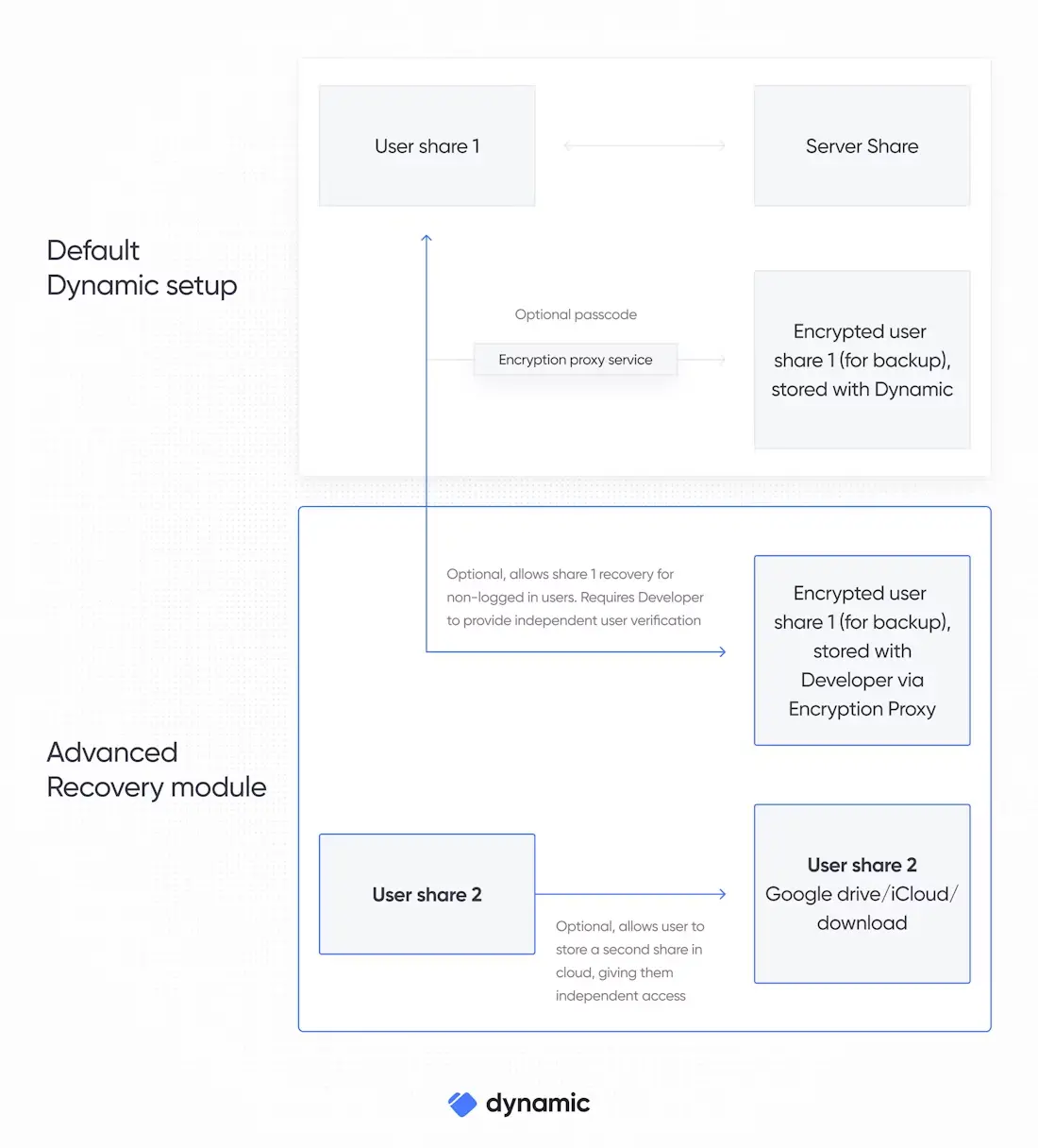
- Developer-Hosted Backups
Enterprises can build their own key share backup infrastructure, fully controlling the backup and recovery processes.
Supports custom backup strategies, internal recovery mechanisms, and business continuity management.
- Custom Key Derivation Options
Supports flexible key derivation paths and schemes, enabling:
Hierarchical Deterministic Wallets (HD Wallet)
Custom address generation rules
Seamless integration with existing Key Management Systems (KMS).
- Advanced Key Sharing Configurations
In addition to standard 2-of-3, supports 3-of-5 or other custom threshold schemes.
Allows for more complex security models, such as:
Multiple backup strategies
Hierarchical access control
Enhanced leak prevention mechanisms
Independent recovery processes
Tron Comments
Dynamic's advantage lies in its integration of identity authentication, non-custodial wallets, and multi-chain support through the TSS-MPC security architecture, ensuring private keys are never exposed while balancing security, recoverability, and user experience; it supports enterprise-level customization (such as self-hosted backups, key derivation, and complex threshold configurations), achieving high security and flexibility in wallet and identity infrastructure; it can seamlessly operate across multiple chains like EVM, SVM, Sui, and Bitcoin, reducing integration costs.
Its disadvantage is that the system structure is complex, with high implementation and maintenance costs, requiring developers to have a deep understanding of MPC/TSS architecture; excessive configuration options may increase integration difficulty for enterprises; additionally, some features rely on server and TEE environments, necessitating a trade-off between complete decentralization and performance.
1.2. Interpretation of the $4.5 Million Funding, with Participation from Mantle and Sui ------ Printr, a cross-chain abstracted token issuance and liquidity infrastructure
Introduction
Printr is the first token issuance platform to achieve chain abstraction, allowing you to issue, trade, and discover tokens across more than 70 blockchains.
In this era of multi-chain coexistence, each chain has its unique advantages. Tokenization on a single chain has become limiting. As a creator, you should not be forced to choose among numerous public chains; your goal should be to reach more users and liquidity.
Printr was born for this purpose ------ to help you achieve truly cross-chain boundary-less token issuance and circulation, allowing Memecoins to truly become borderless assets.
On Printr, you can:
Issue tokens on any chain or all chains simultaneously;
Trade freely across chains, buying or selling from any chain;
Engage in cross-chain arbitrage, capturing price differences;
Earn points and rewards.
Architecture Overview
1. Bonding Curve ------ Pricing Mechanism Analysis
The bonding curve establishes a mathematical relationship between token supply and price. As users buy or sell tokens, the price automatically adjusts based on a preset formula, providing a predictable pricing mechanism for the market.
Printr's bonding curve can operate independently on different blockchains, with price and supply relationships not dependent on a specific chain.
Curve formula:
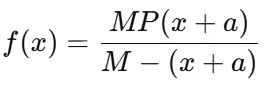
Where:
M = Maximum supply
P = Base price factor
x = New supply added
a = Virtual reserve, used to smooth price changes
Applicable range: 0≤x<M−a
How It Works
The numerator MP(x + a): represents the product of virtual reserves and new supply.
The denominator M - (x + a): prevents the price from exceeding the maximum supply limit.
The result forms a price curve that rises as supply increases; the closer the supply is to the upper limit, the higher the price.
Curve Properties
Supply-driven price increase: Supply increases → Price rises.
Smooth liquidity: The virtual reserve a dampens price jumps, preventing severe fluctuations.
Supply constraint: The curve only operates within the effective supply range, ensuring system stability.
This model provides stable and predictable pricing logic for the token lifecycle.
Implications
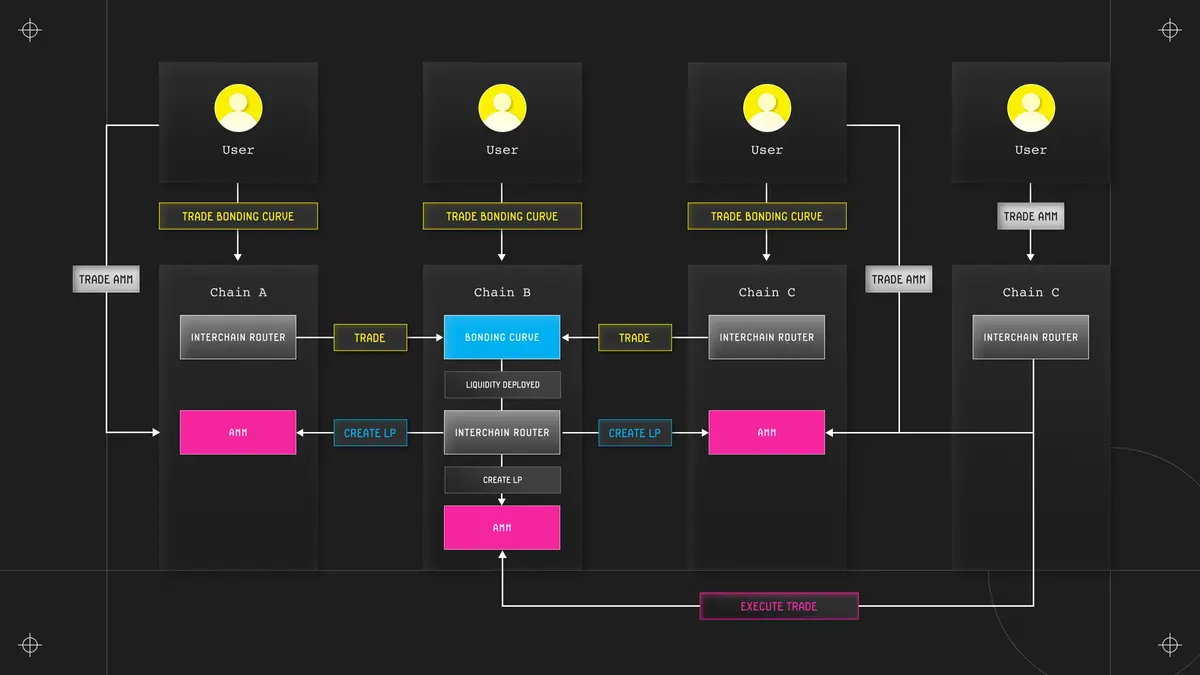
When tokens sell out, the contract will automatically "graduate" the tokens and create a liquidity pool on DEX.
Tokens on each chain operate independently, so different chains may complete sales and liquidity at different times.
If tokens are deployed across multiple chains, their total supply will be evenly distributed across each chain.
Due to reduced supply on a single chain, price fluctuations will be more sensitive to market demand.
2. Printr Stack (Technology Stack and Architecture)
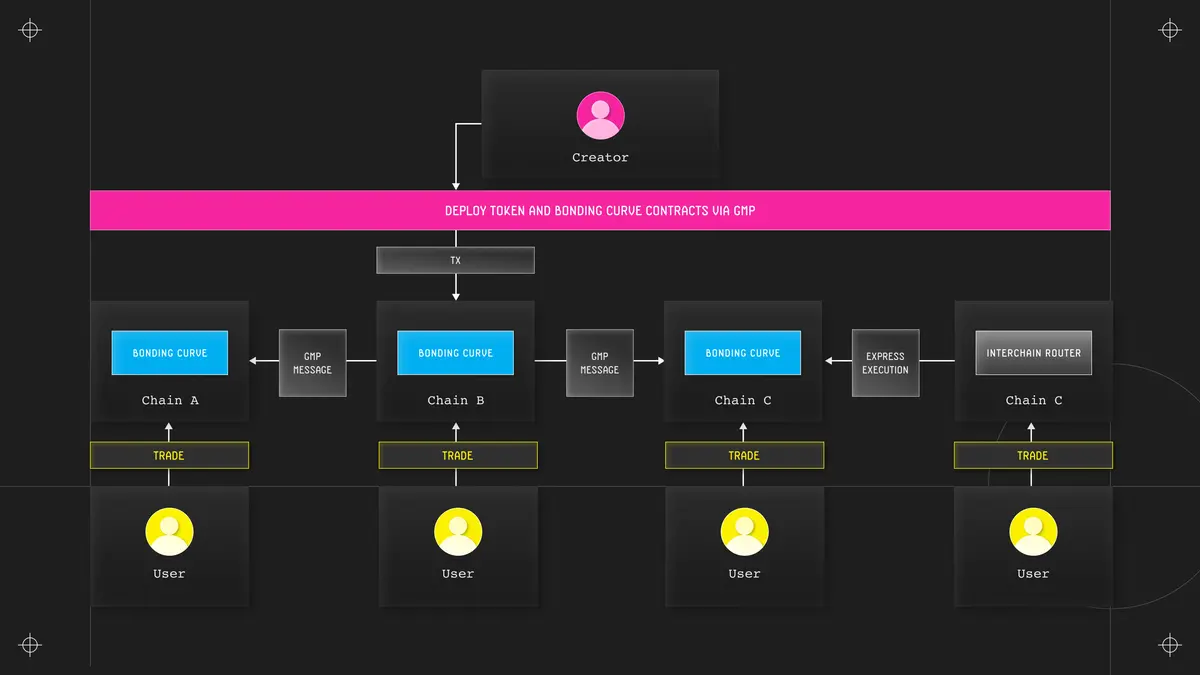
Printr is a cross-chain token issuance platform centered on interoperability, achieving token creation, trading, liquidity management, and cross-chain unification through a modular smart contract system, while hiding the underlying complex cross-chain logic to provide creators with a seamless multi-chain token experience.
Printr Architecture
Printr consists of multiple independent but collaborative contract modules:
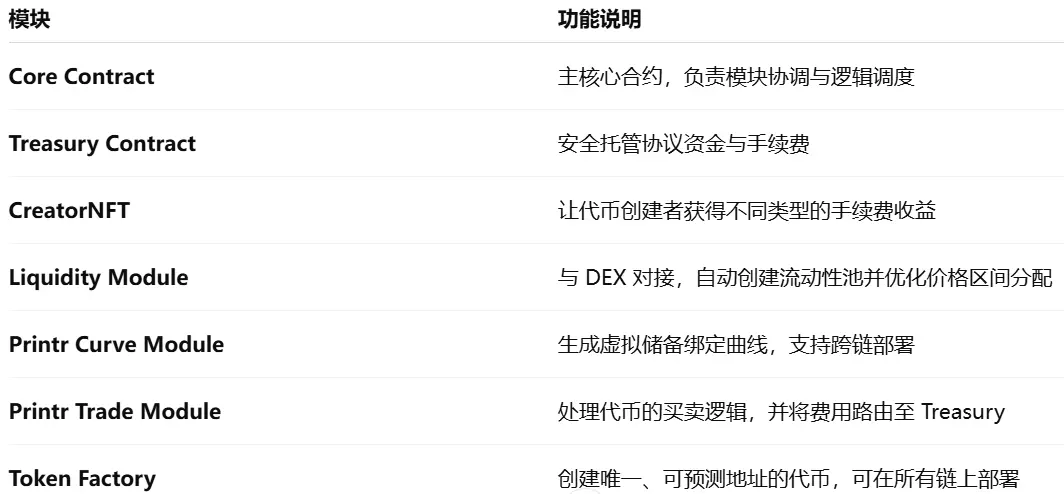
Additionally, Printr uses GoPlus Liquidity Lockers to lock liquidity, ensuring that liquidity remains permanently secure after project graduation while directing LP earnings into the Treasury.
Cross-Chain Integration
Axelar Integration
Printr deploys native contracts on each chain to synchronize token creation across multiple chains.
When creators deploy tokens, the contract executes the creation on the specified chain, and Axelar's Interchain Token Service (ITS) achieves 1:1 interoperability and unified token addresses.
ITS retains the native properties of tokens on each chain and allows for unified management of token supply and functionality.
The system uses virtual reserve mechanisms to set initial prices, preventing early large purchases from manipulating the market.
Multi-chain operates independently, with tokens issued and priced separately on each chain, completing sales (Graduation) before Axelar achieves cross-chain interchangeability.
Cross-Chain Swaps
Printr has integrated cross-chain routing protocols such as SquidRouter, Relay, and Debridge.
They employ Intent-Based Routing: users only need to set the desired outcome, and the system automatically selects the optimal liquidity path.
When tokens "graduate," the Swap module will automatically launch, supporting cross-chain trading at optimal exchange rates.
Tron Comments
Printr's advantage lies in its core of chain abstraction and modular architecture, integrating token creation, bonding curve issuance, cross-chain trading, and liquidity management, supporting over 70 blockchains, achieving true cross-chain interoperability and unified pricing mechanisms. Its technology stack combines infrastructures like Axelar, LayerZero, and SquidRouter, allowing tokens to operate independently across different chains and ultimately achieve 1:1 interchangeability, providing creators with the ability to issue tokens across multiple chains without barriers, greatly expanding token liquidity and market coverage.
Its disadvantage is that the system structure is complex, with a high dependence on cross-chain communication, bridge security, and price synchronization; parallel deployment across multiple chains increases auditing and contract maintenance costs; additionally, the project's early stages still rely on the stability of external infrastructures (such as Axelar, LayerZero), posing certain risks of system coupling and security transmission.
2. Detailed Analysis of Key Projects of the Week
2.1. Detailed Analysis of the $54.15 Million Funding, Led by YZiLabs, with IDG Following --- Sovereign-level blockchain infrastructure Sign, targeting governments and institutions while integrating privacy, security, and compliance
Introduction
Sign is a blockchain-based token distribution and credential verification infrastructure designed to ensure transparency and security. Its platform TokenTable has facilitated over $4 billion in token airdrops for 400,000 users and more than 200 projects (including Starknet and ZetaChain).
The Sign Protocol connects real-world identity credentials with blockchain addresses, supporting blockchain adoption for government and enterprise-level applications.
SIGN Stack Architecture Overview
SIGN Stack is a blockchain infrastructure aimed at governments and institutions, adopting a "three-layer integration" design:
Sovereign Blockchain Layer: A dual-path architecture combines public chain Layer 2 (transparent operation) with Hyperledger Fabric permissioned chain (privacy protection), allowing governments to maintain sovereign control while choosing different security models.
On-chain Authentication Layer (Sign Protocol): A unified identity and credential verification system that connects real identity systems with blockchain, achieving secure authentication across public and private chains.
Digital Asset Layer (TokenTable): A high-performance programmable distribution engine for on-chain issuance of subsidies, benefits, and government assets, supporting stablecoin and CBDC environments.
Overall, SIGN Stack provides a digital infrastructure for the public sector that balances transparency and privacy, compliance control, and cross-chain interoperability.
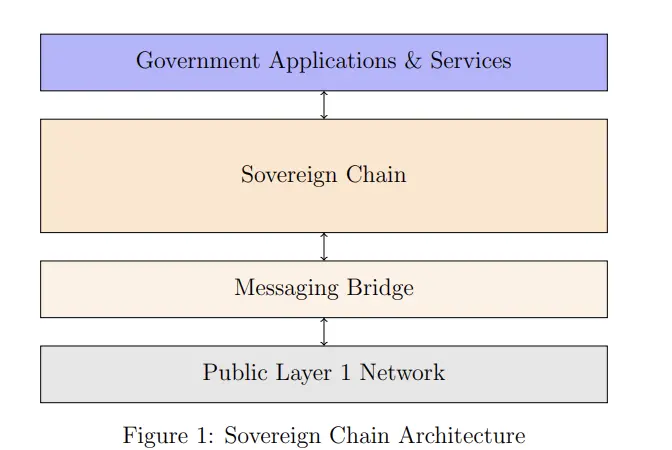
1. Customizable Chain Parameters
Governments can flexibly configure according to regulatory and business needs:
Access Control: Address whitelist/blacklist mechanisms;
KYC Mechanism: Enforce identity verification at the chain level;
Sequencer Configuration: Customize the number of sequencers, validator requirements, consensus mechanisms, and emergency circuit breakers;
Performance Parameters: Configurable block time, block size, and throughput.
2. Operational Control
Transaction Fee Policy
Supports whitelist gas exemption policies, allowing governments to exempt transaction fees for specific users or service providers;
Full chain-level fee control without relying on complex mechanisms like ERC-4337 or ERC-2771.
Validator Control
Governments can customize validator admission standards and lists;
Supports performance monitoring and penalty mechanisms.
Protocol Governance
Achieved through a secure master key system (such as MPC, threshold signatures, etc.):
Parameter adjustments, chain upgrades, and emergency shutdowns;
Rapid response to security incidents.
3. Layer 1 Security Inheritance
While operating independently, the sovereign chain inherits the core security features of the underlying Layer 1:
State Commitments: Regularly anchoring state to Layer 1 to ensure integrity;
Fraud Proofs: Detecting and rejecting invalid state transitions;
Exit Mechanisms: Allowing users to safely exit to Layer 1 when issues arise on Layer 2.
This design allows governments to maintain operational sovereignty while relying on the security of mature public chains.
4. Global Financial Access
Compared to closed national private chains, this architecture allows assets on the sovereign chain (such as ERC-20 stablecoins, ERC-721 tokenized physical assets) to bridge freely and trade with global assets (such as BNB, ETH, WBTC, USDC, EURC, etc.).
Private Chain Solution: CBDC Network Based on Hyperledger Fabric
SIGN Stack's private blockchain solution is designed for Central Bank Digital Currency (CBDC), built on Hyperledger Fabric to create a sovereign-level permissioned network, meeting privacy, security, and regulatory controllability requirements that public blockchains cannot achieve.
This architecture ensures that central banks have complete network sovereignty and operational control while allowing commercial banks and enterprises to participate in verification and accounting in a regulated environment, forming a financial infrastructure that balances privacy protection and multi-party collaboration.
1. Permissioned Network Architecture
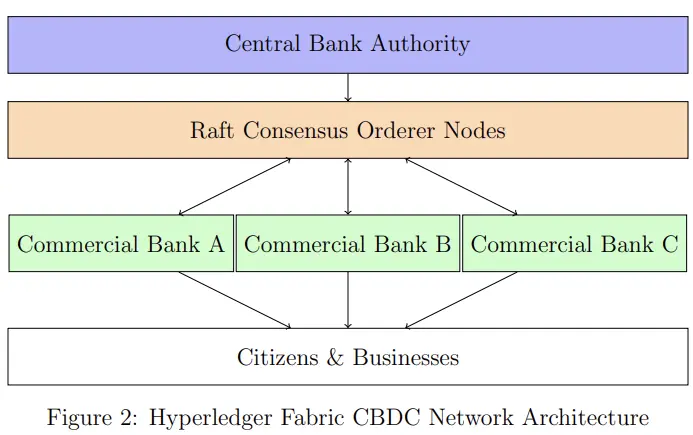
Key Features:
- Central Bank Authority
- Central banks maintain complete control and governance over the entire network by holding Raft consensus ordering nodes.
- Redundant Infrastructure
- Multiple ordering nodes ensure high availability and disaster recovery capabilities.
- Commercial Bank Participation
- Commercial banks participate in transaction verification and ledger maintenance as Peer nodes, but central banks retain final decision-making and control authority.
- Certificate Authority Hierarchy
- An identity management mechanism based on X.509 certificates ensures that only authorized institutions and nodes can join the network.
Sign Protocol (On-chain Authentication System)
Sign Protocol is a comprehensive on-chain attestation framework for creating, verifying, and managing various types of cryptographic attestations.
It provides a trusted data verification foundation for governments and institutions while supporting secure operation in sovereign Layer 2 chains (transparent environment) and Hyperledger Fabric (privacy environment).
1. Attestation Architecture Overview
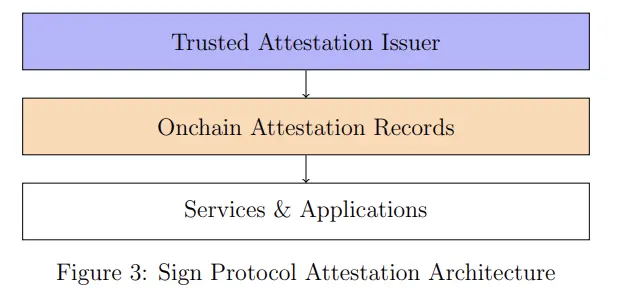
Core participants include:
Trusted Attestation Issuer: Authorized entities can issue encrypted certification information.
On-chain Attestation Records: All credentials are verifiable and traceable on the blockchain.
Services & Applications: Government, enterprise, finance, and other applications can directly call authentication results.
2. Attestation Framework Functions
Attestation Creation: Authorized entities can issue encrypted credentials regarding identity, qualifications, or facts.
Verification Mechanisms: Provide multiple ways to verify the authenticity and validity of credentials.
Revocation Infrastructure: Supports immediate revocation when credentials expire, are revoked, or violated.
Expiration Management: Allows setting credential validity periods, automatically expiring to ensure information updates.
Selective Disclosure: Uses cryptographic methods to disclose only necessary information, protecting privacy.
Digital Asset Engine: TokenTable
TokenTable is a high-throughput, programmable government digital asset issuance and distribution system for efficiently and securely distributing national digital currencies, subsidies, pensions, benefits, and other public assets on-chain.
It combines the identity verification capabilities of Sign Protocol to achieve precise, traceable, and non-duplicative fund allocation.
1. System Architecture
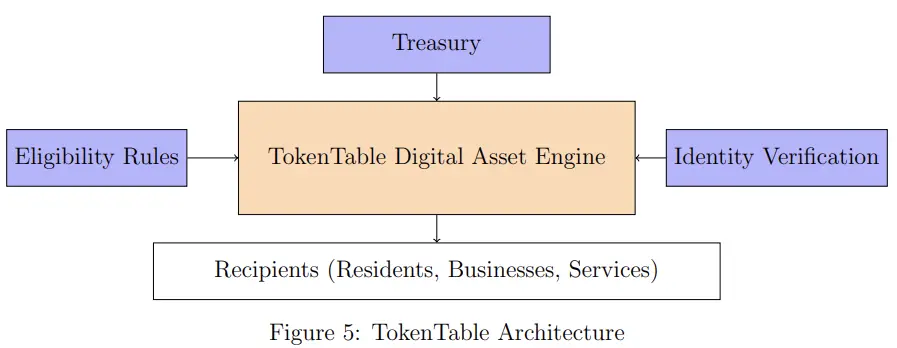
Main components:
Treasury: Manages and controls funding sources;
TokenTable Engine: Responsible for asset creation, scheduling, and distribution logic;
Eligibility Rules: Defines conditions for beneficiaries;
Identity Verification: Provided by Sign Protocol for authentication support;
Recipients: Residents, enterprises, and service agencies.
This architecture ensures that the entire distribution process is compliant, verifiable, and automated.
2. Operating at Scale
User-triggered Batch Processing:
Optimizes large-scale distribution performance, avoiding on-chain congestion.Scheduled Distributions:
Supports periodic issuance, such as pensions and fixed subsidies.Multi-Asset Support:
Compatible with various tokenized assets, including national digital currencies (CBDC), benefit tokens, and stablecoins.
3. Identity-Linked Targeting
Verified Recipients:
Ensures assets are only distributed to verified, qualified individuals or institutions.Attribute-Based Targeting:
Allows precise targeting based on identity attributes such as age, region, and occupation.Duplicate Prevention:
Technological measures prevent duplicate claims or multiple distributions.
Tron Comments
SIGN's advantage lies in its construction of a complete government-level blockchain infrastructure stack (SIGN Stack), combining sovereign Layer 2 public chains with Hyperledger Fabric private chains to achieve an architecture that balances transparency and privacy protection;
its Sign Protocol is responsible for identity and credential verification, while TokenTable enables efficient and secure asset distribution, allowing governments to deploy compliant and controllable public service systems on the blockchain. Overall, it possesses advantages of sovereign control, regulatory compliance, cross-chain interoperability, high security, and high scalability, meeting both financial and government application scenarios.
Its disadvantage is that the system architecture is complex, with high deployment and maintenance costs, requiring high technical demands on node governance, certificate systems, and cross-chain communication; if the bridge between privacy chains and public chains is not carefully designed, there are potential security and data synchronization risks; additionally, project implementation relies on government policies and compliance support, making short-term promotion barriers relatively high.
# III. Industry Data Analysis
1. Overall Market Performance
1.1. Spot BTC vs ETH Price Trends
BTC
ETH
2. Summary of Hot Sectors
# IV. Macroeconomic Data Review and Key Data Release Points for Next Week
Last week, several released and regular data from the U.S. pointed to further cooling of the economy: October durable goods orders fell sharply, reflecting continued weakness in manufacturing demand; new home sales continued to decline in a high-interest-rate environment, with real estate momentum still under pressure; weekly initial jobless claims rose slightly, indicating a slow cooling of the labor market. Overall, even without the release of core inflation and other key indicators, the disclosed data already show structural characteristics of "weakening demand, cautious corporate investment, and loosening employment," further reinforcing the market's judgment that the U.S. economy is entering a slowdown phase.
Data to be released this week:
December 4: Second revision of Q3 GDP (reissue)
# V. Regulatory Policies
Australia
Australia proposed its first comprehensive regulation bill for digital asset platforms this week.
Core Bill: The government submitted the "2025 Company Law Amendment (Digital Asset Framework) Bill" to Parliament.
Regulatory Model: It brings crypto platforms under the existing financial legal system, requiring digital asset platforms and tokenized custody platforms to obtain an Australian Financial Services License (AFSL).
Customer Asset Protection: Platforms must meet the minimum standards set by the Australian Securities and Investments Commission (ASIC) regarding trading, settlement, and customer asset custody to mitigate risks similar to the FTX incident.
Exemption Clause: Provides flexibility for small businesses, allowing platforms with customer assets below $5,000 or annual trading volumes below AUD 10 million (approximately USD 6.5 million) to be exempt from licensing requirements.
United States
Multiple U.S. regulatory agencies released guidelines and frameworks related to the crypto industry this week.
SEC Regulatory Framework: The U.S. Securities and Exchange Commission (SEC) launched the "Project Crypto" initiative, aiming to clarify token classifications and define three categories of non-security tokens: digital commodities, digital collectibles, and digital tools.
IRS Tax Guidelines: The Internal Revenue Service (IRS) issued a revenue procedure providing a safe harbor for trusts engaged in digital asset staking, allowing them to stake while continuously paying taxes.
Senate Legislative Draft: The U.S. Senate Agriculture Committee released a bipartisan-supported legislative draft on digital asset market structure, aiming to establish a comprehensive regulatory framework.
United Arab Emirates
The UAE has significantly expanded the regulatory scope for crypto assets and decentralized finance (DeFi) through a new central bank law.
Comprehensive Regulation: The new decree authorizes the central bank to implement licensing management for all cryptocurrencies and blockchain entities within the country, covering various scenarios including virtual assets, DeFi protocols, stablecoins, decentralized exchanges, and wallets.
Severe Penalties: Operating without a license may face fines of up to 1 billion dirhams (approximately USD 272 million), with some violations potentially involving criminal penalties.
Compliance Transition Period: Relevant entities have a one-year transition period to complete compliance adjustments before September 2026.
United Kingdom
The UK has adopted stricter measures regarding tax reporting for crypto assets.
- Expanded Reporting Framework: The UK has expanded its Crypto Asset Reporting Framework (CARF), planning to include domestic cryptocurrency transactions in the reporting scope by 2026 to comply with OECD standards and close compliance loopholes.
 Risk warning Risk warning



Popular articles





