








Morning News | Five indicators suggest Bitcoin may enter a bear market by early 2026; Erebor completes $350 million financing; Ethereum stablecoin trading shows institutional trend

 Overview of Important Market Events on December 23
整理:ChainCatcher
Important News:
- Five indicators suggest Bitcoin may enter a bear market by early 2026
- Hyperliquid names Lighter as a direct competitor, former employee implicated in HYPE shorting incident
- Crypto bank Erebor completes $350 million financing, led by Lux Capital
- Japanese government plans to promote digital securitization of local bonds, relevant legislation to be submitted in 2026
- Matador Technologies plans to raise $58 million to acquire 1,000 BTC
- Ethereum stablecoin trading shows institutional trend, P2B growth fastest at 167%
- Greeks.live: Consensus points to low volatility in the next two weeks, market may remain subdued and gradually decline
What important events have occurred in the past 24 hours?
Ethereum stablecoin trading shows institutional trend, P2B growth fastest at 167%
According to ChainCatcher, James, head of the Ethereum Foundation's ecosystem, stated that most stablecoin transactions on Ethereum come from P2P (accounting for 67%), but the trading volume only accounts for 24%. Data from the past 12 months shows that B2B trading volume surged by 156%, with the average transaction size increasing by 45%, while P2B trading grew the fastest at 167%, becoming the category with the highest growth rate.
The report indicates that institutions are not increasing the frequency of payments, but rather the amount per transaction is continuously expanding, reflecting the growing maturity of stablecoins in large commercial settlements. Consumer payments to businesses are the fastest-growing category for Ethereum stablecoin payments.
Matador Technologies plans to raise $58 million to acquire 1,000 BTC
ChainCatcher reports that Canadian listed company Matador Technologies (MATA) announced plans to raise $58 million to purchase more BTC, aiming to hold 1,000 BTC by the end of 2026.
Greeks.live: Consensus points to low volatility in the next two weeks, market may remain subdued and gradually decline
ChainCatcher reports that Greeks.live stated on social media that this week coincides with the Christmas holiday, and the U.S. stock market will be closed on Christmas Eve and Christmas Day. During this period, both institutional and retail investors in Europe and the U.S. typically do not trade, a trend that usually continues until after New Year's Day. This Friday (26th) is the annual settlement day, and currently, over 50% of the total options positions are waiting to expire.
Most institutions have chosen to roll over positions early. Since last week, implied volatility (IV) for major expiration dates has begun to decline significantly, while the proportion of block trades has increased.
With the combined effects of declining volatility, the Christmas trading period, and year-end rollovers, the implied volatility for Bitcoin across major expiration dates has dropped by over 5% in the past month, with mid-term IV dropping by more than 10%. Ethereum's IV has decreased even more.
These data collectively indicate a pessimistic market expectation, with consensus pointing to low volatility in the next two weeks. The market is likely to remain subdued and may gradually decline over the next half month.
Trump: Tariffs contribute to excellent U.S. economic data, the situation will only get better
ChainCatcher reports that, according to Jinshi, U.S. President Trump stated that tariffs contributed to the recently released excellent U.S. economic data, and the situation will only get better!
Additionally, there is no inflation, and national security is very stable.
Arizona Senator Wendy Rogers proposes tax exemption for BTC and cryptocurrencies
ChainCatcher reports that Arizona Senator Wendy Rogers proposed to amend state regulations to exempt BTC and cryptocurrencies from taxation.
U.S. Q3 real GDP annualized quarter-on-quarter initial value 4.3%, expected 3.3%, previous value 3.8%
ChainCatcher reports that, according to Jinshi, the initial value of the U.S. Q3 real GDP annualized quarter-on-quarter is 4.3%, expected 3.3%, previous value 3.8%.
ChainCatcher reports that Hyperliquid recently stated officially that it considers Lighter a direct competitor alongside Binance and Aster. Hyperliquid pointed out that these platforms are all controlled by centralized orderers, emphasizing its own architecture advantage of being "fully on-chain, operated by 24 validators, with no hidden states."
In contrast, Lighter focuses on "verifiable execution" and proof mechanisms, providing auditability for CLOB-like trading structures, and competition between the two in decentralized trading infrastructure is gradually heating up.
At the same time, Hyperliquid also responded to community concerns regarding the suspected insider shorting incident involving the HYPE token, stating that the related wallet belongs to a former employee who was dismissed in early 2024, and their actions are unrelated to the team. The platform emphasized that strict HYPE trading and compliance restrictions are implemented internally for employees and contractors.
Cathie Wood: AI will create job opportunities, not take them away
ChainCatcher reports that Ark Invest founder Cathie Wood stated, "AI will create job opportunities, not take them away. AI will not kill jobs; it will significantly lower the cost of starting a business. Learning AI and 'intuitive coding' may be the fastest way to realize entrepreneurial dreams."
Banmu Xia: Bitcoin is no longer a good bullish opportunity, recommend continuing to watch market complex consolidation
ChainCatcher reports that trader Banmu Xia stated on social media, "Bitcoin has reached a point where it is no longer a good bullish opportunity. The liquidity logic in the medium term has also been weakened by the recent continuous ETF sell-off. This is not the best bullish opportunity, which does not mean it won't rise later, but the risks are increasing. During the adjustment phase, if the opportunity is not highly probable, there is no need to participate; just continue to watch the market's complex consolidation."
Google's parent company Alphabet spends $4.75 billion to acquire clean energy firm Intersect
ChainCatcher reports that, according to Bloomberg, Google's parent company Alphabet announced the acquisition of clean energy developer Intersect Power for $4.75 billion in cash and debt to expand its AI data center power resources.
This marks the first direct acquisition of a renewable energy developer by a large tech company, indicating Google's accelerated layout of clean energy self-sufficiency. Intersect will maintain independent operations in branding and team, continuing to be led by CEO Sheldon Kimber.
Crypto bank Erebor completes $350 million financing, led by Lux Capital
ChainCatcher reports that, according to Axios, bank startup Erebor has completed a new round of $350 million financing after receiving approval from the Federal Deposit Insurance Corporation (FDIC), led by Lux Capital.
Insiders revealed that Erebor's existing investors also include Founders Fund, 8VC, and Haun Ventures. The company's valuation is approximately $4.35 billion. It is reported that the FDIC officially approved Erebor's deposit insurance application last week, making it a newly established national bank. Erebor was founded in 2025 by Anduril CEO Palmer Luckey and Joe Lonsdale, with early support from Peter Thiel and Haun Ventures.
According to its bank license application documents, Erebor plans to offer both traditional banking services and crypto-related products and services, targeting clients in the U.S. innovation economy, especially tech companies focused on virtual currencies, artificial intelligence, defense, and manufacturing, as well as payment service providers, investment funds, and trading institutions. Erebor is expected to officially launch operations next year.
ChainCatcher reports that Caixin released a "2026 New Year Special Review and Outlook," which pointed out that in 2025, the "Trump trade" gained momentum, with gold prices and virtual currencies shining, and in March signed an executive order to include approximately 210,000 Bitcoins held by the federal government into the national strategic reserve. Various transactions based on stablecoins and digital currencies were significantly implemented in 2025, with listed companies transforming into treasury companies specifically hoarding digital currencies, leading to speculation.
However, the seizure of $15 billion in Bitcoin from the Chen Zhi telecommunications fraud group by the U.S. has raised concerns about transaction security, and Bitcoin also fell from its historical highs by the end of the year. As we enter 2026, when Trump begins preparing for the midterm elections in November, which areas his policies will adjust in response to feedback, and how this will affect the performance of various asset classes, will become a theme that needs continuous attention in 2026.
Binance Wallet launches "Secure Auto Sign" service
ChainCatcher reports that, according to an official announcement, Binance Wallet has launched the "Secure Auto Sign" (SAS) service: it now supports mnemonic/private key wallets for transactions in the Binance Wallet (web version).
By connecting the wallet through the Binance Wallet App or browser extension, users can activate SAS with one click, allowing for automatic signing of orders and the use of limit orders. No asset migration or wallet address change is required.
ChainCatcher reports that, according to beincrypto, Bitcoin financial services company Fold Holdings (NASDAQ: FLD) announced on December 22 that it has been included in the U.S. small-cap benchmark index Russell 2000, becoming the first Bitcoin financial services publicly listed company, currently holding over 1,500 BTC.
At the same time, global index provider MSCI is considering excluding companies with digital asset holdings exceeding 50% of total assets from its index. According to JPMorgan analysis, if Strategy is excluded by MSCI, it could face an outflow of $2.8 billion, and if other indices follow suit, the outflow could reach $8.8 billion. The MSCI consultation period will end on January 15, and the final decision will be announced; currently, 38 companies are at risk of exclusion, with a total market value of $46.7 billion.
ChainCatcher reports that, according to CoinDesk citing Nikkei News, the Japanese government has determined to promote the digital securitization (Security Token) of local bonds issued by local governments. The government plans to submit relevant legislation in the regular Diet session of 2026 and will determine specific countermeasures based on local government needs within this month.
Experts point out that blockchain-based digital local bonds can achieve rapid issuance and settlement without intermediaries and can grasp investor information in real-time. This model can combine various forms of returns, such as monetary returns, non-monetary perks, and social contributions, and is expected to serve as a tool for direct financing for individuals.
Five indicators suggest Bitcoin may enter a bear market by early 2026
ChainCatcher reports that, according to beincrypto, as of December 22, Bitcoin remains in the range of $88,000 to $90,000, but several on-chain and market structure indicators show an increase in downside risk, suggesting that the market may be entering the distribution phase at the end of the cycle.
Five warning signs:
- Slowing demand growth: Apparent demand growth is slowing, with strong prices mainly relying on leverage rather than spot buying.
- Weakened ETF inflows: In Q4 2025, inflows into U.S. spot Bitcoin ETFs have significantly slowed.
- Medium-sized investors reducing positions: Wallets holding 100 to 1,000 BTC have seen an increased year-on-year reduction in holdings.
- Decreasing funding rates: Funding rates across major exchanges are trending downward, indicating weakened leverage demand.
- Breaking below the 365-day moving average: This is the first sustained drop below this long-term trend indicator since early 2022.
Historical data shows that if a bear market forms, a Bitcoin price of around $56,000 may become a long-term support range.
Meme Hot List
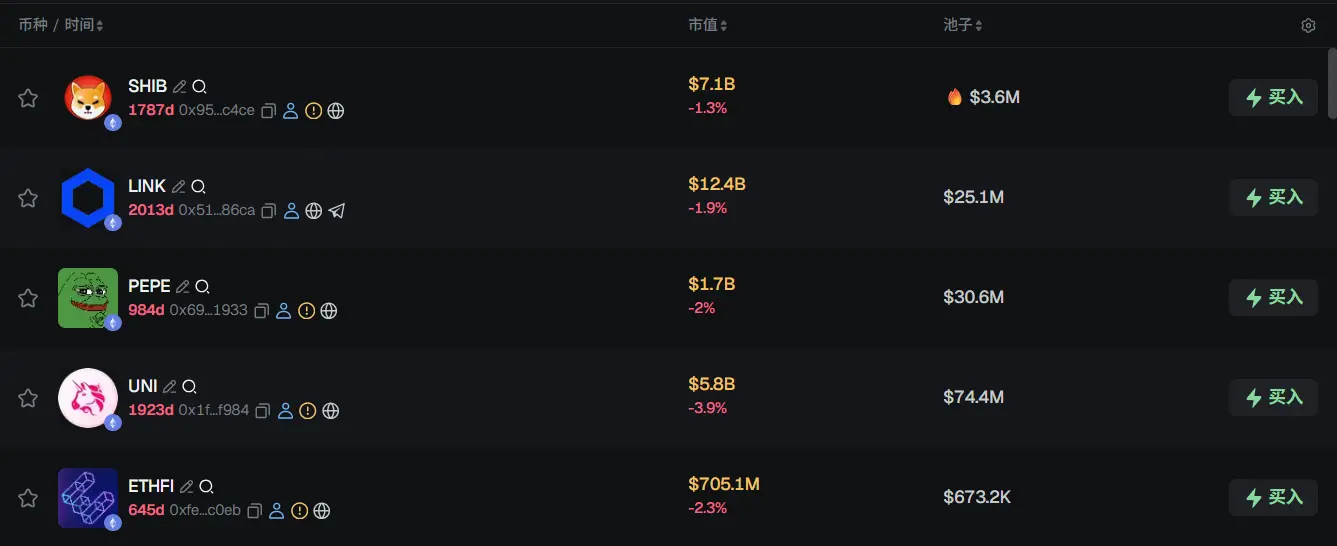
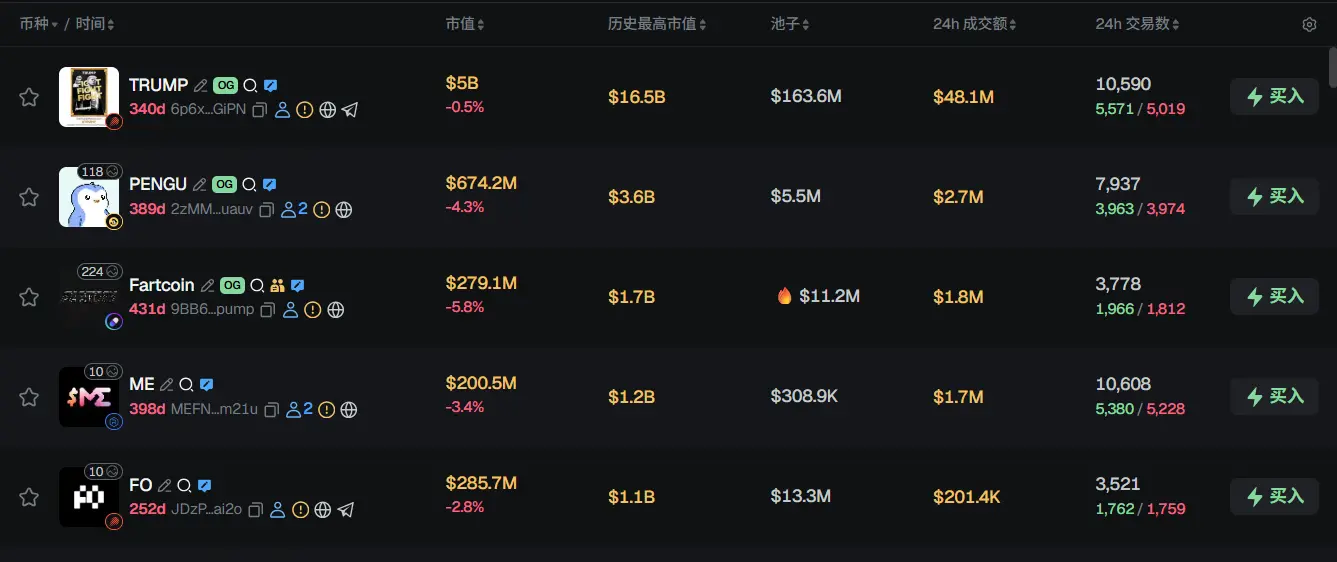
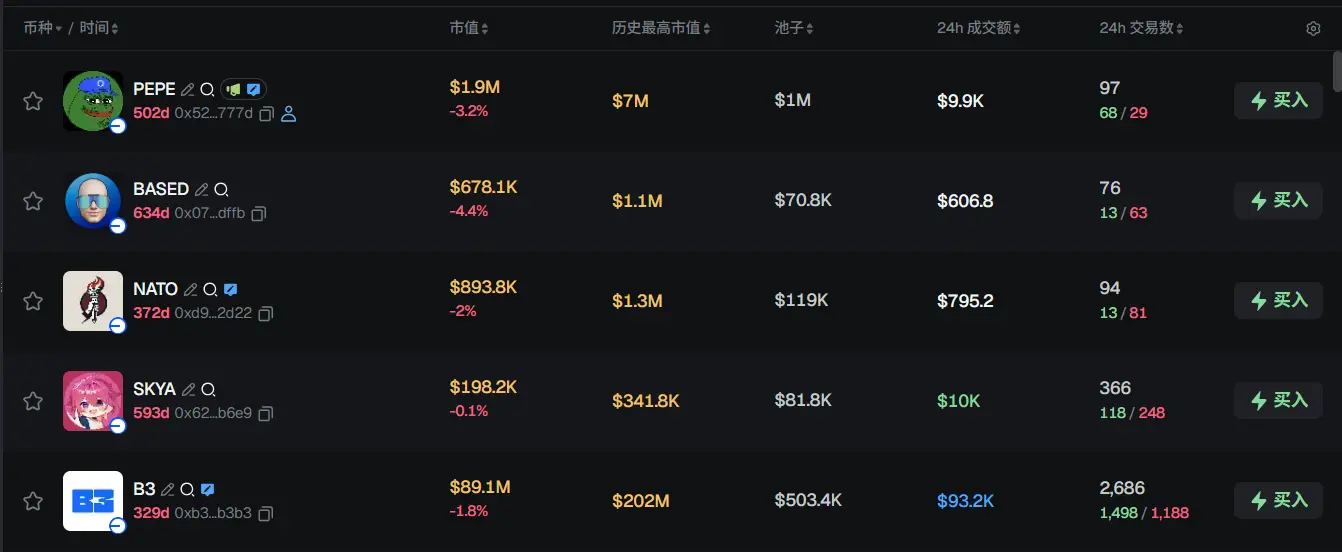
According to the meme token tracking and analysis platform GMGN, as of December 24, 09:00,
The top five popular tokens in the past 24 hours for ETH are: SHIB, LINK, PEPE, UNI, ETHFI
The top five popular tokens in the past 24 hours for Solana are: TRUMP, PENGU, Fartcoin, ME, FO
The top five popular tokens in the past 24 hours for Base are: PEPE, BASED, NATO, SKYA, B3
What are some interesting articles worth reading in the past 24 hours?
Meanwhile, Web3 is reconstructing the production relationship of AI through decentralized computing power networks and crypto incentive systems, while the structural needs of reinforcement learning for rollout sampling, reward signals, and verifiable training naturally align with blockchain's computing power collaboration, incentive distribution, and verifiable execution. This research report will systematically break down the AI training paradigm and the principles of reinforcement learning technology, demonstrating the structural advantages of reinforcement learning × Web3, and analyze projects such as Prime Intellect, Gensyn, Nous Research, Gradient, Grail, and Fraction AI.
Outwardly bullish on Ethereum, but internally bearish—can we still trust Tom Lee's team?
If we were to choose a representative figure for the bullish narrative on Ethereum in 2025, Tom Lee, chairman of the Ethereum treasury company BitMine and co-founder and chief investment officer of Fundstrat, would often be placed in the spotlight. He has repeatedly emphasized in public speeches that ETH is undervalued, and just recently at the Binance Blockchain Week on December 4, he stated that Ethereum at $3,000 is "severely undervalued," and has given a high target price judgment of "ETH $15,000 by the end of 2025." As a strategist with a Wall Street background, known as the "Wall Street Oracle," and long active in media and institutional roadshows, Tom Lee's views are often seen as a sentiment barometer by the market.
Snowball 20x in 2 days—an analysis of how automated market-making mechanisms ignite a cold market
The crypto market in December is as cold as the weather.
On-chain trading has been hibernating for a long time, and new narratives are hard to come by. Just look at the gossip and drama that Chinese CT has been discussing these days, and you can tell that not many people are playing in this market anymore.
But in the English-speaking community, there has been discussion about something new.
A meme coin called Snowball launched on pump.fun on December 18, and in four days, its market cap surged to $10 million, reaching new highs; while almost no one in the Chinese community mentioned it.
However, today, we will not discuss the "number one candidate" with a higher probability of winning, but rather focus on the "second in line" with the most variables—Kevin Warsh.
If Hasset represents the market's "greedy expectations" (lower interest rates, more liquidity), then Warsh represents the market's "fear and reverence" (tighter monetary policy, stricter rules). Why is the market reassessing this once-lauded "Wall Street golden boy"? If he really takes charge of the Federal Reserve, what major changes will occur in the underlying logic of the crypto market?
 Risk warning
 Risk warning



Popular articles





