The tokenized market will reach a trillion-dollar scale, but there are still four major obstacles
 Core Viewpoint

 Tokenizing trillions of dollars in assets is no longer a question of "whether it will happen," but rather a question of who will build the applications for issuing, trading, and custodial services for these assets on a global scale.
Author: Crypto Carl
Compiled by: Hu Tao, ChainCatcher
We are at the dawn of a new era in finance. Tokenization is no longer a niche experiment but is rapidly evolving into an important field, with institutions competing to lead this emerging asset class, one of the largest in scale, while capital allocators seek more significant returns.
The question today is no longer whether trillions of dollars will move on-chain, but who will lead this process. This article will explore the conditions necessary to achieve this process and the opportunities faced by operators and entrepreneurs in building platforms for custodianship and trading of trillions of dollars in funds.
Tokenized finance has already reached a considerable scale. The circulation of stablecoins alone has exceeded $300 billion, while the total market value of other tokenized financial assets (including money market funds, private credit, stocks, commodities, and other products) has also surpassed $30 billion. Many of the world's largest asset management firms, including BlackRock, Fidelity, and Franklin Templeton, have collectively moved billions of dollars of real-world assets on-chain.

Figure 1: Tokenized Financial Assets (excluding stablecoins)
While cryptocurrencies have performed well as an emerging industry, substantial progress in technology and institutional-level risk management is required to scale tokenized finance to trillions of dollars.
The Key is Risk-Adjusted Returns
The growth of tokenized finance depends on whether it can provide better risk-adjusted returns than traditional finance; otherwise, assets will remain off-chain. Tokenizing an asset must improve capital deployment through higher returns, lower risk units, or significant operational and capital efficiency advantages.
The historical flow of stablecoin funds clearly illustrates this. When on-chain "risk-free" yields (represented by Aave USDC supply APY) significantly exceed the federal funds rate (from the end of 2023 to August 2024), assets under management (AUM) grow the fastest; conversely, when on-chain yields were below the federal funds rate from 2022 to 2023, the scale contracted.
The initial reasons for stablecoins moving on-chain included trading, remittances, and acquiring dollars, not just yield. However, when on-chain yields lose attractiveness relative to traditional options, capital flows out.

Figure 2. Month-on-month growth of USDC relative to Aave supply yield and federal funds rate.
This "capital flows to higher risk-adjusted returns" pattern is not unique to stablecoins; it reflects the overall historical trajectory of tokenized finance and foreshadows future directions.
The Tokenization Process
Initially, cryptocurrency trading referred to tokenizing dollars to trade native crypto assets, but it later expanded to include real-world assets, with on-chain native issuance becoming the next significant opportunity.

Tokenization originated from users wanting to trade native crypto assets like cryptocurrencies and NFTs. The emergence of stablecoins made them a practical medium for transferring value between exchanges, quoting in dollars, and storing value on-chain.
Starting in 2025, real-world assets (RWA) will become an important driving force. These assets are traditional financial assets, such as money market funds, private credit, and stocks, packaged and issued on-chain by intermediaries. The function of tokens often resembles "warehouse receipts," representing digital claims on underlying assets. However, the primary record sources remain off-chain, requiring additional legal structures to link token holders with actual assets. This downstream approach enhances accessibility but also introduces dual management and additional counterparty risks.
The longer-term goal is native asset issuance, where the initiation and issuance of assets occur directly on-chain. For example, native on-chain lending and blockchain-based equity issuance. If blockchain is integrated into financial operations from the outset, it can enhance capital efficiency through higher yields, lower operational costs, faster capital cycles, and greater transparency. However, the first true native issuances are likely to come from emerging companies building payment finance and credit infrastructure, rather than traditional financial institutions. Superstate has made substantial progress in equity tokenization through its direct issuance program.
We should anticipate that these three different models will coexist in the long term. The current goal should be to validate product-market fit and build deep, reliable liquidity. Only when assets under management (AUM) reach a certain scale will institutions begin to view blockchain as a primary trading venue rather than a secondary one.
Therefore, it is necessary to identify which assets and use cases can achieve trillions of dollars in scale through tokenization in the near future.
Tokenization Premium
Since tokenized finance must ultimately provide superior risk-adjusted returns, the real question becomes: where and how can this be achieved? What assets should issuers and allocators prioritize?
Thinking from fundamental principles is beneficial. I propose the framework of "tokenization premium" to identify where tokenization can create the most value. Returns are not evenly distributed but are bimodal—clear and strong advantages appear at both extremes: extremely low volatility assets and extremely high volatility assets.

Figure 3. Tokenization Premium
Applying this framework to various asset classes can reveal the biggest short- to medium-term investment opportunities:

Figure 4. Cross-Asset Class Application of Tokenization Premium
Low volatility assets are clear short-term winners. For example, tokenized Stretch ($STRC) and money market funds (like BlackRock's BUIDL) provide stable, predictable yields that can be reused as collateral or deployed into persistent yield strategies that traditional finance struggles to achieve. These assets are well-suited for institutional capital prioritizing yield-bearing collateral and companies wishing to keep capital on-chain. Tokenization transforms them into composable, 24/7 collateral that can be reused across protocols with minimal friction—creating structural advantages over off-chain equivalents.
High volatility assets benefit from an entirely different set of advantages. Native crypto assets ($BTC, $ETH, $SOL), on-chain derivatives (perpetual contracts, structured products like Ethena), and tokenized stocks and commodities enjoy 24/7 global trading, permissionless and orderly settlement, real-time price discovery enabled by robust oracles, and deep composability. Risk assets can enter and exit positions instantly, with no delays; they can also create trading experiences, indices, and structured products that traditional NAV quarterly updates or settlement cycles cannot achieve. These assets thrive in environments where speed, transparency, and atomic composability are most critical.
Assets that fall in the middle—moderate volatility and returns—struggle in the current era of physical assets. They rarely generate sufficient returns to support frequent cyclical trading without facing liquidation risks, and due to low oracle update frequencies or the need for manual intervention, they cannot fully leverage the advantages of round-the-clock trading. These challenges are particularly pronounced for private investment tools like private equity and venture capital, which settle quarterly. The expansion of new products, such as @upshift_fi's Upshift Clear, which enables instant settlement of semi-liquid assets, can begin to narrow the attractiveness gap.
The tokenization premium is not exhaustive and does not cover some secondary factors, such as whether assets are publicly traded or privately traded, counterparty risk, and the liquidity status of assets. However, from a fundamental perspective, it provides a structural reference point to maximize the advantages of tokenization.
Even for those assets that should be tokenized, at least four barriers prevent capital from flowing on-chain at scale.
1/ Investors Need Better Security Guarantees
Modern portfolio theory defines risk as volatility. Tokenized assets also face two additional risks: protocol risk and liquidity risk.
In the early days of DeFi, hacks were commonplace—or at least not surprising. Most attacks were related to smart contracts, and after each attack, developers diligently upgraded smart contracts to ensure such events would not occur again across the ecosystem. After that, around 2024, many believed that large-scale hacks involving tens of thousands of dollars would no longer happen. Their thinking was partially correct.
Today, hacks continue and are becoming increasingly sophisticated. This round is primarily about OpSec (operational security) issues, with Drift Protocol and KelpDAO alone losing over $500 million this year. Even large, mature centralized companies like Bybit faced a $1.5 billion hack in 2025. Clearly, this is an endless cat-and-mouse game. The characteristics of crypto and blockchain as superior financial assets (instant settlement and permissionless) are also the root of security challenges.
However, today this cat has unprecedentedly powerful tools—next-generation AI models. Anthropic's Mythos model is advanced enough to discover security vulnerabilities on foundational platforms like Linux and Apple. Hackers like North Korea's Lazarus Group can leverage these to accelerate attacks, even if developers use them as blue team allies.
Current on-chain security methods are insufficient. Institutions will not invest trillions of dollars into a system that can lose hundreds of millions in a single attack. A security renaissance is needed—a conscious and disciplined rethinking of how on-chain finance is designed, governed, and trusted.
This requires both common-sense improvements and new underlying mechanisms, and for certain asset classes, it may require partially abandoning the ideal of complete decentralization. Innovative protocols and companies will earn the trust of large capital, while those that do not innovate will struggle to attract capital.
If on-chain finance can establish more robust institutional-level standards for security architecture, it will benefit immensely. The most critical and obvious measures are to establish standards for upgrade permissions, withdrawal limits and time locks, signature thresholds, and overall transparency of security architecture. Like many others, I was shocked to see Drift using a 2/5 signature configuration without a time lock, while KelpDAO's bridging smart contract only used a single DVN (i.e., signer).
I am pleased to see new standards for transparency reports and certifications emerging, which will set clear benchmarks for institutional participation. Protocols that prioritize transparency and robust design will attract more capital; institutions have strong risk management departments that require robust protective measures. While it is impossible to discover all vulnerabilities comprehensively, teams that implement common-sense circuit breakers and more robust upgrade processes will be more attractive to issuers, institutions, and retail investors.
Secondly, teams should consider issuing their own stablecoins. This has dual advantages: it can generate revenue for the protocol and provide the ability to freeze and seize instantly. The initial moments after an attack are crucial, and the ability to act quickly and unilaterally is vital. Why rely on existing stablecoin issuers to freeze tokens immediately when an attack occurs? Because it is impractical; stablecoin issuers can hardly monitor every protocol, and this puts them in a dilemma: should they respect the rights of the protocol or the rights of the holders and comply with relevant laws? The vulnerability attack on the Drift protocol is a clear hack, but what if the nature of the attack is less obvious? Issuing their own stablecoin allows the protocol to have complete control and judgment, significantly reducing losses.
However, we also need to evolve this paradigm. In reality, protocols can never be 100% secure, and institutions need to hedge risks.
Traditional finance (TradFi) has managed counterparty and credit risks through credit default swaps and insurance. Similar opportunities exist on-chain: protocols can allow depositors to purchase insurance or credit default swaps to guard against losses. A promising approach is to utilize prediction markets, where participants can choose to go long (buy protection) or short (collect premiums by betting on protocol security). These markets can provide hedging tools and transparently show in real-time which platforms are considered most trustworthy.
We urgently need a security renaissance that involves protocols exerting greater control, providing higher transparency, and leveraging market forces so that large depositors can "buy their own security."
2/ Institutional-Level Buy-Side Tools
Suppose an institutional investor wants to invest $100 million in tokenized assets. They are likely to ask: are there currently platforms that allow me to discover investment opportunities with complete prospectuses, conduct cross-chain investments and custodianship, avoid market volatility and liquidation risks, monitor portfolio performance, and efficiently cycle positions?
Frankly, there are currently no institutional-level platforms. We have built a rich portfolio of tokenized assets—from government bonds to stocks—but we have not yet built the robust infrastructure needed for large-scale deployment and management of institutional capital.
Now is the time to start building the tools that institutional buyers need. I find several significant gaps.
The first is an institutional-level UI that provides the overall capabilities mentioned above. On-chain investing is much more complex than traditional finance, and investors need solutions that provide necessary risk profiles and assist with cross-chain custodianship and execution. A recent investor purchased $50 million worth of $AAVE through the Aave official website, only to receive real tokens worth $36,000—this is the experience institutional capital faces today. Platforms must protect investors from front-running and other MEV attacks.
Another critical feature is short-term liquidation insurance or protection. Most oracles are robust but not perfect. Institutions cannot be liquidated due to short-term oracle issues or unrelated contagion causing perceived asset price drops. I envision multiple native crypto market makers being willing to step in during temporary market mispricing. Individual protocols currently offer such services, but institutions need more generalized solutions.
Finally, platforms could offer a one-click cycling feature. Platforms like Pendle and Kamino support cycling for specific asset lists, but managers may want to cycle assets that are not listed. Thus, there is a clear opportunity: to release a set of cycling contracts that allow wallets and institutional-level platform UIs to access any asset directly.
3/ Large Transaction Capabilities
Privacy is the final frontier.
Liquidity used to be a bottleneck. PropAMM largely solved this issue by enabling low-latency dynamic pricing, thus improving capital efficiency and liquidity while reducing the incidence of adverse MEV compared to static AMMs.
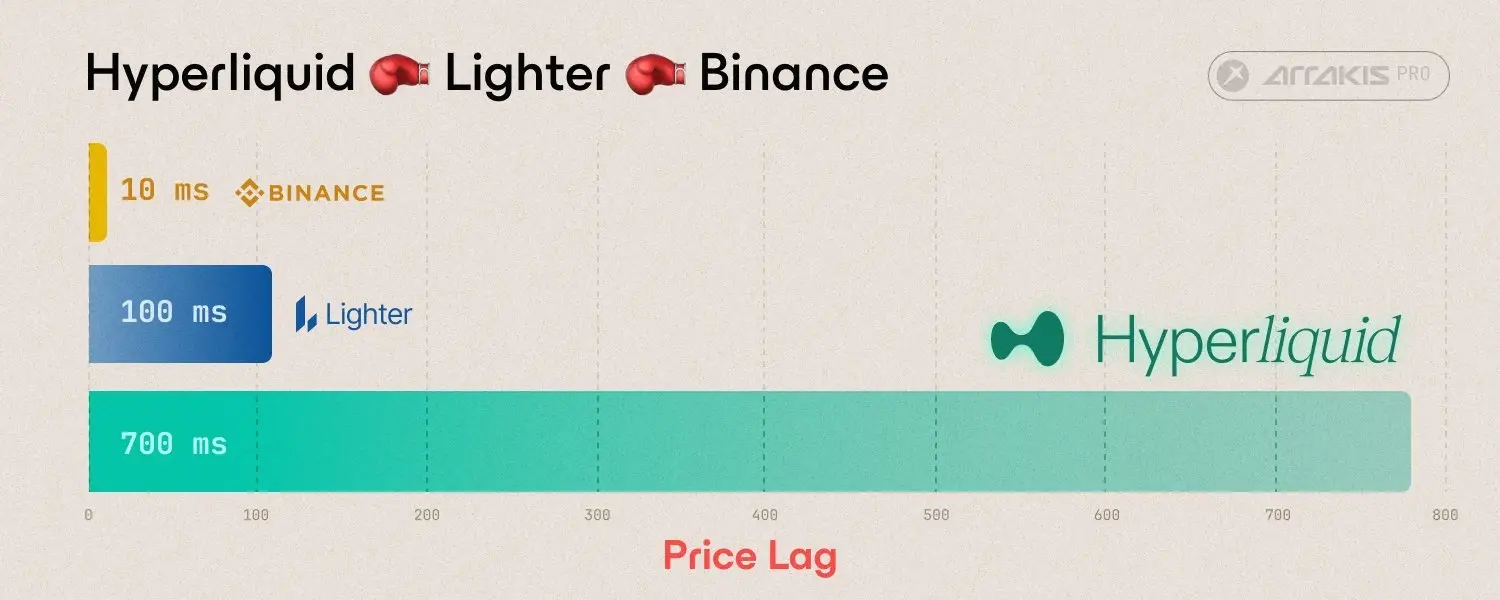
But liquidity is not the only need for institutions. Trading intentions remain public, trading algorithms can still be reverse-engineered, and block settlements still require capital. If every position, hedge, and execution is visible in real-time, institutions cannot escape pilot mode—and they will not. This is why blockchains optimized for confidentiality in trading finance (TradFi) like Canton have reached valuations in the billions. This is also why some large whales steer clear. Hyperliquid, despite limited market depth, finds that placing orders can move the market against them.
The solution is to shield execution of public liquidity. Silhouette (Hyperliquid's shielded trading product) achieves this through a TEE-driven matching engine. Orders are batched, privately matched, and net settled without revealing intentions; unfilled portions are routed directly to HyperCore's public order book. Spot trading is live, saving an average of 4 basis points per transaction through net settlement. Perpetual contracts will launch this year. Of course, there will be more solutions for different trading types across different chains.
Over-the-counter trading platforms and centralized exchanges will continue to execute large transactions. But only when the execution of trades themselves can be protected will the full advantages of on-chain finance—instant settlement, reduced counterparty risk, and deeper unified liquidity—truly be realized.
4/ Regulatory Reform and On-Chain KYC
While widespread regulatory reform remains one of the biggest structural barriers to the scaling of tokenized finance, early companies in this field also find it challenging to exert direct influence. Nevertheless, founders can still have a meaningful impact on one relevant issue in the short term: on-chain identity and KYC (Know Your Customer).
Regulated tokenized products (like those issued by Securitize) require users to complete KYC at a portal before trading. But what if users want to trade products not issued by Securitize? They have to KYC again.
Reducing trading friction will help grow on-chain users and assets. We may not be able to completely avoid KYC requirements for certain assets, but if we can simplify information-sharing processes or establish reciprocal KYC mechanisms within specific monetary thresholds, it will greatly expand the space for innovation.
Conclusion
The first $350 billion primarily comes from stablecoins.
The next order of magnitude is more challenging. It requires winning over capital that has ample reasons to remain in traditional finance: this capital is more concerned about counterparty risk than throughput, more concerned about strategy confidentiality than composability, and more concerned about institutional-level tools than ideology.
Capital will not flood on-chain simply because tokenization is a new thing. Only when tokenization can deliver structurally superior risk-adjusted returns will capital flow in. The tokenization premium points to the opportunities, while the four gaps reveal pressing issues that need to be addressed.
Tokenizing trillions of dollars in assets is no longer a question of "if it will happen," but rather "who will build the applications for issuing, trading, and custodianship of these assets globally."
We believe the opportunities are real and imminent.

 Risk warning