








Bitget UEX Daily Report | Dow Jones rose 1.08%; U.S. September PPI increased 1.3% month-on-month; TSMC net profit increased by 68.7% (October 16, 2026)

 Bitget UEX Daily Report
# Selected Hot News
U.S. Inflation | September PPI Rises 1.3% Month-on-Month, Cost Pressures Intensify
The U.S. Bureau of Labor Statistics announced on October 15 that the final demand PPI rose 1.3% month-on-month and 6.3% year-on-year in September; the index excluding food, energy, and trade services rose 0.5% month-on-month and 5.0% year-on-year. Price pressures are affecting both goods and services.
Market Impact: Price increases at the production end add pressure on companies to absorb costs or raise prices downstream, making it harder for the market to judge policy loosening based solely on a single-day bond rebound. Future observations should focus on the extent of cost transmission to the consumer end and whether companies can maintain profit margins.
U.S. Consumption | September Retail Sales Grow 0.8% Month-on-Month, Nominal Demand Continues to Expand
The U.S. Census Bureau reported that retail and food service sales in September were approximately $745 billion, growing 0.8% month-on-month and 6.3% year-on-year. This data is not adjusted for prices and cannot be directly equated to actual consumption growth.
Market Impact: The increase in consumer spending supports corporate revenues, but when combined with relatively strong inflation, the policy trade-offs remain complex. Moving forward, it is necessary to assess whether growth is driven by demand or price by considering retailer sales volume, discount intensity, and profit guidance.
International Energy | U.S. Crude Oil Inventory Declines, WTI and Brent Show Divergent Trends
U.S. commercial crude oil inventories decreased by 8.6 million barrels for the week ending October 9. On October 15, the WTI November futures settlement price rose 3.03% to $97.97 per barrel, while Brent December futures fell 0.13% to $105.92 per barrel.
Market Impact: The decline in inventory supports U.S. crude oil, while global shipping capacity, Gulf transportation risks, and supply recovery expectations affect prices in different regions. Key observations include whether inventory changes can be sustained and whether transportation costs continue to impact regional price differentials.
# Market Review
Commodity and Forex Performance
Item Reference Price Data Source
|-------------|---------------|----------------------------| | Spot Gold | $4,153.42/oz | October 16, 02:01 Beijing time, up about 1.2% | | Spot Silver | $57.05/oz | October 15 U.S. trading session, up about 2.5% | | WTI Crude Oil | $97.97/barrel | November futures, settled on October 15, +3.03% | | Brent Crude Oil | $105.92/barrel | December futures, settled on October 15, -0.13% | | U.S. Dollar Index DXY | Approximately 102.06 | October 16, 09:01 Beijing time | | U.S. 10-Year Treasury Yield | Approximately 5.064% | October 15 U.S. trading session |
Gold and silver have rebounded while U.S. Treasury yields have fallen, but inflation data remains strong. For cross-asset trading, the key is to distinguish between short-term price corrections and a sustained downward trend in interest rates; crude oil needs to track inventory, transportation, and regional supply and demand separately.
Cryptocurrency Performance
BTC: Approximately 82,326.50 USDT, up 0.73% in 24 hours. ETH: Approximately 2,438.68 USDT, up 0.85% in 24 hours. The total market capitalization of cryptocurrencies is approximately $2.78 trillion, down 2.01% in 24 hours; this update time is October 16, 09:11 Beijing time.
BTC | Liquidation Zone Observation
The more obvious potential liquidation zone for shorts is around $83,000---$83,400, approximately 0.92%---1.40% away from the current price; the potential liquidation zone for longs is around $81,300---$81,800, approximately 0.54%---1.15% away. Currently closer to the downside, if it falls into this zone, attention should be paid to the volatility caused by long leverage unwinding.
ETH | Liquidation Zone Observation
The more obvious potential liquidation zone for shorts is around $2,465---$2,490, approximately 1.18%---2.20% away; the potential liquidation zone for longs is around $2,380---$2,425, approximately 0.47%---2.31% away. Currently closer to the downside, if it drops near $2,425, attention should be paid to potential long liquidation pressure; if it approaches $2,465 on the upside, observe the risk of short covering.
Institutional Holding Cost | BTC
According to a report from Glassnode on October 14, the estimated comprehensive cost of the U.S. spot BTC ETF is approximately $81,500, with the current BTC price about 0.92% higher. Strategy disclosed on October 12 that as of October 11, it held 848,250 BTC, with an overall average cost of approximately $75,444, including fees; the current coin price is about 9.02% higher than its cost. The above is a reference price difference relative to holding costs.
One-Sentence Market Overview
The potential liquidation zone for BTC at $81,300---$81,800 covers the ETF cost reference line of about $81,500; if it falls back to this range, both leverage unwinding and reference floating profit narrowing should be observed. On the upside, focus on $83,000---$83,400, while for ETH, first look at the price reactions near $2,425 and $2,465.
Major U.S. Stock Index Performance
Index Closing Level Change
|-----------|-----------|--------| | Dow Jones Industrial Average | 52,177.69 | +1.08% | | S&P 500 Index | 7,744.06 | +0.33% | | Nasdaq Composite Index | 26,713.03 | +0.08% |
The three major indices closed higher, with the Dow leading significantly, while the Nasdaq approached a flat close. The index rebound coexists with continued declines in some tech stocks, indicating ongoing market divergence.
Performance of the Seven Tech Giants
Company Stock Code Closing Price (USD) Change
|----------|-------|--------|--------| | NVIDIA | NVDA | 217.23 | -1.84% | | Apple | AAPL | 342.00 | -0.28% | | Microsoft | MSFT | 539.44 | +1.08% | | Alphabet | GOOGL | 349.22 | +0.45% | | Amazon | AMZN | 254.76 | +0.27% | | Meta | META | 736.72 | -0.11% | | Tesla | TSLA | 362.44 | -1.29% |
Among the seven giants, there were 3 gains and 4 losses. Microsoft led the gains, while NVIDIA and Tesla saw relatively larger declines; large tech stocks have not yet formed a unified rebound, and future observations should focus on each company's earnings realization and capital expenditure returns.
Sector Movement Observation
Healthcare: Eli Lilly rose 3.55%, UnitedHealth rose 2.79%, while Deutsche Bank upgraded the ratings of both companies during the same period. The performance of healthcare stocks diverges from some weaker tech stocks, and future attention should be paid to whether profit guidance can continue to provide support.
Semiconductors: TSMC ADR fell 1.80%, NVIDIA fell 1.84%. TSMC's earnings growth coexists with a weakening stock price, indicating that evaluating sector performance still requires examining performance, expectations, and valuations simultaneously, rather than inferring the trading direction of the entire supply chain from a single financial report.
Commercial Space: Rocket Lab fell 6.64%. The first flight of Neutron has been postponed to 2027, causing the market to refocus on the progress of technical validation and revenue realization timing.
# In-Depth Analysis of Key U.S. Stocks
TSMC (TSM) | Strong Net Profit Growth, Stock Price Reaction Remains Cautious
Event Overview: TSMC announced on October 15 that its third-quarter revenue in U.S. dollars was $46.72 billion, a year-on-year increase of 41.2%; net profit was NT$76.306 billion, a year-on-year increase of 68.7%, with a gross margin of 66.4%. The company expects fourth-quarter revenue to be between $52.3 billion and $54.3 billion. Its ADR closed at $422.25, down 1.80%.
Market Interpretation: The performance and guidance provide substantial evidence for chip manufacturing demand, but there is a divergence between growth figures and stock price performance. For stock prices, how much growth expectation the market has previously factored in and whether subsequent profits can continue to be realized are equally important.
Investment Insight: Focus on tracking whether fourth-quarter revenue falls within the guidance range, demand for advanced processes, and the sustainability of high gross margins. Evaluating business growth and valuation changes separately will help better understand the volatility after the earnings report.
Charles Schwab (SCHW) | Client Asset Growth, Valuation Check Continues Post-Earnings
Event Overview: Charles Schwab announced on October 15 that its third-quarter revenue was approximately $7.2 billion, a year-on-year increase of 17%; adjusted earnings per share were $1.69. The core new client assets for the quarter were $190.4 billion, a year-on-year increase of 38%, with total client assets of approximately $13.33 trillion. The stock closed at $94.16, down 2.73%.
Market Interpretation: The increase in new assets helps expand the basis for subsequent fees and interest income, but client fund allocation, deposit costs, and yield changes will still affect profit conversion. Earnings growth and the stock price decline on the same day can occur simultaneously and cannot be simply attributed to operational deterioration.
Investment Insight: Pay attention to the retention of new assets, client cash allocation, and net interest income performance, and check whether the growth in asset scale can translate into sustained earnings per share growth.
Rocket Lab (RKLB) | Neutron First Flight Delayed, Realization Timing Becomes the Focus
Event Overview: The company disclosed in an investor update on October 14 that the first flight of Neutron will be delayed until 2027, without providing a new specific first flight date; manufacturing process corrections and subsequent testing still need to be advanced. On October 15, the stock closed at $55.25, down 6.64%.
Market Interpretation: The delay extends the verification and revenue realization cycle for the medium-lift rocket business. Order demand still needs to be converted into revenue through reliable launch capabilities, and changes in the timeline will also affect the market's assessment of cash consumption.
Investment Insight: Track the testing of primary structural components, progress of complete tests, and the new first flight timeline, while observing whether the existing business cash flow and reserves can cover the development cycle.
# Market and Project Dynamics
Ripple Prime launches an institutional-focused RWA perpetual swap. On October 15, it was announced that the product covers over 100 reference markets including stocks, indices, ETFs, metals, energy, and forex, supporting round-the-clock trading and settlement. The contracts reference perpetual futures on Trade.xyz on Hyperliquid and can use RLUSD as collateral, with applicability varying by jurisdiction. Its significance lies in expanding continuous risk management channels for traditional assets.
Starknet initiates a non-binding vote on an independent L1 direction. The vote initiated on October 15 will last for seven days to assess whether to further explore an independent quantum-resistant L1 path. A favorable result will initiate research and subsequent proposals, but does not equate to approval for migration; the proposal clearly states continued use of STRK without introducing new tokens.
Network School acquires Farcaster. Neynar co-founder Rish announced on October 15 that the Farcaster application, protocol codebase, and related products will be transferred to Network School, with most team members continuing to participate in development. Future attention will be on changes in the operating model and retention of developers and users.
DeFi Development raises CHAD dividend yield. The company announced on October 15 that the annual dividend yield for preferred stock CHAD has been increased from 13% to 14%, effective November 2; based on the stipulated amount of $10 per share, the annual dividend rises from $1.30 to $1.40, with payment subject to board declaration. Future proceeds from issuance are intended to expand the SOL treasury, and attention should be paid to the matching of financing costs and treasury returns.
Canaan discloses progress on mining operations and waste heat utilization. The company announced on October 15 that it produced 44 BTC in September and held 1,875 BTC at the end of the month; the Nordic 8MW district heating project is now fully operational, utilizing computational waste heat to serve approximately 2,800 households. This update also provides observational clues regarding the scale of holdings and energy utilization efficiency.
Market Calendar Today
Beijing Time Country/Region Event Market Attention
|-------------|----|--------------|-----| | October 16, 20:30 | United States | September Import and Export Price Index | ★★★ | | October 16, 21:15 | United States | September Industrial Production and Capacity Utilization | ★★★ |
Key Event Outlook: Import and export prices help supplement observations of external cost pressures, while industrial production provides signals from the supply side of the real economy. If price pressures continue to strengthen and production remains resilient, market expectations for policy easing may be constrained; if production weakens, profit growth expectations will need to be reassessed.
Institutional View: Jed Ellerbroek, portfolio manager at Argent Capital Management, stated on October 15 that rising financing costs will impact housing and data center construction, with defensive and non-cyclical businesses receiving attention. This suggests that when evaluating AI investments in the future, one should also examine funding costs and cash recovery capabilities.
This article is for market information reference only and does not constitute investment advice.
 Risk warning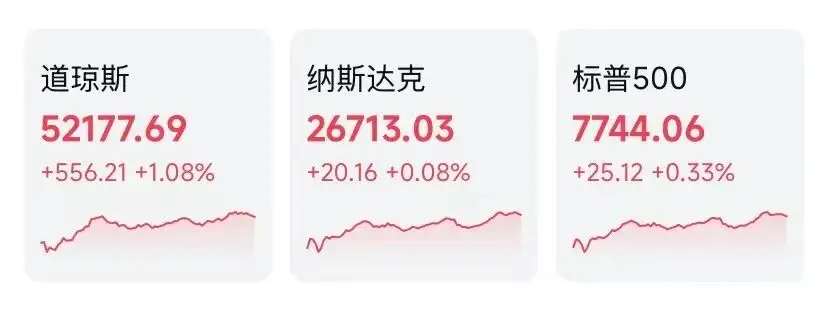




Popular articles





