Morning Report | Bitcoin's year-end market divergence intensifies: Optimists look towards $100,000, while cautious investors focus on inflation pressures; the probability of the Federal Reserve raising interest rates by 25 basis points in October drops to 15.5%

 October 18 Market Important Events Overview
Compiled by: ChainCatcher
What important events have occurred in the past 24 hours?
Bitcoin Year-End Market Divergence Intensifies: Optimists Eye $100,000, Cautious Focus on Inflation Pressure
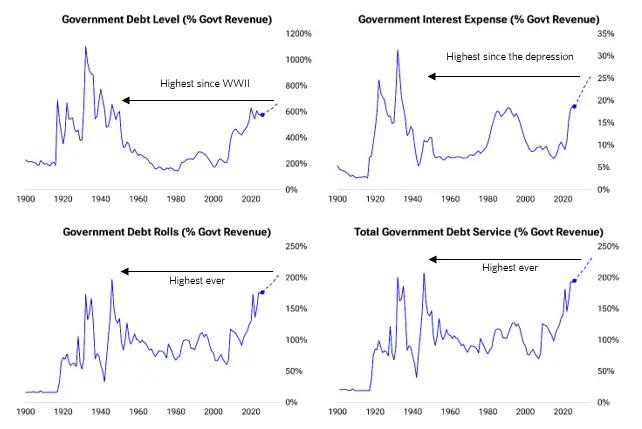
According to ChainCatcher, as reported by CoinDesk, institutions have differing views on Bitcoin's year-end trend, with optimists looking towards $100,000 and the cautious focusing on inflation pressure. Bitwise Research Director Ryan Rasmussen believes that Bitcoin could surpass $100,000 by the end of 2026, driven by institutional purchases through ETFs, ongoing corporate buying, concerns over inflation and government debt, and a clearer regulatory environment.
LO:TECH Research Director Adam Morgan McCarthy expects Bitcoin to oscillate between $85,000 and $95,000 before year-end, with inflation pressure and Federal Reserve policies remaining market obstacles; to return above $100,000, the market may need to lower expectations for a rate hike in December, while a drop in oil prices and easing inflation could help facilitate this change.
CoinShares Research Director James Butterfill pointed out that the contradiction between persistent inflation and a weakening job market will affect the Federal Reserve's subsequent policy space: cooling inflation may provide leeway to address job weakness, while renewed inflation could keep monetary policy restrictive.
Goldman Sachs CEO: Tokenization Will Expand Financial Market Opportunities
According to ChainCatcher, David Solomon, CEO of investment bank Goldman Sachs, stated during an earnings call that tokenization is becoming an important trend covering multiple asset classes, potentially bringing more products, clients, and business. The bank has achieved tokenization of bonds, money market funds, and some client real estate.
DeFi, prediction markets, and automated trading are also under discussion, but Goldman Sachs has not announced specific related products. Solomon noted that blockchain-related activities are still relatively small in scale. Goldman Sachs uses its own GS DAP platform to provide blockchain financial asset infrastructure and participates in the tokenization services launched by the Depository Trust & Clearing Corporation (DTCC), assessing scalable applications.
Solomon stated that tokenization can reduce costs, automate processes, and improve liquidity across asset classes. He mentioned that Goldman Sachs supports the passage of the CLARITY Act, although there are reservations about certain provisions, and participates in discussions with regulators regarding market rules. The bank reported net revenue of $18.68 billion in the third quarter, with stock trading revenue increasing by 72% year-on-year to $6.4 billion.
Turkey Confirms Arrest of Hex Founder Richard Heart, Seizes $7.15 Million and Six Cold Wallets
According to ChainCatcher, Turkish Justice Minister Akın Gürlek confirmed on Saturday that Ethereum ecosystem token Hex and PulseChain founder Richard Heart was detained in Istanbul. Gürlek stated on the X platform that Heart, whose real name is Richard James Schueler, was detained on Wednesday during an operation in the Beşiktaş district of Istanbul along with his wife, and police subsequently detained three individuals confirmed to be his bodyguards.
The operation was carried out by the Istanbul Chief Prosecutor's Office in conjunction with the city's police intelligence and financial crimes department, with support from Turkey's intelligence agency MİT. Gürlek stated that police searched 15 addresses in the Beşiktaş, Üsküdar, and Sarıyer districts, seizing $7.15 million in cash, six cold wallets, 160,000 Turkish lira, 28 watches, 97 pieces of jewelry, 300 bags, and 19 graphics cards, while confiscating four long-barreled rifles, three unlicensed handguns, and 1,400 rounds of ammunition.
Gürlek stated that judicial procedures and the review of seized items are still ongoing. Turkey's state news agency Anadolu reported separately that police seized nine vehicles registered in Heart's wife's name. According to CoinGecko data, Hex has dropped about 14% in the past 24 hours.
Gürlek linked Heart's red notice to $1 billion cryptocurrency fraud charges involving the U.S. and Finland. The notice was issued in December 2024 at Finland's request, with Finnish authorities seeking his arrest on charges of serious tax evasion and assault. In the U.S., a federal judge dismissed the SEC's lawsuit against Heart in February 2025 on jurisdictional grounds, and the agency decided not to refile the lawsuit in April of that year.
Binance, Coinbase, and Other Crypto Companies Participate in West Africa Anti-Fraud Operation, Identifying $11 Million in Freezeable Funds
According to ChainCatcher, as reported by CoinDesk, the U.S. Department of Justice announced that authorities in Ghana and Nigeria arrested 28 individuals in an enforcement operation targeting a West African fraud network involving cryptocurrency investment fraud. The UK's National Crime Agency (NCA) stated that the operation also uncovered 117 victims of human trafficking in Ghana, who are awaiting repatriation to Nigeria. Private sector partners identified over $11 million in freezeable funds.
The operation, hosted by the NCA, brought together tech companies and law enforcement agencies to combat fraud networks targeting citizens of the U.S., U.K., and other countries. The Department of Justice stated that this is the first joint operation focused on West Africa. Cryptocurrency exchanges Coinbase and Binance, along with blockchain analytics firms Chainalysis, Elliptic, and TRM Labs, participated in the operation.
Coinbase stated that it assisted in tracking illicit funds, supporting asset freezes, and providing intelligence to investigators, identifying over 65 active fraud victims and preventing potential losses exceeding $415,000. TRM Labs reported that it uncovered a large-scale peer-to-peer money laundering network.
In the Sasaabi area of Ghana, authorities arrested 19 individuals and seized 303 electronic devices; Nigeria also arrested 9 individuals. Meta reported that it has deleted over 3.7 million Facebook and Instagram accounts, pages, and groups, most of which targeted Americans and Britons through impersonation. Law enforcement also received leads on over 30 suspected fraud centers.
Federal Reserve's October Rate Hike Probability Drops to 15.5%
According to ChainCatcher, based on CME's "FedWatch" data, the probability of the Federal Reserve maintaining interest rates in October is 84.5%, while the probability of a 25 basis point rate hike is 15.5%.
Reuters/Ipsos Poll: Majority of Americans Oppose Betting on Election Predictions
According to ChainCatcher, as reported by Cointelegraph, a recent poll conducted by Reuters and Ipsos shows that a majority of American respondents oppose using prediction markets to bet on U.S. elections and other government actions. The survey revealed that 69% of Democratic respondents and 61% of Republican respondents oppose using prediction markets for betting on election outcomes.
The survey was conducted from September 30 to October 5, covering 4,506 adults nationwide. Even for betting on professional sports events, 43% of respondents expressed opposition, while only 29% expressed support.
The prediction market industry is currently dominated by platforms such as Polymarket and Kalshi, allowing users to bet on U.S. elections, government policy trends, and sports events, and has sparked multiple lawsuits regarding regulatory authority. The Trump administration is pushing for federal regulation of the industry through the Commodity Futures Trading Commission (CFTC), while several states have expressed opposition.
Previously, on October 8, Cointelegraph reported that 39 states and the District of Columbia submitted an amicus brief, indicating that the conflict between the CFTC and state authorities over prediction market issues has formed a "national turf war" that cannot be resolved without a Supreme Court ruling.
Cysic Cross-Chain Bridge Suffers Unauthorized Minting of 10 Million CYS, Bridge Suspended
According to ChainCatcher, the decentralized computing network Cysic reported on the X platform that its cross-chain bridge was attacked on Saturday, with the attacker exploiting a processing vulnerability to unauthorized mint 10 million CYS on the BNB Smart Chain. The cross-chain bridge has now been suspended. Preliminary investigation results indicate that the attacker accessed the database supporting the cross-chain bridge without authorization.
The report shows that the minting occurred at UTC time 12:31:38, and Cysic added the receiving address to the token contract blacklist at 13:47:52. At that time, the address still held approximately 2.8 million CYS, and transfers were restricted. Cysic stated that the incident was limited to the message processing and minting phase of the cross-chain bridge and did not affect the mainnet or other operational systems, nor did it result in the theft or unauthorized transfer of CYS or other assets already in user wallets.
Cysic emphasized that the quantity minted alone does not determine the final dollar loss, and related token transfers, exchanges, and actual losses are still under verification. The company has hired a security agency and plans to release a follow-up report after the current investigation phase concludes. CYS is used to coordinate incentives among users, computing power providers, governance participants, and contributors within the Cysic network.
South Korean Government to Hear Opinions from Five Major Crypto Exchanges on October 20, Virtual Asset Taxation May Be Delayed Again
According to ChainCatcher, as reported by Yonhap News Agency, the South Korean government will convene representatives from five major virtual asset exchanges—Upbit, Bithumb, Coinone, Digital X, and GOPAX—along with DAXA executives on October 20 to hear industry opinions on the virtual asset taxation originally scheduled to be implemented in January 2027.
The current proposal aims to impose a 22% income tax and local income tax on virtual asset transfers and lending income after deducting a basic exemption of 2.5 million Korean won.
This tax policy has been postponed three times since it was proposed in 2020, and the government is still advancing preparations according to the original timeline, with the National Tax Service of Korea expected to release a related announcement in November. Additionally, South Korea's financial regulatory authorities are accelerating the advancement of the government draft of the "Basic Law on Digital Assets," which is expected to be completed by the end of this month and initiate related consultation procedures.
AIsa Completes Seed Round Expansion Financing, Tether and HIVEN Join as Strategic Investors
According to ChainCatcher, enterprise AI agent infrastructure company AIsa announced the completion of its seed round expansion financing, with stablecoin issuer Tether and HIVEN joining as strategic investors. This round brings its total financing amount to over $9 million.
Tether and HIVEN have joined existing investors such as Alibaba, Tribe Capital, Sumitomo Corporation, Draper Associates, and Saison Capital.
Jordan Liu, founder and CEO of AIsa, stated that the company will build infrastructure to support AI agents in global discovery, access, and payment for resources. AIsa's network integrates resource discovery, access, and transactions, connecting enterprise AI agents with external data, AI search, models, APIs, software tools, and industry services, while providing permission management, usage measurement, billing, and settlement.
Qubic: 1,404 wallets hacked, $1.3 million QU stolen, network paused
According to ChainCatcher, Qubic announced that between 23:42 yesterday and 01:26 today UTC, attackers exploited a vulnerability in the randomness of some wallet seeds to access and steal approximately 29.4 trillion QU from 1,404 Qubic wallets. The issue lies in the seed generation mechanism, not the Qubic protocol itself.
Affected seeds include those created in any browser on iPhone or iPad before October 18, 2026, seeds created on Mac Safari on the same day, and seeds created through the Qubic iOS App before July 2025.
The network has paused at tick 85,371,949, with 87.1% of the stolen funds remaining on the Qubic network and frozen, while the remaining 12.9% has been transferred to MEXC, with the related receiving accounts also frozen.
Qubic stated that the seed generation issue has been fixed in version 4.26.4, and subsequent handling will be determined by the Computor quorum according to network rules, with a complete technical report to be released after the fund recovery plan is finalized.
Ansem: HYPE and ZEC breaking out independently may shift altcoin investment logic, this cycle no longer only focuses on BTC and ETH
According to ChainCatcher, crypto trader Ansem shared recent investment views, stating that the crypto market is gradually shifting towards a phase that places greater emphasis on the fundamentals of individual projects, capital inflows, and actual business performance. Therefore, identifying mispriced assets and determining which teams are truly driving project development will become increasingly important, rather than relying solely on the trends of mainstream assets like Bitcoin and Ethereum. Ansem believes that this cycle's investment approach for altcoins differs from the past, as assets like HYPE and ZEC have shown independent performance even during periods of overall market weakness.
Nine companies oppose OKXICE trading their tokenized stocks, Nasdaq chooses to withdraw
According to ChainCatcher, The Block reported that nine companies, including CoreWeave, Broadcom, Verizon, and UnitedHealth, have expressed opposition to the trading of tokenized versions of their stocks on OKXICE. OKXICE is a joint venture platform established by the crypto trading platform OKX and the Intercontinental Exchange (ICE). Nasdaq has also stated that it will choose to withdraw and will not tokenize its own stocks under the relevant framework of the U.S. Securities and Exchange Commission.
Coinbase crypto loans and bank deposits advancing on-chain simultaneously
According to ChainCatcher, Coinbase's outstanding balance for crypto asset loans has reached $2.3 billion, with the product launching in January 2025. Eligible users outside of New York State can pledge Bitcoin to borrow USDC without selling their holdings, with loans routed through the Morpho decentralized lending protocol on the Base network.
Coinbase has added fixed-rate loans through Morpho Midnight, expanding the pledged assets to XRP, DOGE, ADA, and LTC; as of mid-September 2026, the scale of floating-rate loans has exceeded $1.4 billion, supported by approximately $3 billion in collateral.
JPMorgan's JPMD tokenized deposits have been operational for institutions on Base since mid-2026, with Citigroup and BNY Mellon also advancing related layouts, and several UK banks planning to launch related networks by 2027.
Hyperliquid seeks U.S. rules to protect blockchain and place regulation at the application layer
According to ChainCatcher, Bloomberg reported that Hyperliquid Labs co-founder Jeff Yan is seeking the U.S. to establish rules that can protect its blockchain.
He believes that Hyperliquid's regulatory responsibilities should fall on financial institutions operating markets based on that blockchain, i.e., the application layer, rather than the blockchain network itself. This regulatory division would allow Hyperliquid to enter Wall Street without bearing the full compliance burden of traditional exchanges.
Jeff Yan also stated that Hyperliquid is currently not open to U.S. customers, and Hyperliquid hopes to serve as the underlying trading technology used by traditional financial institutions rather than replacing existing market participants, likening its positioning to Amazon Web Services (AWS) providing computing infrastructure for businesses.
Michael Saylor responds to MSCI potentially excluding MSTR: Not that important for Strategy, hopes MSCI reconsiders
According to ChainCatcher, Michael Saylor, founder of Bitcoin treasury company Strategy, responded in an interview with Bloomberg regarding MSCI's new index rules that may exclude MSTR. He stated that this move is not that important for Strategy, as the scale of funds they control is relatively small, but he is disappointed with MSCI's stance so far. Oil, gas, land, and machinery are considered capital, while Bitcoin is not, which is a value judgment and reflects a bias against digital assets. They are like unregistered financial advisors setting a "bad precedent" for the entire industry, and he hopes they reconsider.
Digital assets represent the future; MSCI may not want to participate in this future, but investors will not agree, and the U.S. will not agree. If MSCI abandons the proposal to exclude MSTR, it would benefit the entire industry.
Regarding the core controversy of whether Strategy qualifies as a company with actual business operations, Michael Saylor compared it to banks and insurance companies, arguing that these financial institutions sell credit and policies, while Strategy supports digital credit products with Bitcoin, thus Strategy is an operating business and should be treated like other financial companies.
Tom Lee's fund analyst: Now is a good time to buy tech stocks on dips, but diversification is needed
According to ChainCatcher, Mark Newton, an analyst at Tom Lee's fund, stated in an interview with CNBC that now is a good time to buy tech stocks on dips, but investors need to maintain diversified allocations and be prepared for sector rotations. Over the past month, cross-asset volatility has significantly increased, with the S&P 500 index recently retreating about 6%, and the tech sector also experiencing notable adjustments over the past week.
However, compared to the rise in September, he believes the damage to tech stocks is still relatively limited. This year, the market has consistently shown sector rotation characteristics, initially with the energy sector rising nearly 40%, then spreading to the tech sector, and now shifting to the healthcare sector, which has reached an all-time high. Investors need to be prepared for sector switches and maintain diversified allocations.
Interactive Brokers' chief strategist Steve Sosnick reminded that even if investors do not actively allocate to AI, they may still hold significant exposure to tech stocks through S&P 500 index funds. The market is still primarily characterized by sector rotation, but he is concerned about the continued decline of tech stocks and that investors are starting to question the return on AI investments.
Fidelity Global Macro Chief: Bitcoin may be entering a new bull market
According to ChainCatcher, Bitcoin Magazine cited Fidelity Global Macro Chief Jurrien Timmer's view that Bitcoin may be entering a new bull market. Jurrien Timmer stated: Based on the power law model, a new four-year cycle bull market may have already begun. Currently, there seems to be no clear narrative, but bull markets rarely start with a clear narrative.
Nine crypto institutions establish Quantum Alliance to promote blockchain quantum resistance standards
According to ChainCatcher, Decrypt reported that nine blockchain institutions, including Quantus, Postquant Labs, Midnight Foundation, Keystone, Abelian, and Hacken, have jointly established the Quantum Alliance to develop "quantum-ready" open standards and establish a unified approach to testing the quantum resistance of blockchain networks, wallets, and infrastructure.
The Quantum Alliance stated that currently, about 6.04 million BTC, approximately 30% of the Bitcoin supply, are at potential quantum attack risk due to exposed elliptic curve signature public keys.
The organization will focus on promoting blockchain migration, post-quantum zero-knowledge systems, wallet security, and cross-chain compatibility, citing recent predictions that practical quantum attack windows may appear as early as around 2028.
Deutsche Bank: Plans to launch institutional-level crypto custody, initially targeting professional clients in Germany
According to ChainCatcher, Deutsche Bank is nearing the launch of institutional-level crypto asset custody services, expected to begin serving institutional clients within weeks, initially targeting German enterprises and professional investors, supporting assets like Bitcoin and Ethereum, with technology co-developed by Swiss digital asset infrastructure company Taurus. This service is not aimed at retail cryptocurrency trading applications, and the related plans still require regulatory approval. Deutsche Bank has also discussed the potential for tokenized deposits, digital securities, and expansion to Asian financial centers by 2027.
Strategy not removed from MSCI index, MSCI tightens scrutiny rules for Bitcoin treasury companies
According to ChainCatcher, MSCI revised the qualification rules for global investable market index constituents on October 15, tightening the definition of "non-operating companies" and subjecting Bitcoin treasury companies to stricter scrutiny.
Strategy, led by Michael Saylor, has not been removed from the MSCI index.
MSCI stated that it will assess whether a company qualifies as a "non-operating" company based on its operational and financial characteristics, and companies holding digital assets may still have genuine business activities; existing constituents are also subject to a buffer mechanism, and the related consequences will be further clarified in the November index review.
Opinion: Bitcoin completes a bull hunt, may turn to a short squeeze next week
ChainCatcher news, renowned trader Killa reviewed the weekly trend of Bitcoin, pointing out that last week BTC rebounded 50% after falling from $87,000 to the $80,000 range. After the weekly opening, the price surged on Monday but continued to face resistance, ultimately sweeping down to about $80,000, the low of the previous week. Currently, the market is primarily "hunting" for long positions, so there is a significant chance of shifting to hunt for short positions next week.
In the short term, close attention should be paid to whether the low point of this week at $79,800 will be swept again. If a sweep occurs, look for long opportunities. Killa provided a clear observation framework: if the price does not sweep the lows again, focus should be on the $83,600 area. If it cannot break through this area, the market will continue to be in a surrender phase of range-bound fluctuations; if it can successfully reverse, the market will break upwards.
He expects that next week's weekly opening will push upwards, forcing late shorts that have recently chased the market to close their positions. In the worst-case scenario for bulls, BTC could drift down to the $76,000 to $78,000 range. The analyst also clearly stated that he does not believe an extreme situation of sweeping down to $74,000 will occur.
Galaxy Research Director: Bitcoin ETF Net Inflows Remain Positive at $355 Million Year-to-Date
ChainCatcher news, the Galaxy Research Director posted on platform X, stating that year-to-date net inflows into Bitcoin ETFs remain positive at $355 million, having turned positive again in September.
Darkfost Responds to Viewpoint that a 20% Correction in U.S. Stocks Would Trigger BTC to Plummet to $10,000: Prediction is Too Extreme, Lacks Historical Basis
ChainCatcher news, in response to recent community opinions suggesting that a 20% correction in U.S. stocks would trigger Bitcoin to plummet to $10,000, crypto analyst Darkfost analyzed in a post that if Bitcoin were to drop to $10,000, it would represent a decline of about 87% from the current price and a retracement of about 92% from its historical peak.
Historically, Bitcoin has only experienced a maximum retracement of over 92% in 2011; the maximum retracements in 2015, 2019, 2022, and 2026 were 82.5%, 82.6%, 74.4%, and 54.2%, respectively.
Darkfost further pointed out that during a 19.53% correction in the S&P 500 index, Bitcoin fell about 80% in 2018, but when the S&P 500 index also corrected over 19% in April 2025, Bitcoin only dropped about 22%. Therefore, directly linking a 20% correction in U.S. stocks to Bitcoin dropping to $10,000 lacks sufficient historical data support.
Analyst: If Bitcoin Breaks Key Resistance at $82,000, It May Accelerate Towards $90,000
ChainCatcher news, crypto analyst Michaël van de Poppe stated in a post that the price fluctuation range of Bitcoin is gradually narrowing, and volatility is decreasing, indicating that a significant market change may be coming, but there may first be a "false move."
He noted that this "false move" could bring Bitcoin's price below $80,000, into the "blue box" area marked on his chart. This area has been touched once before, and if it is retested, he would not be surprised and believes it would be an ideal entry area.
Regarding the conditions for an upward move, he stated that if Bitcoin breaks the key resistance level of $82,000, the upward momentum will begin to accelerate and is likely to move towards $90,000.
VerityAI Receives Investment from AURUMX Capital, Continues to Expand Multi-Chain Trusted Information Infrastructure
ChainCatcher news, on October 16, AI trusted reputation network VerityAI received investment from AURUMX Capital. AURUMX Capital possesses compliance resources in traditional finance and digital assets, holding Hong Kong SFC license 4/9 and MSB qualification.
The project has previously received investments from Titan Foundation USA and BlockX. VerityAI is dedicated to transforming market research and predictive signals into on-chain verifiable reputation assets, building a credibility assessment system for contributors in the digital market.
AURUMX Capital will leverage its institutional resources to promote the application of VerityAI's verifiable reputation infrastructure in institutional scenarios. Its core product, Signal Explorer, now supports Morph Mainnet and BNB Chain, having generated nearly 20,000 on-chain signals as of October 16, 2026.
During Wall Street's Market Closure, Chip Stock Contracts Were Liquidated for $52 Million in 10 Minutes
ChainCatcher news, according to CoinDesk, during Wall Street's market closure on Saturday, leveraged bets linked to chip stocks and semiconductor funds were liquidated for nearly $52 million within 10 minutes. According to CoinGlass data, approximately $51.6 million in positions related to chip stocks and semiconductor funds were forcibly closed between UTC 21:22 and 21:32, with about $38 million coming from long positions betting on price increases.
The sell-off began on Binance and spread to Hyperliquid within seconds. The SOXL contract, which is three times long on chip stocks, suffered the largest loss, approximately $12.7 million; contracts for SanDisk and SK Hynix each lost about $10.8 million.
According to David Jeong, CEO of trading company Tread.fi, he placed the first large sell orders for SanDisk and Micron on Binance at UTC 21:21:59, and less than a second later, the orders impacted Hyperliquid—this platform, launched by Trade XYZ, tracks contracts for stocks, with about 10 addresses establishing short positions on six chip-related contracts within 1.8 seconds.
In the first minute, Binance processed about $21.9 million in SanDisk trades, while Trade XYZ accounted for $3.1 million. Storage chip stocks had previously experienced a turbulent week due to new competition from Chinese chip manufacturer CXMT. Since the stock market was closed, these contracts had no real stock prices for reference, and traders could only compete against each other; Trade XYZ's rules allow the platform to set reference prices independently before external stock quotes resume, with relevant quotes returning when U.S. stocks open on Monday.
Chainalysis: Tokenized U.S. Treasury Holdings by Americans Account for Only 10.5%
ChainCatcher news, according to Chainalysis data, among tokenized U.S. Treasury assets where the geographical location of holders can be identified, the holdings from Italy, Portugal, and Singapore account for 29.9%, 18.8%, and 18.2%, respectively, totaling 66.9%; the U.S. accounts for 10.5%, ranking fourth.
The number of holders from Japan accounts for 16.4%, ranking first among all countries, but their holdings' value only accounts for 0.4%, indicating that the value of holdings is mainly concentrated among a few large overseas investors. The report noted that in the past year up to July 1, 2026, the scale of tokenized U.S. Treasuries grew by 125%, from $6.86 billion to $15.42 billion.
Chainalysis believes that tokenization lowers the minimum investment threshold and allows some overseas investors to gain exposure to U.S. Treasuries without needing to open a U.S. brokerage account.
Meme Popularity Rankings
According to the meme token tracking and analysis platform GMGN, as of October 19, 08:00,
The top five popular ETH tokens in the past 24 hours are: CLAUS, RING, CLAUDIA, ZC, DOPE.
The top five popular Solana tokens in the past 24 hours are: godspeed, TSI, mucron, onboard, FTR.
The top five popular Base tokens in the past 24 hours are: XDP, ELSA, PROS, VVV, EDEL.
The top five popular BSC tokens in the past 24 hours are: pPOLY, BNCB, SUPERMAMA, AAPLB, HackiOS.
What are the noteworthy articles to read in the past 24 hours?
Dialogue with Circle CEO Allaire: After Stablecoins Comes the Machine Economy
Robert Hackett (Host / a16z crypto):
Jeremy, it's great to chat with you and hear about the journey Circle has taken; I always learn a lot. Thank you very much for being here.
Jeremy Allaire (Co-founder and CEO of Circle): My honor, thank you. Robert Hackett (Host / a16z crypto):
Behind the $1.5 Billion Crypto Heist: On-Chain Batman Tears Open North Korean Hacker Money Laundering Network
For North Korean hackers, even if an intrusion is successful, relying on money laundering services brings subsequent risks. Obtaining stolen assets does not mean there are people willing to accept, exchange, and ultimately spend them.
ZachXBT's undercover operation illustrates that this demand for monetization can turn customer relationships into investigative breakthroughs. The U.S. crackdown on Huione and Xinbi also proves that even if criminal clients constantly change their bases, gray service providers themselves can still become targets for law enforcement.
The core vulnerability of criminal behavior lies in the fact that stealing cryptocurrency and actually using cryptocurrency are two completely different matters. The latter still relies on business relationships, where all parties involved have assets, reputations, and economic interests to protect. North Korean hackers wanting to turn ill-gotten gains into spendable money must re-enter interpersonal networks that require trust; meanwhile, the intermediaries providing services must also bear the risk of financial loss…
Bank of America Analyst Hartnett Predicts Precise Market Drop: "Sell Signal" Has Ended, Investors Will "Return to Tech Stocks in Mid-November," Key Focus on "Chip Prices"
On the operational level, Hartnett chooses to increase allocations to "peak yield" benefiting assets, including small-cap stocks, REITs, and the consumer discretionary sector, which the Bank of America’s October fund manager survey shows has been the most underweighted by investors since July 2008. He clearly stated that he will not increase positions in tech stocks for now.
In terms of long-term asset allocation, Hartnett maintains an overweight in gold, commodities, and emerging markets, while indicating that long-term "shorting bonds" and underweighting positions in China should be gradually reduced—this marks a clear shift in his stance.
Hartnett also pointed out through "price signals" that there are 355 constituent stocks in the S&P 500 index that are more than 10% below their 52-week highs, 188 that are more than 20% below, and 93 that are more than 30% below. Beneath the seemingly calm index, the damage at the individual stock level is quite considerable, and for investors patiently looking for layout opportunities, a certain value space may have already formed…
Why does Circle only keep 7 cents for every dollar it earns?
Since the birth of USDC over 8 years ago, this flywheel has undergone several rounds of brutal market cycles and has consistently operated steadily. Looking towards the next cycle, we will continue to increase our investment to make it even more robust.
In the entire chain of customer acquisition, settlement payments, banking channels, institutional trading, and underlying blockchain infrastructure, Circle has built the industry's most extensive and deeply integrated stablecoin ecological barrier. If you are considering where to build the next generation of business, we are always ready to walk alongside you.
Does tokenized stock make sense without DeFi?
A real RWA that fits DeFi is not at the moment of token minting, but rather the entire market surrounding it, which can withstand a weekend of risk outbreak.
This is our core argument. In the next phase, it is not about piling up more RWA token logos, but about building an operational layer that transforms legally effective equity certificates into resilient financial strategies.
The long-term vision is not "everything can be tokenized," but rather that physical production assets can be addressed and called by software, capital can flow continuously between various assets, and risks can be managed at the speed of the market itself. Tokens are just barcodes. The market is the real operating machine.
"Wish-style" programming capability upgrade, DeepSeek launches: Open self-developed search API, only 5 yuan for a thousand calls
In terms of pricing, this update can be called the king of cost-effectiveness: According to reports, the new version of DeepSeek API has been released, adding support for Search and Fetch interfaces, and the related capabilities are officially open to the public, with both interfaces priced at 5 yuan per thousand calls.
Users can now access the Search/Fetch interfaces through server-side tools when using the DeepSeek API in DeepSeek Harness, Claude Code, or Codex, and it is free until November 1st.
 Risk warning



Popular articles