BTC $65,098.70 +0.30%
ETH $1,844.08 +1.75%
BNB $592.54 +0.27%
XRP $0.9655 +0.53%
SOL $72.12 +0.66%
TRX $0.3057 -0.11%
DOGE $0.0593 +1.14%
ADA $0.1539 +0.11%
BCH $208.11 -0.06%
LINK $9.25 +0.15%
HYPE $67.34 +0.62%
AAVE $109.61 +2.63%
SUI $0.7231 +0.08%
XLM $0.1382 -0.10%
ZEC $883.76 -0.61%
AAPL $355.75 -0.12%
AMZN $262.50 -0.10%
GOOGL $289.93 -0.56%
MSFT $522.78 +0.54%
META $634.20 -0.05%
NVDA $161.47 +0.84%
TSLA $389.70 +0.81%
SNDK $820.59 -3.51%
INTC $56.60 -1.74%
SPCX $138.65 0.00%
MU $731.90 -3.00%
AMD $523.03 +0.94%

inflation

All
Article
Flash

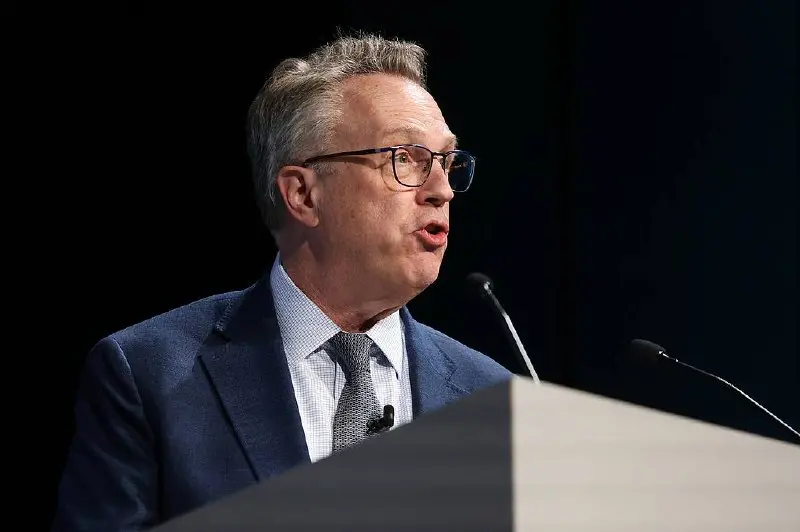
first_img Schmid: Inflation is above the 2% target and the direction is wrong, the Federal Reserve still has work to do

Jeff Schmid, President of the Federal Reserve Bank of Kansas City, stated on November 15 at a credit union conference in Hawaii that the Federal Reserve has the tools and responsibility to address "overheating" price pressures, and that the central bank "still has some work to do on inflation." Schmid did not explicitly call for further interest rate hikes but mentioned that inflation is "uncomfortably above the 2% price stability target and is moving in the wrong direction." He indicated that recent common narratives surrounding the nature of current inflation and the Fed's ability to curb inflation are not valid.Schmid stated that viewing high inflation as a result of repeated supply shocks overlooks the fact that inflation is always a result of an imbalance between supply and demand. He explained that it is against a backdrop of strong demand that supply disruptions push prices higher; demand always plays a role in inflation, and the Fed has the tools and responsibility to address inflation by influencing demand. Schmid is not a voting member of the Federal Open Market Committee this year. He also disagreed with the notion that current demand-driven sources of inflation, such as artificial intelligence development, are resistant to Fed policy, and opposed the view that achieving inflation targets must respond to specific categories of prices, such as prices of goods related to artificial intelligence technologies.The Fed raised interest rates by 25 basis points to a range of 3.75% to 4.00% in September, but did not raise rates further at last month's meeting. Following recent inflation data that exceeded expectations and statements from other Fed officials, including Governor Christopher Waller, the interest rate futures market has fully priced in a 25 basis point hike at the December meeting, with a small probability of a 50 basis point hike. Schmid noted that both narratives of supply shocks or demand that is unaffected by higher interest rates share a common core, which is that inflation is to some extent beyond the Fed's control; he does not agree with this view. He stated that the Fed has the tools to address inflation and has the responsibility to achieve price stability. As Chairman Kevin Warsh said, we still have work to do.

Analysis: The cryptocurrency market has shifted from a gradual decline to accelerated liquidation, and a rebound under multiple negative factors may be difficult to sustain

According to Bloomberg, Bitcoin briefly fell to nearly $62,000 over the weekend, hitting a new low since July. Unlike previous sudden crashes, this round of selling mostly occurred during relatively quiet trading periods, with prices continuing to decline until the recent days when leveraged liquidations accelerated significantly. Many small-cap tokens have retraced years of gains, and the expansion of institutional participation and the popularity of spot ETFs have not been able to prevent this round of decline.Spot buying has weakened, while U.S. Treasury yields and the dollar have strengthened. From October 30 to November 13, nearly $3 billion flowed out of U.S. spot Bitcoin ETFs. Meanwhile, persistently high inflation has raised expectations for further tightening by the Federal Reserve, with the 10-year U.S. Treasury yield breaking above 5%, increasing the opportunity cost of holding non-interest-bearing assets like Bitcoin. The Binance hacking incident has reignited market concerns about the security of trading platforms, and the results of the U.S. midterm elections have added to policy uncertainty.The Anthropic IPO may divert funds, but the scale is still unclear. Joshua Lim, co-head of market operations at FalconX, pointed out that discussions about the reasons for the decline have focused on two aspects: nearly $20 billion in stablecoin balances that have flowed out over the past month, and the potential impact of the Anthropic IPO on liquidity. Bloomberg noted that the IPO received a large number of subscriptions, and some investors may sell other holdings, including crypto assets, to raise funds, but it is currently unclear how much money has directly shifted from the crypto market to this IPO.Bitcoin rebounded from below $65,000 in August to above $87,000 in late September after the U.S. Treasury announced an expansion of long-term Treasury buybacks, but it has now retraced most of those gains, with the market refocusing on the year-to-date low of about $58,000. Ayesha Kiani, Chief Operating Officer of Monarq Asset Management, believes that short-term trends mainly depend on whether institutional demand can stabilize and whether the macro environment can allow risk appetite to recover. Before that, any rebound may be difficult to sustain, and market volatility will remain high.

In October, the core CPI in the United States exceeded expectations for three consecutive months, with rising costs in energy, services, and AI increasing pressure for interest rate hikes

Inflation data for October in the United States sends multiple warning signals. The data shows that the core CPI rose by 0.3% month-on-month, higher than the market expectation of 0.2%, exceeding expectations for the third consecutive month; the overall CPI rose by 0.4% month-on-month, also above expectations. The impact of rising energy prices is spreading to areas such as food and transportation, and service inflation remains robust, further complicating the Federal Reserve's efforts to control inflation.Specifically, food prices in the U.S. rose by 0.5% month-on-month in October, with grocery prices recording the largest monthly increase since April; urban transportation service prices saw the largest monthly increase since 2020, and prices for airline tickets and delivery services also increased. Additionally, service prices excluding energy and housing rents rose by 0.4% month-on-month, while owners' equivalent rent increased by 0.3%.AI investments are bringing new cost pressures. Over the past three months, the annualized price increase for computers and peripheral devices in the U.S. reached 25%, and electricity prices rose by 0.9% month-on-month in October, marking the largest increase in six months. Morgan Stanley estimates that AI-related factors have contributed about 6 basis points to the core CPI this year, with the current impact still relatively limited, but as data center investments expand, related pressures may rise further.In terms of monetary policy, Chicago Fed President Goolsbee described the latest inflation data as approaching an alarming level. Fed Governor Waller previously stated that if the core CPI month-on-month increase reaches 0.3% or higher, the December meeting should consider raising interest rates by 50 basis points. Goldman Sachs has included a forecast for an additional 25 basis point increase in March 2027, expecting that the target range for the federal funds rate will rise to 4.25% to 4.50%. However, some economists warn that there is a lag in the transmission of energy prices, and over-reliance on current data may lead to excessive tightening of monetary policy.
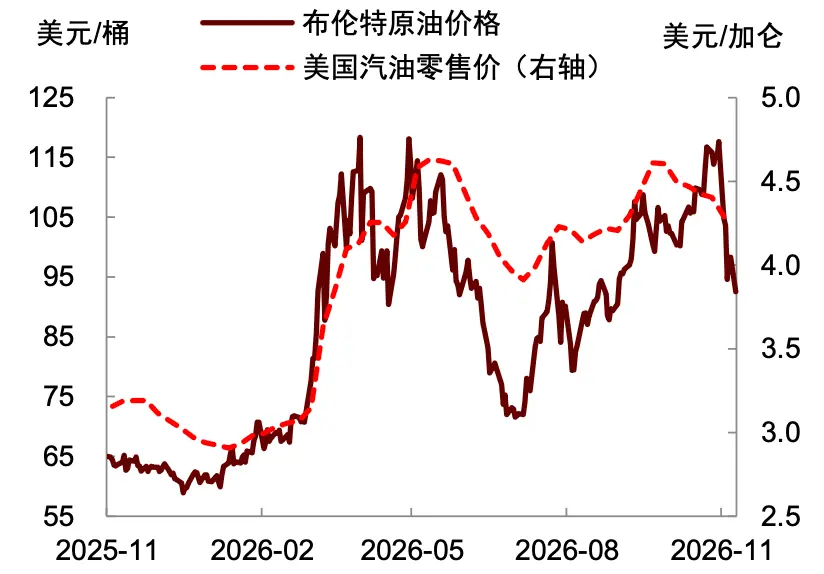
Federal Reserve spokesperson: The interest rate hike in December is almost certain, with the focus shifting to the magnitude and pace of the rate increases

According to the Wall Street Journal, Nick Timiraos, known as the "mouthpiece of the Federal Reserve," wrote that after the third consecutive strong inflation report was released, a rate hike by the Federal Reserve in December is almost certain. Market focus is shifting to the magnitude of the rate hike and the subsequent pace, including a 25 basis point hike at each meeting, a one-time hike of 50 basis points, or signaling multiple consecutive hikes of 25 basis points.Nick Timiraos pointed out that the Federal Reserve will hold a policy meeting from December 8 to 9, and the bigger question is whether this rate hike is a moderate adjustment envisioned by several officials, with two to three more hikes, or the beginning of a sustained effort to suppress the economy and lower inflation.Previously, Federal Reserve Governor Waller, who supported maintaining interest rates last week, stated that if the core price increase in October reaches about 0.3% month-over-month, the Federal Reserve should consider a 50 basis point hike in December, and the latest published data happens to align with this scenario. Dallas Federal Reserve President Logan also hinted after the data release that, given the current inflation pressures, it may be necessary to accelerate the pace of rate hikes. The relevant tactical choices are usually decided by the Federal Reserve Chair.
app_icon
ChainCatcher Building the Web3 world with innovations.