Asia-Pacific stock markets on Black Friday: Japanese and South Korean stock indices fell nearly 5%, SoftBank plunged 15%, gold dropped below 3600
 Core Viewpoint


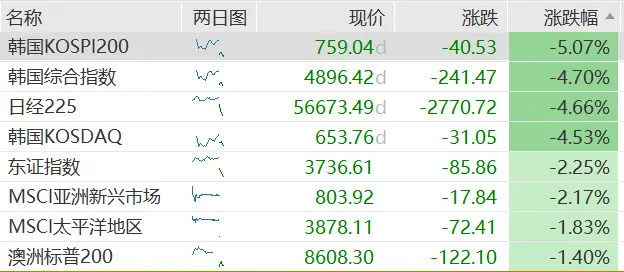
 Anthropic's listing failed to boost the AI sector, and the Asia-Pacific market plummeted on Friday: the Korea Composite Stock Price Index fell 4.7%, the Nikkei 225 dropped 4.6%, SoftBank fell sharply by 15%, and the MSCI Asia-Pacific Index declined for the seventh consecutive trading day; gold fell below $3,600, dropping over 7% this week, while U.S. Treasuries attracted safe-haven buying.
Anthropic's IPO failed to boost confidence in the AI sector. Affected by pessimistic sentiment regarding the prospects of AI trading, the Asia-Pacific market faced a sharp decline on Friday, with technology stocks hit hardest. Global stock indices are heading towards the longest streak of declines in nearly three years.
The MSCI Asia-Pacific stock index fell 1.7%, marking its seventh consecutive trading day of losses, approaching its lowest closing level since April. This also dragged the MSCI global index towards its longest decline since September 2023. The Korea Composite Stock Price Index dropped 4.7%, while Japan's Nikkei 225 index saw its losses widen to 4.6%. Japan's latest inflation data raised concerns in the market about potential interest rate hikes by the central bank, further suppressing sentiment in technology stocks.
Anthropic's shares rose 17% on their first day of trading on Thursday but immediately fell over 5% in after-hours trading, dropping below $92, lower than the lowest point on the first day of trading. Several Wall Street strategists pointed out that this reflects deep-seated doubts in the market about the commercialization prospects of AI—investors are reassessing whether massive capital investments can translate into sustainable business returns.
Meanwhile, commodities, gold, and other assets also faced selling pressure, while U.S. Treasuries strengthened due to a surge in safe-haven buying.
Asia-Pacific Technology Stocks Face Concentrated Selling, South Korea and Japan Lead the Decline
The Asia-Pacific technology sector is under significant selling pressure.
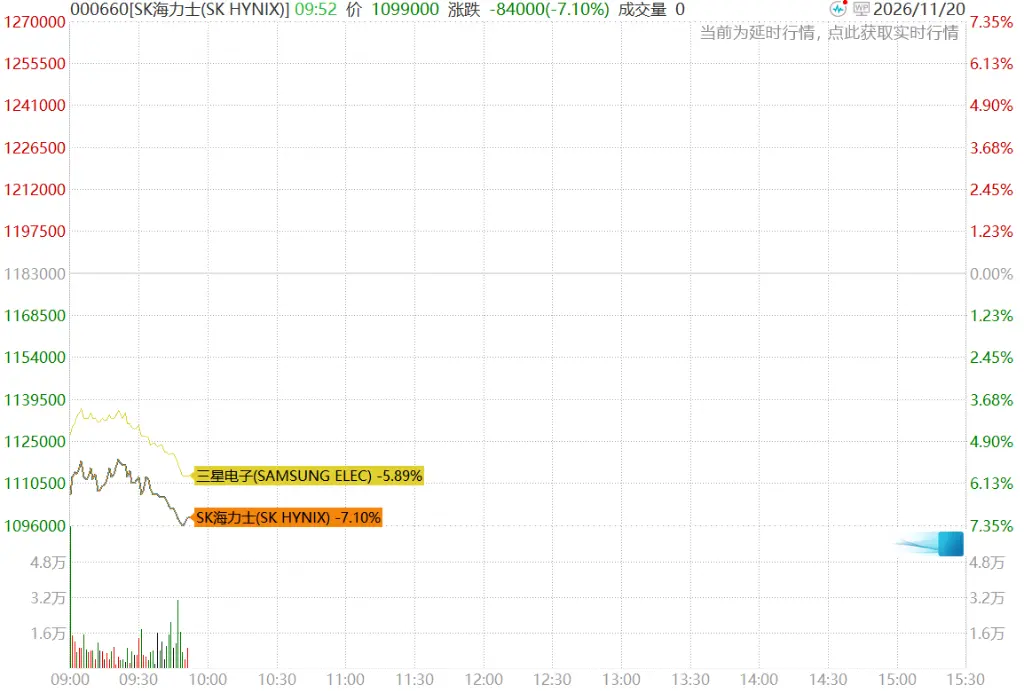
South Korea's SK Hynix and Samsung Electronics plummeted 7% and 6%, respectively, dragging the Korea Composite Index down 4.7%. The Kosdaq index, which is concentrated with small-cap tech stocks, also fell 4.5%.
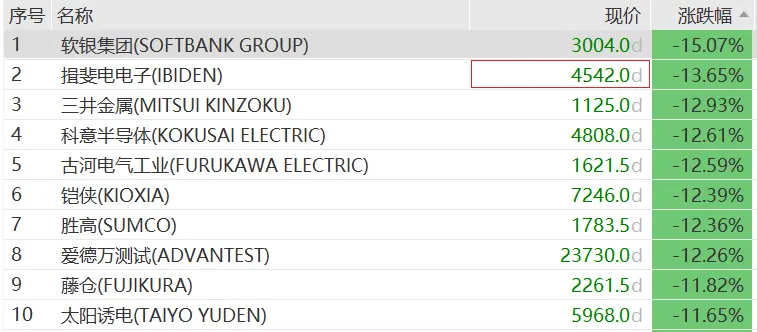
Japan's stock market experienced even more severe declines. The Nikkei 225 index dropped 4.6%, SoftBank Group fell 15%, chip testing equipment manufacturer Advantest plummeted over 9%, and Tokyo Electron slid 7%. Australia's S&P/ASX 200 index fell 1.3%.
Charu Chanana, Chief Investment Strategist at Saxo Markets, stated:
Investors are questioning whether cutting-edge AI is becoming an extremely successful technology while simultaneously becoming a business that is increasingly difficult to achieve substantial returns. Reports suggest that Apple is developing its own AI agents, which will only reinforce these concerns.
Tim Waterer, Chief Market Analyst at KCM Trade, also pointed out:
The initial excitement surrounding Anthropic's IPO is gradually fading, and the strong first-day performance has not translated into broader enthusiasm for the AI sector.
Japan's core CPI rose 2.2% year-on-year in October, reaching a new high since 2026, up from 2.1% last month but slightly below the 2.3% expected by economists surveyed by Reuters. Energy prices surged sharply after government subsidies expired in September, with October energy prices rising 2.2% year-on-year, contrasting sharply with a 0.6% decline in September. The month-on-month increase in natural gas prices jumped from 2.4% to 5.8%.
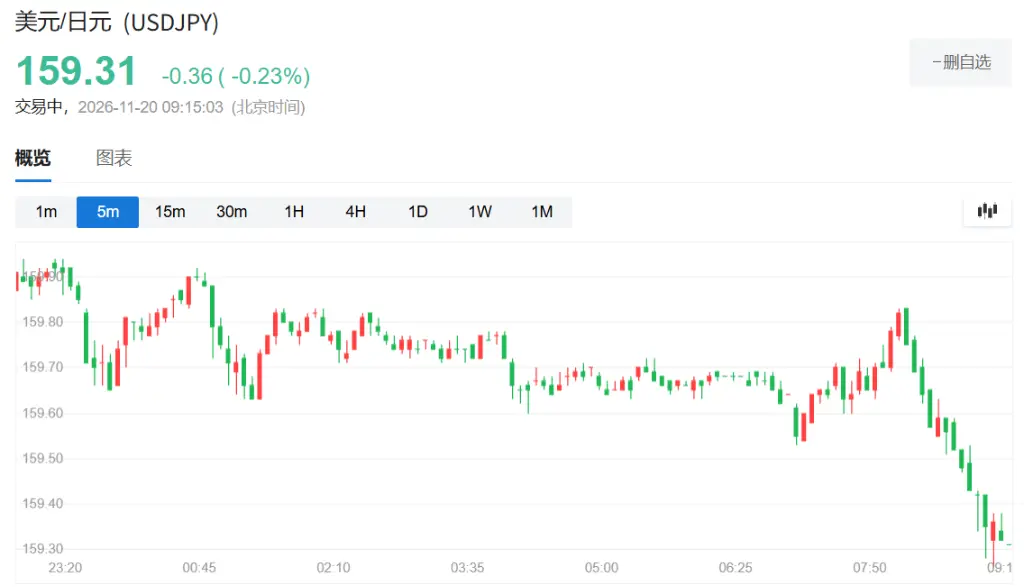
According to LSEG data, the market currently expects a 72% probability of the Bank of Japan raising interest rates in December. The expectation of a rate hike has slightly strengthened the yen by 0.23%, with the dollar trading at 159.31 yen, and the yield on Japan's 10-year government bonds fell 2 basis points to 2.800%.
Commodities and Gold Under Pressure, U.S. Treasuries Supported by Safe-Haven Buying
The deterioration of global risk sentiment has weighed on commodities.
The Bloomberg Commodity Index has fallen to its lowest point since July. Spot gold dropped about 1% on Friday, trading around $3,590 per ounce, with a cumulative decline of over 7% this week, nearing its lowest level since September 2025.
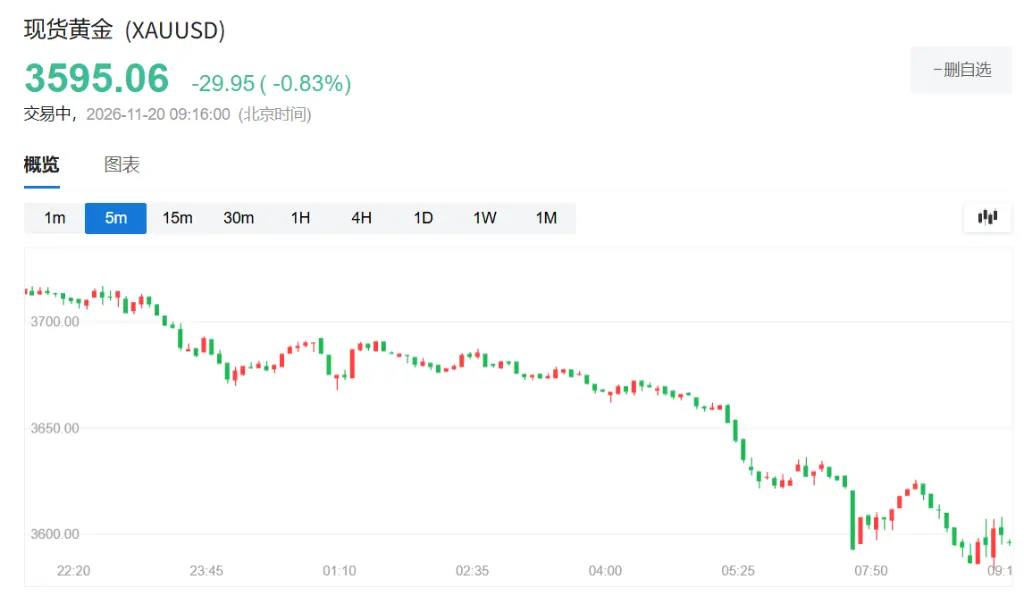
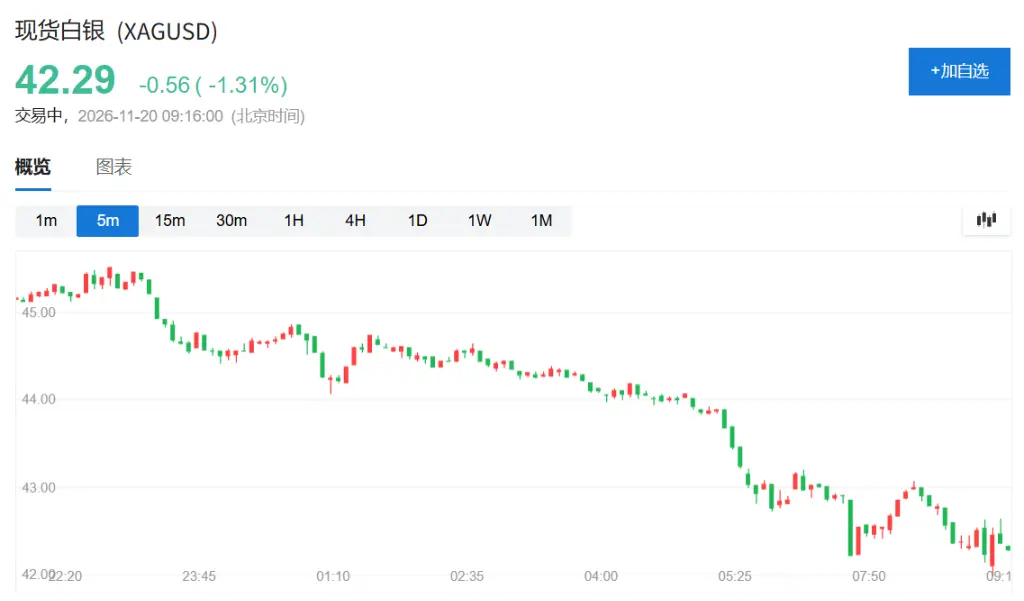
Part of the reason for the drop in gold prices is that the sharp decline in AI stocks has prompted investors to sell gold to cover losses, while hawkish statements from Federal Reserve officials have also dampened the appeal of safe-haven metals. Silver also fell another 1.3%, with a cumulative decline of 13% this week.
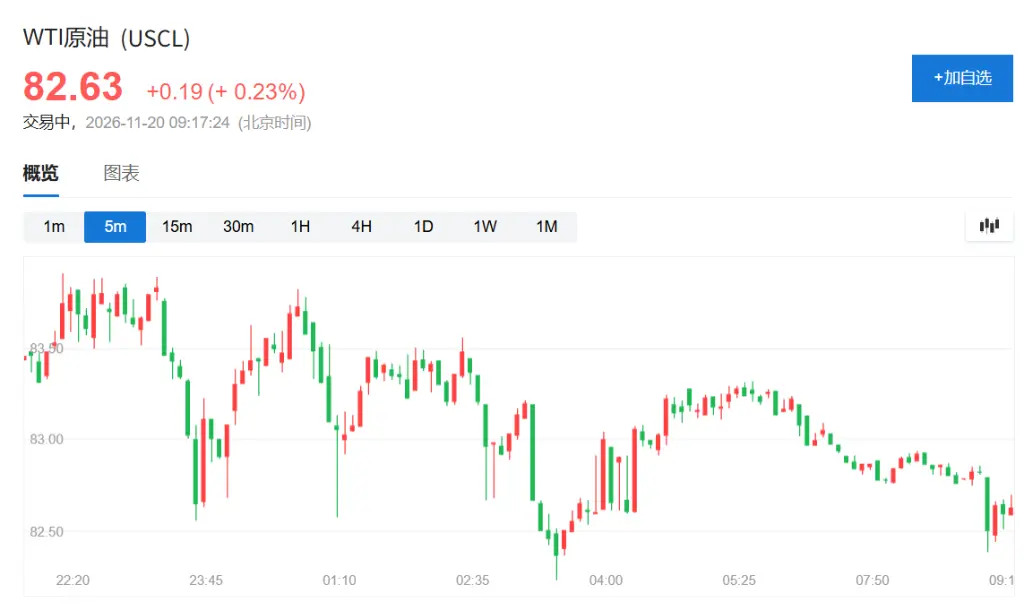
On Friday during the Asia-Pacific session, WTI crude oil rebounded slightly by 0.23%, with a cumulative decline of about 5% this week, hovering around $83 per barrel; Brent crude settled close to $92 per barrel. Uncertainty in the Middle East has caused oil prices to fluctuate more than $2 in a single day during the previous trading session.
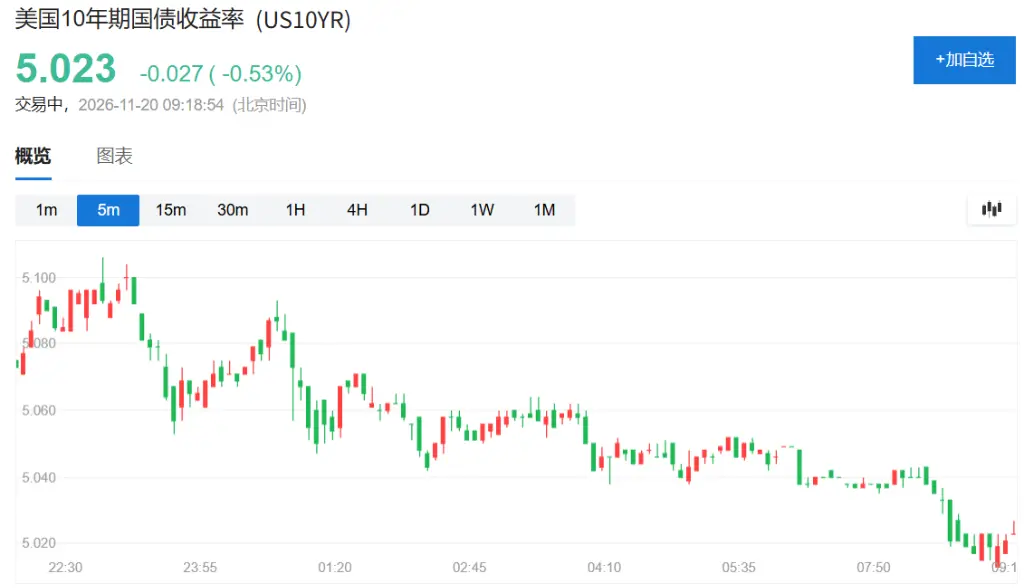
In terms of U.S. Treasuries, the yield on the 10-year U.S. Treasury bond fell 2.7 basis points to 5.023% on Friday, but it has been approaching the longest record of remaining above 5% for a single year since 2007.
Federal Reserve officials have recently sent a series of hawkish signals. Chicago Fed President Austan Goolsbee stated on Thursday that he will consider all options at next month's policy meeting and has not ruled out the possibility of a larger rate hike. He said:
We have seen persistently high inflation at concerning levels for several months, and there has been almost no improvement in areas where we expected to see progress, so in my view, all options are on the table.
Traders currently expect the Federal Reserve to raise rates in December and to hike rates two more times in 2027.
 Risk warning
ChainCatcher reminds readers to view blockchain rationally, enhance risk awareness, and be cautious of various virtual token issuances and speculations. All content on this site is solely market information or related party opinions, and does not constitute any form of investment advice. If you find sensitive information in the content, please click , and we will handle it promptly.




Popular articles