BTC $63,930.14 -1.44%
ETH $1,797.40 -0.99%
BNB $588.85 -0.31%
XRP $0.9691 +1.60%
SOL $73.01 +2.29%
TRX $0.3071 +0.57%
DOGE $0.0593 -0.00%
ADA $0.1534 +0.12%
BCH $208.77 +0.56%
LINK $9.16 +0.24%
HYPE $68.27 +0.03%
AAVE $110.36 +2.86%
SUI $0.7236 +0.43%
XLM $0.1390 +1.25%
ZEC $923.37 +3.42%
AAPL $351.35 -0.20%
AMZN $257.75 -0.08%
GOOGL $280.08 -1.62%
MSFT $506.30 -2.40%
META $620.40 -0.97%
NVDA $153.69 -1.28%
TSLA $380.03 +0.59%
SNDK $794.36 -1.96%
INTC $54.31 -1.90%
SPCX $141.57 +1.35%
MU $702.26 -2.29%
AMD $492.14 -2.49%

fai

All
Article
Flash

The Ministry of Foreign Affairs responded to the U.S. restrictions on advanced chip exports, stating that necessary measures will be taken

The spokesperson of the Ministry of Foreign Affairs, Guo Jiaqun, responded at a regular press conference to the U.S. rules restricting access to advanced semiconductors, stating that China will take necessary measures to firmly safeguard its legitimate rights and interests.During the press conference, it was mentioned that the U.S. Department of Commerce issued a temporary final rule on November 16 to restrict remote access to advanced semiconductors. Citing the high risk of illegal chip transfers to China from Singapore, Thailand, Malaysia, Indonesia, and Brazil, it requires companies in these countries to apply for U.S. export licenses when exporting advanced chips to prevent restricted countries and enterprises from obtaining sensitive U.S. technology.Guo Jiaqun stated that the U.S. side continuously generalizes the concept of national security, abuses export control measures, interferes with normal trade and technological cooperation between China and other countries, and unreasonably suppresses the development of China's high-tech industry. This constitutes economic coercion and "long-arm jurisdiction," deviating from the consensus reached by both parties, harming the legitimate rights and interests of Chinese enterprises, and disrupting the stability of the global supply chain.

first_img Former Trump cryptocurrency advisor: The failure of the Clarity Act is a "failure of American leadership."

Patrick Witt, the former Executive Director of the White House Digital Asset Advisory Committee, stated at the Solana Breakpoint conference held in London that the Senate's failure to pass the Clarity Act is "a failure of American leadership," and called the outcome "extremely disappointing." He revealed that he had invested over a year negotiating the bill, which could have established a regulatory framework for the crypto market, but it failed to pass a critical procedural vote in the Senate in September. He said, "We ultimately lost to time," noting that the policy itself was good, and almost all policy disagreements had been resolved, but the upcoming midterm elections caused "the moral and ethical political issue to overshadow everything else."Witt acknowledged that Trump's personal involvement in the crypto business "can be said to be part of the problem," but stated that the president had agreed to two ethical provisions, the second of which would prohibit federal officials, including the president, from issuing or endorsing digital assets, requiring the president to divest some digital assets or place them in a blind trust, and allowing state attorneys general to enforce accountability for violations. He mentioned that such arrangements have no precedent in U.S. law. He also noted that the GENIUS stablecoin bill had lost its initial procedural vote in 2025 but was revived due to being early in Trump's term, while the Clarity Act "only had one chance."Looking ahead, Witt believes the likelihood of passing a comprehensive replacement bill is low, and that U.S. market structure rules will be "written less on Capitol Hill and more in the Federal Register," established through rulemaking and guidance by the SEC and CFTC. He indicated that some provisions may still be included in a larger legislative package, and Congress could grant targeted authority, such as allowing the CFTC to regulate the spot crypto market. He stated that SEC Chairman Paul Atkins and CFTC Chairman Michael Selig are both committed to pushing the market on-chain, emphasizing that "capital will flow to where it is treated best." Despite the Democrats winning control of both houses in this month's midterm elections, he expressed that he is "not pessimistic" about the industry as a whole and believes that opposition to crypto is increasingly reflecting generational differences. Witt left the government in October and mentioned that he has been in contact with crypto companies, venture capital firms, and defense contractors, hoping to announce his next steps in the coming weeks.

Analyst Murphy: BTC technical support failure leads to losses approaching bear bottom

Analyst Murphy stated that the sentiment in the cryptocurrency market has returned to "extreme fear." On November 12, the realized losses of long-term and short-term holders moving to trading platforms reached recent highs, with the overall scale approaching the bear market bottom period of June to July this year.Murphy mentioned that the market has recently faced multiple extreme bearish factors, including the Binance black swan event, concerns over AI infrastructure restrictions triggered by the Democratic Party's midterm election victory, CPI exceeding expectations, Nvidia's sharp decline due to scandals, and MSTR being removed from the MSCI index. The severity of these events has surpassed historical levels, except for March 12, 2020. He acknowledged underestimating the impact of collective panic and the short-selling forces behind it, stating that under the dominance of irrational behavior, all technical supports have failed.Murphy also revealed that in his personal holdings, ETH is trapped at $2260, MSTRB is trapped at $136, and his heavily invested BTC has seen a significant reduction in unrealized gains, but he has chosen to maintain his positions. He still believes that the nine months from February to November this year are not a "bear market continuation," but rather a transitional period after emerging from the bear bottom structure, and stated that once signs of improved sentiment and indicator resonance appear, he will only buy on dips.

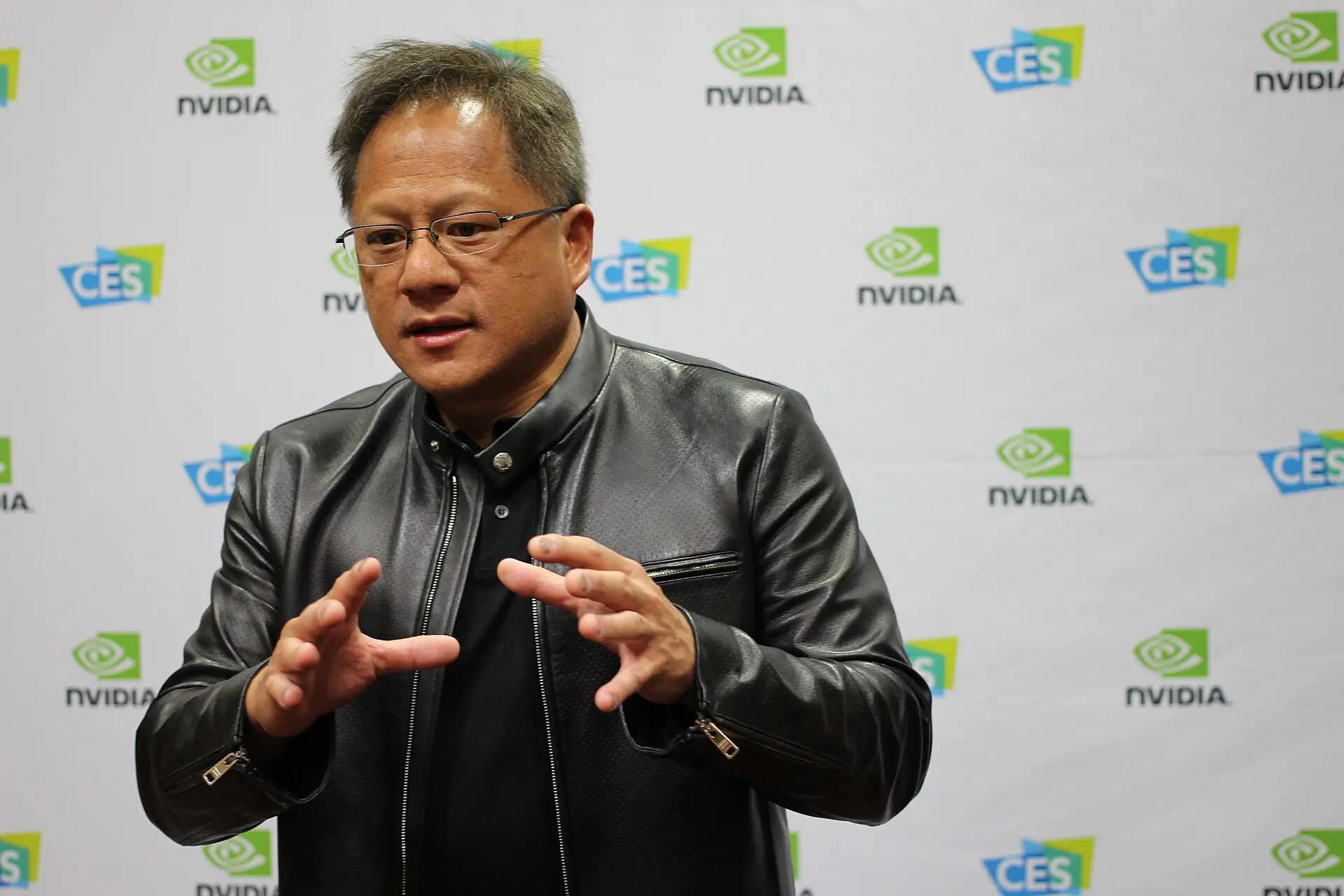
The New York Times: Jensen Huang was reported to have an extramarital affair with company executive Kimberly Powell

The New York Times cited five individuals who previously worked at NVIDIA, reporting that in addition to the extramarital affair already acknowledged, Jensen Huang also had an extramarital relationship with Kimberly Powell, the Vice President of the company's healthcare business. Powell reports directly to Huang, and both are married.According to insiders, during the NVIDIA GTC developer conference in March this year, the two were spotted behaving intimately at a hotel in San Jose, California. Someone captured footage of the incident on a mobile phone, and Huang's security team subsequently isolated the shooter and requested them to sign a non-disclosure agreement. The New York Times stated that it has not seen the video, and the related relationship had previously been discussed internally within the company. Powell was originally scheduled to speak at the opening ceremony of the Milken Institute Health Summit in Washington on the morning of November 12, but the host, CNN reporter Meg Tirrell, announced that she had canceled her appearance without specifying the reason. When responding to a phone inquiry from a New York Times reporter, Huang stated that he did not believe the other party should speak directly with him, and then hung up the phone.This is the second time in a week that Huang has been exposed for an extramarital affair. Meanwhile, The Wall Street Journal reported that NVIDIA's board is preparing to dismiss Huang, with a special meeting scheduled as early as November 11 local time to discuss his future. Following the news, NVIDIA's stock price fell by about 9% in after-hours trading. Since Huang was first reported to have an extramarital relationship with Alice Huang, including the after-hours drop, its stock price has decreased by 18% across the two related reports, resulting in NVIDIA's market value evaporating by approximately $820 billion.
app_icon
ChainCatcher Building the Web3 world with innovations.