Scan to download
BTC $67,950.06 +1.00%
ETH $1,969.88 +1.19%
BNB $629.28 +3.36%
XRP $1.42 -4.56%
SOL $81.67 -4.53%
TRX $0.2795 -0.47%
DOGE $0.0974 -3.83%
ADA $0.2735 -4.22%
BCH $568.08 +2.78%
LINK $8.64 -2.97%
HYPE $28.98 -1.81%
AAVE $122.61 -3.42%
SUI $0.9138 -6.63%
XLM $0.1605 -4.62%
ZEC $260.31 -8.86%
BTC $67,950.06 +1.00%
ETH $1,969.88 +1.19%
BNB $629.28 +3.36%
XRP $1.42 -4.56%
SOL $81.67 -4.53%
TRX $0.2795 -0.47%
DOGE $0.0974 -3.83%
ADA $0.2735 -4.22%
BCH $568.08 +2.78%
LINK $8.64 -2.97%
HYPE $28.98 -1.81%
AAVE $122.61 -3.42%
SUI $0.9138 -6.63%
XLM $0.1605 -4.62%
ZEC $260.31 -8.86%

halving

Analysis: Bitcoin recorded a decline for the first time a year after the halving, potentially breaking the "four-year cycle."

Bitcoin closed lower in 2025 than at the beginning of the year, marking the first time in history that it recorded an annual decline in the year following a halving, sparking intense discussions in the market about whether the "Bitcoin four-year cycle" has come to an end. Despite the latest halving occurring in April 2024, BTC previously reached an all-time high of $126,000 on October 6, but then experienced a significant pullback, currently down over 30% from its peak, with weaker performance throughout the year.Analysts pointed out that after the halvings in 2012, 2016, and 2020, Bitcoin reached new highs in the following year, a pattern that has not continued in this cycle. Vivek Sen, founder of Bitgrow Lab, bluntly stated that Bitcoin's decline in the year following the halving means that the "four-year cycle is officially dead."Investor Armando Pantoja believes that the inclusion of ETFs, institutional funds, and corporate balance sheets has made Bitcoin less driven by retail sentiment and more influenced by macro factors such as liquidity, interest rates, regulation, and geopolitics. However, there are differing opinions. Markus Thielen, head of research at 10x Research, stated that the four-year cycle still exists but is no longer driven solely by "programmatic halving," instead unfolding in new forms.The divergence in the market regarding the long-term cycle structure of Bitcoin continues to widen.

Bitwise: Bitcoin will reach a new high in 2026, the halving effect has greatly weakened, and the occurrence of 10.11 has reduced the likelihood of a major market crash

Cryptocurrency investment firm and index fund manager Bitwise believes that even after a slump over the past two months, Bitcoin will reach a new all-time high again in 2026. The company's CEO Matt Hougan stated that Bitcoin has historically followed a four-year cycle, where three years of significant gains are followed by a year of deep correction.According to this cyclical pattern, 2026 should be a correction year. However, we believe this will not happen. In our view, the core forces that have historically driven the four-year cycle—Bitcoin halving, interest rate cycles, and the boom and bust of the crypto market driven by leverage—have significantly weakened compared to past cycles.Halving effect: By definition, each subsequent Bitcoin halving is only half as significant as the previous one. Interest rate environment: Interest rates rose sharply in 2018 and 2022, suppressing prices; however, we expect rates to decline in 2026. Risk of bubble burst: Following the record liquidations in October 2025, the relative contraction of leverage and improved regulation have reduced the likelihood of a major market crash.More importantly, the wave of institutional funds that began after the approval of the spot Bitcoin ETF in 2024 will accelerate in 2026. At that time, platforms such as Morgan Stanley, Wells Fargo, and Merrill Lynch will begin asset allocation. Meanwhile, the crypto market is expected to start benefiting from the pro-crypto regulatory shift following the 2024 U.S. elections, with Wall Street and fintech companies beginning to truly adopt cryptocurrencies. It is anticipated that the combined effects of these factors will drive Bitcoin to reach a new all-time high.

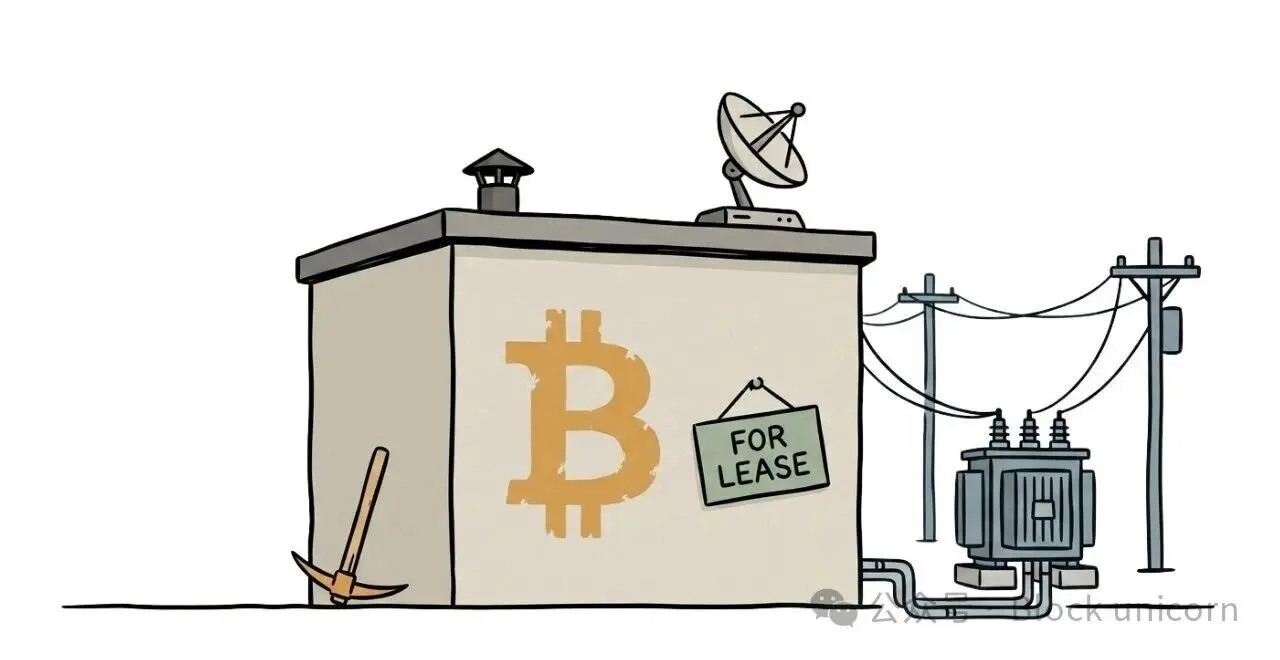
MARA CEO: Bitcoin mining companies must control power resources, or they will struggle to survive before the next halving

According to CoinDesk, MARA Holdings CEO Fred Thiel stated that the Bitcoin mining industry is entering a difficult period, with increasing competition, rising energy demands, and shrinking profits. He noted that Bitcoin mining is a zero-sum game, where increased hash power raises mining difficulty and energy costs, compressing profit margins.The industry is becoming increasingly brutal, and only mining companies that secure low-cost, reliable energy or adopt new business models will survive. Many mining companies are turning to artificial intelligence or high-performance computing infrastructure, while some are being pushed out of the market by participants deploying their own hardware at low costs. Thiel warned that after the next Bitcoin halving in 2028, the survival environment for mining companies will be even harsher, with block rewards dropping to just above 1.5 Bitcoins. Unless transaction fees rise or coin prices soar, the mining economy will struggle to sustain itself.The design philosophy of Bitcoin is that transaction fees will eventually replace block subsidies, but this has not happened. Currently, transaction fees are generally low, and although there have been brief spikes, they cannot replace block subsidies. In this environment, small mining companies are under immense pressure. Large mining companies are adapting by controlling energy sources and investing in AI-specific infrastructure, while more streamlined mining companies may be forced to shut down.Thiel expects the market to self-regulate, stating, "By 2028, mining companies will either become power producers, be acquired by power producers, or collaborate with power producers."

4E: The "post-halving drop" pattern of Bitcoin may become ineffective; the EU plans to expand cryptocurrency regulation

According to 4E observations, the traditional volatility pattern of Bitcoin after halving may be failing. Data shows that the current Bitcoin volatility is below 2%, reaching a historic low, while during the third halving period in 2020, volatility once exceeded 5%. Keiji Maeda, an executive at Japanese crypto company BACKSEAT, pointed out that as market liquidity increases and institutional participation rises, the impact of individual investors' short-term behavior on prices diminishes, and the so-called "post-halving pullback" rule of thumb may no longer apply.On the EU front, the European Commission is planning to expand central regulation of stock and crypto asset exchanges. The new proposal will grant the European Securities and Markets Authority greater powers, covering "the most important cross-border entities" to promote the construction of a "Capital Markets Union" and reduce regulatory fragmentation. The relevant proposal is expected to be formally presented in December.On the other hand, Strategy Chairman Michael Saylor stated that the company has no plans to acquire other Bitcoin asset reserve companies, noting that such mergers and acquisitions typically involve high uncertainty and long cycles.In terms of investment institutions, the latest top 15 holdings of Cathie Wood's ARKK ETF show that crypto-related companies like Coinbase (5.8%) and Circle (2.55%) have significant weights, indicating continued bets in the new round of technology and digital asset cycles.4E Commentary: Bitcoin entering a historically low volatility range may indicate that the market structure has shifted from being speculation-driven to a stable capital state. If EU regulatory integration and institutional allocation trends progress simultaneously, crypto assets may gradually enter a "low volatility steady bull" phase.
app_icon
ChainCatcher Building the Web3 world with innovations.