BTC $64,661.61 -0.77%
ETH $1,823.24 -0.04%
BNB $591.78 -0.37%
XRP $0.9620 -0.35%
SOL $72.25 +0.02%
TRX $0.3051 +0.42%
DOGE $0.0590 -0.37%
ADA $0.1537 -0.56%
BCH $208.27 -0.53%
LINK $9.17 -0.69%
HYPE $69.23 +3.85%
AAVE $112.04 +2.25%
SUI $0.7236 -1.02%
XLM $0.1388 -0.76%
ZEC $912.71 +1.41%
AAPL $352.91 -1.32%
AMZN $258.37 -2.55%
GOOGL $285.10 -3.29%
MSFT $518.88 -1.02%
META $626.21 -1.70%
NVDA $158.69 -2.40%
TSLA $380.88 -1.72%
SNDK $826.64 -3.62%
INTC $55.13 -5.24%
SPCX $138.22 -1.51%
MU $733.97 -3.25%
AMD $518.86 -0.60%

mid

All
Article
Flash

first_img Schmid: Inflation is above the 2% target and the direction is wrong, the Federal Reserve still has work to do

Jeff Schmid, President of the Federal Reserve Bank of Kansas City, stated on November 15 at a credit union conference in Hawaii that the Federal Reserve has the tools and responsibility to address "overheating" price pressures, and that the central bank "still has some work to do on inflation." Schmid did not explicitly call for further interest rate hikes but mentioned that inflation is "uncomfortably above the 2% price stability target and is moving in the wrong direction." He indicated that recent common narratives surrounding the nature of current inflation and the Fed's ability to curb inflation are not valid.Schmid stated that viewing high inflation as a result of repeated supply shocks overlooks the fact that inflation is always a result of an imbalance between supply and demand. He explained that it is against a backdrop of strong demand that supply disruptions push prices higher; demand always plays a role in inflation, and the Fed has the tools and responsibility to address inflation by influencing demand. Schmid is not a voting member of the Federal Open Market Committee this year. He also disagreed with the notion that current demand-driven sources of inflation, such as artificial intelligence development, are resistant to Fed policy, and opposed the view that achieving inflation targets must respond to specific categories of prices, such as prices of goods related to artificial intelligence technologies.The Fed raised interest rates by 25 basis points to a range of 3.75% to 4.00% in September, but did not raise rates further at last month's meeting. Following recent inflation data that exceeded expectations and statements from other Fed officials, including Governor Christopher Waller, the interest rate futures market has fully priced in a 25 basis point hike at the December meeting, with a small probability of a 50 basis point hike. Schmid noted that both narratives of supply shocks or demand that is unaffected by higher interest rates share a common core, which is that inflation is to some extent beyond the Fed's control; he does not agree with this view. He stated that the Fed has the tools to address inflation and has the responsibility to achieve price stability. As Chairman Kevin Warsh said, we still have work to do.

first_img The U.S. midterm elections have 14 undecided races, which may add more supporters for the Congress

More than a week after the "blue wave" in the U.S. midterm elections allowed the Democratic Party to gain control of both the House and Senate, there are still 14 election results yet to be announced. According to Stand With Crypto, the results that have been announced have increased the number of crypto supporters in both chambers, and the remaining elections may bring in more supporters. In the undecided House races, three candidates have received support from the crypto political action committee (PAC), and all candidates in these districts are classified as "strongly support crypto" or "undecided."Specifically, Alaska Congressman Nick Begich is currently leading, with Fairshake's Republican affiliate Defend American Jobs investing $508,000 in him during the primary in early August; the same PAC invested $150,600 in North Carolina's 7th District Congressman David Rouzer, who is also leading. Louisiana State Senator Blake Miguez will enter the runoff on December 12 against the state's 6th District Democrat Chauna Banks, with Fellowship PAC investing $250,000 in him. On November 11, the Associated Press determined that South Carolina's 2nd District incumbent Congressman Joe Wilson won, and Stand With Crypto rated him as "strongly support crypto." His victory brings the total number of crypto supporters in the House to 246 and opponents to 107, while the Senate has 50 supporters and 33 opponents.Lindsay Fraser, Chief Policy Officer of the Blockchain Association, stated that the undecided new lawmakers "represent an opportunity." She noted that nearly a quarter of the new Congress members are newcomers, many of whom have not given much thought to blockchain technology, which is akin to "a blank slate." The association plans to organize outreach activities in January next year to engage newly elected lawmakers, aiming to get more lawmakers into Stand With Crypto's A and B ratings. She also mentioned that age influences lawmakers' crypto voting tendencies more than party affiliation, with lawmakers under 55 being significantly more likely to support the industry, and the new Congress overall being younger; she hopes the industry can face two candidates with in-depth thoughts on the industry in the 2028 election, avoiding the industry's fate being dependent on a single election outcome.

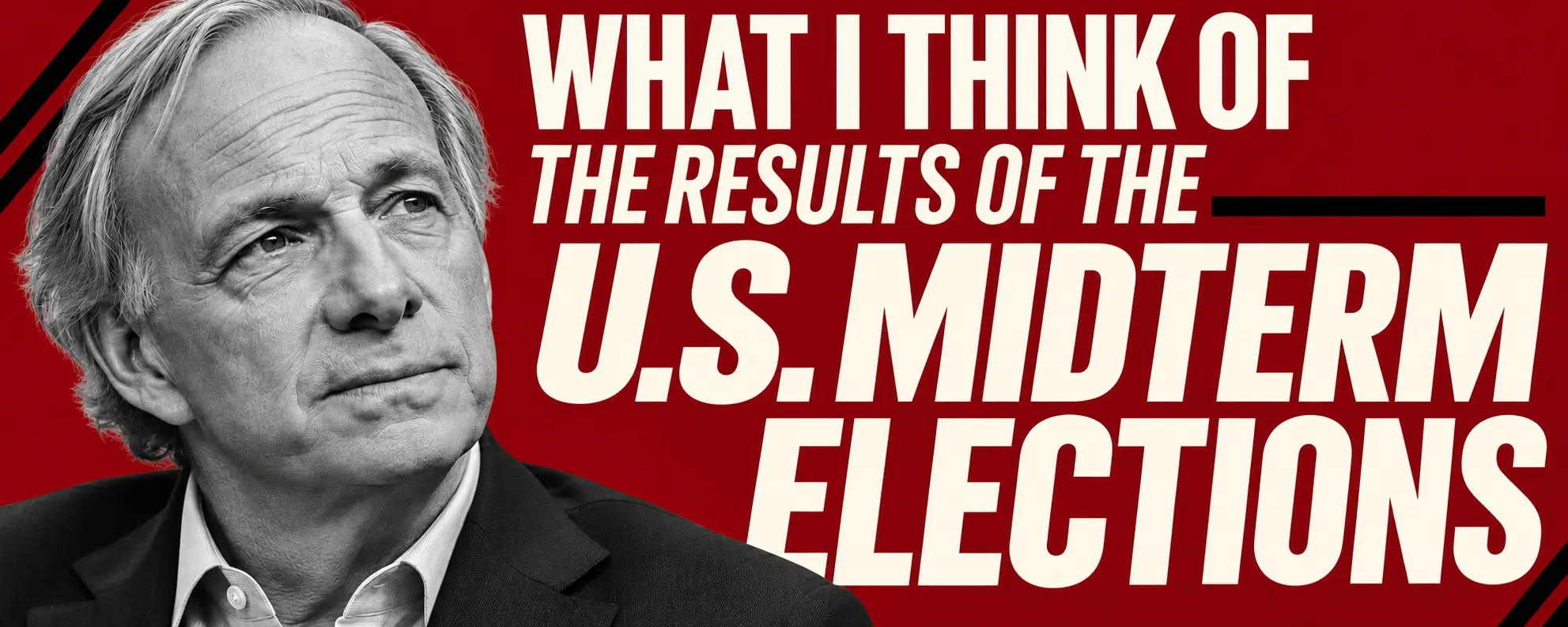
Bridgewater Dalio: Infighting intensifies after the midterm elections, which may push up short-term U.S. Treasury yields

Ray Dalio, the founder of Bridgewater Associates, published an article discussing the results of the U.S. midterm elections. He believes that the elections will not change the core issues facing the United States, such as debt, wealth and value divergence, geopolitical tensions, climate, and technology. Future conflicts between parties and within parties, as well as government dysfunction, may intensify.Dalio pointed out that funding issues will soon come to the forefront: on December 11, Trump's temporary funding will expire, and the federal debt is expected to hit its ceiling by March 2027. By the fall of 2027, the Treasury is expected to exhaust its funding maneuvering options. He believes that the related conflicts may be quite intense, and uncertainty could push up short-term yields such as U.S. Treasury bills, exacerbating concerns about liquidity and credit risk, and weakening the status of U.S. Treasuries as a major global safe collateral.He also stated that Elizabeth Warren's appointment as chair of the Senate Banking Committee could trigger conflicts and changes that impact the economy and markets. The election results will make Trump a targeted lame-duck president, weakening the United States' international standing and potentially leading to a strategic contraction of the U.S., increasing the influence of regional powers like China.
app_icon
ChainCatcher Building the Web3 world with innovations.