BTC $64,543.63 +0.10%
ETH $1,807.86 -0.84%
BNB $591.29 -0.02%
XRP $0.9841 +2.82%
SOL $74.66 +2.97%
TRX $0.3089 +0.93%
DOGE $0.0592 +0.77%
ADA $0.1535 +0.47%
BCH $208.00 -0.03%
LINK $9.22 +0.90%
HYPE $68.98 -0.98%
AAVE $110.89 -1.21%
SUI $0.7292 +1.30%
XLM $0.1407 +2.59%
ZEC $947.90 +3.34%
AAPL $350.30 -0.72%
AMZN $258.94 +0.55%
GOOGL $281.49 -0.86%
MSFT $507.51 -1.83%
META $618.91 -0.59%
NVDA $158.65 +0.87%
TSLA $382.72 +1.02%
SNDK $822.20 +1.37%
INTC $55.97 +2.77%
SPCX $142.37 +3.37%
MU $734.27 +1.67%
AMD $513.99 +0.93%

semianalysis

All
Article
Flash

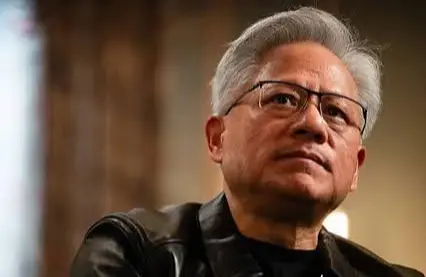
first_img Later: Jensen Huang becomes the 11th CEO of a S&P 500 company to lose their job due to personal relationships since 2000

According to "Late Point" reports, as Jensen Huang resigned as CEO of Nvidia due to a personal relationship scandal, he became the 11th CEO of a S&P 500 company to lose his job due to personal relationships since 2000. Data shows that among these 11 CEOs, 8 left after the 2017 MeToo movement. Jensen Huang is the one with the longest tenure (33 years and 7 months) and the largest company market value (approximately $4.18 trillion). Unlike traditional professional managers, Huang holds less than 3.4% of shares and has no super voting rights, making it difficult to counter the board representing public investors.The report points out that in addition to corporate governance factors, geopolitical issues may be another driving force. Semiconductor research firm SemiAnalysis estimates that over 1.5 GW of restricted Nvidia GPUs have flowed into banned markets, believing that the U.S. intelligence community is a significant force behind Huang's departure. After the news was announced, Nvidia's stock price initially fell by 14.4%, closing with a decline of 4.3%.Jensen Huang has always been the absolute leader of Nvidia, directly receiving reports from 60 subordinates, investing in AI GPUs despite shareholder opposition, and establishing the CUDA ecosystem barrier. He is both the top seller and the top buyer, deeply binding customers through investments or guarantees. As of the second quarter, Nvidia's off-balance-sheet guarantees have exceeded $530 billion. Currently, the interim CFO Colette Kress has differing views on some strategies. Nvidia is facing a significant test: how to maintain competitiveness and growth for a giant company that has lost its founder within a wealthy team.

Yuanjing Star River Base 120MW completed in one year, with a cost of about one-fifth of similar projects in the United States

After a field visit to the Yuanjing Star River base in Ulanqab, Inner Mongolia, the American semiconductor research organization SemiAnalysis stated that the construction cost of this Chinese AI data center park may be only one-fifth of similar projects in the United States. The first phase of the Star River base, with a capacity of 120MW, was completed and delivered in less than a year. On August 6 of this year, the infrastructure for the first phase was completed, and the wind power and energy storage company Yuanjing Technology announced that the base officially commenced production. After nearly three months of electromechanical debugging and deployment of computing power equipment, the first phase of the approximately 200MW project was fully delivered to customers by the end of October.The entire park is planned to reach an IT power supply capacity of 800MW by the end of 2027, comparable to the approximately 820MW planned for OpenAI's Stargate Abilene core park, which is expected to reach this scale by the end of 2026. Stargate is a data center construction plan covering multiple states, with an initial goal of implementing 10GW of AI infrastructure capacity in the United States by 2029. In April of this year, OpenAI announced that it had secured over 10GW of planned capacity ahead of schedule, but these data centers have not all been completed and put into operation.Yuanjing Technology integrates power generation, energy storage, power supply, and data center construction, having built two wind farms with a total installed capacity of 420MW and supporting battery storage, aiming for over 60% of the electricity used by the first two phases of the data center to come from its own wind power. In contrast, the American Stargate Abilene park mainly relies on the grid and on-site gas-fired power generation facilities for electricity. Yuanjing has already operated an 800V high-voltage direct current system in a 5MW machine room, directly converting 10kV alternating current into the direct current required for server cabinets. The park also employs a cooling design that does not require central chilled water units, allowing liquid-cooled and air-cooled servers to share a single water circulation system.

Huawei Ascend 950PR's matrix computing speed is only 43% of H100

The semiconductor research organization SemiAnalysis has released the actual test results of Huawei's Ascend 950PR. The organization selected 1,055 sets of commonly used matrix calculations for large models. Huawei's own underlying program has allowed the 950PR to achieve 86% of its theoretical computing power, higher than NVIDIA's H100 at 75.5%; however, the actual computation speed is still only 43% of the H100, and only 21% compared to the relatively newer B300. This set of results has not yet utilized the newly ported operators from DeepSeek.DeepSeek is working on reducing data movement and waiting from the software side. In attention computation, after adjusting storage with FlashMLA, the two sets of data that originally needed to be read separately can now be retrieved at once; TileLang allows the chip to compute while preloading the next batch of data. SemiAnalysis measured that automatic scheduling has reduced the time for some small computing tasks by up to about 40%. DeepSeek has also ported DeepEP, which is responsible for MoE expert communication, but communication and computation will still compete for memory bandwidth, and Huawei plans to continue improving the firmware.Last year, DeepSeek attempted to train R2 using Huawei's Ascend chips, but even with Huawei engineers on-site for assistance, it could not be completed due to issues related to chip stability, inter-card communication, and software support. This year, both parties continue to collaborate, and by the end of September, DeepSeek focused on publicly releasing six sets of Ascend adaptation code. In October, it was reported that Huawei is adjusting the next generation of chip designs according to DeepSeek's model requirements. The 950PR tested this time is mainly aimed at inference input processing, while DeepSeek is preparing to use the 950DT for large-scale pre-training as early as the end of the year. Previously, both parties had conducted tests at the thousand-card level, but to enable tens of thousands of chips to complete a round of large model training continuously, more complex coordination and stability issues still need to be resolved.

first_img SemiAnalysis: ASML is currently developing hybrid bonding equipment

On October 15, the semiconductor research organization SemiAnalysis published an article stating that the lithography equipment manufacturer ASML has not officially announced related products, but patents, news reports, and the company's roadmap all indicate that it is developing hybrid bonding equipment. The author of the article judges that ASML may first launch more challenging chip-to-wafer hybrid bonding tools and view it as an extension of vertical integration.Patents show that the system operates on a track, with each chip placed in an independent carrier, sequentially completing inspection, cleaning, plasma activation, morphology inspection, leveling, coarse alignment, position adjustment, and fine alignment before entering the bonding station; the final placement is completed by the carrier and suction cup. The track's repeat accuracy is about 10 microns, far from the approximately 50 nanometers required for bonding. ASML submitted 27 bonding patent families from December 2022 to November 2024, most of which are aimed at chip-to-wafer. The Elec reported in March that ASML has begun hybrid bonding machine architecture design with Prodrive Technologies and VDL ETG.The article states that wafer-to-wafer hybrid bonding has been used for image sensors and 3D NAND; chip-to-wafer is currently only used for mass production of logic chips, including AMD's hybrid bonding V-Cache shipped since 2022 and TSMC's SoIC. The current spacing of SoIC is about 6 microns, with a target of reaching approximately 4.5 microns by 2029. Besi is currently the only supplier with chip-to-wafer mass production tools, with related logic business mainly concentrated in TSMC and Intel.

SemiAnalysis: ByteDance accounts for nearly one-fifth of China's data center capacity

The semiconductor research organization SemiAnalysis released a survey on Chinese data centers, tracking over 1,000 facilities from more than 60 operators. The report estimates that by the end of 2026, China's data center capacity will exceed 24GW, second only to the United States' 56GW. ByteDance accounts for nearly one-fifth of this, making it the largest data center tenant in the country.ByteDance has leased over 4GW of data center capacity, with suppliers including Qinhuai Data, China United Network Communications, and Century Internet. The report states that by early 2026, ByteDance will still contribute about 90% of Qinhuai Data's revenue. ByteDance has also begun to accelerate its self-built data centers, constructing large facilities in Shanxi, Anhui, and Inner Mongolia to reduce reliance on external suppliers.The report also mentions that while Chinese data centers have long been considered to have a high vacancy rate, AI server rooms are still in short supply. This is due to many old server rooms lacking sufficient power supply and cooling capabilities, making it difficult to directly deploy high-power AI servers, while newly built large AI data centers are quickly being rented out. For example, a 100MW data center, excluding IT equipment such as servers, has a construction cost of about $300 million in China and about $1.5 billion in the United States, with Chinese facilities of the same scale typically delivered in about 12 months. Compared to the power supply and approval issues faced by the United States, the more prominent bottleneck for expanding AI data centers in China is the supply of advanced chips.

SemiAnalysis releases Neocloud security deep report: Infrastructure configuration errors are shocking, and cross-tenant RCE could affect banks, telecommunications, and even a country's intelligence agency

The semiconductor and AI independent research organization SemiAnalysis released a deep security report on Neocloud (new cloud), revealing various cross-tenant security vulnerabilities discovered during the ClusterMAX 3 testing period. In a four-month test covering 25 vendors and 32 clusters, the team achieved multiple instances of cross-tenant remote code execution (RCE) solely by exploiting publicly known vulnerabilities and basic configuration checks. Affected entities included banks, telecommunications companies, universities, research institutions, AI laboratories, and even a national intelligence agency.Typical issues included: shared Kubernetes control plane leading to tenant metadata visibility, container escape, exposure of BMC/IPMI management networks, incorrect configuration of InfiniBand security keys (P_Key, SA_Key, M_Key), unfortified default trust mode of BlueField DPU, Grafana monitoring dashboards using god-level API keys, and lack of VXLAN isolation in front-end networks. The report specifically pointed out a cascading vulnerability case: a misconfiguration of shared vCluster combined with software versions being two years out of date ultimately completed the POC verification of cross-tenant RCE within an afternoon.Notably, the report questioned the mainstream narrative that "AI has fundamentally changed the pace of cybersecurity": statistics on CVEs for NVIDIA GPU drivers, CUDA, PyTorch, Kubernetes, Docker, and the Linux kernel showed that there was no significant increase in vulnerabilities after the popularization of AI coding models, with most data supporting the "no change hypothesis." The report also detailed the incident where an OpenAI-trained agent attacked Hugging Face, where the AI agent achieved cluster-level privilege escalation through a message board established via Artifactory, which went undetected from May to July. While building POC verification for existing vulnerabilities, the team found that Claude Fable and GPT-5.6 Sol frequently rejected security-related requests, ultimately relying on open-source models such as DeepSeek V4, Kimi K3, and GLM-5.2 to complete the task.SemiAnalysis stated that the core issue in the Neocloud (new cloud) industry is not the new risks brought by AI, but rather the long-term absence of basic patch management, tenant isolation, and security design. They recommended that vendors establish automated security announcement monitoring systems and rectify single points of failure that could expose all users' architectural patterns.

first_img SemiAnalysis: HBF non-HBM alternative, cost and heat dissipation still have uncertainties

P Equity Research and SemiAnalysis researcher Nick Doyle and others discussed high bandwidth flash (HBF) in X Space. Nick stated that it is still too early to determine how much the cost premium of HBF relative to HBM can shrink; existing data mostly comes from vendor claims, such as Sandisk stating that the cost per bit is about one-eighth that of HBM. Yields, testing, and other factors will improve with scale, but structural costs such as TSV, stacking, and pSLC mode will always exist, and durability is a key unknown; if wear exceeds expectations, costs will rise.The application scenarios for HBF are narrow, targeting only AI inference, especially low batch and long context MoE models, and it is not a substitute for HBM. The actual bandwidth target is about 1.6 TB/s, which is at the HBM3E level, suitable for sequential reads to load model weights, more aligned with the capacity needs of a small number of GPUs in local or private enterprises, rather than ultra-large-scale bandwidth scenarios. Heat dissipation reliability has not yet been resolved; flash memory will degrade faster at high temperatures next to GPUs, and mitigation measures such as UCIe separation and daily refresh have yet to be validated.In terms of manufacturing, Sandisk/Kioxia has experience with 3D NAND, and SK Hynix complements HBM-style stacking capabilities, but mass production is still to be confirmed. Overall, storage is shifting towards a specialized layered market, with NAND shortages expected to continue until 2028, and HBF may further impact supply and demand.
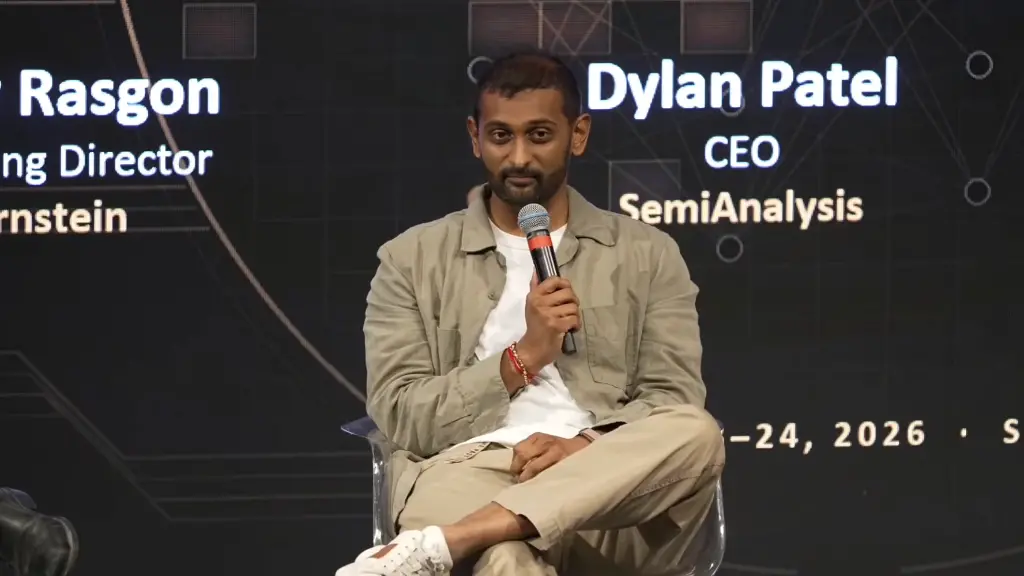
SemiAnalysis Founder: By 2028, most of the new AI computing power will belong to two companies

In the latest podcast, SemiAnalysis founder Dylan Patel predicts that by 2028, OpenAI and Anthropic may account for 70% to 80% of the world's new AI computing power, with the total computing power scale potentially exceeding 100GW. Patel stated that the two companies currently account for about 30% of the world's annual new computing power, and this proportion is still rising rapidly.Patel pointed out that the business model of leading AI laboratories is changing, with a significant increase in the efficiency of AI computing power output. Currently, Anthropic's revenue per megawatt of computing power has reached about $50 million and may further rise to $100 million. This allows OpenAI and Anthropic to procure or lease computing power at high prices ranging from $25 million to $50 million per megawatt.Patel expects that global AI-related capital expenditures will reach about $11 trillion from 2024 to 2029, with over $5 trillion needing to be financed through debt. Due to the potential return on investment of AI infrastructure being far higher than that of traditional industries, tech giants may accept higher financing costs, thereby pushing up overall credit rates and squeezing the valuations of traditional assets and highly leveraged economies. Additionally, Patel believes that the new computing power may not primarily be used for providing model inference services externally, but may instead flow more towards internal research and development and self-improvement of models within AI laboratories.
app_icon
ChainCatcher Building the Web3 world with innovations.