BTC $59,827.22 -2.35%
ETH $1,678.05 -2.44%
BNB $549.08 -1.69%
XRP $0.9211 -2.13%
SOL $69.40 -4.22%
TRX $0.3080 -0.42%
DOGE $0.0552 -2.45%
ADA $0.1441 -2.74%
BCH $195.70 -2.75%
LINK $8.81 -2.14%
HYPE $59.78 -7.22%
AAVE $93.51 -3.93%
SUI $0.6442 -4.84%
XLM $0.1241 -5.22%
ZEC $730.93 -7.37%
AAPL $354.40 +1.29%
AMZN $252.55 -1.38%
GOOGL $279.47 -1.29%
MSFT $497.15 +0.67%
META $590.91 -1.27%
NVDA $153.99 -6.63%
TSLA $384.48 -0.35%
SNDK $77.48 -11.94%
INTC $54.66 -7.90%
SPCX $126.64 -5.39%
MU $628.09 -11.20%
AMD $413.53 -8.10%

ultra

All
Article
Flash

first_img Google opens Genie 4 to AI Ultra subscribers, allowing real-time rewriting of generated worlds

On Wednesday, Google announced that the latest world model, Genie 4, is now available to eligible AI Ultra subscribers through Project Genie. This model was released in October this year and was previously only available to trusted testers. Users can input text commands while exploring generated scenes in the browser to change the weather, introduce characters, or adjust the course of events without starting over; the model also synchronously generates sounds of wind, footsteps, and dialogues that respond to scene events. This experience is included in the Google AI Ultra subscription, which costs $199.99 per month in the United States, and AI Pro subscribers can join a waiting list.Google stated that Genie 4 improves the way characters move and how objects respond to physical forces, with these effects coming from its own demonstrations and not yet independently tested. The previous version, Genie 3, continues to coexist with the new model, with the duration of a single session extended from 60 seconds to 3 minutes, added support for 360-degree panoramic images, and the ability to connect multiple generated worlds for longer journeys; Google has not disclosed the corresponding session duration for Genie 4, allowing users to choose between the visually richer Genie 4 and the longer-exploring Genie 3 as needed.Genie is not a traditional game engine with fully defined building rules, but rather predicts the visuals and sounds that the world should present as it changes. Google acknowledges that objects may drift or change between different perspectives, complex physics still pose challenges, and generated speech or text may also be inaccurate; the audio and video from Project Genie carry a SynthID watermark, and both input and output undergo security screening. This series is set to debut in 2024, with the first-generation model learning from over 200,000 hours of game footage, capable of transforming a single image into a playable 2D environment, followed by Genie 2 entering three-dimensional space, and Project Genie opened to adult Ultra subscribers in the United States in January this year.

Ultraman talks about Jensen Huang's return: I have also been kicked out by the board, he is my hero, but heroes also have flaws

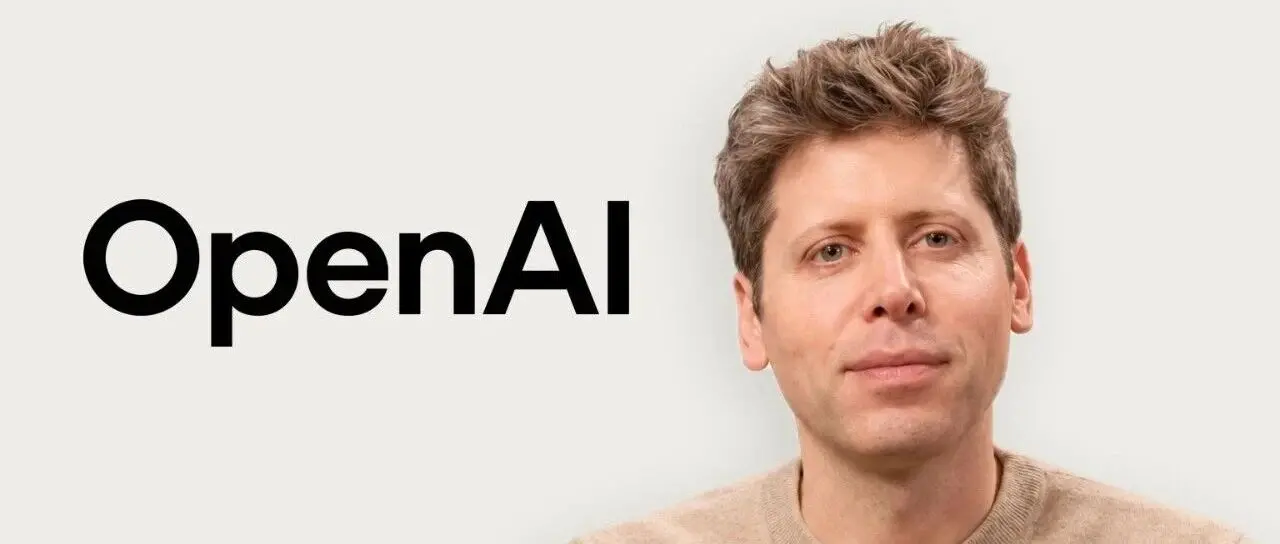
According to Beating AI, OpenAI CEO Sam Altman was asked at the Semafor conference whether Jensen Huang should return after being ousted by the board like he was years ago. Host Reed Albergotti also mentioned that the open letter supporting Huang's reinstatement online looks like a copy of the letter from 2023 that supported Altman's reinstatement.Altman did not directly support Huang's reinstatement, stating that he does not know enough to answer the question. He also mentioned that Huang has always been his hero, "Heroes also have flaws." He was also ousted by the board in the past, so he can particularly empathize with Huang's current situation, "I remember what that felt like, even though it seems like a long time ago."Altman said that NVIDIA bet on OpenAI very early on, and OpenAI also bet on NVIDIA. He is very grateful for this and finds it hard to imagine what the AI revolution would look like without Huang. Regarding NVIDIA's previous guarantee of up to approximately $105 billion for OpenAI's Ohio data center project and whether the guarantee remains reliable after Huang's departure, Altman believes NVIDIA is large enough for the market to still trust its guarantees. The demand and revenue for AI are also growing rapidly, and he is not worried that Huang's departure will drag down the entire industry.

Ultraman introduced three paths for employees to develop safe super AI

OpenAI CEO Sam Altman introduced three proposals for the safe development of super AI to employees last week. The first is to establish a global regulatory organization similar to the International Atomic Energy Agency, to inspect advanced models and audit safety measures. Insiders say Altman leans towards this route.The second proposal emulates the European Organization for Nuclear Research, merging major AI laboratories into one organization or collaborating through a unified agency for joint development, rather than continuing to race against each other. The third and most extreme, which he referred to as the "Eliezer Plan": an AI company achieves recursive self-improvement first, and then uses overwhelming economic power to control computing power, making it impossible for other developers to catch up. Altman described this idea as "melting down all other companies' GPUs," while stating that this plan is very bad and is only meant to illustrate the extreme possibility.The idea of "melting down GPUs" comes from AI safety researcher Eliezer Yudkowsky. He proposed a thought experiment in 2021, suggesting that super AI could create self-replicating nanomachines to melt down global GPUs, stating that this is merely an extreme example to illustrate the intensity of intervention, not a proposal to be executed. OpenAI proposed the establishment of an "AI version of the International Atomic Energy Agency" in 2023, and Google DeepMind head Hassabis has also advocated for the creation of an "AI version of CERN." Currently, OpenAI, Google, and Anthropic plan to establish a joint safety standards organization by the end of this year or early next year, but there are disagreements over the responsibility for model safety testing. Altman hopes to set speed limits for AI development while stating that OpenAI cannot currently cede its competitive advantage to rivals.

first_img Qualcomm's next-generation AP overheating, Samsung may bring Exynos back to Ultra

According to a report by Seoul Economy on the 16th, Samsung Electronics is experiencing performance degradation due to overheating in Qualcomm's next-generation application processor intended for the high-end model Galaxy S27 Ultra, which is set to be released early next year. The MX division of Samsung's DX department is conducting final performance validation on the Qualcomm Snapdragon 8 Elite Extreme 6th generation that will be equipped in this model and has requested Qualcomm to resolve the overheating issue by mid-month.Several related individuals stated that the chip repeatedly exceeded temperature benchmarks during recent internal testing, leading to a decrease in processing speed under sustained high load. Samsung informed Qualcomm of the results last month, and as of the report, the overheating stability required by Samsung has not yet been achieved, with both parties still working to enhance performance and revalidate. This chip is Qualcomm's highest-end mobile application processor publicly announced last month, focusing on handling complex AI tasks on the device side and improving the performance of the CPU, GPU, and more.Mass production of the Galaxy S27 series is scheduled for the end of this year, and Samsung plans to confirm the results of the overheating improvements and finalize the application processor selection by mid-month. If the standards are met, Snapdragon will be used as originally planned; if not resolved, the Exynos 2700, designed by Samsung's System LSI and utilizing the second-generation 2-nanometer process SF2P from its foundry division, may be considered as an alternative. Since the global use of Qualcomm application processors began with the Galaxy S23 Ultra in 2023, if the Exynos 2700 is adopted in next year's Ultra, it will mark a return to the highest-end model after about five years since 2022. Industry insiders indicate that Qualcomm's application processor has not been completely ruled out.
first_img Analysis: China may have stockpiled 343 immersion deep ultraviolet lithography machines

According to the South China Morning Post, former U.S. officials stated that Chinese semiconductor factories have stockpiled hundreds of immersion lithography machines worth billions of dollars in recent years and urged Washington and its allies to stop further exports. The Centre for Technology & Statecraft, established in August 2026, released a report in late September estimating that by early 2026, Chinese wafer fabs had acquired approximately 343 immersion deep ultraviolet lithography systems. The report was co-authored by former U.S. export control official Nicholas Brown and former White House and Department of Commerce technology policy advisor Saif Khan.The report estimates that about 270 of these are ASML Twinscan NXT:1980i. The authors claim that although these devices lag behind extreme ultraviolet lithography machines, they can be modified for the production of 7-nanometer logic chips and advanced memory required for artificial intelligence processors (including Huawei's Ascend series). Chinese wafer fabs spent over $13 billion in 2024 to purchase about 90 NXT:1980i units, and acquired another 89 units in 2025. ASML disclosed that, by destination, China accounted for 41% of its net system sales in 2024, 33% in 2025, dropping to 19% in the first quarter of 2026 and 14% in the second quarter.Since September 2023, the Netherlands has required export licenses for the NXT:2000i and more advanced immersion deep ultraviolet equipment, effectively banning these models from being shipped to China; a year later, the licensing requirements were extended to the NXT:1980i, but this model can still be approved for shipment on a case-by-case basis.
app_icon
ChainCatcher Building the Web3 world with innovations.