Scan to download
BTC $60,434.72 -0.07%
ETH $1,551.10 -2.28%
BNB $573.25 -0.19%
XRP $1.08 -1.88%
SOL $61.54 -4.98%
TRX $0.3214 +0.13%
DOGE $0.0806 -1.43%
ADA $0.1578 -2.19%
BCH $213.74 -1.78%
LINK $7.31 -0.76%
HYPE $57.24 -0.71%
AAVE $60.32 -3.14%
SUI $0.7060 +0.33%
XLM $0.2061 +5.76%
ZEC $357.75 +8.90%
BTC $60,434.72 -0.07%
ETH $1,551.10 -2.28%
BNB $573.25 -0.19%
XRP $1.08 -1.88%
SOL $61.54 -4.98%
TRX $0.3214 +0.13%
DOGE $0.0806 -1.43%
ADA $0.1578 -2.19%
BCH $213.74 -1.78%
LINK $7.31 -0.76%
HYPE $57.24 -0.71%
AAVE $60.32 -3.14%
SUI $0.7060 +0.33%
XLM $0.2061 +5.76%
ZEC $357.75 +8.90%

bip

The U.S. Congress will advance a bipartisan cryptocurrency tax bill, which may become the next significant legislation following the CLARITY Act

Jason Smith, the chairman of the U.S. House of Representatives' fundraising committee, stated that digital asset tax legislation must receive bipartisan support; otherwise, the related bill process will not advance. Subsequently, U.S. Representatives Steven Horsford, Max Miller, Suzan DelBene, and Mike Carey jointly proposed the "Digital Asset Protection, Accountability, Regulation, Innovation, Taxation, and Revenue Act" (PARITY Act). The bill aims to update digital asset tax rules, provide a clearer regulatory framework for the market, while enhancing investor protection and preventing market manipulation.Representative Steven Horsford stated that the bill will help ordinary investors participate more safely in the digital asset market and promote wealth accumulation opportunities. Max Miller believes that the current U.S. tax laws are unable to adapt to the rapid development of digital assets and modern financial technology. Currently, the PARITY Act and the advancing CLARITY Act are seen as important components of establishing a comprehensive regulatory system for crypto assets in the United States.The U.S. Congress released a tax policy discussion draft in March this year and held a bipartisan roundtable in May to discuss the tax framework for crypto assets. The market is closely watching whether the CLARITY Act can be passed by 2026. Analysts believe that if both the CLARITY Act and the PARITY Act are ultimately legislated and combined with the subsequent rule-making of the GENIUS Act, the U.S. crypto industry will welcome a clearer regulatory environment, further promoting Web3 and DeFi into the mainstream financial system.

U.S. digital asset regulation is set to undergo a turning point: the CLARITY Act has gained bipartisan support and has entered a critical legislative phase

According to CoinDesk, during a recent Senate Banking Committee review, substantial progress was made in advancing the Digital Asset Market Clarity Act, referred to as the "CLARITY Act," which passed into the Senate full review stage with a vote of 15 to 9.Several bipartisan lawmakers emphasized the urgent need for the United States to establish a unified regulatory framework covering digital assets to clarify asset classification, trading platform regulation, and market structure rules, thereby providing long-term certainty for the industry. Angela Alsobrooks pointed out from a family perspective that the younger generation shows a natural interest in digital assets, and the regulatory system should strike a balance between "opportunity and protection" to avoid technological development being detached from regulatory constraints. Tim Scott emphasized that legislation should be promoted from the perspective of economic opportunity and the American Dream, while Cynthia Lummis stated that the legislative process has already shown a clear foundation for bipartisan cooperation.Supporters believe that digital assets have become an irreversible trend, with approximately 68 million Americans holding related assets, but a significant amount of trading still occurs on overseas platforms. The U.S. urgently needs to establish a domestic regulatory system to enhance market transparency and investor protection levels.Analysis indicates that the CLARITY Act is seen as a key complement following the stablecoin-related legislation (GENIUS Act). Without supporting rules at the market structure level, the U.S. may lose its leading position in the competition for digital financial infrastructure. As the bill advances to the Senate full stage, there is widespread attention on whether it can achieve final legislation based on bipartisan consensus to establish the core rules of the U.S. digital asset regulatory framework.

The bipartisan negotiations on the "CLARITY Act" have not reached an agreement, and the Democrats still have differences regarding the BRCA provisions

According to crypto journalist Eleanor Terrett, sources say that a bipartisan group of minority senators in the U.S. Senate held discussions last night regarding the CLARITY Act, attempting to push the Democrats to make concessions on at least two outstanding issues, but ultimately failed to reach an agreement.Senator Cynthia Lummis stated that both sides had reached consensus on "99% of the content" of the bill and expressed hope that the Democrats would continue to address the remaining issues after the bill passes committee review; otherwise, if a similar incident to FTX occurs in the future, "they can only blame themselves."Reports indicate that Democratic Senators Adam Schiff and Ruben Gallego have been pushing for a compromise on the ethical standards and conflict of interest clauses involving the president's family before the committee review, making it one of the conditions for supporting the bill.Additionally, some Democratic lawmakers have raised concerns about provisions related to the Blockchain Regulatory Certainty Act (BRCA). This provision aims to prohibit lawsuits against non-custodial software developers based on money transfer laws.Sources say that both sides have made substantial progress on ethical and conflict of interest issues, but disagreements over amendments to the BRCA ultimately led to the breakdown of negotiations. The market currently widely expects that this committee review will show clear partisanship.

Bitcoin developers proposed BIP-361 to combat potential future quantum attack risks

One of the Bitcoin contributors, Jameson Loop, along with other cryptographers, has proposed an initiative that may force Bitcoin holders to migrate their tokens to new quantum-resistant addresses, or else their tokens will be permanently frozen by the network itself. In this scenario, holders technically still own these coins but will lose the ability to transfer them. This is known as Bitcoin Improvement Proposal BIP-361, which was updated on Tuesday in Bitcoin's official proposal repository, titled "Post-Quantum Migration and Old Signature Retirement."BIP-361 builds on the BIP-360 proposal introduced in February. BIP-360 introduced a soft fork (a type of network upgrade) aimed at enabling a new transaction type called "Pay to Merkle Root" (P2MR). This approach draws on Bitcoin's Taproot (P2TR) framework but removes key-based spending paths, thereby eliminating an element widely considered to pose risks in the quantum era.The BIP-361 proposal divides the migration into three phases. Phase A starts three years after activation and prohibits anyone from sending new bitcoins to old, quantum-vulnerable addresses. You can still spend from these addresses, but you cannot receive any coins. Phase B starts five years after activation and will render old signatures (ECDSA and Schnorr) completely ineffective, with the network rejecting any attempts to spend coins from quantum-vulnerable wallets.Essentially, your coins will be frozen. Finally, there is Phase C, which is a rescue plan still under research: holders of frozen wallets may potentially prove ownership through zero-knowledge proofs (a method of proving knowledge of a secret without revealing the secret itself). If successful, the coins frozen in Phase B can be recovered.

The Bitcoin network has seen the first block supporting BIP-110, which has sparked controversy over the restriction of on-chain data usage

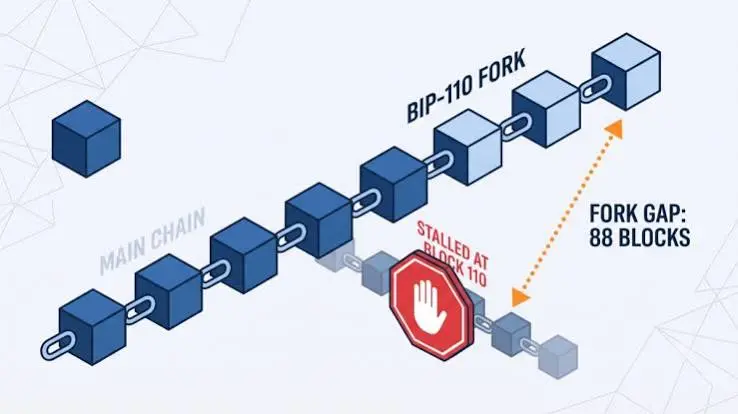
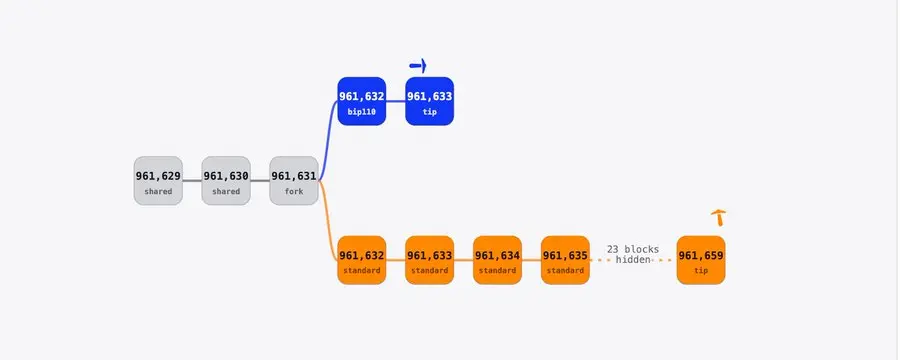
According to market news, the Bitcoin network has seen the first block supporting the BIP-110 proposal, mined by the Ocean pool. This proposal aims to limit arbitrary non-financial data in blockchain transactions through a temporary soft fork over approximately one year. Supporters believe this can curb "junk" data that occupies block space, protect Bitcoin's role as a robust monetary infrastructure, and alleviate the burden on node operators. The proposal has sparked intense controversy within the community.Critics, including Blockstream CEO Adam Back, warn that intervention at the consensus layer could undermine Bitcoin's credibility, lead to discriminatory treatment of transactions, and violate the principle of transaction capacity neutrality. He also questioned the actual support for the proposal, stating it could increase the risk of blockchain splits.The controversy escalated further when a developer embedded a 66KB image in a Bitcoin transaction to oppose the core claim of BIP-110, demonstrating that a large amount of data can be encoded even without relying on OP_RETURN. This debate highlights the long-standing ideological divide within the Bitcoin community: whether to staunchly defend Bitcoin's pure positioning as a currency or to maintain maximum neutrality regarding arbitrary uses at the base layer.
app_icon
ChainCatcher Building the Web3 world with innovations.