Scan to download
BTC $70,728.91 +0.46%
ETH $2,071.78 +1.06%
BNB $652.98 +1.43%
XRP $1.42 -4.56%
SOL $81.67 -4.53%
TRX $0.2795 -0.47%
DOGE $0.0974 -3.83%
ADA $0.2735 -4.22%
BCH $457.64 +2.45%
LINK $8.64 -2.97%
HYPE $28.98 -1.81%
AAVE $122.61 -3.42%
SUI $0.9138 -6.63%
XLM $0.1605 -4.62%
ZEC $260.31 -8.86%
BTC $70,728.91 +0.46%
ETH $2,071.78 +1.06%
BNB $652.98 +1.43%
XRP $1.42 -4.56%
SOL $81.67 -4.53%
TRX $0.2795 -0.47%
DOGE $0.0974 -3.83%
ADA $0.2735 -4.22%
BCH $457.64 +2.45%
LINK $8.64 -2.97%
HYPE $28.98 -1.81%
AAVE $122.61 -3.42%
SUI $0.9138 -6.63%
XLM $0.1605 -4.62%
ZEC $260.31 -8.86%

bond

30 million euros bond oversubscription and 1 million dollars new purchase plan: Global cryptocurrency stocks shift to "debt financing" model

According to BBX data, the global cryptocurrency assets have deeply evolved towards "credit toolization" yesterday, with listed companies demonstrating a resilient strategy of leveraging debt to acquire digital sovereignty and "output retention":European bond premium: Samara Asset Group (Euronext: $SRAG) announced that its €30 million Bitcoin bond was oversubscribed. By acquiring Bitcoin on a large scale through non-dilutive debt instruments, Samara locked in low fiat interest rates and successfully "Bitcoinized" its balance sheet, avoiding equity dilution.Hashrate retention discipline: Bitfarms (NASDAQ: $BITF) confirmed the launch of its new mining facility in Paraguay, with a retention rate of 85% yesterday. By optimizing its global energy portfolio, the company expanded its reserves through "passive accumulation" on the production side without relying on external equity financing.Nasdaq's new sentinel: Thumzup Media (NASDAQ: $TZUP) board approved a $1 million Bitcoin holding plan yesterday. This marks Bitcoin as an officially recognized "standard tool" for small and mid-cap tech companies in the U.S. stock market to combat the decline in fiat purchasing power and reshape asset structures.Hong Kong stock treasury model: Boyaa Interactive (0434.HK) confirmed in a board preparatory meeting yesterday that it will continue to strengthen its "Bitcoin-first" treasury asset allocation. As a leading listed company in Asia holding Bitcoin, its treasury net worth has become a core driver of its stock price, and the company plans to disclose more accumulation details in its upcoming annual performance report.The market is showing a clear dual evolution trend of "debt-driven accumulation" and "internal growth of hashrate."

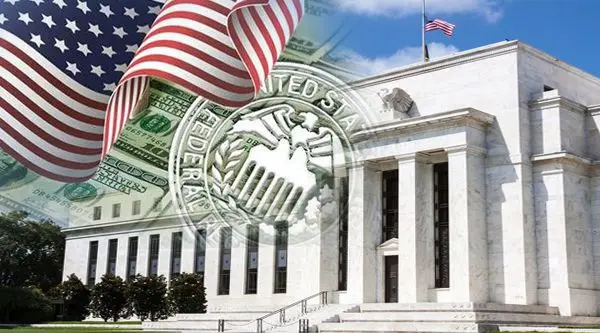
Rick Rieder, a leading candidate for the Federal Reserve Chair, manages BlackRock's $2.4 trillion in assets and is regarded as the person who understands the bond market best in the United States

According to Fortune, in the past two weeks, Rick Rieder's odds of becoming the next Federal Reserve Chair on Polymarket have surged to nearly 50%, clearly leading over the second-ranked Kevin Warsh (29%) and the third-ranked Christopher Waller (6%). Rieder's career has been almost entirely on the front lines of the global bond market, working as a trader and asset manager, deeply involved in the market, interpreting and profiting from central bank policy signals. Simply put, no one understands the bond market better than Rick Rieder. And in Trump's policy decision-making, nothing is more important than "whether the bond market is up or down."Currently, Rieder is responsible for BlackRock's global fixed income business, managing up to $2.4 trillion, which accounts for about one-sixth of the $14 trillion in assets under management at the world's largest asset management firm. A former CEO who worked with Rieder described him as "extremely personable" and stated that Rieder "has a very good understanding of how the market operates and is able to maintain independent judgment."If Rieder takes over as Federal Reserve Chair in May, he will face extremely daunting challenges. His stance on the federal funds rate has long been clear and is more aligned with Trump's camp. In an interview with CNBC on January 12, Rieder stated, "The Fed needs to lower rates to 3% (currently 3.50%--3.75%), which I believe is closer to a balanced level." The problem is that the Fed is currently implementing two policies that could potentially raise inflation. In mid-December last year, the central bank reversed its previous quantitative tightening (QT) policy. Additionally, the Fed is also reducing the amount of reserves that banks must hold at the central bank.

Arthur Hayes: If the Federal Reserve expands its balance sheet to intervene in the yen and Japanese government bonds, it will be beneficial for risk assets like Bitcoin

BitMEX co-founder Arthur Hayes published an in-depth analysis in his latest article regarding the recent depreciation of the yen and the decline in Japanese government bond prices, which has caused "anomalies" in the global market. He believes this indicates that the Federal Reserve and the Treasury may soon collaborate to directly intervene in the yen and Japanese government bond markets through "money printing" to inject new liquidity into the global fiat currency system.Hayes specifically outlined the possible intervention path: the New York Fed creates dollar reserves and instructs primary dealers like JPMorgan to sell dollars and buy yen in the foreign exchange market to support the exchange rate, and may invest the acquired yen in Japanese government bonds to lower their yields. This operation will lead to an expansion of the "foreign currency-denominated assets" item on the Fed's balance sheet, essentially meaning that the Fed is taking on the interest rate risk of the yen exchange rate and Japanese government bonds through money printing.He analyzed the motives and consequences of this move: aimed at stabilizing the yen and lowering Japanese government bond yields to prevent Japanese investors from massively selling U.S. Treasuries, avoiding uncontrolled increases in U.S. Treasury yields, while enhancing the competitiveness of U.S. exports.This process will increase global dollar liquidity and may simultaneously boost the euro and yuan exchange rates. Hayes pointed out that this "non-QE" style of balance sheet expansion will ultimately provide upward momentum for risk assets, including Bitcoin. In terms of trading strategy, he stated that a rapid strengthening of the yen against the dollar is usually a signal for reducing risk assets. Bitcoin's decline due to the strengthening yen means he will not increase his risk exposure until it is confirmed that the Fed is intervening in the yen and Japanese government bond markets by expanding its balance sheet.He has closed positions in leveraged Bitcoin-related assets such as Strategy and Metaplanet, stating that he will re-enter if his judgment proves correct. In the meantime, his fund Maelstrom continues to increase its holdings in Zcash, while positions in other quality DeFi tokens remain unchanged. He indicated that if the Fed indeed expands its balance sheet to intervene in the currency and bond markets, he will increase his holdings in DeFi assets such as ENA, ETHFI, PENDLE, and LDO.
app_icon
ChainCatcher Building the Web3 world with innovations.