BTC $63,747.77 -1.73%
ETH $1,789.58 -1.45%
BNB $588.12 -0.28%
XRP $0.9600 +0.63%
SOL $72.58 +2.21%
TRX $0.3070 +0.31%
DOGE $0.0587 -0.59%
ADA $0.1523 -0.28%
BCH $207.44 -0.01%
LINK $9.09 -0.74%
HYPE $68.02 +1.25%
AAVE $110.23 +3.20%
SUI $0.7181 -0.16%
XLM $0.1375 +0.29%
ZEC $924.67 +4.03%
AAPL $351.02 -0.31%
AMZN $257.45 -0.28%
GOOGL $281.58 -1.33%
MSFT $507.67 -2.24%
META $622.16 -0.52%
NVDA $154.37 -1.29%
TSLA $380.38 +0.73%
SNDK $794.20 -3.02%
INTC $53.97 -3.28%
SPCX $141.19 +1.69%
MU $699.30 -3.94%
AMD $491.69 -3.33%

overs

All
Article
Flash

first_img The chair of the House Oversight Committee calls for a ban on government officials participating in prediction market trading

Chairman James Comer of the House Oversight Committee, a Republican, has called for new restrictions on government officials' participation in prediction markets, including the possibility of a complete ban. The committee released the conclusions of an investigation that began in May of this year on Friday, which examined the risks of government officials, military personnel, and those with security clearances using insider information to place bets in prediction markets. Comer stated that the committee reviewed 1,700 pages of documents and heard five bipartisan staff briefings provided by prediction market companies.Comer stated that Congress must consider further reforms to prevent public corruption and restore the American people's trust in the government. The committee believes that relevant reforms should legislate restrictions on the types of bets federal employees, lawmakers, and congressional staff can participate in within prediction markets, or directly implement a complete ban. The committee's memorandum noted that whether a complete ban on prediction market trading is imposed or only restrictions on certain contracts related to government, applying such restrictions to officials across all branches of government would reinforce the ethical expectation that government personnel should not use non-public information obtained through their positions for personal financial gain.This concern has intensified over the past year, stemming from an active-duty U.S. Army soldier using confidential information to bet on Polymarket before the arrest of former Venezuelan President Nicolás Maduro, after which government personnel, including a former White House teleprompter operator, were also found to have profited from insider information. The committee also suggested that Congress push for prediction market companies to share necessary information with federal agencies to enforce restrictions. Both Kalshi and Polymarket have stated that they have taken measures to strengthen controls, and in April of this year, the Senate passed a resolution banning lawmakers from trading in prediction markets.

first_img Chinese AI company seeks to rent overseas NVIDIA computing power

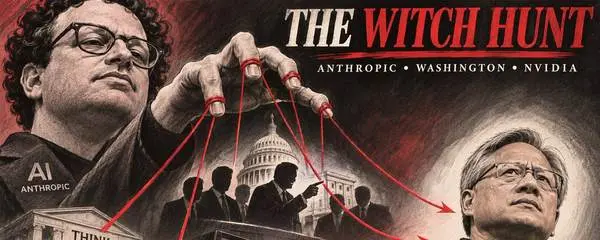
Reuters reported on November 12, citing three informed sources, that Chinese artificial intelligence companies are attempting to rent Nvidia chip computing power from overseas data centers, concerned that the controversy surrounding Nvidia CEO Jensen Huang may prompt Washington to tighten restrictions on the remote use of advanced processors. The United States has restricted the export of Nvidia's most advanced artificial intelligence chips to China, and Chinese companies can currently use such processors remotely by renting computing power from overseas data centers. A large Chinese cloud service provider has internally discussed whether to secure overseas Nvidia chip capacity, and some companies have contacted data center operators to negotiate reservations. The informed sources declined to be named due to the sensitivity of the matter and did not specify the cloud service provider.Two informed sources stated that smaller artificial intelligence labs are also considering similar arrangements, including reaching out to major computing power rental service providers in Southeast Asia. These companies are concerned that the controversy surrounding Jensen Huang may provide political momentum for the U.S. Remote Access Security Act (RASA). This bill aims to authorize the U.S. Department of Commerce to regulate remote and cloud access to restricted technologies. The U.S. House of Representatives passed the bill in January with a vote of 369 in favor and 22 against, and it is currently awaiting Senate review. Reuters stated that Nvidia's advanced processors are used to train and run the large models behind generative artificial intelligence products like chatbots, and restricting overseas cloud access will make it more difficult for Chinese developers to obtain high-end computing power without directly importing chips.Jensen Huang stated on Sunday that he was unfaithful to his wife. The New York Times reported that the individual involved is Alice Huang, a former executive of Singapore cloud computing company Megaspeed, who U.S. authorities have identified as a Chinese intelligence operative. Reuters stated it was unable to independently verify the allegation, and the Chinese side has denied it. Two informed sources said that Alice Huang has business dealings and investment relationships with Chinese tech companies such as Tencent and Alibaba, which did not immediately respond to requests for comment. Business filings in Singapore reviewed by Reuters show that Alibaba subsidiary Apex Enterprise Solutions had provided financing to Malaysian company Speedmatrix, which is associated with Megaspeed. Megaspeed denied illegally transshipping Nvidia chips subject to U.S. export controls to China. Two other informed sources stated that traders and intermediaries have begun hoarding restricted Nvidia artificial intelligence chips in China's gray market, with buyers concerned that the controversy may prompt the U.S. to take broader action against the smuggling of advanced chips and artificial intelligence servers.

Barclays: The Nvidia controversy and financing risks cannot hinder the long-term trend of AI; investors should still maintain exposure

Julian Lafarge, Chief Market Strategist at Barclays Private Bank, stated that despite the uncertainty surrounding Nvidia CEO Jensen Huang's future, the uncertain returns on AI investments, and rising financing costs testing market confidence, investors should continue to participate in the AI market. Lafarge believes that AI is not a bubble but a technological revolution that will impact all industries, although its commercialization and infrastructure development cannot happen overnight.Lafarge pointed out that Nvidia is referred to as the "central bank of AI trading," but even if the company changes its CEO, it does not mean that the entire AI industry chain's trading needs to be re-evaluated or renegotiated. He compared the potential leadership transition at Nvidia to previous management transitions at Microsoft, Alphabet, and Amazon, arguing that a successor taking over does not necessarily weaken corporate value.However, Barclays lists interest rates and the financing environment as major risks that could disrupt the market. As the scale of AI infrastructure investment expands, the market's focus is shifting from whether the demand for computing power is real to whether the massive capital expenditures can generate sufficient returns. Data center construction also faces bottlenecks such as power access, equipment installation, and commercial operation cycles, while expectations of tightening Federal Reserve policies may also raise corporate financing costs and depress long-term cash flow valuations.Lafarge emphasized that the trillions of dollars in AI investment commitments cannot quickly translate into actual computing power delivery, and there will be significant divergence in investment returns among companies. Tighter financing conditions may change the pace of industry investment and competitive landscape, but it does not mean that the long-term demand for AI infrastructure will disappear. Barclays still prefers to maintain exposure to AI investments until there are clear signs of a significant slowdown in industry growth momentum.

Reuters survey: The Federal Reserve's interest rate hike expectations for December remain solid, but there is still controversy over the end of the tightening cycle

A Reuters survey shows that about 55% of the economists surveyed, or 56 out of 101, expect that the interest rate hike in December will mark the end of the current tightening cycle, a figure that is basically unchanged from last month.However, 45 economists still expect that the Federal Reserve will raise interest rates at least two more times, including more than half of the surveyed primary dealers, which is consistent with the expectations reflected in market pricing, and believe that the risks to the inflation outlook have not changed since the U.S. midterm elections. Changes in the political landscape are unlikely to quickly alleviate inflationary pressures.Despite market hopes that the nearly 9-month-long Middle East conflict could be resolved, leading to a drop of over 22% in crude oil futures prices from the late October peak, inflationary pressures still persist. A strong labor market, resilient economic growth, and inflation remaining above the Federal Reserve's 2% target for nearly six years all indicate that further tightening of monetary policy is still necessary.Wells Fargo Chief Economist Tom Porcelli stated, "The Federal Reserve's decision-making depends on the upcoming inflation data, which will prompt it to raise rates again. In fact, the Federal Reserve has every reason to raise rates at the October meeting."

Dunamu Vice Chairman: The tokenization of Korean stocks trading overseas is heartbreaking

According to a report by the Korean News Agency, Kim Hyung-nyeon, Vice Chairman of Dunamu, the operator of South Korea's largest cryptocurrency exchange Upbit, stated at the digital asset policy conference "DICON" held in Yeouido, Seoul, that South Korea's representative stocks, Samsung Electronics and SK Hynix, can only be tokenized and traded on overseas exchanges, "This matter itself is very painful."The report noted that as one of the co-founders of Dunamu, Kim Hyung-nyeon rarely speaks in public. He mentioned that there are many issues that need to be considered recently, and as long as the regulatory system is designed properly, Dunamu will do its best to become a global player representing South Korea. On the same day, Dunamu CEO Oh Kyung-sik stated in his opening speech that the digital asset industry is at a critical juncture where opportunities and challenges intertwine, and major countries have begun to view digital assets as important factors for financial innovation and national competitiveness.During the discussion, ruling party member Min Byung-deok stated that the postponement of virtual asset taxation has made all parties clearly recognize the necessity of the "Basic Law on Digital Assets," which must be passed in this regular National Assembly session, no later than January 18 of next year. He also advocated for allowing institutions and legal entities to invest in virtual assets comprehensively, arguing that according to the spirit of the South Korean Constitution, individuals and legal entities should not be treated differently.
app_icon
ChainCatcher Building the Web3 world with innovations.