BTC $64,897.94 -0.17%
ETH $1,826.20 +0.01%
BNB $593.32 +0.33%
XRP $0.9631 +0.01%
SOL $72.75 +1.14%
TRX $0.3049 +0.34%
DOGE $0.0591 +0.22%
ADA $0.1540 -0.19%
BCH $208.94 +0.05%
LINK $9.18 -0.33%
HYPE $70.08 +5.53%
AAVE $112.08 +2.26%
SUI $0.7265 -0.18%
XLM $0.1392 -0.89%
ZEC $917.98 +2.64%
AAPL $353.08 -1.11%
AMZN $258.63 -2.34%
GOOGL $284.70 -3.43%
MSFT $517.84 -1.04%
META $625.16 -1.88%
NVDA $157.86 -2.96%
TSLA $380.18 -1.91%
SNDK $819.04 -4.26%
INTC $54.79 -5.79%
SPCX $138.12 -1.76%
MU $725.06 -4.27%
AMD $512.95 -1.72%

three

All
Article
Flash

first_img Microsoft: The Microsoft 365 outage was caused by three factors

Microsoft Copilot, Agents, and Platform Executive Vice President Charles Lamanna explained the preliminary cause of the Microsoft 365 outage on November 12 and stated that more complete details can be found in the Microsoft 365 Admin Center. Lamanna expressed the company's deep apologies for the impact the outage had on the normal business and operations of all customers. He mentioned that the outage that day was caused by three factors, which led to a global disruption of the network gateway affecting multiple Microsoft 365 services.Lamanna stated that the first factor was a latent defect that caused the servers to overload and become unresponsive under specific load conditions due to internal process lock contention, rendering the machines unavailable. This defect originated from a fix prepared specifically for the Microsoft 365 network gateway servers, and both the defect and the fix are not applicable to broader Windows deployments. The related behavioral change began deployment in July of this year, was securely deployed, and completed global coverage within weeks, during which no issues were observed; this change had been deployed globally for over three months without causing any impact.Lamanna also mentioned that the second factor was an increase in load, which raised the likelihood of the network gateway encountering the aforementioned contention. Microsoft 365 maintains two independent and heterogeneous network gateway systems to isolate and ensure high availability, allowing multiple services to failover between the two systems during an outage; such failovers are part of normal operations and standard resilience measures. The third factor was that nearly 14% of the network gateway server capacity went offline almost simultaneously due to an unrelated issue from the previous day, which was planned to be restored through routine maintenance and health processes; the service had sufficient capacity margin, and the isolated capacity drop did not cause any impact. Lamanna stated that the combination of increased load and decreased server capacity triggered the latent defect introduced in July.
OpenAI privately supports three bills restricting chip exports to China

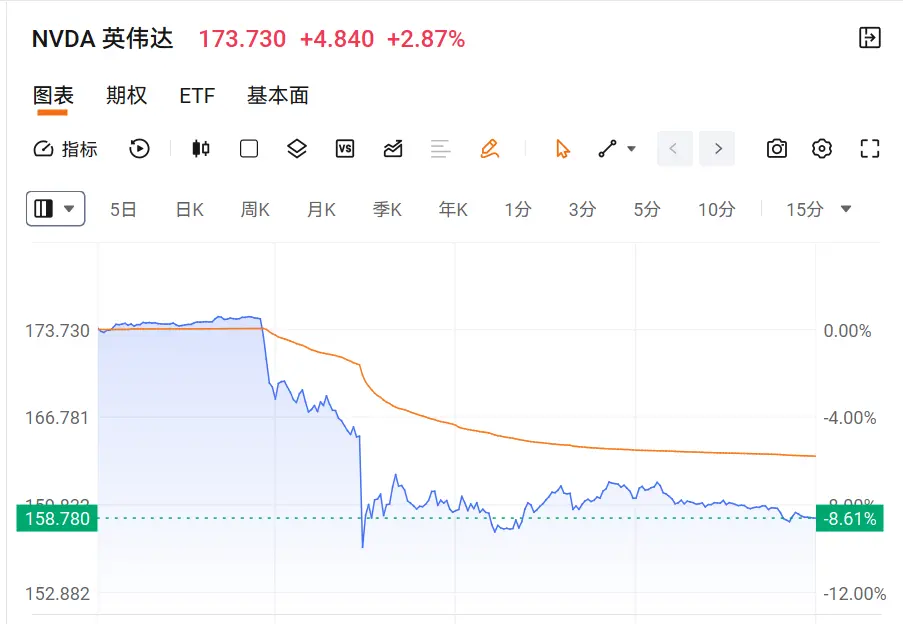
According to Beating AI news, OpenAI has privately expressed support to U.S. lawmakers this week for three bills aimed at limiting China's access to advanced AI chips and manufacturing equipment. This is not the first time OpenAI has supported chip restrictions against China. Last year, the company advocated for limiting U.S. companies from selling high-end chips to China but later stopped pushing Congress for stricter measures. OpenAI's leadership has been concerned that publicly supporting tighter chip export restrictions to China would anger Jensen Huang and damage their partnership with NVIDIA.OpenAI has a close relationship with NVIDIA. NVIDIA not only supplies GPUs but also supports OpenAI's data center construction through substantial financing guarantees. Jensen Huang has long lobbied Washington for a relaxation of chip sales restrictions to China. The stance of AI company Anthropic has been more pronounced. In September of this year, the company directly withdrew from an industry association in opposition to the association's obstruction of chip regulation bills.The three bills supported by OpenAI require strengthening chip tracking, limiting the supply of chip manufacturing equipment to China, and increasing congressional scrutiny of sensitive chip export licenses. Jensen Huang resigned on November 12, impacting NVIDIA's lobbying influence in Washington. Bipartisan lawmakers are working to incorporate these restrictions into the year-end National Defense Authorization Act.

In October, the core CPI in the United States exceeded expectations for three consecutive months, with rising costs in energy, services, and AI increasing pressure for interest rate hikes

Inflation data for October in the United States sends multiple warning signals. The data shows that the core CPI rose by 0.3% month-on-month, higher than the market expectation of 0.2%, exceeding expectations for the third consecutive month; the overall CPI rose by 0.4% month-on-month, also above expectations. The impact of rising energy prices is spreading to areas such as food and transportation, and service inflation remains robust, further complicating the Federal Reserve's efforts to control inflation.Specifically, food prices in the U.S. rose by 0.5% month-on-month in October, with grocery prices recording the largest monthly increase since April; urban transportation service prices saw the largest monthly increase since 2020, and prices for airline tickets and delivery services also increased. Additionally, service prices excluding energy and housing rents rose by 0.4% month-on-month, while owners' equivalent rent increased by 0.3%.AI investments are bringing new cost pressures. Over the past three months, the annualized price increase for computers and peripheral devices in the U.S. reached 25%, and electricity prices rose by 0.9% month-on-month in October, marking the largest increase in six months. Morgan Stanley estimates that AI-related factors have contributed about 6 basis points to the core CPI this year, with the current impact still relatively limited, but as data center investments expand, related pressures may rise further.In terms of monetary policy, Chicago Fed President Goolsbee described the latest inflation data as approaching an alarming level. Fed Governor Waller previously stated that if the core CPI month-on-month increase reaches 0.3% or higher, the December meeting should consider raising interest rates by 50 basis points. Goldman Sachs has included a forecast for an additional 25 basis point increase in March 2027, expecting that the target range for the federal funds rate will rise to 4.25% to 4.50%. However, some economists warn that there is a lag in the transmission of energy prices, and over-reliance on current data may lead to excessive tightening of monetary policy.

app_icon
ChainCatcher Building the Web3 world with innovations.