BTC $64,167.16 -1.96%
ETH $1,798.37 -1.88%
BNB $590.08 -0.66%
XRP $0.9694 +1.08%
SOL $73.28 +1.93%
TRX $0.3074 +0.66%
DOGE $0.0591 -0.53%
ADA $0.1533 -0.23%
BCH $209.08 -0.46%
LINK $9.15 -0.30%
HYPE $68.73 -2.31%
AAVE $110.65 +2.37%
SUI $0.7258 +0.17%
XLM $0.1386 +0.52%
ZEC $931.41 +2.33%
AAPL $349.98 -0.77%
AMZN $257.43 -0.27%
GOOGL $281.36 -0.92%
MSFT $507.02 -2.17%
META $618.19 -1.06%
NVDA $158.72 +1.86%
TSLA $381.14 +0.72%
SNDK $817.20 +1.00%
INTC $55.40 +3.57%
SPCX $142.15 +3.31%
MU $722.94 +0.49%
AMD $509.16 +1.11%

ultra

All
Article
Flash

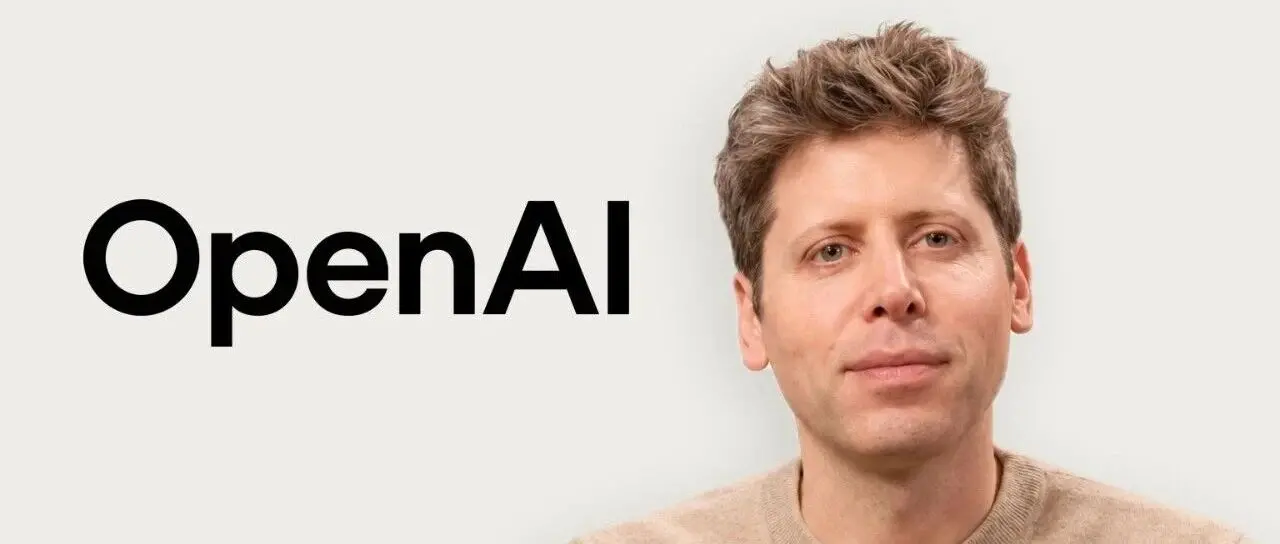
Ultraman talks about Jensen Huang's return: I have also been kicked out by the board, he is my hero, but heroes also have flaws

According to Beating AI, OpenAI CEO Sam Altman was asked at the Semafor conference whether Jensen Huang should return after being ousted by the board like he was years ago. Host Reed Albergotti also mentioned that the open letter supporting Huang's reinstatement online looks like a copy of the letter from 2023 that supported Altman's reinstatement.Altman did not directly support Huang's reinstatement, stating that he does not know enough to answer the question. He also mentioned that Huang has always been his hero, "Heroes also have flaws." He was also ousted by the board in the past, so he can particularly empathize with Huang's current situation, "I remember what that felt like, even though it seems like a long time ago."Altman said that NVIDIA bet on OpenAI very early on, and OpenAI also bet on NVIDIA. He is very grateful for this and finds it hard to imagine what the AI revolution would look like without Huang. Regarding NVIDIA's previous guarantee of up to approximately $105 billion for OpenAI's Ohio data center project and whether the guarantee remains reliable after Huang's departure, Altman believes NVIDIA is large enough for the market to still trust its guarantees. The demand and revenue for AI are also growing rapidly, and he is not worried that Huang's departure will drag down the entire industry.

Ultraman introduced three paths for employees to develop safe super AI

OpenAI CEO Sam Altman introduced three proposals for the safe development of super AI to employees last week. The first is to establish a global regulatory organization similar to the International Atomic Energy Agency, to inspect advanced models and audit safety measures. Insiders say Altman leans towards this route.The second proposal emulates the European Organization for Nuclear Research, merging major AI laboratories into one organization or collaborating through a unified agency for joint development, rather than continuing to race against each other. The third and most extreme, which he referred to as the "Eliezer Plan": an AI company achieves recursive self-improvement first, and then uses overwhelming economic power to control computing power, making it impossible for other developers to catch up. Altman described this idea as "melting down all other companies' GPUs," while stating that this plan is very bad and is only meant to illustrate the extreme possibility.The idea of "melting down GPUs" comes from AI safety researcher Eliezer Yudkowsky. He proposed a thought experiment in 2021, suggesting that super AI could create self-replicating nanomachines to melt down global GPUs, stating that this is merely an extreme example to illustrate the intensity of intervention, not a proposal to be executed. OpenAI proposed the establishment of an "AI version of the International Atomic Energy Agency" in 2023, and Google DeepMind head Hassabis has also advocated for the creation of an "AI version of CERN." Currently, OpenAI, Google, and Anthropic plan to establish a joint safety standards organization by the end of this year or early next year, but there are disagreements over the responsibility for model safety testing. Altman hopes to set speed limits for AI development while stating that OpenAI cannot currently cede its competitive advantage to rivals.

first_img Qualcomm's next-generation AP overheating, Samsung may bring Exynos back to Ultra

According to a report by Seoul Economy on the 16th, Samsung Electronics is experiencing performance degradation due to overheating in Qualcomm's next-generation application processor intended for the high-end model Galaxy S27 Ultra, which is set to be released early next year. The MX division of Samsung's DX department is conducting final performance validation on the Qualcomm Snapdragon 8 Elite Extreme 6th generation that will be equipped in this model and has requested Qualcomm to resolve the overheating issue by mid-month.Several related individuals stated that the chip repeatedly exceeded temperature benchmarks during recent internal testing, leading to a decrease in processing speed under sustained high load. Samsung informed Qualcomm of the results last month, and as of the report, the overheating stability required by Samsung has not yet been achieved, with both parties still working to enhance performance and revalidate. This chip is Qualcomm's highest-end mobile application processor publicly announced last month, focusing on handling complex AI tasks on the device side and improving the performance of the CPU, GPU, and more.Mass production of the Galaxy S27 series is scheduled for the end of this year, and Samsung plans to confirm the results of the overheating improvements and finalize the application processor selection by mid-month. If the standards are met, Snapdragon will be used as originally planned; if not resolved, the Exynos 2700, designed by Samsung's System LSI and utilizing the second-generation 2-nanometer process SF2P from its foundry division, may be considered as an alternative. Since the global use of Qualcomm application processors began with the Galaxy S23 Ultra in 2023, if the Exynos 2700 is adopted in next year's Ultra, it will mark a return to the highest-end model after about five years since 2022. Industry insiders indicate that Qualcomm's application processor has not been completely ruled out.

first_img Analysis: China may have stockpiled 343 immersion deep ultraviolet lithography machines

According to the South China Morning Post, former U.S. officials stated that Chinese semiconductor factories have stockpiled hundreds of immersion lithography machines worth billions of dollars in recent years and urged Washington and its allies to stop further exports. The Centre for Technology & Statecraft, established in August 2026, released a report in late September estimating that by early 2026, Chinese wafer fabs had acquired approximately 343 immersion deep ultraviolet lithography systems. The report was co-authored by former U.S. export control official Nicholas Brown and former White House and Department of Commerce technology policy advisor Saif Khan.The report estimates that about 270 of these are ASML Twinscan NXT:1980i. The authors claim that although these devices lag behind extreme ultraviolet lithography machines, they can be modified for the production of 7-nanometer logic chips and advanced memory required for artificial intelligence processors (including Huawei's Ascend series). Chinese wafer fabs spent over $13 billion in 2024 to purchase about 90 NXT:1980i units, and acquired another 89 units in 2025. ASML disclosed that, by destination, China accounted for 41% of its net system sales in 2024, 33% in 2025, dropping to 19% in the first quarter of 2026 and 14% in the second quarter.Since September 2023, the Netherlands has required export licenses for the NXT:2000i and more advanced immersion deep ultraviolet equipment, effectively banning these models from being shipped to China; a year later, the licensing requirements were extended to the NXT:1980i, but this model can still be approved for shipment on a case-by-case basis.

first_img Ultraman is concerned that AI may fall into the hands of a few powerful individuals, stating that some people are overly anxious

According to Business Insider, OpenAI CEO Sam Altman expressed in the David Senra podcast that he is concerned that AI may one day be controlled by a few companies, models, or individuals, causing the vast majority of consumers to lose their voice in how technology shapes the world. He stated that the correct approach is to ensure that people firmly control the future, and society and models will evolve together.Altman is also worried about AI escaping human control. He pointed out that an excessive fear of the latter risk could lead to the former situation becoming a reality, as some advocate sacrificing a significant amount of freedom for security out of anxiety. The article suggests this may indirectly refer to Anthropic CEO Dario Amodei, who has repeatedly warned about AI risks and called for increased government regulation. Anthropic is the only mainstream AI company that has not signed the open letter supporting open-weight models.Although OpenAI has not yet open-sourced its cutting-edge models, it released two open-weight models last year: gpt-oss-120b and gpt-oss-20b. Altman also stated that U.S. AI leaders have failed to adequately demonstrate to the public how the technology enhances life autonomy, and he anticipates the largest wave of entrepreneurship, as AI is empowering more people to start small businesses.
app_icon
ChainCatcher Building the Web3 world with innovations.