BTC $64,935.66 +0.15%
ETH $1,838.47 +0.91%
BNB $593.90 +0.45%
XRP $0.9648 +0.74%
SOL $72.91 +1.82%
TRX $0.3061 +0.81%
DOGE $0.0591 +0.47%
ADA $0.1543 +0.31%
BCH $209.21 +0.18%
LINK $9.19 +0.26%
HYPE $70.42 +6.17%
AAVE $112.41 +3.05%
SUI $0.7272 +0.22%
XLM $0.1388 -0.47%
ZEC $924.65 +3.92%
AAPL $353.18 -1.15%
AMZN $258.48 -2.21%
GOOGL $284.97 -2.77%
MSFT $517.87 -1.02%
META $625.10 -1.45%
NVDA $157.90 -2.24%
TSLA $380.18 -1.37%
SNDK $821.12 -2.81%
INTC $55.00 -4.50%
SPCX $138.19 -0.82%
MU $726.48 -2.81%
AMD $513.09 -0.50%

vis

All
Article
Flash

first_img Former Trump cryptocurrency advisor: The failure of the Clarity Act is a "failure of American leadership."

Patrick Witt, the former Executive Director of the White House Digital Asset Advisory Committee, stated at the Solana Breakpoint conference held in London that the Senate's failure to pass the Clarity Act is "a failure of American leadership," and called the outcome "extremely disappointing." He revealed that he had invested over a year negotiating the bill, which could have established a regulatory framework for the crypto market, but it failed to pass a critical procedural vote in the Senate in September. He said, "We ultimately lost to time," noting that the policy itself was good, and almost all policy disagreements had been resolved, but the upcoming midterm elections caused "the moral and ethical political issue to overshadow everything else."Witt acknowledged that Trump's personal involvement in the crypto business "can be said to be part of the problem," but stated that the president had agreed to two ethical provisions, the second of which would prohibit federal officials, including the president, from issuing or endorsing digital assets, requiring the president to divest some digital assets or place them in a blind trust, and allowing state attorneys general to enforce accountability for violations. He mentioned that such arrangements have no precedent in U.S. law. He also noted that the GENIUS stablecoin bill had lost its initial procedural vote in 2025 but was revived due to being early in Trump's term, while the Clarity Act "only had one chance."Looking ahead, Witt believes the likelihood of passing a comprehensive replacement bill is low, and that U.S. market structure rules will be "written less on Capitol Hill and more in the Federal Register," established through rulemaking and guidance by the SEC and CFTC. He indicated that some provisions may still be included in a larger legislative package, and Congress could grant targeted authority, such as allowing the CFTC to regulate the spot crypto market. He stated that SEC Chairman Paul Atkins and CFTC Chairman Michael Selig are both committed to pushing the market on-chain, emphasizing that "capital will flow to where it is treated best." Despite the Democrats winning control of both houses in this month's midterm elections, he expressed that he is "not pessimistic" about the industry as a whole and believes that opposition to crypto is increasingly reflecting generational differences. Witt left the government in October and mentioned that he has been in contact with crypto companies, venture capital firms, and defense contractors, hoping to announce his next steps in the coming weeks.

first_img The Italian court implements one year of judicial supervision on Revolut Bank's operations in Italy

The Milan court in Italy has implemented a one-year judicial administration on the Italian operations of Revolut Bank UAB. This entity is registered in Lithuania and operates in Italy through a local branch. The court ruled that there are serious deficiencies in anti-money laundering controls, with a total of 41.9 million euros being concealed through relevant accounts by 24 individuals involved or already convicted from 2021 to 2026.The ruling stated that other banks had submitted 265 suspicious transaction reports regarding these 24 individuals, while Revolut Bank UAB did not submit such reports. The court appointed two judicial administrators to oversee and inspect the relevant operations and required Revolut to implement a rectification plan containing 15 measures: appoint an internal contact person within 5 days and submit a rectification action plan within 60 days. This regulatory measure applies only to its Italian operations; Revolut has not been subject to a criminal investigation in this case.This judicial administration stems from an inspection of Revolut Digital Assets Europe by the Milan financial police in 2024. This agency is responsible for providing cryptocurrency services to European users. The report completed by the police in December 2024 alleged that the agency violated customer due diligence and data retention regulations over 1 million times, with 60 instances of unmarked suspicious transactions; the relevant report has been submitted to the Italian Ministry of Economy.

first_img Ming-Chi Kuo: Google TPU shipment visibility extended to 2029

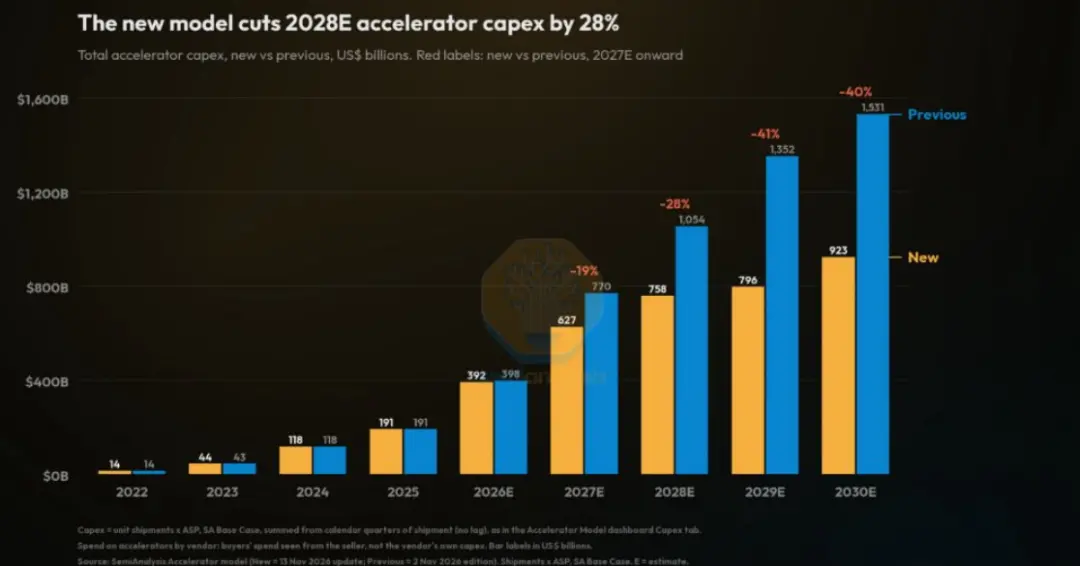
Tianfeng International Securities analyst Guo Mingqi stated that his latest industry survey shows that new orders from OpenAI and Anthropic will extend the visibility of Google TPU shipments to 2029, earlier than Nvidia GPU and other AI ASICs (most of which are from the fourth quarter of 2027 to the second quarter of 2028). He indicated that starting from 2028, v9 will become the main force of Google’s self-built computing power, thus orders for the v8 series (8t, 8i, or its design variants) can be seen as coming from OpenAI and Anthropic. The total demand from 2028 to 2029 is approximately 12 million units from OpenAI (8t designed by MediaTek) and 14 million units from Anthropic (8i designed by Broadcom), both of which will grow year by year; OpenAI will adopt a buyout model, while Anthropic will use both leasing and buyout.Guo Mingqi mentioned that the v10 product line has been adjusted from Icefish and Merope/Bladerunner to Quillfish, with mass production expected in 2029, and the design service order obtained from MediaTek. Icefish has been changed to v11, with mass production expected in 2030, and the design service order also obtained from MediaTek; Merope has lower visibility, with the supplier undecided, and it may also be canceled. MediaTek will be the sole design supplier for v9 (Humufish and Triggerfish) and v10 (Quillfish), accounting for approximately 45% to 50%, 50% to 55%, and 55% to 60% of total TPU supply from 2027 to 2029, respectively. Starting from v9, the new TPU models will adopt Intel EMIB-T advanced packaging; due to initial capacity constraints, the main shipments until 2029 will still be from the v8 series.Guo Mingqi stated that under supply chain constraints, the more reasonable TPU shipment estimates from 2027 to 2029 are 8 million to 9 million units, 14 million to 15 million units, and 16 million to 18 million units, respectively. He indicated that the market generally expects AI capital expenditures to peak in 2028, but the above plans show that TPU shipments will still grow in 2029, primarily driven by direct orders from OpenAI and Anthropic. He also mentioned that MediaTek has been the sole design supplier since v9, with high-margin 8t series shipment visibility extending to 2029; Broadcom leads the design of 8i, which has a higher profit margin than 8t, but its focus in the coming years will be on non-TPU XPU and AI network chips, with non-TPU revenue potentially exceeding TPU revenue as early as 2027.

Financial Supervisory Service of Korea: Plans to restrict active-duty military personnel from applying for high-interest small loans within the year

According to a report by the Korean News Agency, the Financial Supervisory Service (FSS) of South Korea announced that it will collaborate with the Financial Services Commission and the banking industry to promote several new financial consumer protection regulations. These include completing the establishment of standard business norms by the end of the year and fully restricting microcredit institutions from issuing general credit loans to active-duty military personnel.Data shows that the loan scale for active-duty military personnel from the top 30 credit institutions registered with the Financial Services Commission in South Korea has surged from 350 million Korean won at the end of 2022 to 24.2 billion Korean won (approximately 17 million USD) by the end of 2025. South Korean regulators pointed out that some active-duty military personnel blindly invest borrowed funds into high-risk investments such as virtual assets (cryptocurrencies) and online gambling, which is one of the main reasons for excessive debt.In addition, the Financial Supervisory Service of South Korea will also promote the expansion of flexible banking outlet operations and shorten the notification period for long-unused prepaid electronic payment accounts from 1 year to 3 months.

Republican senators publicly demanded that Jensen Huang resign, and a former economic advisor to Trump called for him to step down immediately

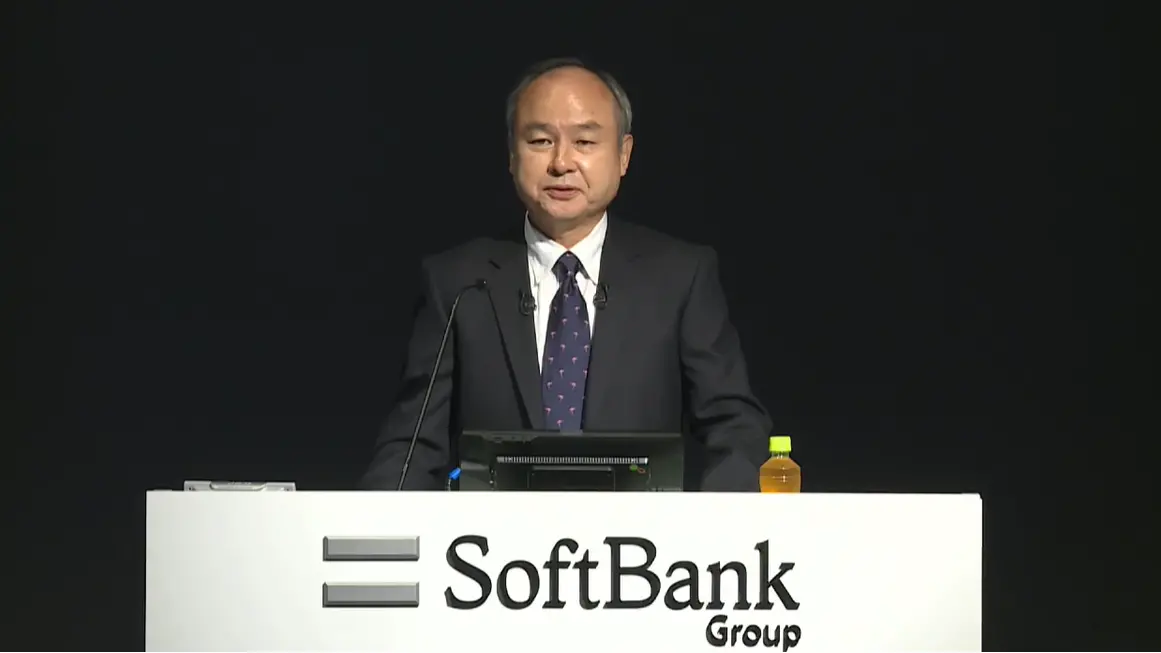
U.S. Republican Senator Kevin Cramer accepted an interview with POLITICO and publicly called for Jensen Huang to resign as CEO of NVIDIA. He believes that Huang's extramarital affair poses a serious potential blackmail risk, especially considering that NVIDIA holds highly sensitive AI chip technology. Cramer stated, "The risk of being blackmailed is just too great; I think he must go."Cramer is a member of the U.S. Senate Banking Committee, which is reviewing several bills aimed at strengthening export controls on advanced AI chips. He believes that while it is certainly possible for NVIDIA's board to initiate an internal investigation, it is far from enough. Earlier that day, Larry Kudlow, the former director of the White House National Economic Council during Trump's first term, also publicly urged on Fox Business, "Mr. Huang, resign now." He believes this is a reasonable action for Jensen Huang to take at this time.As the controversy escalates, the U.S. Congress is also accelerating its scrutiny of NVIDIA's chip exports. The three bills under consideration by the Senate Banking Committee involve strengthening export approvals for advanced chips, tracking the destination of chips, and restricting the export of certain semiconductor manufacturing equipment. These bills are vying to be included in the annual National Defense Authorization Act and have not yet been fully passed.

first_img Visa has included Monad in its stablecoin settlement network options

According to The Block, payment company Visa has included the Monad blockchain network in its stablecoin settlement program, allowing participating issuing institutions and acquiring institutions to settle through this network.The Monad Foundation stated that Monad has joined the ranks of blockchains supported by Visa, including Avalanche, Ethereum, Solana, Stellar, Circle's Arc, Base, Canton, Polygon, and Tempo, with the latter five announced as supported in April this year. Compared to traditional card settlements that follow a five-business-day banking schedule, blockchain settlements allow funds to flow on weekends and holidays.Dan Roesbery, Vice President of Global On-Chain Partnerships and GTM at Visa, stated that the goal is to allow partners to flexibly choose the blockchain network that best meets their needs for settlement. The support for Monad expands the options for partners and is another step in building a multi-chain stablecoin payment settlement infrastructure. Visa disclosed that as of September 2026, its stablecoin settlement annualized run rate reached $20 billion, a year-on-year increase of more than 15 times, with over 225 stablecoin-related card projects launched globally.Monad is developing a privacy feature called Private Settlement for institutions, expected to launch in the coming months, which will allow institutions to keep sensitive transaction details confidential while sharing these details with auditors or regulators when necessary. This feature is built directly into Monad, and privacy transactions can use the same liquidity as other transactions on the network without slowing down settlement.Keone Hon, co-founder and General Manager of the Monad Foundation, stated that the next phase will depend on whether institutions can keep sensitive fund flows confidential without leaving the open network. Visa has also explored privacy settlements on Canton, announcing in June a proof of concept with stablecoin issuer Brale to test settlements using its dollar-backed SBC token.
app_icon
ChainCatcher Building the Web3 world with innovations.