








HashWhale Crypto Weekly | Bitcoin Gradually Pulls Back; Macro Signals Disturb the Market (8.16-8.22)

 This week, Bitcoin prices have shown a stepwise correction, with market sentiment being cautious, and funding and macro policy expectations becoming dominant factors. The price trend has gone through four stages: sideways consolidation, three rounds of decline, and low-level stabilization. The crypto market is under pressure, with spot Bitcoin and Ethereum ETFs experiencing capital outflows for four consecutive trading days, as the market awaits Powell's key speech on Friday.
Author & Editor: Monkey
1. Bitcoin Market
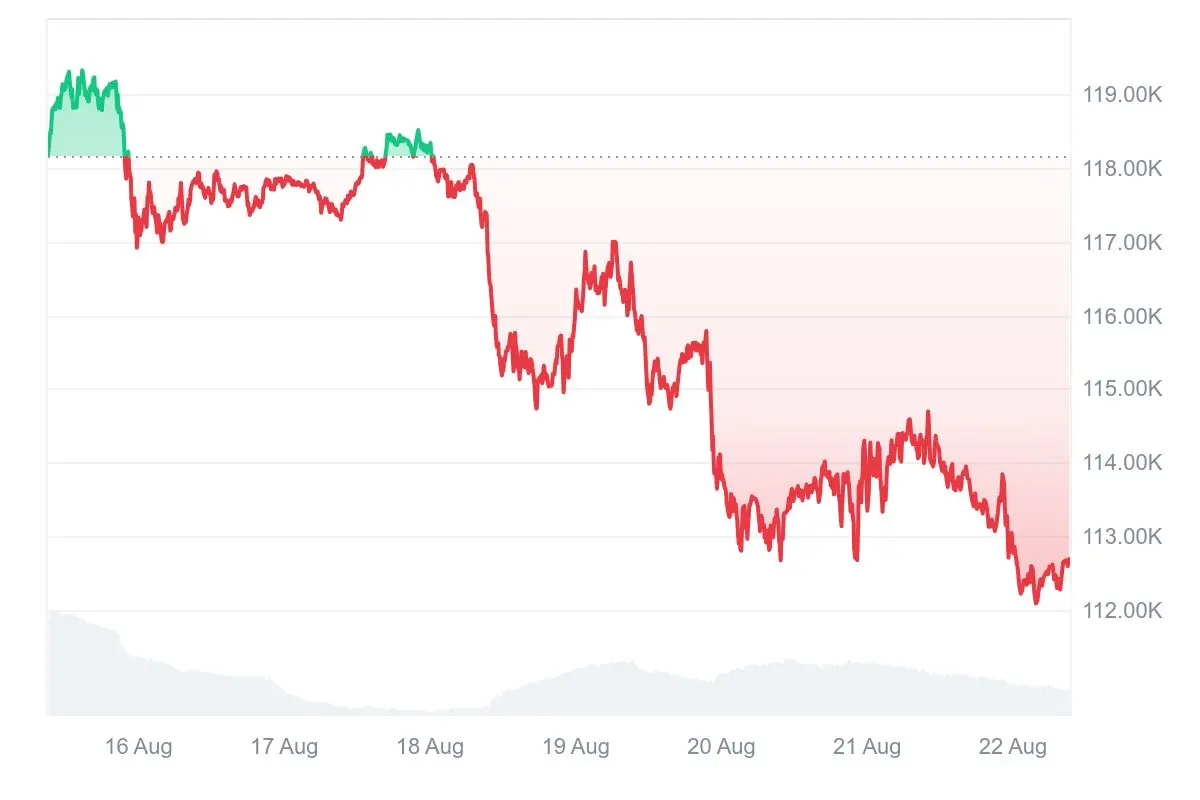
Bitcoin Price Trend (2025/08/16-2025/08/22)
This week, Bitcoin's price showed a stepwise correction trend overall. Market sentiment has become cautious, with funding and macro policy expectations becoming the dominant forces. The price movement roughly went through four stages: sideways consolidation, three rounds of decline, and low-level stabilization.
Sideways Phase (August 16 to 17)
From August 16 to 17, Bitcoin fluctuated narrowly within the range of $117,000 to $118,500, with trading volume continuously shrinking.
The technical indicators showed that the upper pressure level was around $118,500, which was not broken. The market displayed a cautious standoff between bulls and bears during this phase, with insufficient capital inflow and a lack of breakthrough momentum.
First Decline Phase (August 18 to 19)
On August 18, Bitcoin's price saw a significant correction, dropping from $118,033 to $115,233, with a daily decline of about -2.37%. The intraday low reached $114,732.
On the 19th, the price briefly rebounded to $116,991 but failed to stabilize above $116,000, quickly falling back to around $114,753.
Reasons for the Decline:
1. Market Still Affected by Federal Reserve Policy Expectations : Investors are closely watching the Jackson Hole meeting and the upcoming FOMC meeting minutes, worrying that the policy may lean hawkish, thus lowering market sentiment again.
2. Technical Instability : Most technical analysis indicators (such as MACD being bearish, and the 50-day moving average not breaking through) suggest weak buying interest in the market, suppressing rebound momentum.
3. Capital Flow and Leverage Liquidation : The market saw large long positions being forcibly liquidated, especially in ETH and BTC long positions, adding extra pressure.
Second Decline Phase (August 19 to 20)
On the evening of the 19th, the price briefly rose to $115,784, then began a new round of rapid decline. From the evening of the 19th to the morning of the 20th, Bitcoin dropped from $115,784 to $113,644, a decline of about -1.85%, and continued to fall further, reaching a low of $112,674. On the evening of the 20th, although there was a weak rebound, it still fell back to around $112,703.
Reasons for the Decline:
1. Macroeconomic Policy Tensions Intensify : Investors continue to wait for clear policy guidance from the Federal Reserve. If the Jackson Hole meeting leans hawkish, it may trigger a deeper correction.
2. Overall Market Consumption Momentum Weakens : Trading volume has significantly declined, and the overall market capitalization has shrunk, reflecting a cooling market sentiment.
3. Technical Weakness Not Recovered : Bitcoin broke through several support lines (such as the 50-day moving average and key ranges like 114K), spreading selling pressure.
4. General Market Concerns About Sustained High Interest Rates : Uncertainty in the external economy and interest rate hike expectations shake the valuation foundation of risk assets.
Third Decline Phase (August 21 to 22)
From August 21 to 22, Bitcoin's price continued to consolidate with slight declines. On the morning of the 21st, the volatility increased significantly, with the price fluctuating around $114,000, then gradually declining from $114,624 to $112,086 on the 22nd. The $112,000 level played a key support role during this period, preventing further declines. As of the time of writing, the price remains in sideways consolidation, with signs of attempting to build a bottom.
The trend during this phase mainly reflects the market's caution and wait-and-see attitude. As the panic from the previous continuous declines gradually eases, some short-term funds begin to attempt to accumulate at low levels, but the overall strength is insufficient to form an effective rebound. Meanwhile, incremental capital is still lacking, and market trading is light, with prices constrained in a range-bound oscillation. Overall, this round of correction has temporarily found support at the $112,000 level, but to form a trend reversal, it still relies on the reflow of external capital and clarification of macro policies.
Outlook
In the short term, after three consecutive rounds of decline, Bitcoin's market focus has clearly shifted downwards, with $112,000 becoming a key support level. If this level is effectively broken, the price may further retrace to the $110,000 integer level, or even test deeper technical support. On the upside, the primary resistance level for a rebound is in the range of $114,500 to $115,500. If it can break through and stabilize, it is expected to restore some short-term bullish confidence. However, before macro events such as the Jackson Hole annual meeting are settled, market expectations remain cautious, and risk appetite is unlikely to recover quickly, with short-term trends likely to maintain a range-bound oscillation pattern.
From a long-term perspective, although tightening macro liquidity and high interest rate expectations suppress Bitcoin's price, the medium to long-term structure of its bull market cycle has not been destroyed. Institutional investors are accumulating strength for future trends through sustained holdings of Bitcoin spot ETFs, gradual declines in exchange reserves, and phased alleviation of miner selling pressure. Once macro policies signal easing or the U.S. economy enters a monetary policy turning cycle, Bitcoin is expected to regain momentum and aim for $120,000 and higher.
2. Market Dynamics and Macro Background
Capital Flow
1. ETF Capital Dynamics
This week, capital continued to flow out of Bitcoin spot ETFs:
August 18: -$121.7 million
August 19: -$523.3 million
August 20: -$315.9 million
August 21: -$66.9 million
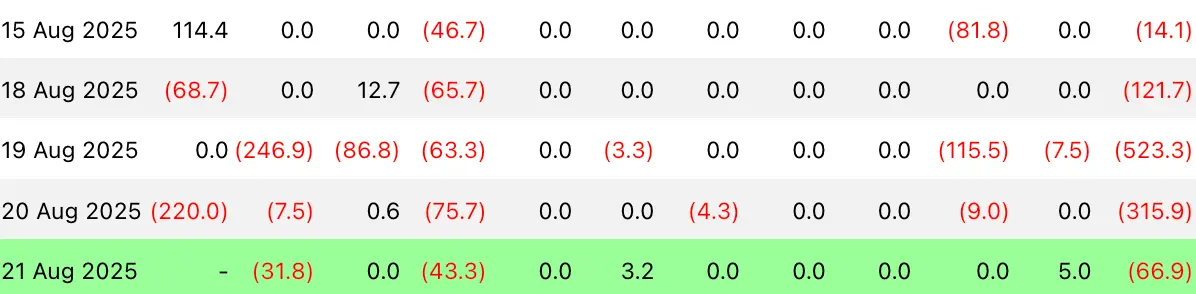
ETF Inflow/Outflow Data Image
According to Farside Investors data, on August 19 (Tuesday), the net outflow from Bitcoin spot ETFs reached $523 million, with Fidelity's FBTC seeing an outflow of $246.9 million and Grayscale's GBTC seeing an outflow of $115.53 million; BlackRock's IBIT had zero liquidity that day, indicating its holdings remained relatively stable.
On August 20, both Invesco and Grayscale's ETFs recorded zero net inflow/outflow, indicating the market is in a wait-and-see phase.
On August 21, Fidelity ETF recorded another net outflow of $7.5 million, continuing the trend of capital withdrawal.
Overall, this week, Bitcoin spot ETFs showed a state of withdrawal, reflecting a cautious attitude of institutional capital continuously reducing positions. Meanwhile, the macro environment is also suppressing the market. Data shows that U.S. spot Bitcoin and Ethereum ETFs have seen a cumulative net outflow of about $1.9 billion over four consecutive trading days, with market sentiment clearly turning defensive as investors await Powell's upcoming speech. Changes in the options market further validate this: the put/call ratio for contracts expiring on August 22 rose to 1.33, with $3.8 billion worth of Bitcoin options expiring, indicating that the short-term market may face strong correction risks.
2. Exchange Capital Flow and Whale Movements
On-chain analyst BorisVest pointed out that Binance's Bitcoin net flow has turned positive, with exchange reserves continuing to rise, indicating that funds are concentrating in exchanges, which may form potential selling pressure in the next 1-2 weeks.
Meanwhile, whale groups have been continuously accumulating during the correction phase. According to CryptoQuant analyst Cauê Oliveira's data, over the past seven days, whale wallets have accumulated more than 16,000 BTC, showing that large funds maintain strong buying power even during declines. Additionally, Cointelegraph reported that wallets holding 10 to 10,000 BTC have cumulatively increased their holdings by 20,061 BTC since last week's correction, totaling 225,320 BTC since March.
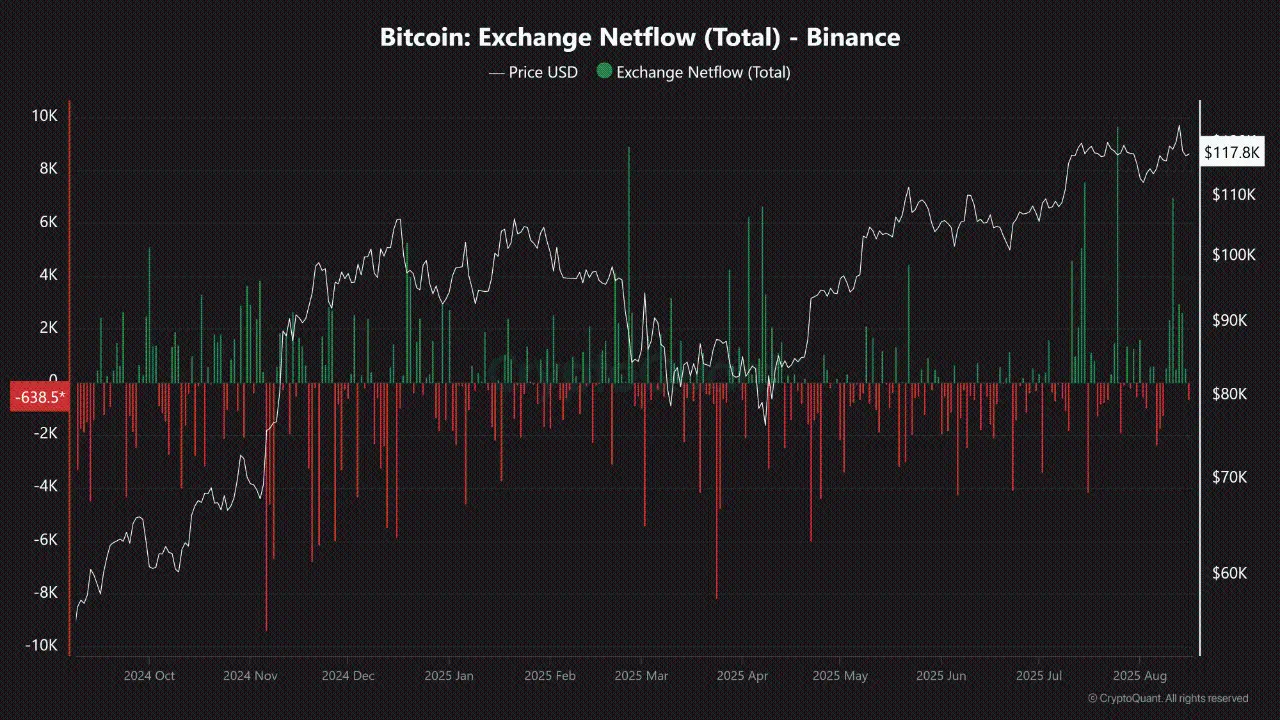
Binance Bitcoin Net Flow
3. On-chain Capital Structure and Investor Behavior
New Demand and Profit Taking : Over the past five days, the holdings of first-time Bitcoin buyers increased 1.0% to 4.93 million BTC, while steadfast buyers grew 10.1% to 1.03 million BTC; however, the scale of profit-taking also reached 1.83 million BTC, marking the largest increase this year. Overall, market demand remains, but short-term profit-taking pressure is increasing.
Options Market Volatility : Last Friday, Bitcoin options trading volume hit a historic high of $226 million, with call options accounting for about 69%. However, this Monday, trading volume plummeted to $18 million, indicating a rapid retreat in derivatives market sentiment.
Network Activity and Market Structure : VanEck data shows that Bitcoin's market dominance has declined from 64.5% in early July to 59.7% in mid-August. Meanwhile, the number of network transactions increased by 26% month-on-month, reaching a peak not seen since November 2024; average transaction fees decreased by 13%, to about 421 sats per transaction. This indicates enhanced capital liquidity, with the trading structure shifting from whale dominance to broader fragmented trading.
On-chain Transaction Activity : In mid-August, Bitcoin's daily transaction volume remained high at 410,000 to 480,000 transactions:
August 16: 401,706 transactions
August 18: 478,104 transactions
August 20: 424,869 transactions
This shows that market activity remains strong and corresponds with capital inflows and outflows.
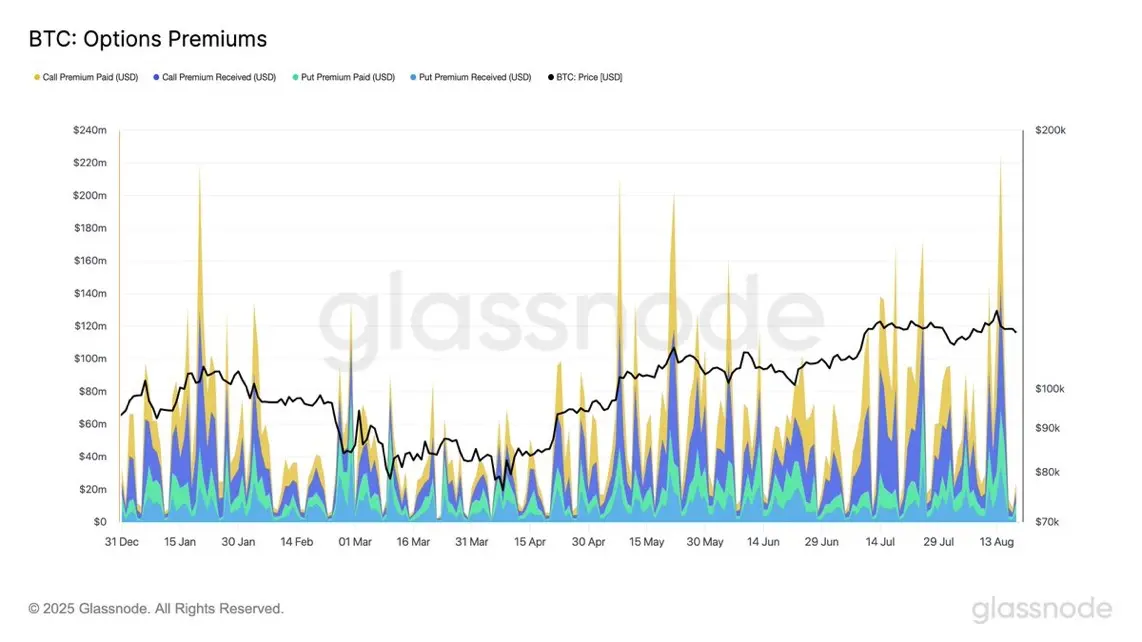
Bitcoin Options Data
Technical Indicator Analysis
1. Relative Strength Index (RSI 14)
According to Investing.com data, as of August 22, 2025, Bitcoin's 14-day RSI is 45.46. The RSI is in the neutral to weak range of 40-50, indicating that the market is currently neither in an oversold state (RSI < 30) nor in an overbought range (RSI > 70). This reflects a temporary balance of bullish and bearish forces, with bears slightly in the lead. If the RSI dips below 40, it may trigger further correction signals; if the RSI returns above 50, short-term bullish momentum may strengthen.
2. Moving Average (MA) Analysis
MA5 (5-day moving average): $113,886
MA20 (20-day moving average): $116,723
MA50 (50-day moving average): $114,259
MA100 (100-day moving average): $106,641
Current price: $113,177

MA5, MA20, MA50, MA100 Data Image
In the short term, the current price is below the MA5, indicating short-term pressure and reflecting selling pressure around $114,000.
In the medium term, the price is also below the MA20 and MA50, indicating insufficient rebound momentum recently and a weak oscillation.
In the long term, the price remains significantly above the MA100 ($106,641), indicating that the overall medium to long-term trend still maintains an upward structure, and the long-term bullish pattern has not been broken.
It is worth noting that the MA20 and MA50 show signs of convergence. If a death cross forms, it may further exacerbate market oscillation pressure; if a golden cross forms, it may drive a medium-term rebound.
3. Key Support and Resistance Levels
Support Level : The short-term key support area is located at $112,000 - $113,000. This range has been validated during multiple declines on August 20 and August 22, with prices showing signs of stabilization after reaching this area, indicating sufficient buying power in this range and strong defensive significance. If this area is lost, further testing may occur down to the strong support level at the $111,000 integer mark.
Resistance Level : The short-term resistance level is in the range of $114,500 - $115,500. If the price can effectively break through and stabilize above $115,000, it will open up further upward space, targeting the $116,000-$118,000 area. If $118,000 can also be broken, it will restore to the price level of August 16 and may challenge the psychological level of $120,000, thus forming a phase of rebound trend.
Comprehensive Analysis
Currently, Bitcoin's price is in a phase of oscillation and consolidation, with market sentiment being cautiously bullish. From the chart, the support level has been validated multiple times, indicating limited short-term downside space, while the upside faces multiple layers of resistance. The overall trend is primarily range-bound oscillation; if trading volume significantly increases when breaking through resistance levels, it will increase the probability of extending the trend to $116,000-$118,000. Conversely, if trading volume is insufficient or macro market negative news disrupts, there remains a risk of price falling back to $112,000 or even lower support areas.
From an operational perspective, it is recommended to maintain a low-position accumulation strategy near the support area while paying attention to the breakout situation in the $114,500 - $115,500 range to determine whether short-term bullish momentum is sufficient to drive a new round of increases.
Market Sentiment Analysis
As of August 22, the Fear & Greed Index reported 46 points, falling within the "Neutral" range, reflecting that market sentiment is slightly cautious amid oscillation, with investors generally adopting a wait-and-see approach.
Looking back at this week (August 16 to August 21), the daily values of the Fear & Greed Index were: 57 (greedy, positive market sentiment), 57 (maintaining optimism), 56 (slight cooling of optimistic sentiment), 53 (tending towards neutrality), 45 (neutral but fearful), and 50 (returning to neutrality). Overall, the index operated within the range of 45-57 this week, remaining in the "neutral" range, with a rhythm of "slightly optimistic → falling under pressure → mild recovery → cautious again."
Structurally, from August 16 to 19, the market maintained a neutral to optimistic range, with investors still having some confidence in Bitcoin's price trend. On August 20, the index fell to 45, influenced by Bitcoin's price dropping below the $113,000 mark, putting short-term sentiment under pressure but still remaining within the neutral range. Subsequently, on August 21, the index rose to 50, reflecting a recovery of confidence in the market during the price rebound. By August 22, the index fell back to 46, indicating that investors are becoming cautious ahead of key macro events (such as Federal Reserve Chair Powell's speech), with the market entering a wait-and-see state.
Overall, this week, Bitcoin's market sentiment exhibited fluctuations within the neutral range. Although there was some pressure midway, panic sentiment was not amplified, and the market's bottom support remains. In the short term, macro policy signals will become an important factor influencing sentiment direction.
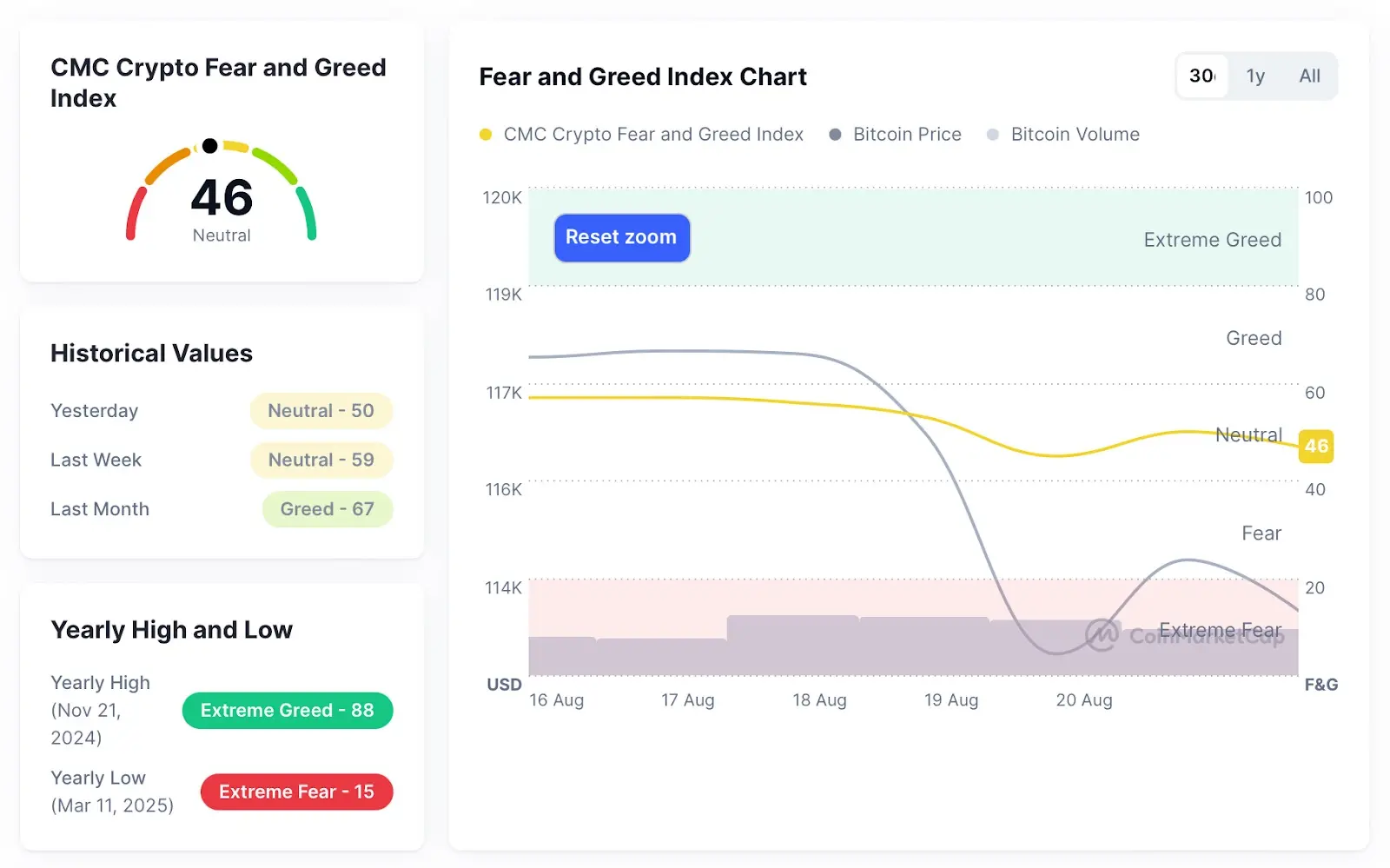
Fear & Greed Index Data Image
Macroeconomic Background
1. Federal Reserve Policy and Market Expectations
Ending the "Special Monitoring Program": On August 15, the Federal Reserve announced the termination of the "Special Monitoring Program" for cryptocurrency and fintech banks, incorporating relevant regulation into the regular framework. This move is seen as a shift towards looser regulation, potentially paving the way for the legitimization of crypto assets and institutional investment.
FOMC Meeting Minutes Reveal Cautious Stance : The minutes from the FOMC meeting on July 29-30 showed that most Federal Reserve officials are concerned about rising inflation, believing that the risks outweigh potential job losses. Therefore, despite weak employment data, the Federal Reserve maintained the benchmark interest rate in the range of 4.25%-4.5%. Two members (Waller and Bowman) supported a 25 basis point rate cut, reflecting internal disagreements on the direction of monetary policy.
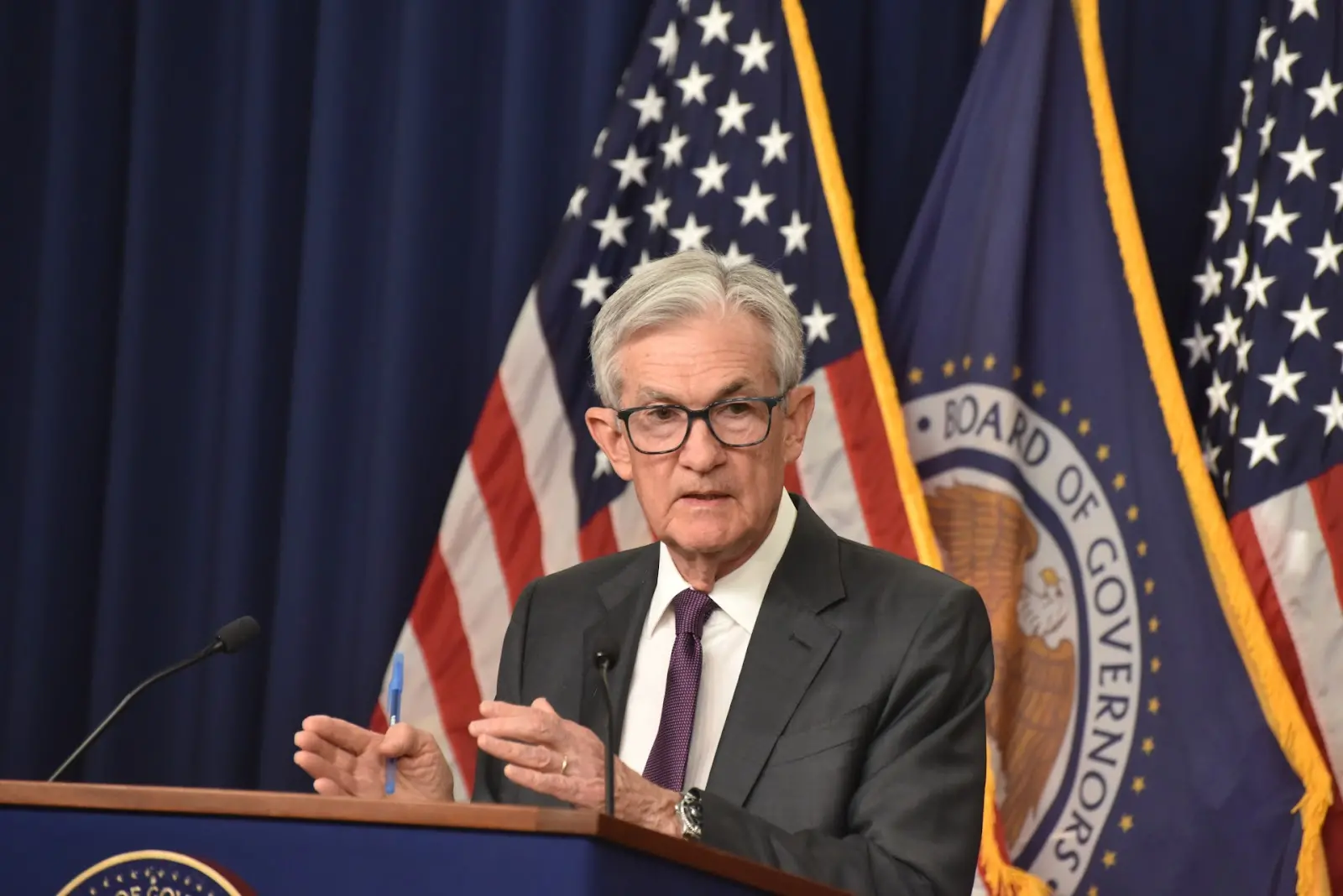
Market Expectations Shift to Jackson Hole Meeting : Investors are focusing on Federal Reserve Chair Powell's speech at the Jackson Hole Economic Policy Symposium from August 21-23, hoping to gain key guidance on future monetary policy.
Related Image
2. SEC Delays Approval of Multiple Crypto ETF Proposals
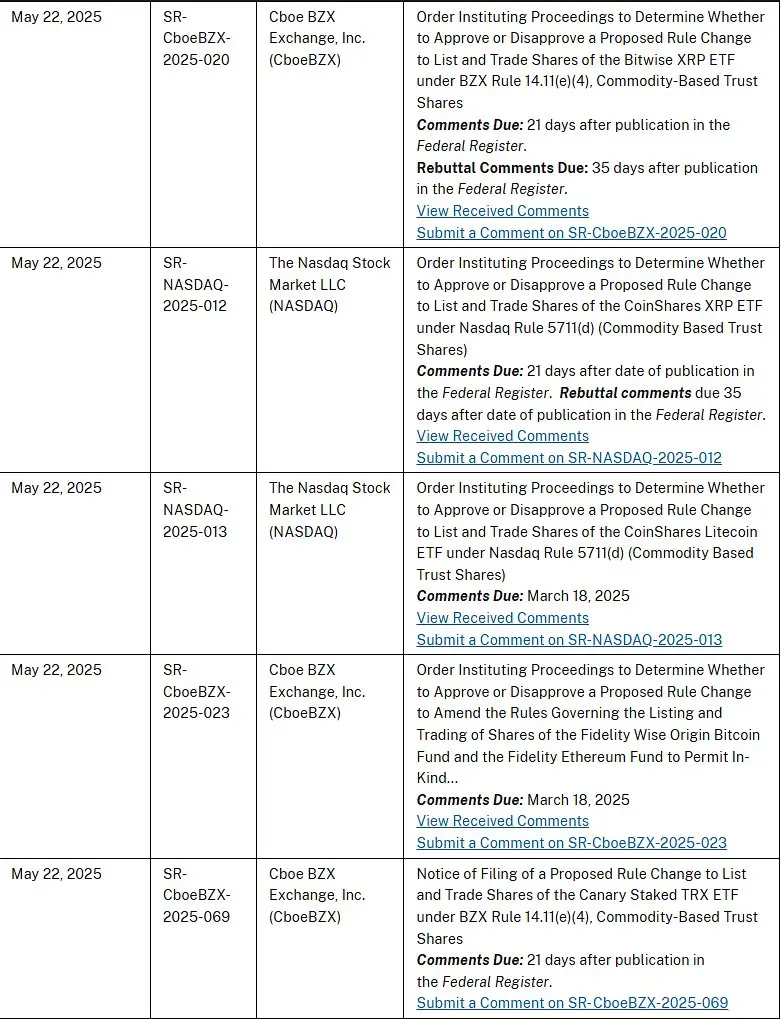
On August 18-19, the SEC announced delays in its approval decisions for several popular crypto ETFs, with the decision dates uniformly pushed to October. For example:
Truth Social's Bitcoin-Ethereum ETF → October 8;
Solana ETF (21Shares/Bitwise) → October 16;
This delay reinforces market uncertainty, but some analysts believe it paves the way for early approvals and may become a catalyst in October.
Related Image
3. Regional Investors and Institutions Increasing Bitcoin Holdings
High-net-worth family offices in Asia are enthusiastic about crypto assets. Some institutions plan to allocate up to 5% of their investment portfolio to crypto assets; Singapore's NextGen fund quickly raised over $100 million.
Broader institutional capital and improved regulation, such as the U.S. GENIUS Act and Hong Kong's stablecoin legislation, are enhancing the investment credibility and acceptance of crypto assets.
4. Global Economic and Market Environment
U.S. Stagflation Risks Intensify : The U.S. economy faces the risk of stagflation, with slowing growth and high inflation coexisting. A Bank of America Global Research survey shows that about 70% of investors expect stagflation in the U.S. within the next year. Recent signs of a weak labor market, rising core inflation, and increasing producer prices have heightened market concerns.
Eurozone Economic Activity Rebounds : Eurozone business activity accelerated in August, with new orders driving overall activity to its fastest growth in 15 months. France's services PMI is close to 50, indicating economic stabilization.
Strong Growth in India's Economy : In August, private sector activity in India expanded at a record pace, with surging service sector demand driving companies to raise prices, pushing inflation to a 12-year high.
Abnormal Trends in the Oil Market: Despite major energy agencies predicting that global oil production will exceed demand, oil prices are exhibiting a "futures curve smile" phenomenon: spot prices are falling, while futures contracts initially inverted before rising, raising concerns about future oversupply.

Related Image
3. Hash Rate Changes
This week, Bitcoin's network hash rate exhibited dynamic fluctuations of "climbing --- slight decline --- gradual recovery --- climbing again."
On August 16, Bitcoin's network hash rate began to gradually rise from a low of 790.90 EH/s, reaching 1.0706 ZH/s on the same day. Subsequently, from August 17 to 20, the hash rate experienced a slight decline, falling to 815.87 EH/s on August 20. From August 20 to 22, the network computing power gradually recovered, rising to 976.76 EH/s on August 21, and after a slight decline on August 22, it climbed again to 1.0018 ZH/s, demonstrating the network's rapid adjustment capability in the short term.
Overall, this week, Bitcoin's network hash rate remains on a steady upward trend after experiencing a short-term rapid increase. Short-term fluctuations are mainly influenced by miner computing power adjustments and Bitcoin price fluctuations, while the recovery and breakthrough of the 1 ZH/s level further reflect the enhancement of network security and miners' long-term confidence.
This round of fluctuations shows miners' flexible response capabilities when facing price and mining revenue changes: when prices or revenue expectations are good, computing power quickly returns, pushing the hash rate up; when short-term profit windows narrow, some computing power may temporarily exit, leading to slight declines. Overall, the hash rate's recovery and maintenance at high levels this week indicate that Bitcoin's network computing power is in a robust upward state, still possessing strong resistance to attacks and network stability in the short term.
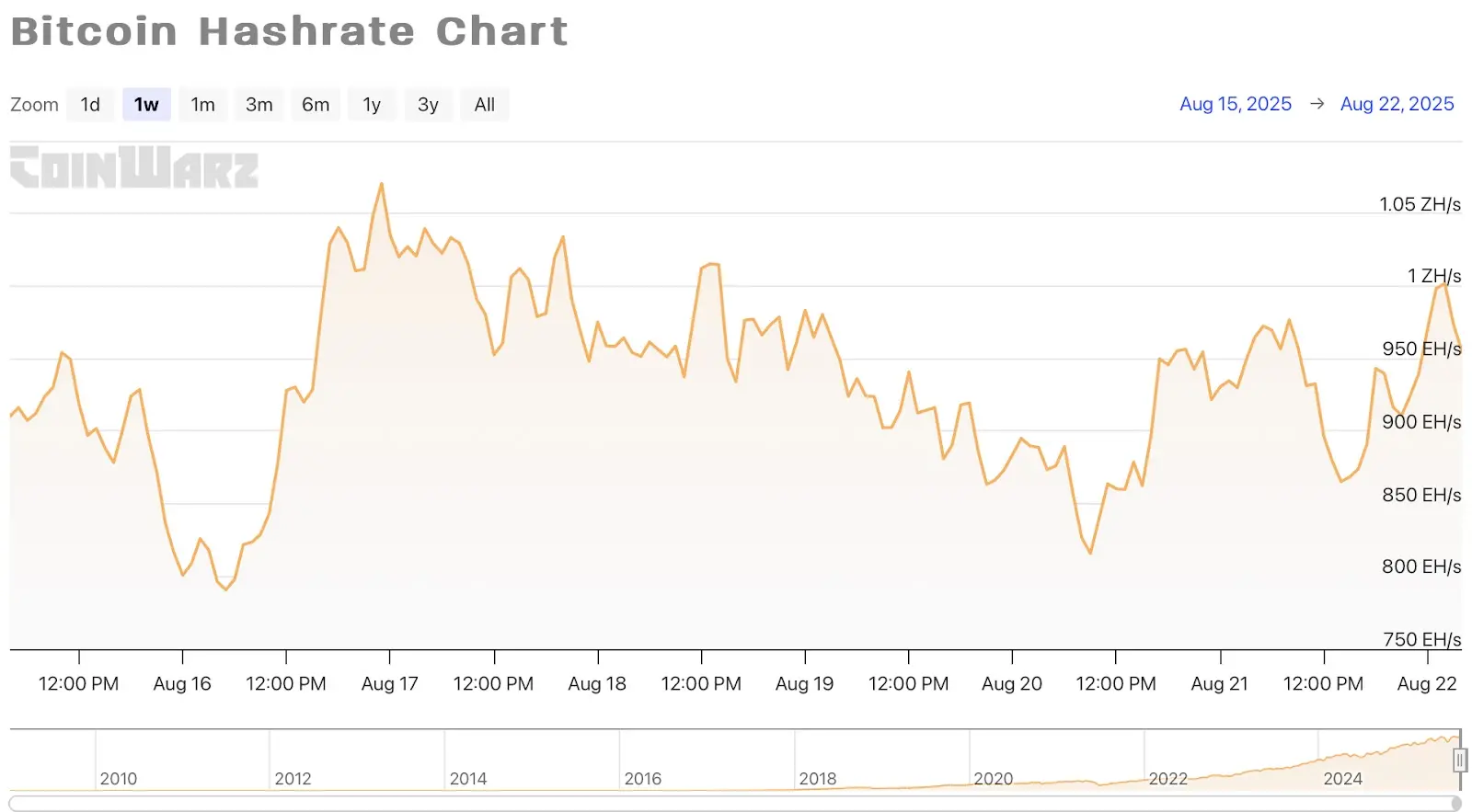
Weekly Bitcoin Network Hash Rate Data
From an annual perspective, Bitcoin's network hash rate shows a clear upward trend, with increased volatility. Last year, Bitcoin's hash rate maintained in the range of 550-750 EH/s, while the current hash rate has stabilized between 850 EH/s and 1 ZH/s.
This trend indicates that with the improvement of miner performance and more computing power joining the network, the security and resistance to attacks of the Bitcoin network have further strengthened. Meanwhile, the increased volatility also suggests that miners will flexibly adjust computing power during price fluctuations to optimize the balance between revenue and risk. Overall, annual data indicates that Bitcoin's network computing power continues to grow, network robustness continues to improve, while the concentration and volatility of computing power may have some impact on short-term market trends.
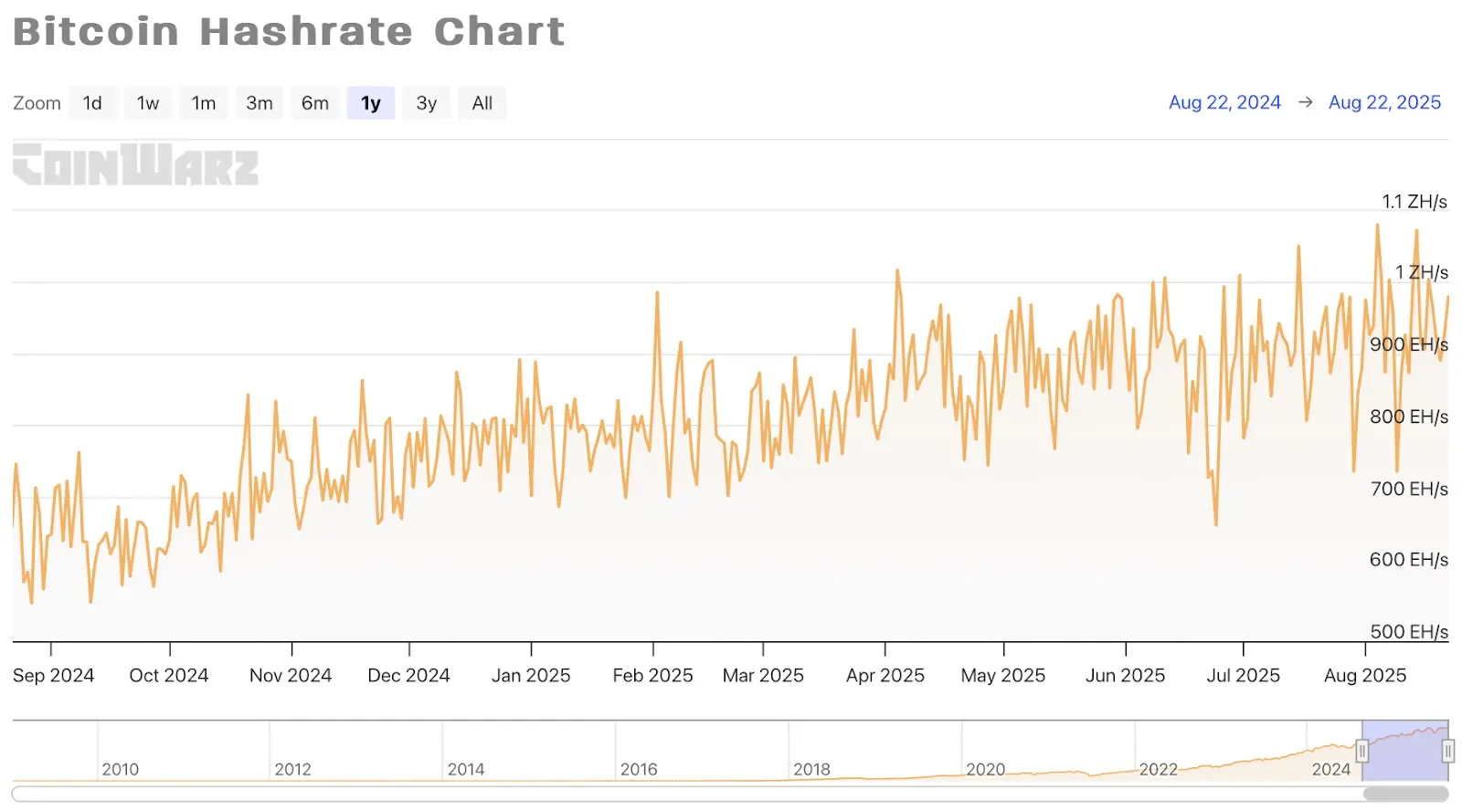
Annual Bitcoin Network Hash Rate Data
4. Mining Revenue
According to YCharts data, over the past week (August 16 to August 22, 2025), Bitcoin miners' daily total revenue (including block rewards and transaction fees) fluctuated between $49.94 million and $57.70 million, as follows:
August 16: $56.29 million
August 17: $57.12 million
August 18: $57.70 million
August 19: $49.94 million
August 20: $51.97 million
August 21: $55.38 million
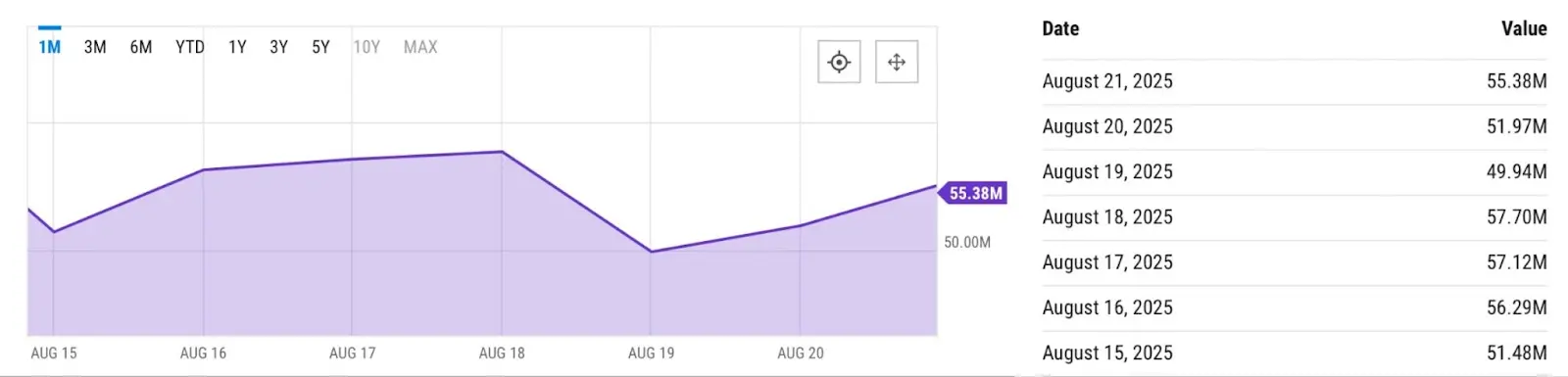
Bitcoin Miners Daily Revenue Data
Overall, this week, Bitcoin mining revenue showed a trend of rising, then falling, and then recovering, reflecting the combined impact of Bitcoin price, network hash rate, and transaction fee fluctuations. Midweek, revenue peaked at $57.70 million on August 18, then significantly dropped to $49.94 million on August 19, a decline of about 13.5%. Revenue was mainly affected by Bitcoin price fluctuations and transaction fee changes. As the weekend approached, revenue recovered to $55.38 million by August 21, indicating that miners' income remains resilient after short-term fluctuations.
From the perspective of daily revenue per unit of hash power (Hashprice), Hashrate Index data shows that as of August 22, 2025, Hashprice is $55.34 per PH/s per day. During the week, Hashprice exhibited a stepwise decline, falling from $57.50 per PH/s per day at the beginning of the week to $54.92 per PH/s per day by August 22. Notably, on August 19, it briefly rose to $57.15 per PH/s per day. Overall, the fluctuations in Hashprice this week are largely consistent with the trends in total miner revenue, reflecting the short-term regulatory effects of Bitcoin price, network hash rate, and transaction fees on miners' profitability.
Multidimensional performance is as follows:
Monthly Range : Hashprice is below the recent 30-day average, indicating that recent unit hash power revenue is under pressure, and miners' profit margins are relatively limited;
Quarterly Range : It is at the median level within three months, indicating that overall revenue remains stable, and short-term fluctuations have not affected quarterly profit averages;
Annual Range : It is still at a mid-high level for the year, indicating that Bitcoin miners' overall income remains above the annual average level, and long-term profitability remains robust.
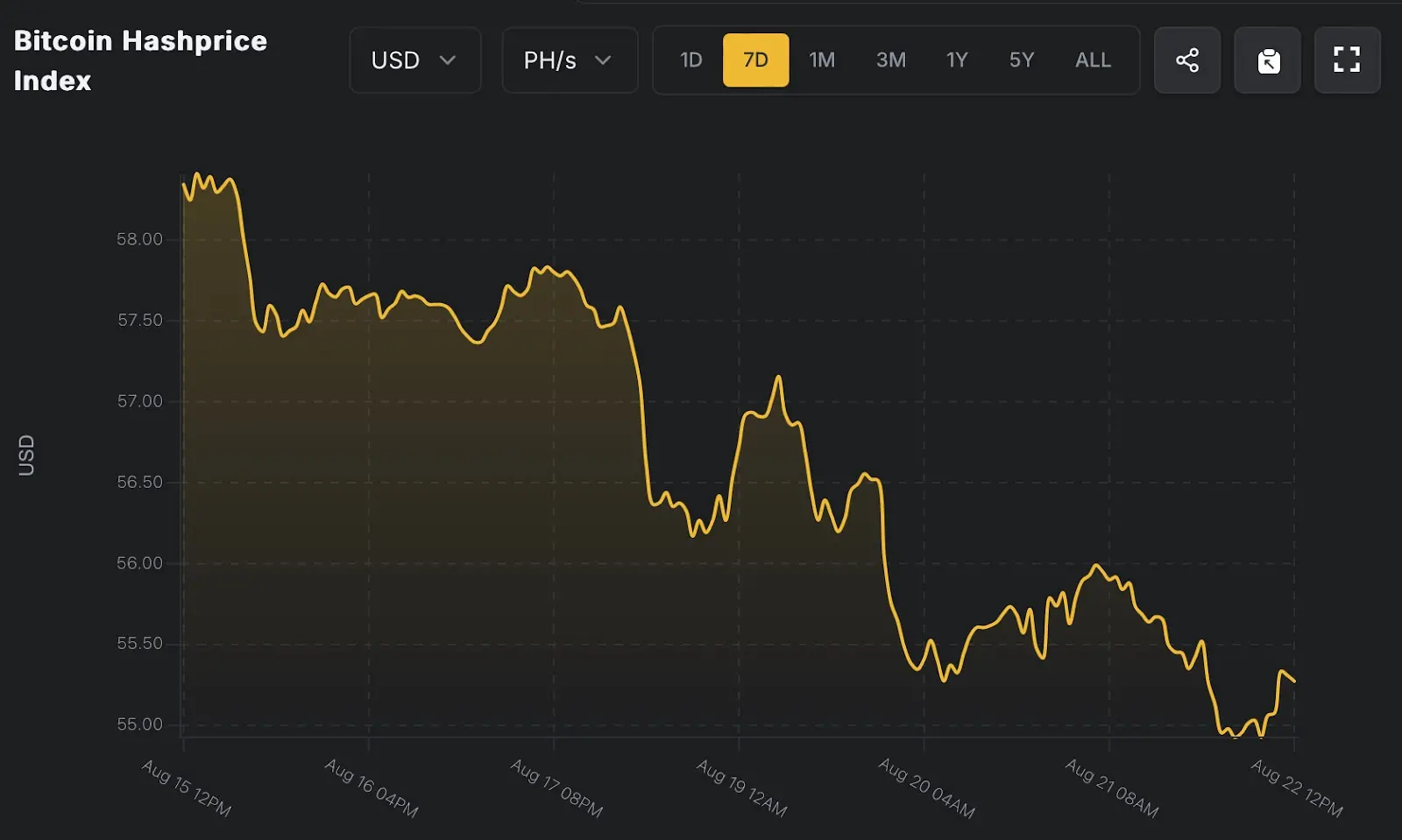
Hashprice Data
It is worth noting that the latest report from investment bank Jefferies shows that Bitcoin mining profitability increased by 2% month-on-month in July 2025. This is mainly due to a 7% increase in Bitcoin prices, while the overall network hash rate increased by only 5%. Against this backdrop, publicly listed mining companies in the U.S. have continued to increase their global output share, producing a total of 3,622 BTC in July, accounting for about 26% of the total network, an increase of 1 percentage point from June. This trend reflects that large mining companies are further consolidating their market share in the global hash rate landscape due to their scale and low-cost advantages.
Overall, although Bitcoin miners' income experienced a short-term decline this week, it remains at a high level. The pressures from price corrections and transaction fee fluctuations are more reflective of short-term disturbances rather than a trend downward. Observing from the quarterly and annual dimensions of Hashprice, miners' profitability remains robust. If Bitcoin prices remain strong or the growth rate of hash power slows in the future, miners' income still has room for further recovery.
5. Energy Costs and Mining Efficiency
According to CloverPool data, as of August 22, 2025, Bitcoin's total network hash rate reached 935.13 EH/s, with mining difficulty at 129.44T. The next difficulty adjustment is expected to occur on August 23, 2025, with an estimated decrease of about 0.72%, bringing the adjusted difficulty to approximately 128.51 T. This trend indicates that although the overall hash rate remains at historical highs, some high-cost mining companies are gradually exiting under current electricity prices and operational cost pressures, leading to a slight decrease in network difficulty. This means that mining efficiency may slightly improve in the short term, especially benefiting miners with lower electricity costs and higher equipment efficiency. It should be noted that this slight decline in difficulty often reflects a market rebalancing of marginal mining profits. When electricity prices are high and Bitcoin prices are in a low range, the exit of weak miners' hash power will enhance the unit yield of surviving miners.
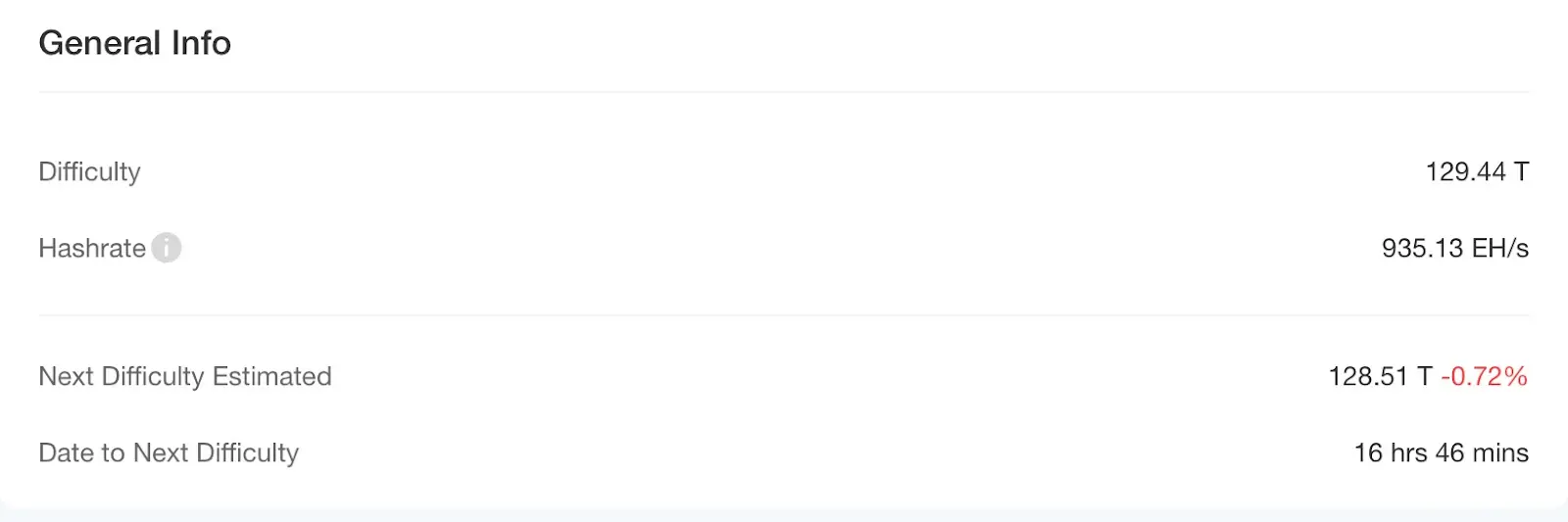
Bitcoin Mining Difficulty Data
According to Digiconomist data, since August 2025, the Bitcoin energy consumption index has continued to rise: from 176.19 TWh/year at the end of July to 183.50 TWh/year. This increase reflects that, despite the hash rate remaining high, the network's energy consumption still maintains a level comparable to that of a medium-sized country.
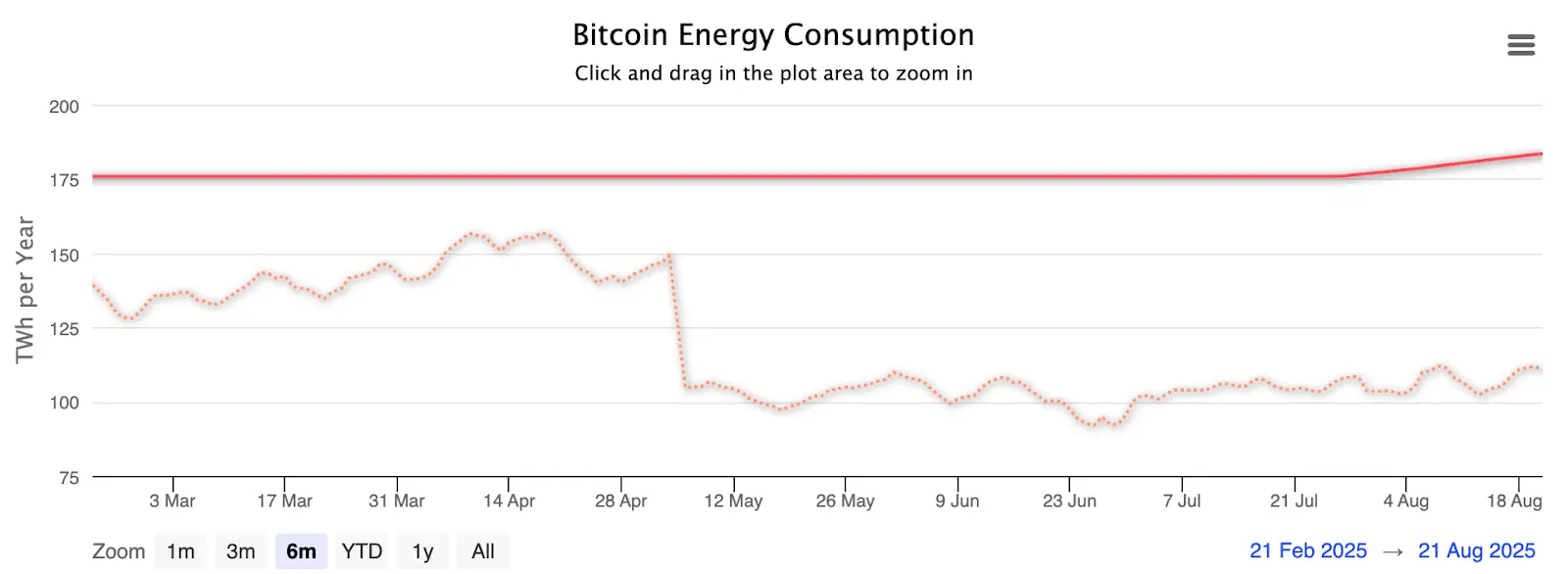
Bitcoin Energy Consumption Data
Overall, in late August 2025, Bitcoin mining has entered a phase characterized by "high energy consumption, slight difficulty adjustments, and efficiency differentiation": the total network hash rate remains at historical highs, but difficulty has slightly decreased, indicating that some high-cost miners are being forced to exit under electricity price and operational pressures, releasing market clearing signals; meanwhile, total network energy consumption continues to rise, with carbon emissions becoming an increasingly prominent issue of external concern; against this backdrop, the efficiency gap in mining is becoming more pronounced, with older high-energy-consuming devices gradually losing competitiveness in high electricity price environments, while new generation high-efficiency miners combined with low-cost electricity resources become the core advantage for maintaining profitability. In the short term, this pattern may enhance the profit margins of surviving miners, but in the medium to long term, Bitcoin mining will still face challenges from tightening energy regulations and cumulative cost pressures.
6. Policy and Regulatory News
Thai Government Officially Launches First State-Owned Bitcoin Wallet for Tourists
On August 18, it was reported by The Bitcoin Historian that the Thai government officially launched the first state-owned Bitcoin wallet for tourists.

Related Image
U.S. SEC Delays Decision on Multiple Crypto ETF Applications
On August 19, it was reported that the U.S. Securities and Exchange Commission (SEC) delayed its decision on the application for Bitcoin and Ethereum ETFs from Trump Media & Technology Group's social platform Truth Social.
According to documents submitted on Monday, the SEC has extended the approval deadline for the Truth Social ETF to October 8, which is part of the agency's routine process for evaluating dozens of cryptocurrency ETF proposals.
Also delayed for approval on the same day were CoinShares Litecoin ETF, CoinShares Ripple ETF, and 21Shares Ripple ETF, with decision deadlines pushed to late October. The SEC stated in the documents: "The committee believes it is necessary to extend the review period to fully assess the proposal's content and related issues."
Senator Cynthia Lummis Pushes for Crypto Bill Before Year-End
On August 21, it was reported by the Wyoming Blockchain Symposium that U.S. crypto-friendly Senator and Bitcoin bill creator Cynthia Lummis plans to push for the passage of a cryptocurrency market structure bill before the end of the year, detailing the plan for the bill on Wednesday. Lummis stated: "We will get the market structure bill to the president's desk by the end of the year. I hope to do it before Thanksgiving, so that is our goal."
Previously, Lummis, Bill Hagerty, Bernie Moreno, and Senate Banking Committee Chair Tim Scott released a discussion draft of a broader cryptocurrency market structure bill last month, setting a self-imposed deadline of September 30 to make progress within the committee. Meanwhile, the House passed a market structure bill called the Digital Asset Market Clarity Act last month, which differs from the Senate Banking Committee's version. Lummis stated on Wednesday that the Senate is "very messy" procedurally.
"We believe we will use the House's CLARITY Act as the foundational bill," Lummis said. "We will try to retain the amendments regarding stablecoin legislation that the House wants to include, as well as the content they put into the CLARITY Act. We hope to respect the House's work as much as possible."

Related Image
Brazilian Legislators Propose Allocating 5% of Foreign Exchange Reserves to Bitcoin, Central Bank Expresses Concerns
On August 21, it was reported that Brazilian legislators held a hearing on Bill 4501/2024, which proposes allocating up to 5% of the country's international reserves (approximately $16.4 billion) to Bitcoin. These reserves would be managed by the Brazilian Central Bank and the Ministry of Finance.
However, the Brazilian Central Bank expressed concerns, stating that Bitcoin's high volatility could undermine the credibility of its monetary policy. Therefore, the bill is currently undergoing further review.
7. Mining News
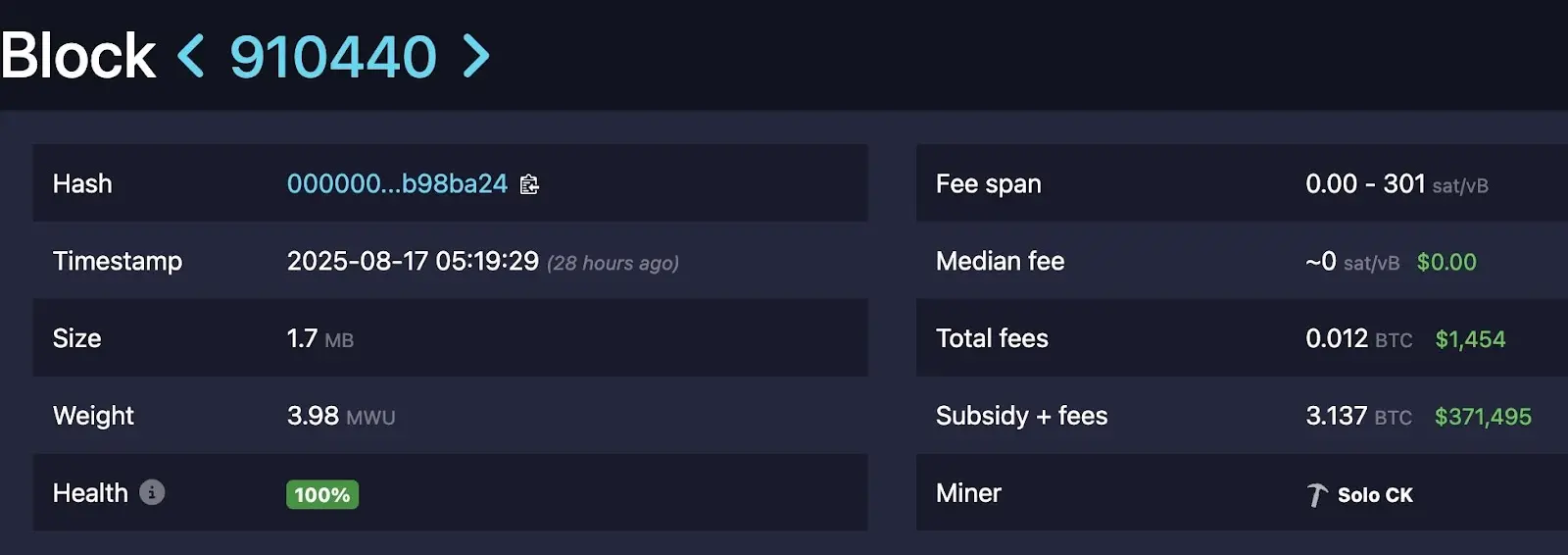
Independent Miner Successfully Mines Bitcoin Block, Receives $371,000 Reward
On August 18, it was reported by Bitcoin Magazine that an independent miner successfully mined a Bitcoin block, receiving a block reward worth $371,000.
Related Image
Google Increases Stake in TeraWulf to 14%, Mining Company Convertible Note Issuance Scale Expands to $850 Million
On August 19, it was reported by The Block and GlobeNewswire that Bitcoin mining company TeraWulf (NASDAQ: WULF) announced that it plans to expand the issuance scale of its convertible preferred notes from the originally planned $400 million to $850 million, with pricing already determined. The notes will mature in 2031, with a coupon rate of 1.00% and an initial conversion price of $12.43 per share, a 32.50% premium over the current stock price. Meanwhile, tech giant Google has increased its stake in TeraWulf to 14%, officially becoming a major shareholder.
Renewable Energy Developer Mint Secures $150 Million Investment for Green Bitcoin Mining and AI Data Centers
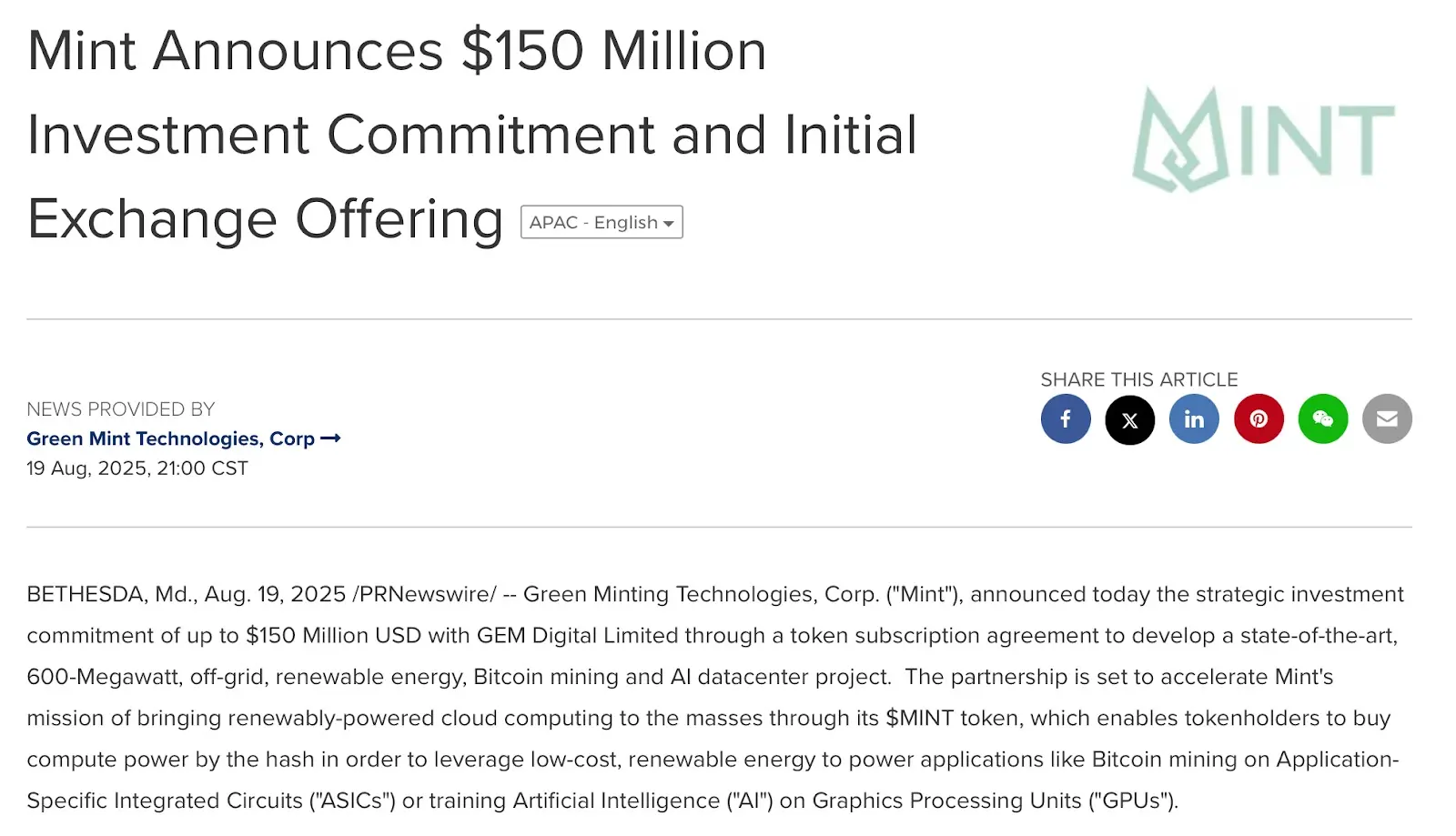
On August 19, it was reported by PRNewswire that U.S. Delaware-based renewable energy developer Green Minting Technologies "Mint" announced a $150 million investment agreement with GEM Digital. The funds will be used to build a 600 MW off-grid renewable energy project to support Bitcoin mining and AI data center operations.
Mint plans to conduct an initial exchange offering (IEO) through its MINT token, aiming to raise $400 million. CEO Alex Wey stated that the MINT token will enable individual investors to participate in large-scale renewable energy mining and computing services at a lower cost, promoting the decentralization of the Bitcoin mining ecosystem. The project will also allocate some resources to develop high-performance data centers supporting AI tools.
Related Image
Riot Platforms Sells Over 11.1 Million Shares of Bitfarms on Monday, Total Value Approximately $15.1 Million
On August 20, it was reported that after accelerating stock sales in recent weeks, Riot Platforms has significantly reduced its stake in competitor Bitcoin mining company Bitfarms, culminating on Monday with the sale of 11 million shares. According to securities filing documents, Riot sold over 11.1 million shares of Bitfarms stock on August 18 at an average price of $1.36 per share, totaling approximately $15.1 million. This move reduces its stake to below 5%, eliminating the need for public disclosure.
As of 2025, Riot has sold about 71.5% of the 90 million shares of Bitfarms stock accumulated last year, or about 64.4 million shares, at an average sale price of $1.11 per share, generating $71.3 million in revenue. Riot's average cost when building its position in 2024 was $2.24 per share, meaning this divestment incurred significant losses relative to its initial investment.
The sale on August 18 was Riot's largest single-day transaction in months, far exceeding its previous daily sales volume, which typically ranged from hundreds of thousands to 4 million shares.
8. Bitcoin News
Summary of Bitcoin Accumulation Dynamics This Week:
1. Mango Financial (Hong Kong Brokerage)
On August 16, licensed Hong Kong brokerage Mango Financial announced the launch of its digital currency strategy, with Bitcoin as the primary focus of the first phase of allocation. The company plans to invest some of its own capital into digital assets and gradually explore the application of blockchain innovations in payment and settlement businesses. Specific purchase quantities have not yet been disclosed.
2. Norges Bank Investment Management (NBIM)
On August 16, according to the head of research at Standard Chartered Bank, NBIM increased its Bitcoin-related asset holdings from 6,200 BTC equivalents to 11,400 BTC in the second quarter, an increase of 83%. It mainly gained Bitcoin exposure by increasing its holdings in MicroStrategy stock and slightly increasing its Metaplanet holdings. As one of the world's largest sovereign wealth funds, NBIM further deepens the institutional trend in the Bitcoin market.
3. BSTR (Bitcoin Reserve Company)
On August 16, Bitcoin Standard Treasury Co. (BSTR) disclosed that it currently holds 30,021 BTC and plans to increase its holdings to over 50,000 BTC. The company is preparing to go public on NASDAQ through a merger with Cantor Equity Partners, with the transaction expected to be completed in the fourth quarter. If financing is secured, BSTR is expected to become the second-largest corporate holder of Bitcoin globally, after MicroStrategy.
4. El Salvador (National Bitcoin Reserve)
On August 17, El Salvador increased its holdings by 8 BTC over the past 7 days, bringing its total holdings to 6,270.18 BTC, valued at approximately $73.77 million. The country continues to steadily advance its Bitcoin reserve strategy to solidify its market position as the world's first country to adopt Bitcoin as legal tender. This slight increase reflects the government's ongoing long-term strategy to accumulate Bitcoin.
5. Metaplanet (Japanese Listed Company)
On August 18, Japanese listed company Metaplanet announced the acquisition of an additional 775 BTC, bringing its total holdings to 18,888 BTC. The company has maintained an active accumulation pace since entering the Bitcoin market. Metaplanet is regarded as a "Bitcoin pioneer" in the Japanese market, with its holdings ranking among the top in Asian companies.
6. Capital B (European Listed Company)
On August 18, Capital B announced that it received an investment of approximately €2.2 million from Adam Back, which will be used to expand its Bitcoin reserves. The company expects this financing to add about 17 BTC, bringing its total holdings to approximately 2,218 BTC. As a listed company in the European market, Capital B's actions highlight the continued support of industry leaders for Bitcoin investment.
7. B Treasury Capital AB (Swedish Listed Company)
On August 18, the company announced plans to raise up to $21.9 million, which will be used to increase its Bitcoin holdings. This financing will further expand its strategic layout in digital assets. Sweden, as one of Europe's active markets for crypto finance, is also attracting more traditional companies to increase their Bitcoin reserves.
8. Monochrome Spot Bitcoin ETF (Australia)
On August 18, Monochrome disclosed that its spot Bitcoin ETF (IBTC) has reached a holding of 990 BTC. Based on the market value at that time, this amounts to approximately AUD 180 million, demonstrating the sustained demand for Bitcoin investment tools in the Australian market. As an important compliant Bitcoin investment channel locally, its scale is steadily increasing.
9. Lib Work (Japanese Real Estate Company)
On August 18, Lib Work announced plans to purchase Bitcoin worth $3.4 million in 2025. The company stated that this move is primarily to hedge against inflation risks and explore overseas market opportunities. As a listed company on the Tokyo Stock Exchange, its strategic shift also indicates that traditional industries in Japan are gradually embracing crypto assets.
10. Amdax (Dutch Crypto Service Provider)
On August 18, Amdax announced plans to establish a listed company named AMBTS, focusing on Bitcoin wealth strategies. Its long-term goal is to accumulate at least 210,000 BTC, accounting for 1% of Bitcoin's total supply. This indicates that the European market is brewing larger-scale Bitcoin capital operations.
11. Strategy (Corporate Treasury)
On August 18, Strategy purchased an additional 430 BTC, raising its total holdings to 629,376 BTC. The company has invested over $46 billion in Bitcoin, becoming the largest corporate holder of Bitcoin globally. Its long-term strategy firmly focuses on accumulating Bitcoin assets to maintain its leading position in the industry.
12. Reborn Coffee (U.S. Coffee Chain)
On August 18, Reborn Coffee announced the initiation of a strategic assessment to consider incorporating Bitcoin and other digital assets into its financial management framework. The company emphasized that it has not yet made any purchases but plans to explore diversified capital reserves and improve funding efficiency. This move indicates that even the retail industry is studying the financial application scenarios of Bitcoin.
13. AEHL (NASDAQ Listed Company)
On August 18, AEHL announced that its Bitcoin strategy has entered the second phase and signed a cooperation agreement with BitGo. The company will gradually purchase BTC and store assets on-chain. As a compliant listed company, its Bitcoin holding plans will be disclosed to the market regularly.
14. Volkswagen Group Singapore (VGS)
On August 18, VGS announced a partnership with payment institution FOMO Pay to introduce payment options for Bitcoin, Ethereum, and other digital currencies. Customers can use digital currencies to pay for part of the new car and after-sales services. Although it does not involve reserve holdings, this means that Bitcoin is accelerating its entry into traditional consumption scenarios.
15. KindlyMD (Bitcoin Treasury Company)
On August 19, KindlyMD announced the completion of a $200 million financing round and purchased 5,744 BTC for $678.9 million. The company officially launched large-scale Bitcoin treasury operations after merging with Nakamoto Holdings. Its holding scale is expected to continue expanding, becoming an important corporate buyer in the U.S. market.
16. Cardone Capital (Real Estate Investment Company)
On August 19, Cardone Capital announced an increase of 130 BTC, valued at approximately $15 million. The company's founder, Grant Cardone, stated that he will continue to consider Bitcoin as part of its long-term reserves. This also reflects that real estate capital is beginning to view Bitcoin as a wealth preservation tool.
17. VCI Global (NASDAQ Listed Company)
On August 19, VCI Global announced the establishment of a joint venture with partners, backed by 18,000 BTC, with a total valuation of over $2.1 billion. According to the agreement, VCI will hold a 70% stake and be responsible for commercialization and management. This move indicates that Bitcoin is gradually entering the construction of sovereign-level digital infrastructure.
18. BOXABL (Modular Housing Company)
On August 20, BOXABL disclosed that it has purchased 10 BTC as part of its reserves. The company publicly revealed its holdings for the first time in its Q2 filings, indicating that traditional manufacturing companies are also beginning to enter the Bitcoin treasury ranks.
19. H100 Group
On August 20, H100 Group increased its holdings by 102.19 BTC, bringing its total holdings to 911.29 BTC. The company continues to expand its Bitcoin assets through market purchases. Its holding scale is gradually entering the ranks of medium-sized Bitcoin holders.
20. LM Funding America (NASDAQ Listed Company)
On August 20, the company announced the completion of approximately $23 million in financing, including $12.6 million in registered direct offerings and $10.4 million in private placements. The funds will primarily be used to further purchase Bitcoin, strengthening its Bitcoin treasury strategy. Since launching its Bitcoin program in 2021, LM Funding has accumulated 150 BTC and has 26 MW of mining capacity, with plans to acquire more mining sites to expand its business.
21. Ming Cheng Group (Hong Kong Construction Service Provider)
On August 21, Ming Cheng Group announced plans to spend $483 million to purchase 4,250 BTC. As a construction engineering service provider, its cross-border entry into Bitcoin investment has attracted attention. If the transaction is completed, Ming Cheng Group will become a significant corporate holder in the Hong Kong market.
22. Goobit Group (Listed Company)
On August 21, Goobit Group launched a Bitcoin treasury strategy and completed its first purchase of 10.6294 BTC, valued at approximately $1.23 million. The company's short-term goal is to hold 210 BTC in its treasury. This action has received support from multiple investors, marking its formal entry into the Bitcoin reserve track.
23. Mac House (Nationwide Chain Clothing Brand in Japan)
On August 21, Mac House announced the completion of its first purchase of 17.51 BTC as part of its Bitcoin treasury strategy's "proof of concept" phase. The company stated that it will evaluate whether to continue additional purchases based on the results, with an overall goal of establishing a Bitcoin treasury of 1,000 BTC. This move indicates that the traditional retail industry is also accelerating its layout of Bitcoin reserves.
Analysis: Bitcoin is still expected to rise to $150,000 before 2026
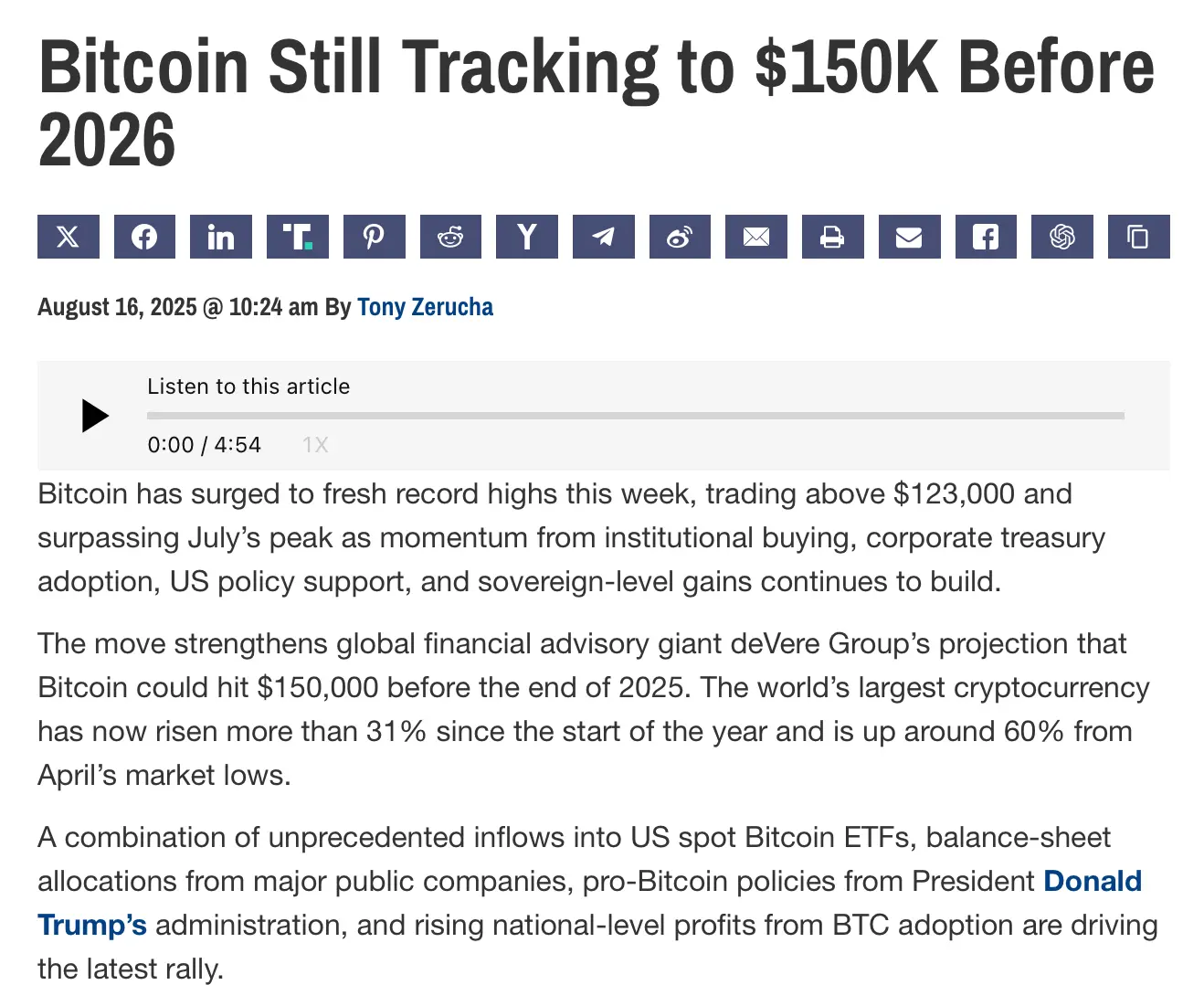
On August 16, it was reported that Bitcoin reached a new high this week, with prices breaking through $123,000, exceeding the peak in July. The upward momentum comes from institutional buying, corporate financial allocations, U.S. policy support, and continuous gains at the sovereign state level. This trend further reinforces the prediction of global financial consulting giant deVere Group: Bitcoin could rise to $150,000 by the end of 2025.
As the largest cryptocurrency globally, Bitcoin has risen over 31% since the beginning of the year, and approximately 60% from the market low in April. Factors driving this round of increases include:
· Unprecedented capital inflows into U.S. spot Bitcoin ETFs;
· Several large publicly listed companies incorporating Bitcoin into their balance sheets;
· The Trump administration's Bitcoin-friendly policies;
· Profits generated from governments holding Bitcoin.
Nigel Green, founder and CEO of deVere Group, stated that multiple strong forces are currently converging, driving Bitcoin to continuously set new records: "Institutional capital is flowing in at record levels through spot ETFs. Publicly listed companies view Bitcoin as a strategic reserve asset. The White House is actively supporting this asset class. Sovereign nations' investments in Bitcoin have already generated profits. These are not isolated incidents but part of a deeper systemic transformation of the global financial system."
Related Image
Canary Capital CEO Predicts Bitcoin Will Hit $150,000 This Year, Ethereum May Struggle to Maintain Brilliance
On August 17, it was reported by Decrypt that Canary Capital CEO Steven McClurg, in an interview with CNBC, stated that Bitcoin has over a 50% chance of reaching $150,000 by the end of 2024, attributing this increase to growing ETF demand and the expanding group of institutional buyers, including sovereign wealth funds, pensions, and corporate bonds.
However, he is bearish on Ethereum's prospects, believing it will be replaced by emerging public chains like Solana. Analyst Greg Magadini pointed out that Ethereum's developer ecosystem advantages are hard to surpass, expecting the ETH/BTC ratio to rebound to 7%.
VanEck: Maintains BTC Year-End Target Price of $180,000
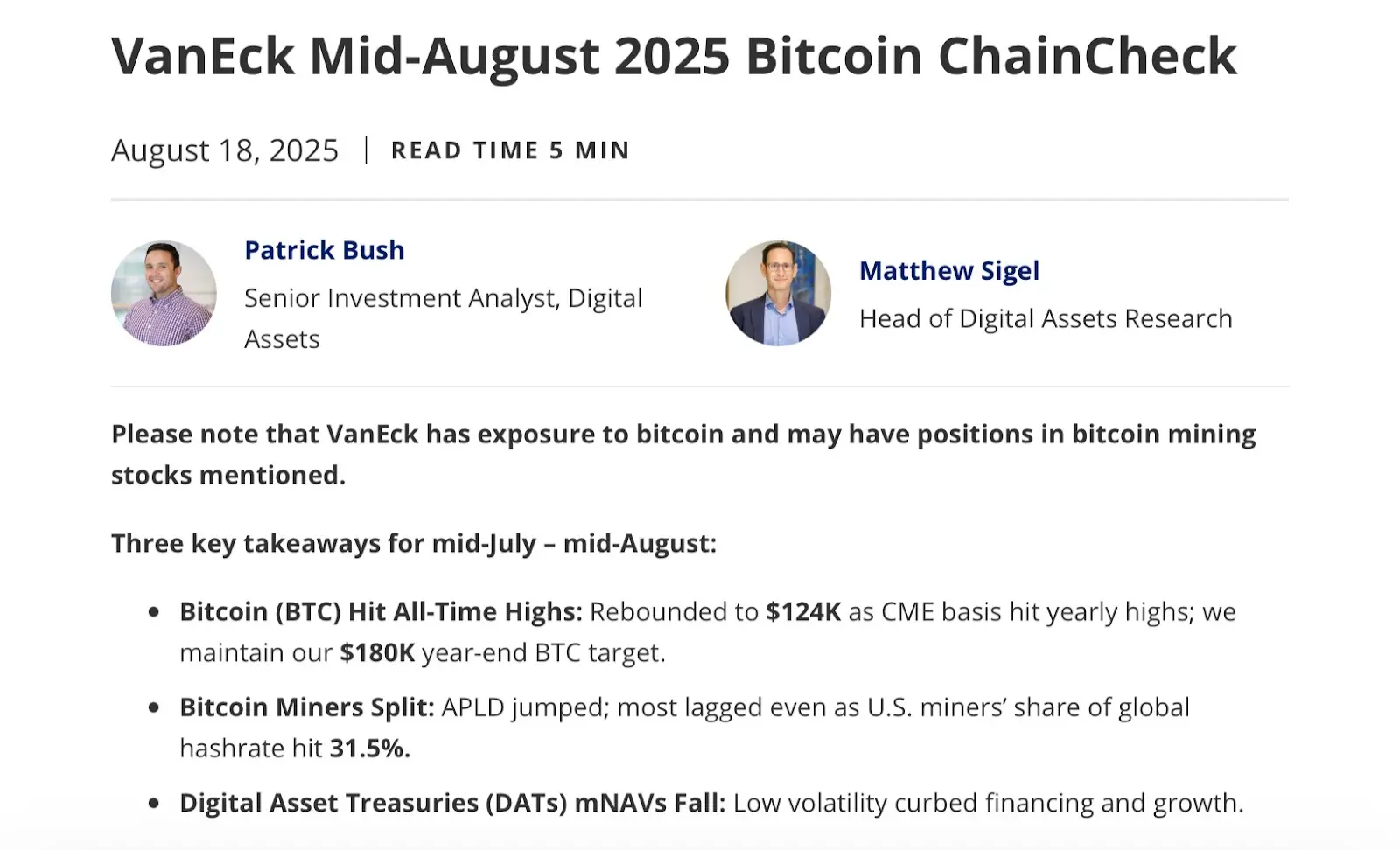
On August 19, VanEck released an analysis report stating that Bitcoin achieved key developments between mid-July and mid-August: the price rebounded to $124,000, setting a new historical high, and the basis on the Chicago Mercantile Exchange (CME) reached a new high for the year. VanEck maintains its year-end target price for Bitcoin at $180,000.
In terms of mining, although mining company APLD's stock price has risen, most mining companies have underperformed. Notably, U.S. mining companies' share of the global hash rate has reached a new high of 31.5%.
The report also noted that due to low volatility, the adjusted net asset value (mNAV) of digital asset treasuries (DATs) has declined, suppressing financing and growth.
Related Image
Bernstein: This Round of Crypto Bull Market May Last Until 2027, BTC May Rise to $150,000-$200,000 in the Next Year
On August 19, it was reported by The Block that Bernstein analysts' latest report indicates that despite recent price cooling, the current cryptocurrency bull market may extend until 2027, driven by U.S. policy support and increasing institutional adoption. Analysts expect Bitcoin to rise to $150,000-$200,000 within the next year, while also raising target prices for Coinbase, Robinhood, and Circle.
Additionally, the company expects the crypto asset cycle to surpass Bitcoin, with Ethereum, Solana, and DeFi tokens driving the next round of increases.
SkyBridge Founder: Maintains Bitcoin Year-End Target Price of $180,000-$200,000
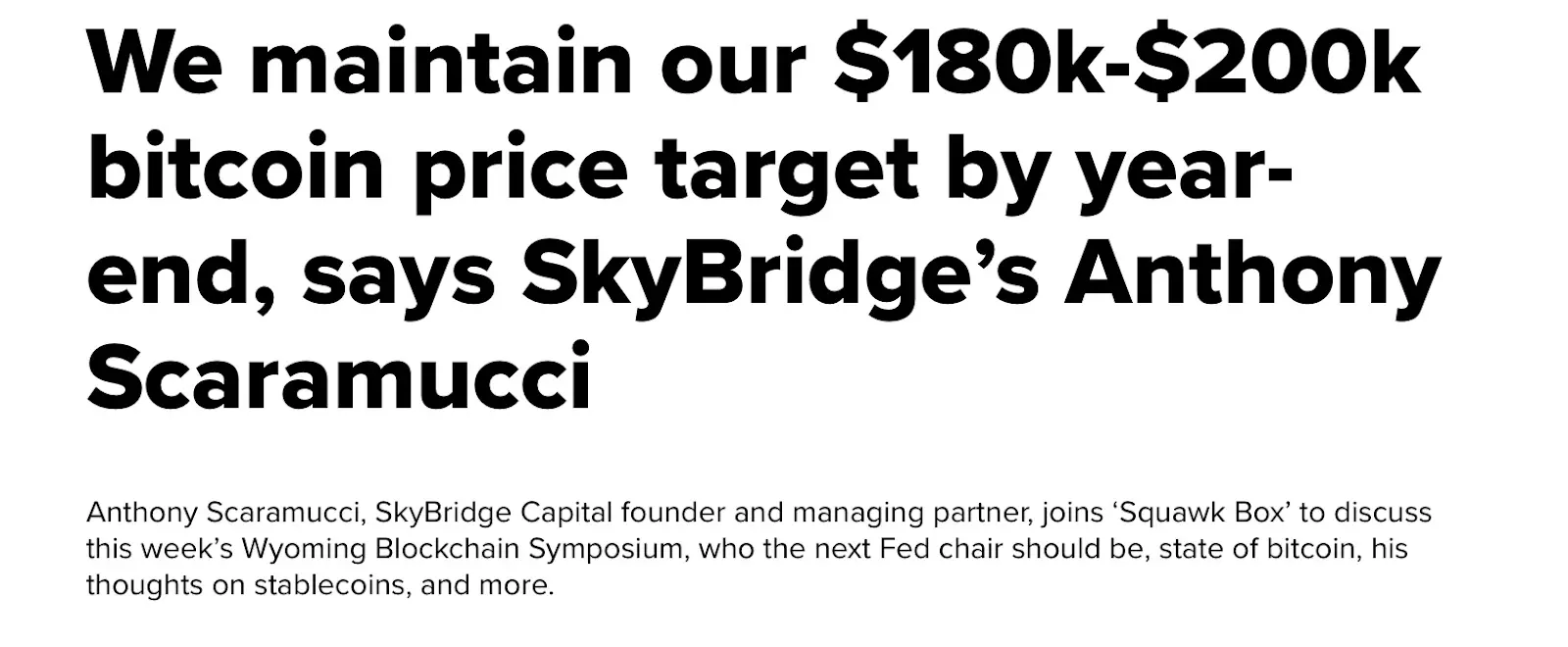
On August 19, it was reported by CNBC that SkyBridge Capital founder Anthony Scaramucci, in an interview with CNBC, stated that he maintains his year-end target price for Bitcoin at $180,000 to $200,000, and also discussed topics such as this week's Wyoming Blockchain Symposium, the next Federal Reserve chair candidate, the current state of Bitcoin, and views on stablecoins.
Related Image
Swiss Lawmaker Calls for Country to Buy and Adopt Bitcoin Before Fiat Currency System "Collapses"
On August 20, it was reported by @peterizzo that Swiss lawmaker KULLMANN called for the country to buy and adopt Bitcoin before the fiat currency system "collapses."
Coinbase CEO: Bitcoin Price Will Reach $1 Million by 2030
On August 21, Coinbase CEO Brian Armstrong predicted that Bitcoin's price would reach $1 million by 2030.
Tether CEO: U.S. Should View Bitcoin as a Hedge Asset Against the Dollar
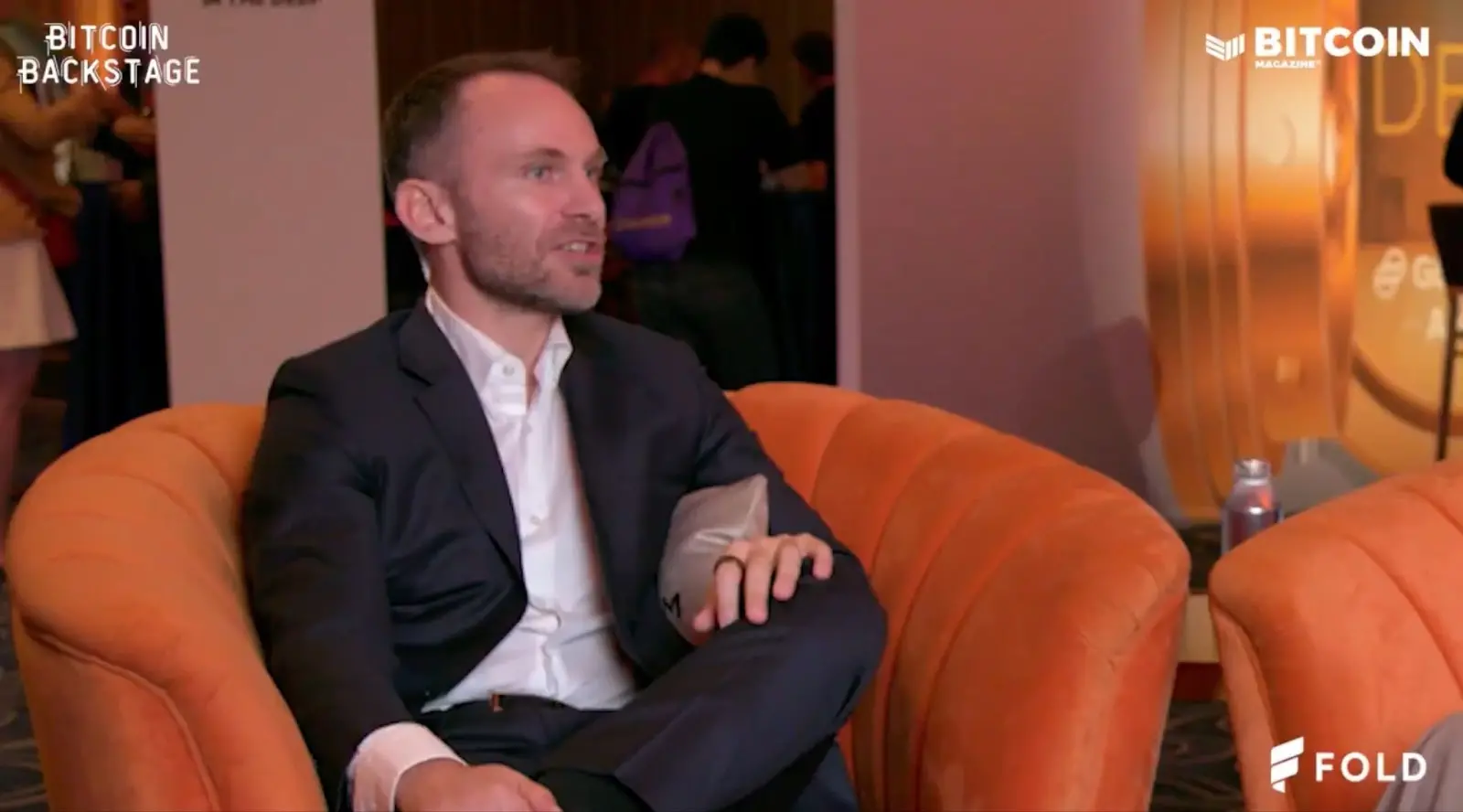
On August 21, Tether CEO Paolo Ardoino stated that the U.S. should view Bitcoin as a hedge against the dollar. He hopes the U.S. will establish a large Bitcoin balance sheet to enhance financial security and asset diversification.
Related Image
Trump's Second Son: Bitcoin Will Ultimately Reach $1 Million, Expected to Rise to $175,000 by Year-End
On August 21, it was reported at the Jackson Hole SALT conference that Trump's second son Eric Trump once again expressed enthusiasm for Bitcoin, stating that he believes Bitcoin's ultimate value will exceed $1 million. The business leader, who co-founded the Bitcoin mining company American Bitcoin earlier this year, even referred to himself as a "Bitcoin maximalist."
As the Executive Vice President of the Trump Organization, he stated that he currently spends over 50% of his time on cryptocurrency projects and insists on his previous prediction that Bitcoin will rise to $175,000 by year-end.
 Risk warning Risk warning




Popular articles





