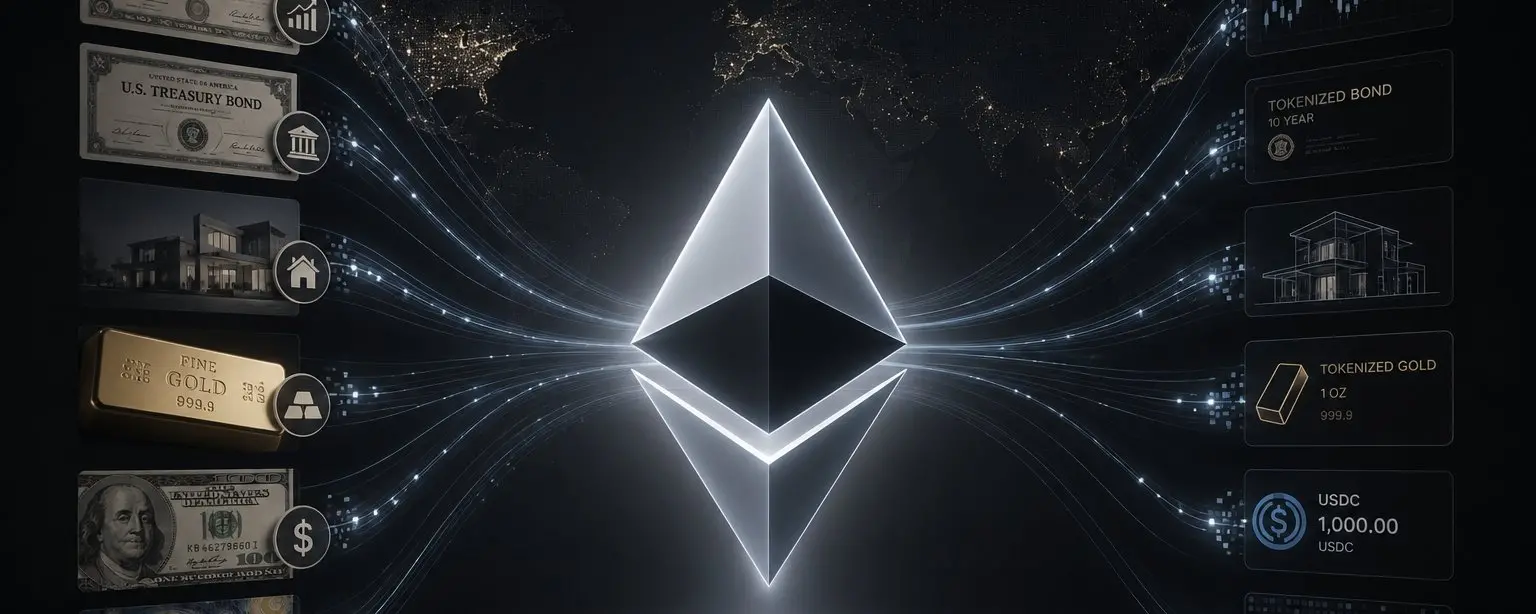
From "flood irrigation" to a differentiated pattern, will the imitation season recreate the brilliance of 2021?

 The counterfeit season of 2021 erupted under a unique macro environment and market structure, and now, the market environment has changed significantly.
Author: Jiawei @IOSG
Introduction
 ▲ Source: CMC
For the past two years, the market's focus has been drawn to one question: Will the altcoin season return?
Compared to the strength of Bitcoin and the advancement of institutionalization, the performance of the vast majority of altcoins has been lackluster, with most existing altcoins' market capitalization shrinking by 95% compared to the previous cycle, and many new coins that were once surrounded by hype are now mired in difficulties. Ethereum has also experienced a prolonged period of emotional downturn, only recently showing signs of recovery driven by trading structures like the "coin-stock model."
Even with Bitcoin hitting new highs and Ethereum stabilizing after a rebound, the overall sentiment towards altcoins remains low. Every market participant is hoping for a repeat of the epic bull market of 2021.
The author presents a core assertion: The macro environment and market structure that supported the "flooding" style of broad-based rallies like in 2021 no longer exist—this does not mean that an altcoin season will not come, but it is more likely to unfold in a slow bull market with more differentiated characteristics.
The Fleeting 2021
 ▲ Source: rwa.xyz
The external market environment in 2021 was quite unique. Amid the COVID-19 pandemic, central banks around the world were printing money at an unprecedented pace, injecting this cheap capital into the financial system, while the yields on traditional assets were suppressed, leaving people with a sudden influx of cash.
Driven by the search for high returns, funds began to flow massively into risk assets, with the crypto market becoming a significant recipient. The most direct indicator was the sharp expansion in the issuance of stablecoins, which skyrocketed from about $20 billion at the end of 2020 to over $150 billion by the end of 2021, an increase of more than seven times within the year.
Within the crypto industry, after DeFi Summer, the infrastructure for on-chain finance was being laid out, the concepts of NFTs and the metaverse entered the public eye, and public chains and scaling tracks were also in a growth phase. At the same time, the supply of projects and tokens was relatively limited, leading to a high concentration of attention.
Taking DeFi as an example, the number of blue-chip projects at that time was limited, with a few protocols like Uniswap, Aave, Compound, and Maker representing the entire sector. Investors faced little difficulty in making choices, allowing capital to more easily coalesce and drive the entire sector upward.
These two points provided fertile ground for the altcoin season of 2021.
Why "The Paradise is Rare, the Feast is Hard to Recreate"
Setting aside macro factors, the author believes that the current market structure has undergone several significant changes compared to four years ago:
Rapid Expansion of Token Supply
 ▲ Source: CMC
The wealth effect of 2021 attracted a massive influx of capital. Over the past four years, the booming venture capital landscape has invisibly raised the average valuations of projects, while the prevalence of airdrop economies and the viral spread of memecoins have collectively led to a dramatic acceleration in the speed of token issuance, with valuations rising accordingly.
 ▲ Source: Tokenomist
Unlike in 2021, when most projects were in a high liquidity state, mainstream projects in the current market, aside from memecoins, are generally facing significant token unlock pressure. According to TokenUnlocks, over $200 billion in market cap tokens are set to unlock between 2024 and 2025. This reflects the industry's current state of "high FDV, low circulation," which has been heavily criticized.
Dispersed Attention and Liquidity
 ▲ Source: Kaito
In terms of attention, the above image randomly captures the mindshare of Pre-TGE projects on Kaito. Among the top 20 projects, we can identify at least 10 sub-sectors. If we were to summarize the main narratives in the 2021 market in a few words, most people would likely say "DeFi, NFT, GameFi/Metaverse." However, the market over the past two years seems difficult to describe immediately in just a few words.
In this context, funds quickly switch between different sectors, with very short durations. The crypto Twitter (CT) space is flooded with overwhelming information, and various groups spend most of their time discussing different topics. This fragmentation of attention makes it challenging for capital to coalesce as it did in 2021. Even if a particular sector experiences a good market, it is hard to spread to other areas, let alone drive an overall rally.
On the liquidity front, a foundational aspect of an altcoin season is the spillover effect of profit-taking funds: liquidity first flows into mainstream assets like Bitcoin and Ethereum, and then begins to seek out altcoins with potentially higher returns. This spillover and rotation effect provides continuous buying support for long-tail assets.
This seemingly natural situation has not been observed in this cycle:
First, the institutions and ETFs driving the rise of Bitcoin and Ethereum are unlikely to further deploy funds into altcoins; these funds prefer custodial and compliant top assets and related products, which marginally reinforces the siphoning effect on top assets rather than evenly raising the water level across the board.
Second, most retail investors in the market may not even hold Bitcoin or Ethereum, but instead have been deeply trapped by altcoins over the past two years, leaving them with no excess liquidity.
Lack of Breakthrough Applications
The frenzy of the 2021 market was actually supported by certain fundamentals. DeFi introduced fresh water to the long-term application stagnation of blockchain; NFTs spread the creator and celebrity effects beyond the circle, with growth coming from new users and use cases outside the circle (at least that's the narrative).
After four years of technological and product iteration, we find that infrastructure has been overbuilt, but truly breakthrough applications are few and far between. Meanwhile, the market has matured, becoming more pragmatic and clear-headed—amid the aesthetic fatigue of overwhelming narratives, the market needs to see real user growth and sustainable business models.
Without a continuous influx of fresh blood to absorb the increasingly swollen token supply, the market can only fall into a zero-sum game of existing assets, which fundamentally cannot provide the basis needed for a broad rally.
Outlining and Imagining the Current Altcoin Season
An altcoin season will come, but it will not be like the one in 2021.
First, the basic logic of capital circulation and sector rotation still exists. We can observe that after Bitcoin reaches $100,000, the momentum for short-term gains has clearly weakened, and funds will start looking for the next target. The same applies to Ethereum afterward.
Second, in a situation of long-term insufficient market liquidity, altcoins are trapped, and capital needs to seek self-rescue methods. Ethereum is a good example: Has the fundamental situation of Ethereum changed in this cycle? The hottest applications, Hyperliquid and pump.fun, did not occur on Ethereum; the concept of a "world computer" is also a thing of the past.
With insufficient internal liquidity, the only option is to seek external opportunities. Driven by DAT, along with a more than threefold increase in ETH, many stories about stablecoins and RWAs have gained the most realistic foundation.
The author envisions the following scenarios:
Fundamentally Driven Certainty Market
 ▲ Source: TokenTerminal
In an uncertain market, funds will instinctively seek certainty.
Funds will flow more towards projects with solid fundamentals and PMF (Product-Market Fit); the price increases of these assets may be limited, but they are relatively more stable and certain. For example, DeFi blue chips like Uniswap and Aave maintain good resilience even during market downturns; Ethena, Hyperliquid, and Pendle have emerged as new stars in this cycle.
Potential catalysts could include actions like opening fee switches and other governance-related initiatives.
The commonality among these projects is that they can generate substantial cash flow, and their products have been fully validated by the market.
Beta Opportunities in Strong Assets
When a mainline market (like ETH) starts to rise, funds that missed this increase or seek higher leverage will look for highly correlated "proxy assets" to gain beta returns. Examples include UNI, ETHFI, ENS, etc. They can amplify ETH's volatility, but their sustainability is relatively poorer.
Repricing of Old Sectors Under Mainstream Adoption
From institutional-level Bitcoin buying and ETFs to the DAT model, the main narrative of this cycle is the adoption of traditional finance. If the growth of stablecoins accelerates, assuming a fourfold increase to reach $1 trillion, a portion of these funds will likely flow into the DeFi space, driving a revaluation of their worth. Transitioning from crypto's niche financial products to the traditional financial landscape will reshape the valuation framework of DeFi blue chips.
Local Ecological Speculation
 ▲ Source: DeFiLlama
HyperEVM, due to its consistently high discussion heat, user stickiness, and influx of incremental funds, may experience weeks to months of wealth effects and alpha during the growth cycle of ecological projects.
Valuation Discrepancies in Star Projects
 ▲ Source: Blockworks
Taking pump.fun as an example, after the peak of sentiment around token issuance recedes and valuations return to conservative ranges, if the fundamentals remain strong, there may be opportunities for recovery. From a mid-term perspective, pump.fun, as a leader in the meme sector, while also having income as fundamental support and a buyback model, may outperform most top memes.
Conclusion
The "buying with closed eyes" altcoin season of 2021 has become history. The market environment is becoming relatively more mature and differentiated—the market is always right, and as investors, we can only continuously adapt to these changes.
In conjunction with the above, the author also presents a few predictions as a conclusion:
After traditional financial institutions enter the crypto world, their capital allocation logic is fundamentally different from that of retail investors—they need explainable cash flows and benchmarkable valuation models. This allocation logic directly benefits the expansion and growth of DeFi in the next cycle. DeFi protocols will more actively initiate fee distribution, buyback, or dividend designs in the next 6 to 12 months to compete for institutional funds.
In the future, the valuation logic based purely on TVL will shift towards cash flow distribution logic. We can see some recently launched DeFi institutional-grade products, such as Aave's Horizon, which allows collateralized tokenized U.S. Treasury bonds and institutional funds to borrow stablecoins.
As the macro interest rate environment becomes more complex and traditional finance's demand for on-chain yields increases, standardized and productized yield infrastructure will become a prized asset: interest rate derivatives (like Pendle), structured product platforms (like Ethena), and yield aggregators will benefit.
The risk faced by DeFi protocols is that traditional institutions may leverage their branding, compliance, and distribution advantages to issue their own regulated "walled garden" products, competing with existing DeFi. This is already evident in the collaboration between Paradigm and Stripe in launching the Tempo blockchain.
The future altcoin market may lean towards a "barbell" structure, with liquidity flowing to two extremes: one end being blue-chip DeFi and infrastructure. These projects possess cash flow, network effects, and institutional recognition, attracting the vast majority of funds seeking stable appreciation. The other end consists of purely high-risk speculative assets—memecoins and short-term narratives. This portion of assets does not support any fundamental narratives but serves as high liquidity, low-barrier speculative tools, satisfying the market's demand for extreme risk and returns. Meanwhile, projects that fall between the two extremes, possessing certain products but lacking deep moats and having bland narratives, may find their market positioning awkward if liquidity structures do not improve.
 Risk warning
 Risk warning