Polymarket returns to the U.S., where is the next opportunity for prediction markets?
 Core Viewpoint

 To achieve scalability in the prediction market, high leverage, high-frequency markets, and high market outcome value are required.
Original Title: Prediction Markets: A Differentiated Hedging Tool
Original Author: Noveleader, Castle Labs
Original Compilation: Ismay, BlockBeats
Editor's Note: As Polymarket is about to reopen to U.S. users, prediction markets are rapidly rising in the crypto space, evolving from a niche activity to an important tool for hedging risks and capturing event outcomes. This article delves into the operational logic, liquidity challenges, and potential scaling paths of prediction markets through specific case studies, while also exploring their application value in high-impact events such as elections and drug approvals.
The article points out that prediction markets not only provide professional investors with new hedging methods but also open a new entry point for ordinary users to participate in the crypto world, covering diverse trading scenarios from pop culture to tech products. For both new and seasoned readers interested in crypto financial innovation, market structure evolution, and risk management, this article offers valuable insights.
Here is the original content:
Prediction markets are rapidly evolving and have become one of the hottest narratives today. The more I read, the more I realize that prediction markets could be an excellent tool for hedging certain global or local events, depending on the direction of my exposure in trading. Clearly, this use case has not yet been widely utilized, but I expect that as liquidity improves and prediction markets reach a broader audience, this application scenario will see an explosion.
Vitalik recently mentioned prediction markets in his article on low-risk DeFi. In this regard, "hedging event risk" is the most important use case for prediction markets. It not only helps maintain the cycle of liquidity but also creates more opportunities for ordinary participants in prediction markets.
We already know that more and more new companies are entering the prediction market space, increasing the number of projects being built in this field to 97. Although these projects have different service directions and will grow with their respective industries and user groups, the trading volume data still shows that a few products stand out.
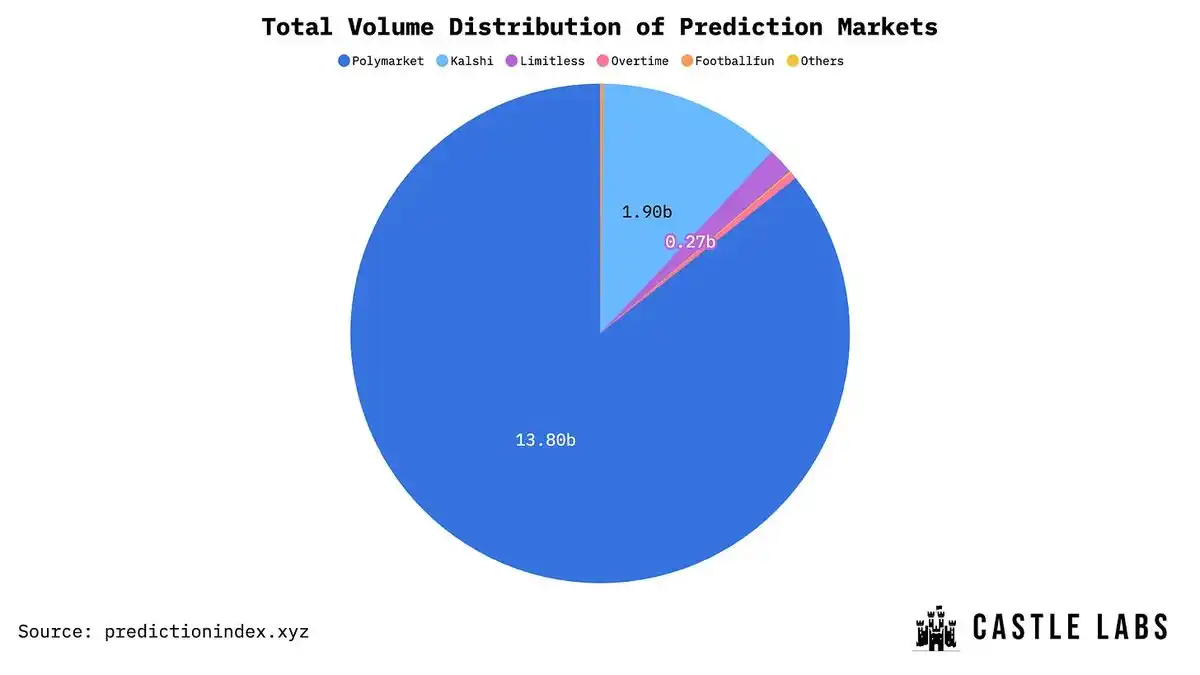
Additionally, it is important to note that prediction markets, as a niche track, are still in the exploratory stage. In the future, new winners will continue to emerge, developing alongside mature projects like @Polymarket, @Kalshi, and @trylimitless, which already hold significant shares in prediction market trading volume.
Evolution of Prediction Markets
Here, I will briefly review the history of prediction markets (which is not very far back). Prediction markets have only gradually entered the mainstream in recent years, especially during the 2024 U.S. presidential election, when Polymarket's trading volume surged, bringing the necessary attention to prediction markets.
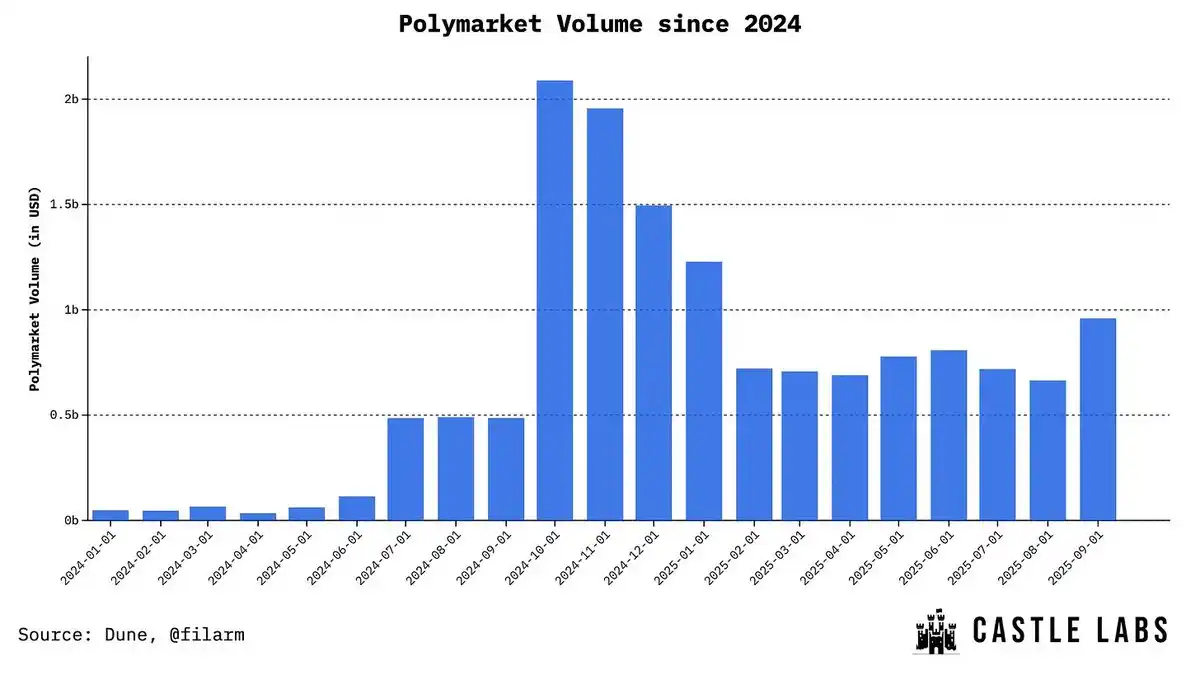
Since that peak, although trading volume has not maintained the levels seen in 2024, it has remained within a relatively high range. Recently, as shown in the monthly trading volume chart above, the volume has begun to grow again. With the development of this trend, companies like Kalshi and Limitless have also gradually achieved higher trading volumes, growing into strong competitors capable of rivaling Polymarket.
Moreover, different types of prediction markets are continuously emerging, targeting different user groups and application scenarios, carving out their own niche tracks. A good example is @noise_xyz (currently still in the testnet phase), which allows users to trade on the "attention" of a specific project with leverage.
Prediction Markets as Hedging Tools
Next, I will move on to my core point.
In the future, prediction markets will become more efficient and liquid, thus becoming valuable hedging tools. I am not saying that they are not currently used for hedging at all, but rather that their scale is not yet sufficient to play a significant role on a larger level.
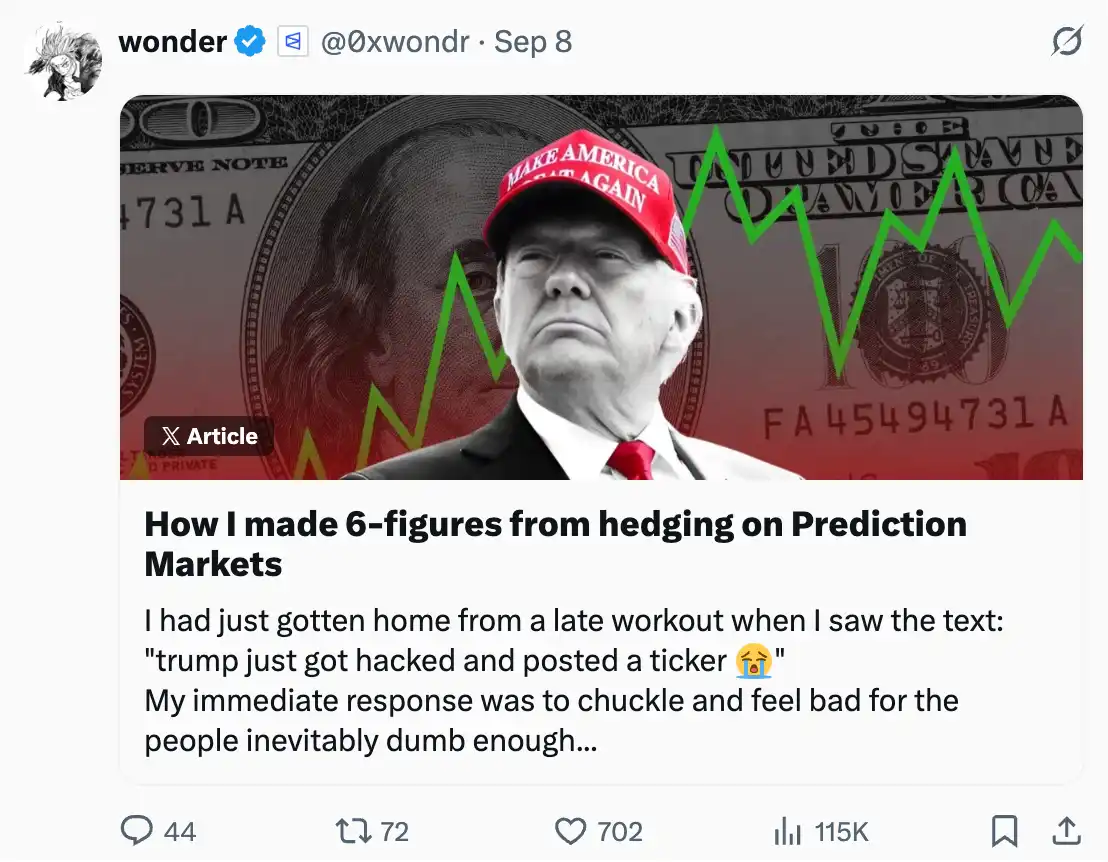
If we observe existing use cases, an article by @0xwondr illustrates this well. He explained how he used prediction markets to hedge when the Trump Token launched earlier this year. He bought $TRUMP tokens while also purchasing "Yes" shares on the prediction market for the event "Will Trump be hacked?" This way, if a hack did occur, he could offset his losses with the "Yes" shares he held; conversely, if no hack occurred, the token itself would have significant upside potential (which we indeed saw it eventually achieve).
Let me try to illustrate the "hedging" opportunity with another example. Suppose an investor has a significant portion of their portfolio invested in a specific pharmaceutical company. The company is awaiting FDA approval for its new product. If the approval is granted, the company's stock price is likely to skyrocket; if rejected, the stock price could plummet. If there is a prediction market for the same outcome, this pharmaceutical investor could hedge their stock position by purchasing "No" shares.
Of course, there are differing opinions on this practice: some believe there are better, more liquid channels to achieve this hedging. Investors could simply short the stock directly and wait for the approval outcome. But the question is whether investors can strictly maintain their hedge based solely on an uncertain FDA approval outcome. The answer is clearly no.
Through prediction markets, hedging against decisions that are not known to anyone becomes smooth and feasible. Perhaps in the long run, prediction markets will become a hedging tool that can complement existing hedging channels. If used efficiently, prediction markets can indeed become very effective hedging tools.
Similar examples include election outcomes, macroeconomic events, interest rate adjustments, etc. For these event-based risks, there are almost no other viable hedging avenues.
What is Needed for Prediction Markets to Scale?
The evolution of prediction markets and the new liquidity brought by users help them become liquid venues for hedging specific events or markets. But the question is, is the liquidity in these markets sufficient for large-scale hedging?
A simple answer is: not enough, at least for most markets.
You may have seen some impressive trading volume data at the beginning of the article. Polymarket's trading volume last month approached $1 billion, which is quite remarkable for a binary market that does not offer leverage and is based on a relatively emerging narrative. However, this trading volume is spread across different markets and themes, not targeting a single event, but rather the platform's total trading volume. In fact, only a few events truly contribute to the majority of the trading volume.
Setting aside trading volume, the core issue we need to discuss is liquidity, as the growth of trading volume relies on deeper liquidity.
Deeper liquidity can ensure that prices are not easily manipulated, that single trades do not have a significant impact on the entire market, and that slippage is minimized during trading.
Currently, prediction markets primarily obtain liquidity through two methods:
Automated Market Makers (AMM): In a classic AMM structure, users trade with liquidity pools. This is suitable for the early stages of the market but not for large-scale expansion. At this point, order books have advantages.
Order Book: Order books rely on active traders or market makers to maintain liquidity, making them very suitable for market scaling.
I recommend reading @Baheet_'s article for an in-depth understanding of how prediction markets operate:
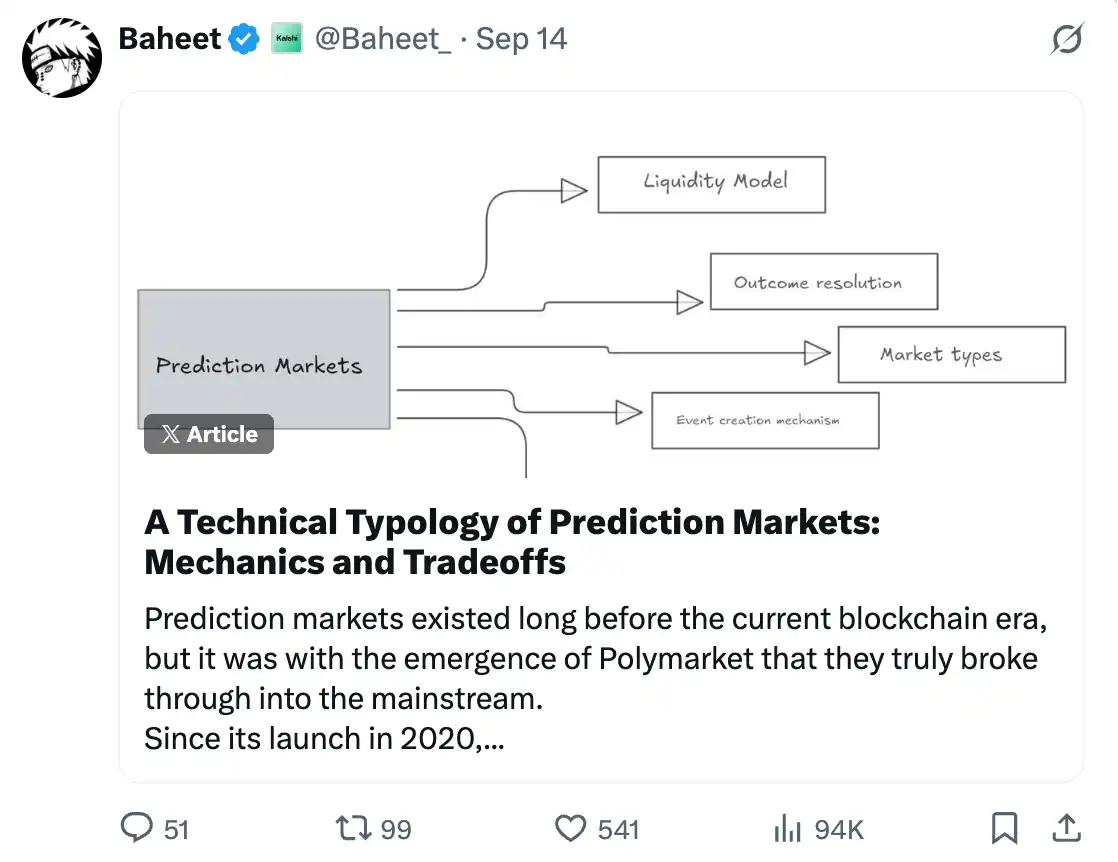
Since we are focusing on the scaling issue here, I will emphasize the order book. In an order book, liquidity can be achieved through traders or market makers (MM) actively placing orders, or a combination of both. Structures involving market makers are usually more efficient.
However, due to significant differences between traditional markets and event contracts (prediction markets), market making in binary markets like Polymarket or Kalshi is not easy.
Here are some reasons why market makers may be reluctant to participate:
High inventory risk: Prediction markets can experience severe volatility due to specific news. A market may perform well in one direction but could quickly reverse. If at this time the market maker's pricing is contrary to the market direction, they could face substantial losses. While hedging can alleviate this, typically these tools do not have convenient hedging options.
Traders and insufficient liquidity: The market lacks sufficient liquidity. This sounds like a "chicken or egg" problem, but the market needs frequent traders or buyers to generate profits for market makers through bid-ask spreads. However, if the trading volume and frequency in a specific market are too low, it cannot incentivize market makers to actively participate.
To address this issue, some projects are actively exploring solutions, such as Kalshi, which utilizes third-party market makers while also having an internal trading department to maintain liquidity. Polymarket, on the other hand, primarily relies on the natural supply and demand generated in the order book.
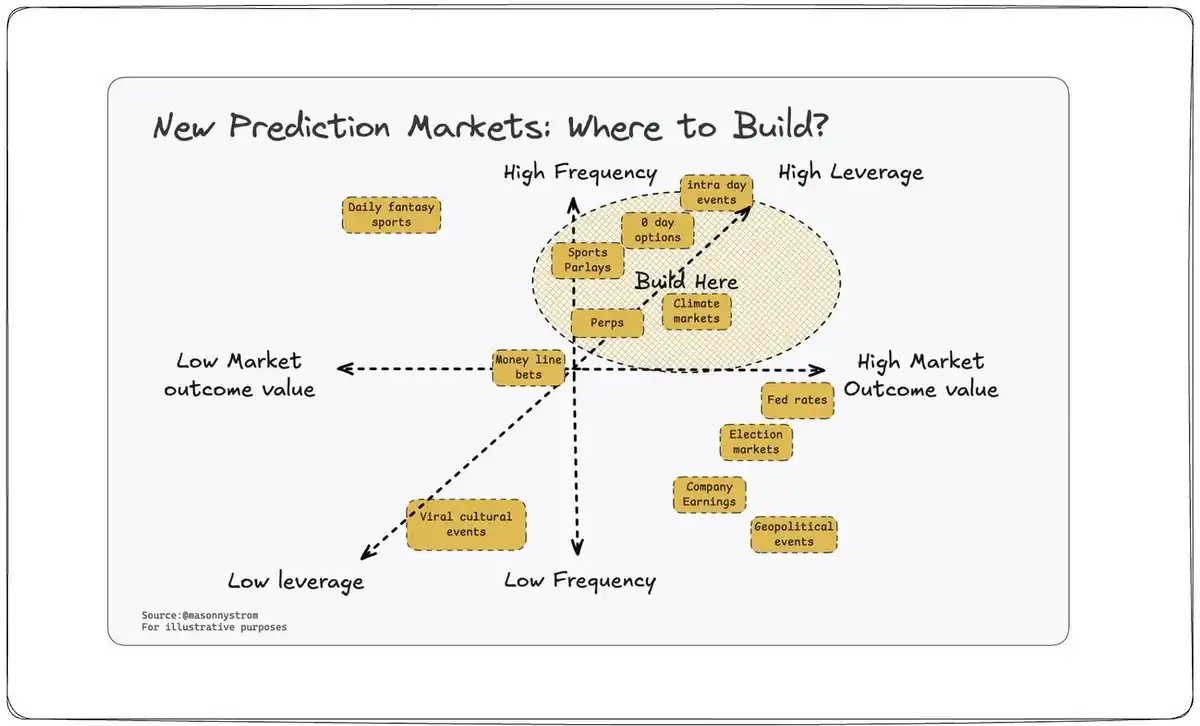
Ultimately, to gain trading volume and users, a market must be built that everyone wants to participate in, and such a market should have three characteristics:
High leverage: This is not easy to achieve in binary markets with Yes/No questions, as users cannot pursue higher returns through leverage. Some platforms like @fliprbot offer leveraged trading in prediction markets, but typically with lower trading volumes. Additionally, Limitless provides daily and weekly exercise markets, allowing users to participate in faster-settling markets, potentially increasing returns.
High-frequency markets: The more markets users can choose from, the more likely they are to trade on the same platform. More markets mean more trading volume.
High market outcome value: If the outcomes of the market have significant implications, it will lead to substantial trading volume. This is particularly evident in markets related to elections or drug approvals, as the results of these events significantly impact broader market reactions.
Summary Thoughts
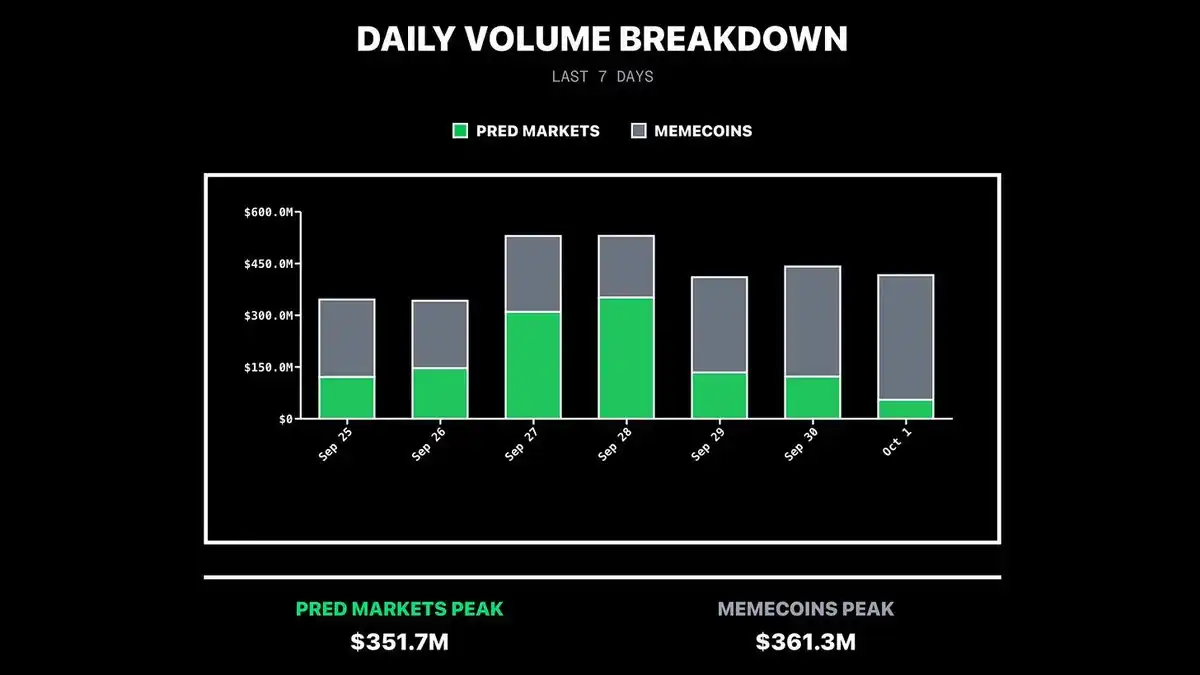
Prediction markets have undoubtedly left a profound mark on the industry. Just this week, their trading volume has surpassed that of meme coins, showing clear signs of growth and widespread adoption.
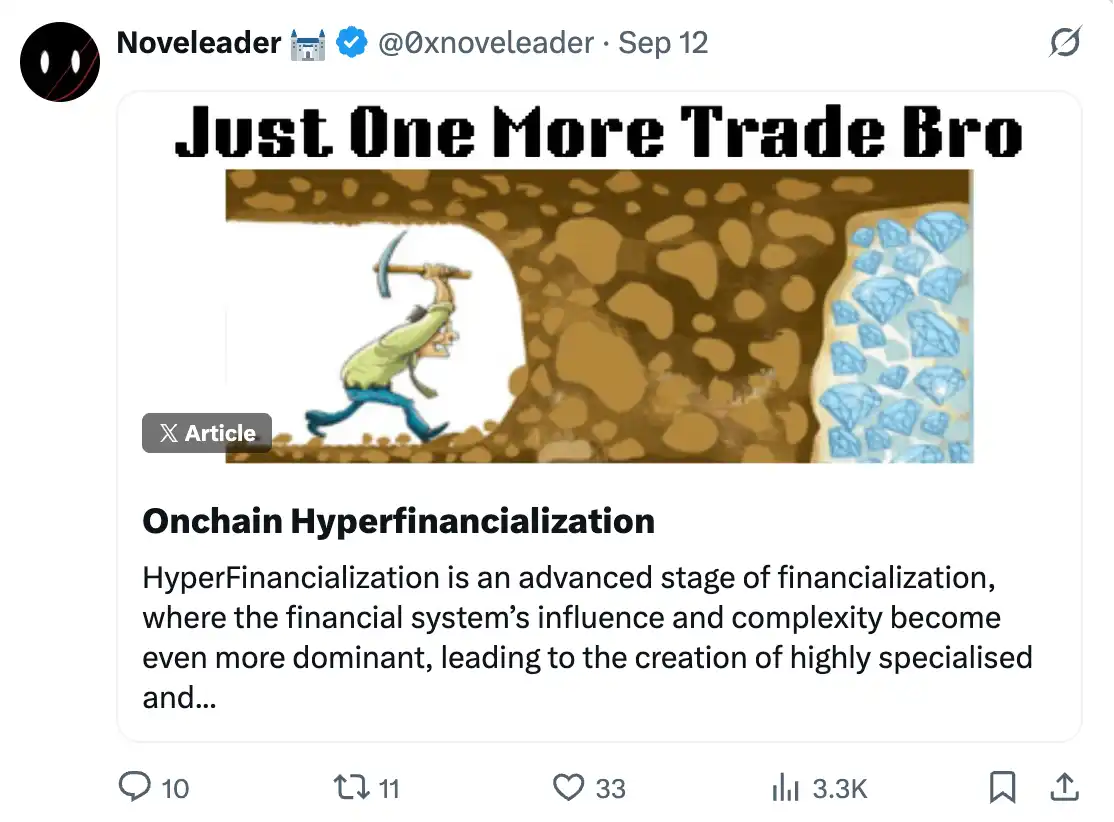
I would also like to point out that prediction markets have indeed propelled the state of "hyperfinancialization." Frankly, as long as people are not losing large sums of money, there is nothing inherently wrong with this state. I even wrote an article exploring how we are moving towards a state where "everything can be marketized," and why this trend has both advantages and disadvantages.
If you want to read it, you can find the article here:
Finally, I sincerely believe that prediction markets are an excellent way to bring new users into the crypto space, as these markets typically target a general audience outside the CT (crypto trader) circle. Almost everything and every topic has a corresponding market, including pop culture, celebrity gossip, new Apple product launches, and almost anything you can think of. Allowing anyone to trade on what interests them is inherently a powerful force, and it is a field I am very much looking forward to observing and participating in.
So, it can be said that prediction markets are alpha.
 Risk warning
 Risk warning