








Reinterpreting Sideways Movement: Mainstream Coins Are Experiencing a Major Whale Chip Reshuffle
 Core Viewpoint

 Ignas is also particularly concerned about the lending agreements that incur costs.
Original Author: Ignas, DeFi
Original Compilation: CryptoLeo (@LeoAndCrypto)
Odaily Note: Ignas raises a point that despite the approval of the BTC ETF, institutional adoption is accelerating, the "Genuis Act" has been passed, and the "Clairty Act" is about to be introduced. There is no regulatory crackdown, no major hacking incidents, and no fundamental narrative collapse, yet BTC remains stagnant with insufficient liquidity. At this moment, early BTC investors are gradually cashing out in a planned manner (rather than selling), while new investors are also planning to buy on dips.
Key Insights
Early BTC believers are cashing out their profits;
This is not a panic sell-off, but a natural transition from concentrated holdings by whales to dispersed holdings by everyone;
Among all traceable on-chain indicators, the most obvious signal is whale selling.
Let's Look at BTC First
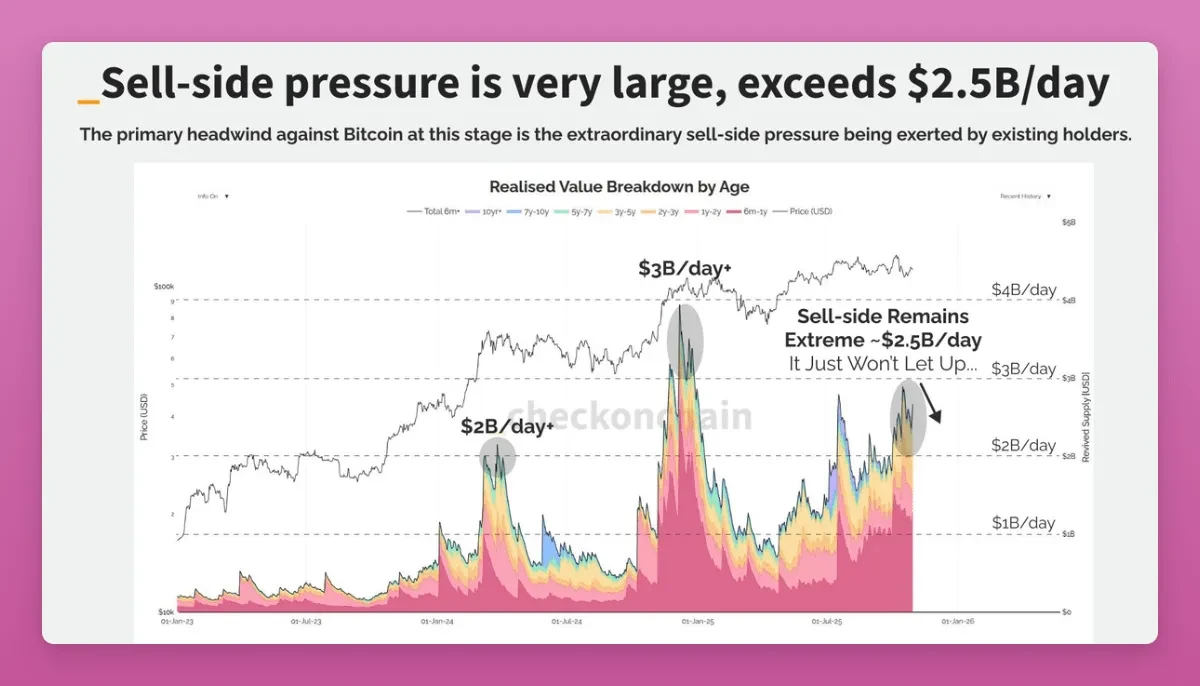
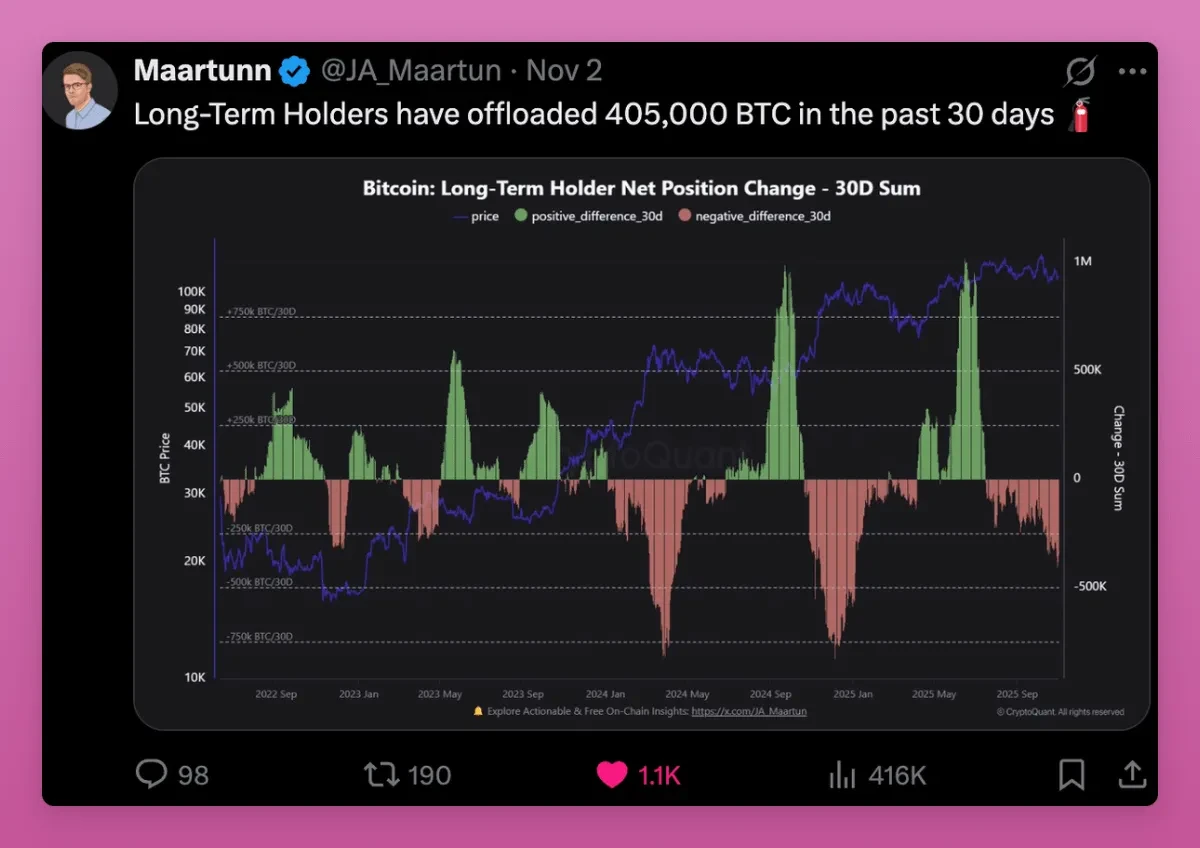
Long-term holders have sold 405,000 BTC in the past 30 days, accounting for 1.9% of the total existing BTC supply.
Take Owen Gunden as an example; he is one of the early BTC whales. He made large transactions on Mt. Gox, has a massive holding, and is a board member of LedgerX. His associated wallet holds over 11,000 BTC, making him one of the largest individual holders on-chain.
Recently, his wallet has started transferring large amounts of BTC to Kraken, moving thousands of BTC in batches. This typically indicates he is preparing to sell. On-chain analysts believe he may be getting ready to sell most of his BTC, valued at over $1 billion.
He hasn't tweeted since 2018, but this move aligns with my "great rotation" theory, where some are moving into ETFs for tax benefits or selling for portfolio diversification (like buying ZEC?).
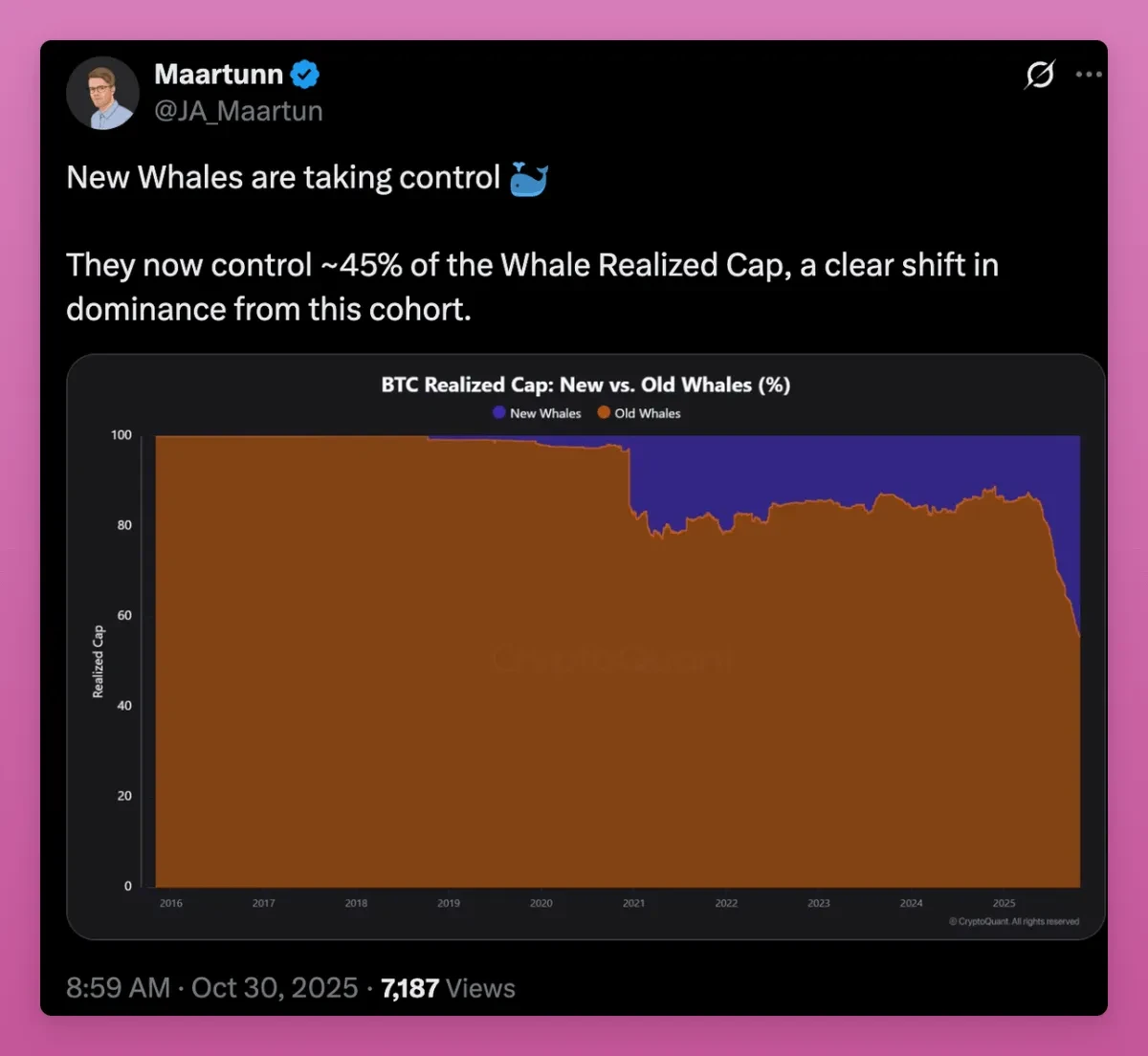
As supply shifts from early whales to new buyers, the average cost basis of BTC continues to rise, and new holders are now taking control.
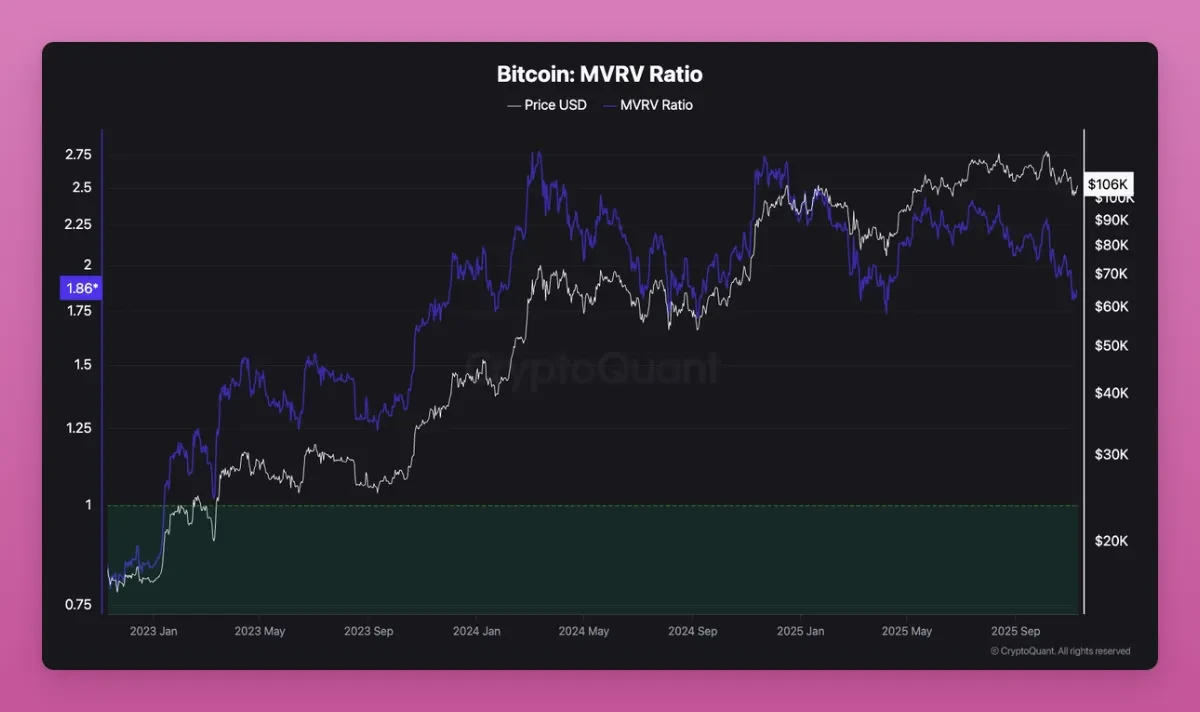
As the average cost basis shifts from early miners to ETF buyers and new institutions, MVRV is climbing.
Odaily Note: MVRV is "Current Price" ÷ "Holder's Cost Basis," one of the classic on-chain valuation indicators for Bitcoin, proposed by Murad Mahmudov and David Puell in 2018, and is widely used to determine whether Bitcoin is overvalued (overheated) or undervalued (oversold).
Some may argue that this seems like a bearish signal, as long-standing whales have held substantial profits for years, while newly entered whales have been in a loss position.
The average cost basis for BTC is close to $110,800, raising concerns that if BTC continues to perform poorly, new investors may choose to sell.
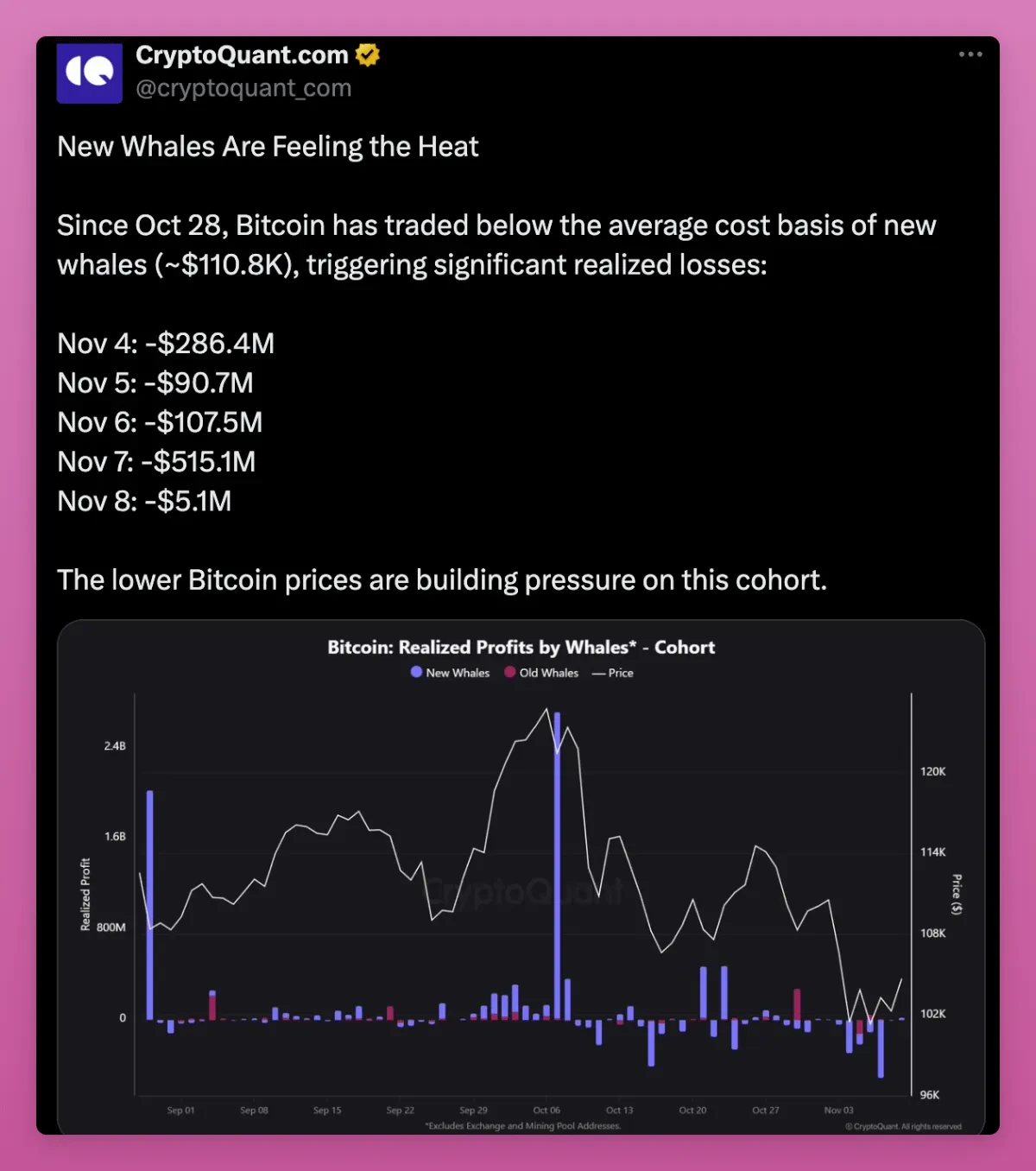
However, the rise in MVRV indicates that ownership is becoming more dispersed and maturing. Bitcoin is transitioning from a few ultra-low-cost holders to a group of holders with a higher cost basis.
This is actually a bullish signal. What about Bitcoin's counterpart?
Ethereum's Chip Rotation
What about ETH? Can ETH exhibit the same "great rotation" pattern? Similar to Bitcoin, this may partially explain the lag in ETH prices.
From a certain perspective, ETH also seems to be winning: both have ETFs, DAT, and institutional investors, albeit of different natures.
Data shows that ETH is also undergoing a similar transformation, just earlier and more convoluted.
In fact, from one angle, ETH has already caught up with BTC: currently, about 11% of all ETH is held by DAT and ETFs.
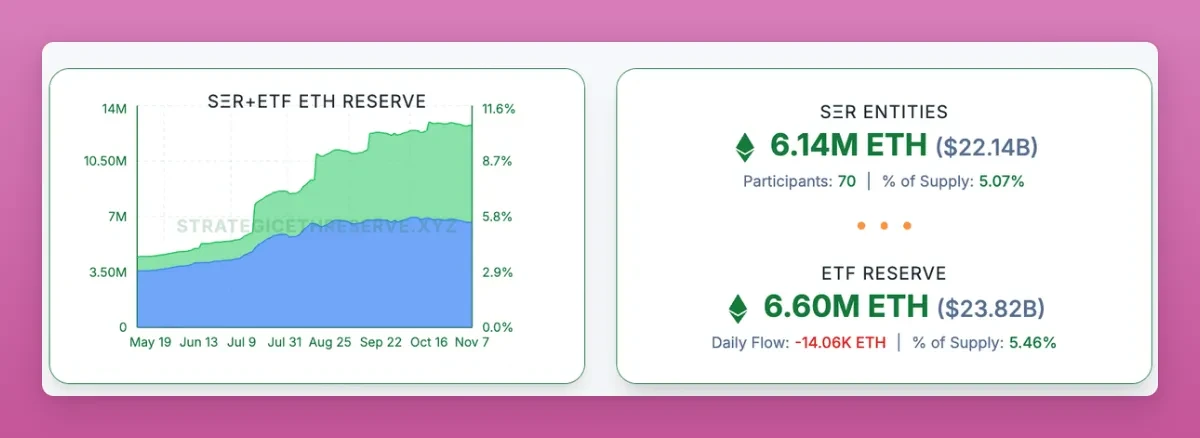
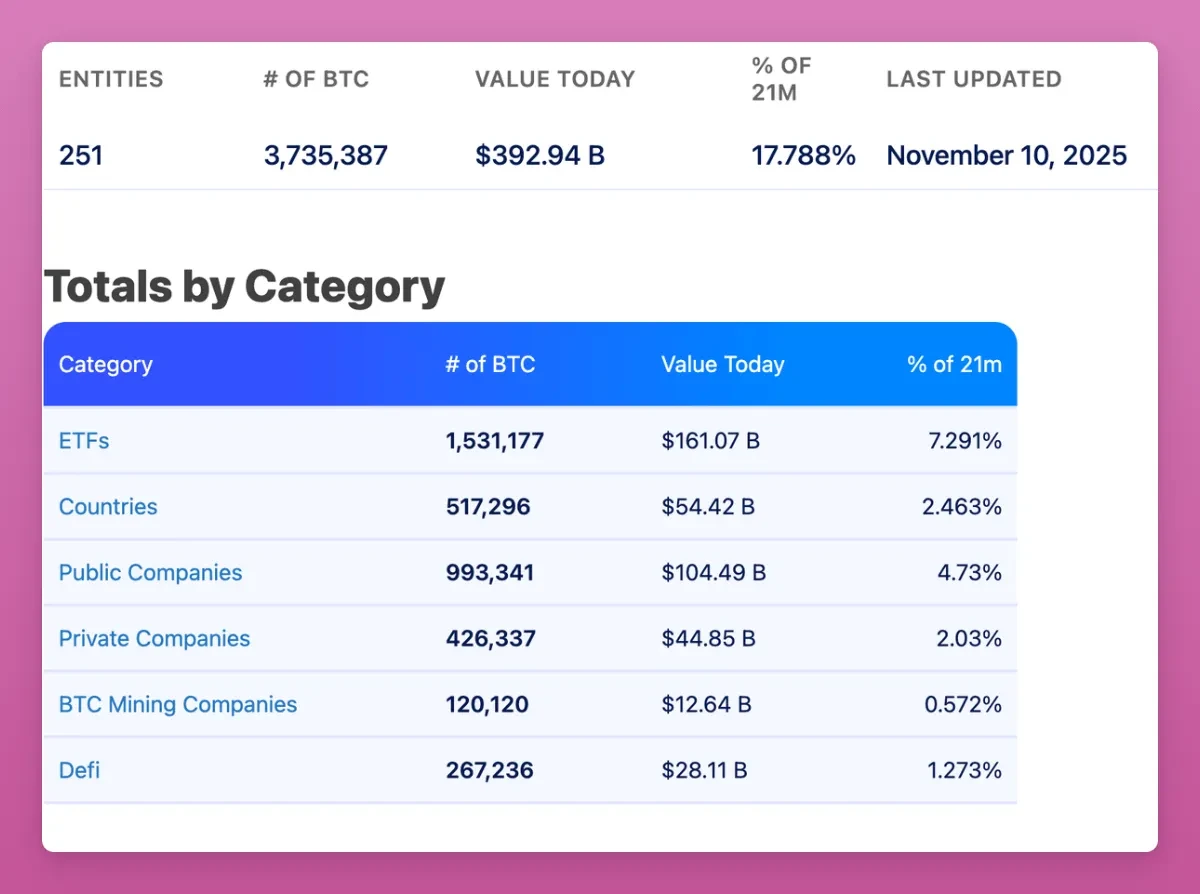
Meanwhile, about 17.8% of BTC is held by spot ETFs and large treasury companies (thanks to Saylor's efforts over the years), and ETH is catching up with this momentum.
I tried to find relevant data for ETH to verify whether, like BTC, old whales are dispersing ETH to new whales, but I was unsuccessful. I even contacted Ki Young Ju from CryptoQuant, who told me that due to ETH's account model, which differs from BTC's UTXO model, it is difficult to gather statistics.
Regardless, the main difference seems to be that ETH is transitioning from retail investors to whales, while BTC's main shift is from old whales to new whales.
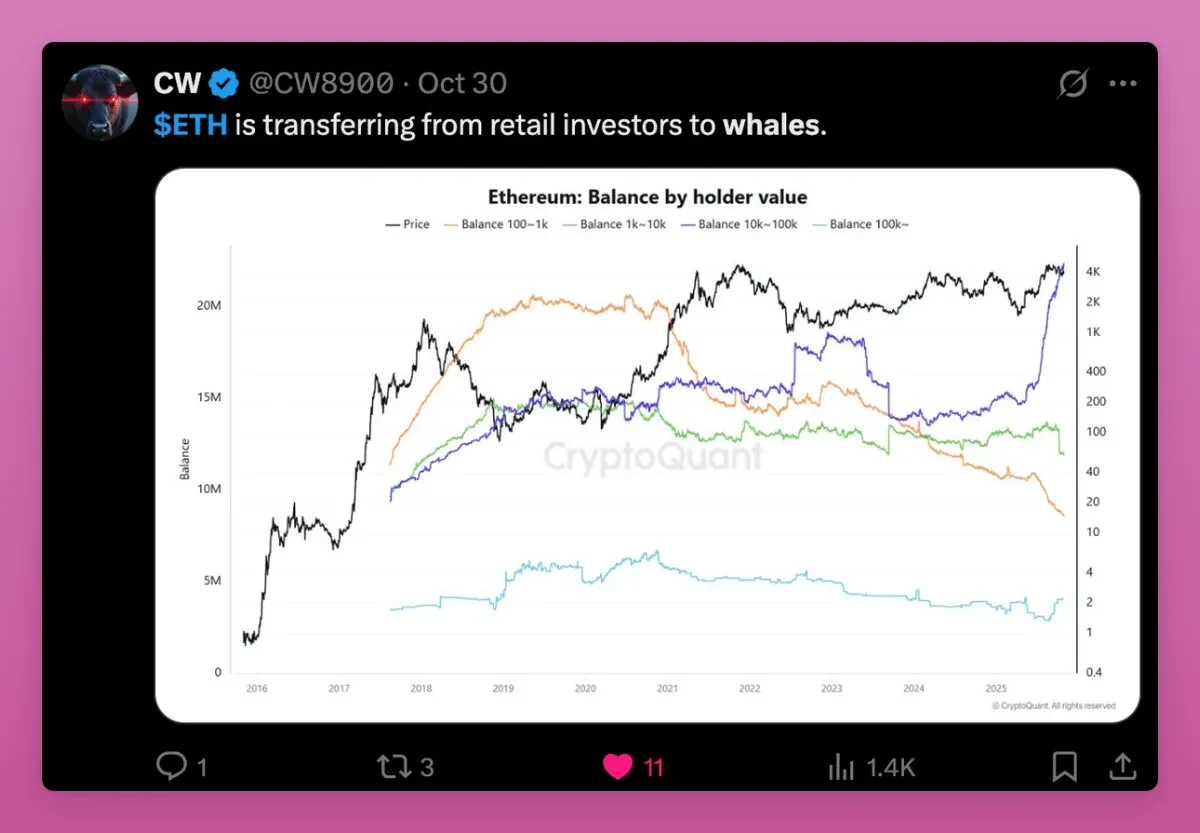
The chart below also shows the trend of ETH ownership shifting from retail to whales.
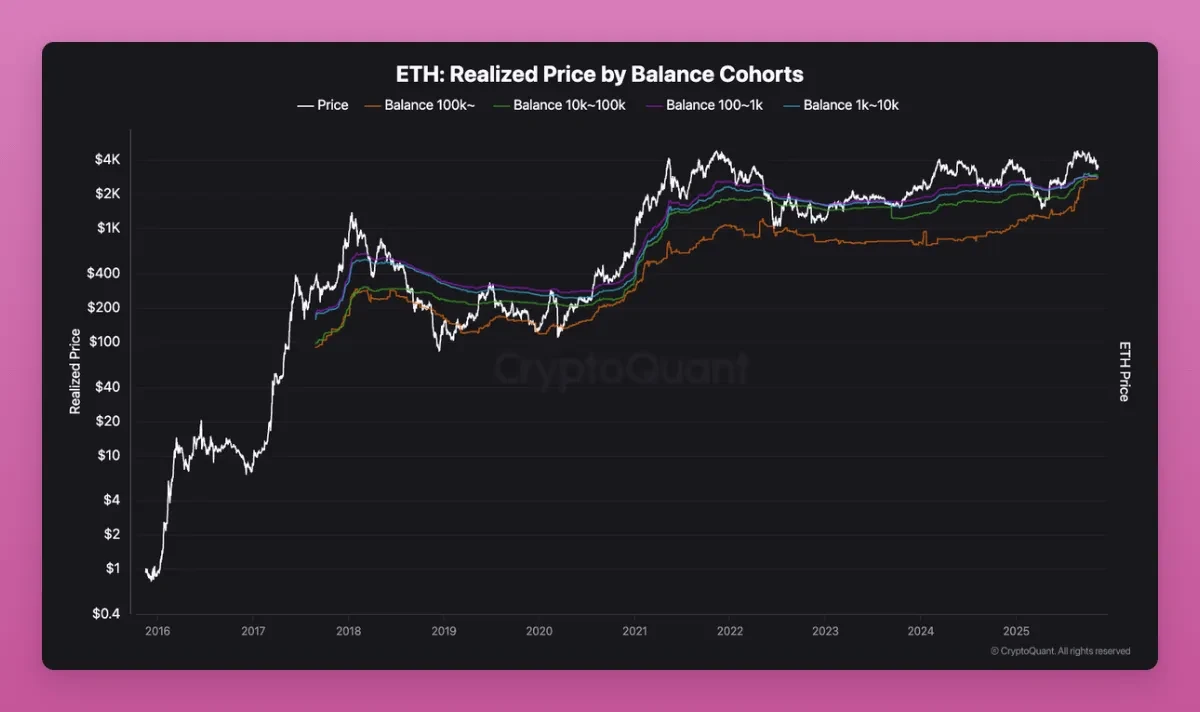
The actual price of large accounts (over 100,000 ETH) is rising rapidly, indicating that new buyers are entering at higher prices while smaller holders are selling off.
Notice that all the lines (orange, green, purple) converge at the same level, meaning the cost of wallets of various sizes is similar, indicating that old tokens have flowed into the hands of new holders.
This cost basis reset should occur before the accumulation phase nears its end and prices rise significantly. Structurally, this indicates that ETH supply is consolidating into the hands of more capable holders, signaling a bullish outlook for ETH.
The rationale for this transition includes:
Retail investors are selling off, while whales and funds are taking the opportunity to accumulate for reasons including: 1) the proliferation of stablecoins and tokenization; 2) staking ETFs; 3) participation from institutional investors;
Retail investors view ETH as "fuel" and lose confidence in it when other L1 tokens emerge. In contrast, whale investors see it as a yield-generating collateral, continuously accumulating for long-term on-chain gains;
When BTC wins, ETH remains in a gray area, prompting whales to step in first to prevent institutional investors from entering.
The combination of ETFs and DAT has made the ETH holder base more institutionalized, but it remains unclear whether they are more inclined towards long-term growth. The main concern is that ETHZilla announced the sale of ETH to repurchase its shares. This is not a reason for panic, but it has set a precedent.
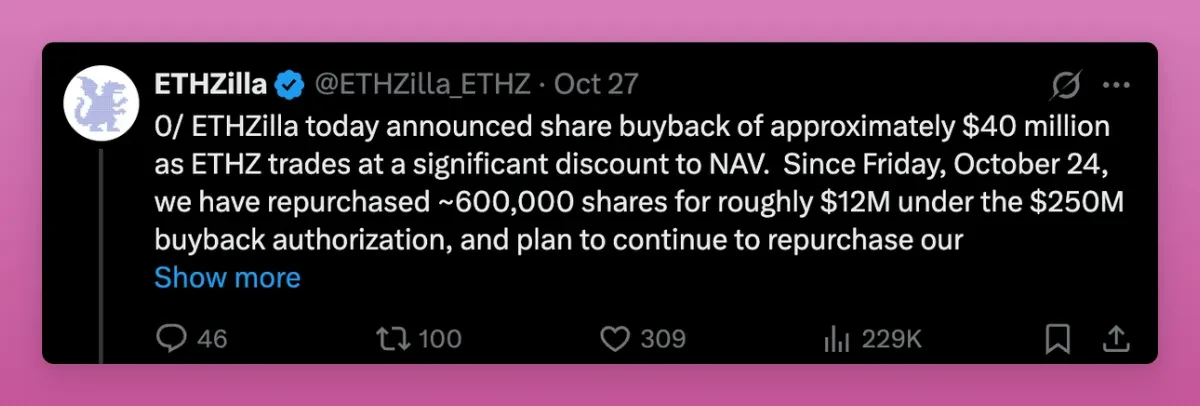
Overall, ETH also aligns with the "great rotation" theory. Its structure is less clear than Bitcoin's due to a more diverse holder base, more use cases (such as staking liquidity into a few large wallets), and more reasons for holders to transfer tokens onto the chain.
Solana's Chip Movement
Determining which stage SOL is in regarding the rotation theory is quite challenging, as identifying institutional wallets or major holders is difficult. Nevertheless, some patterns can be discerned.
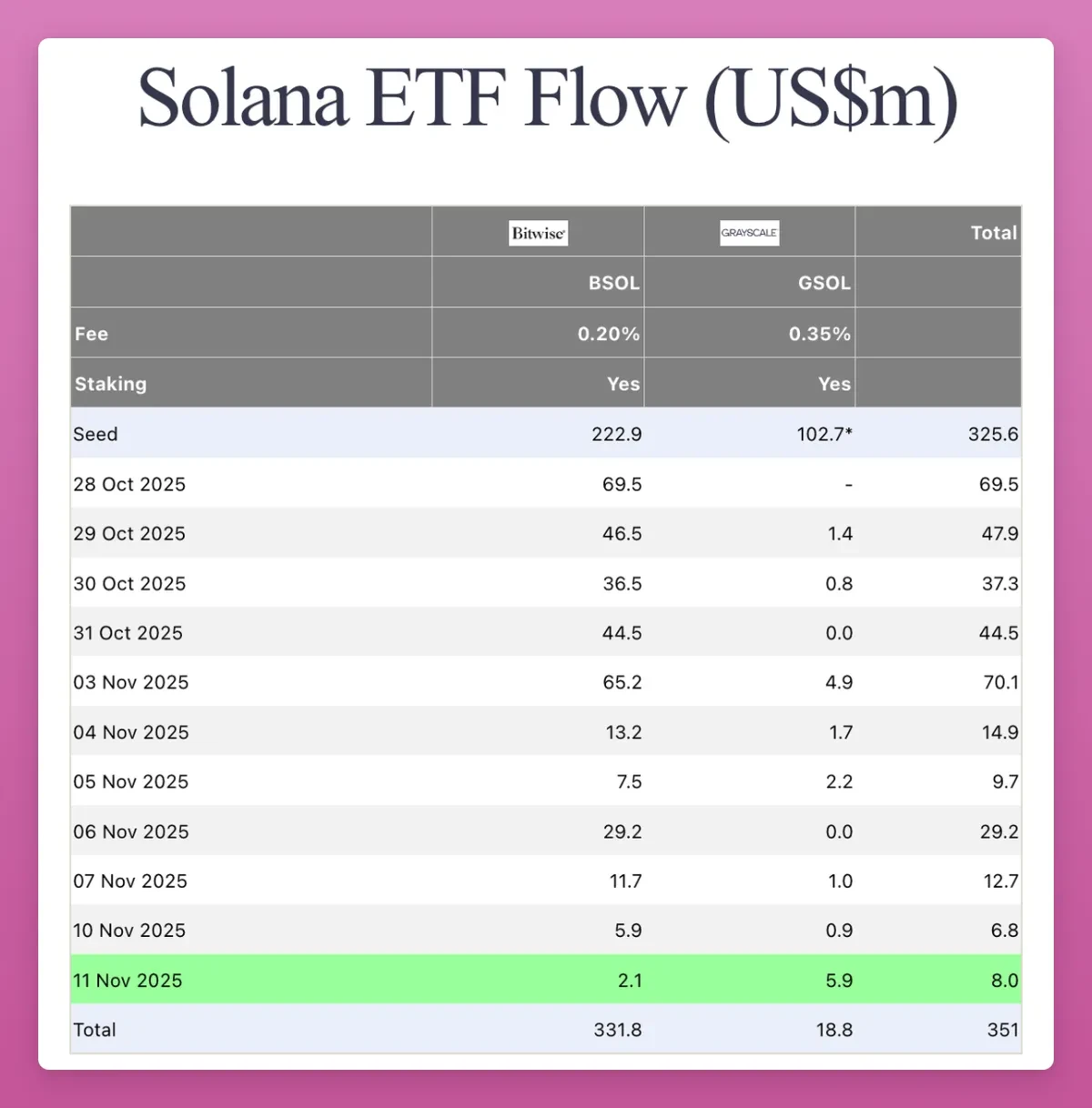
SOL is entering the same institutional phase as ETH. Last month, a SOL spot ETF appeared on CT without any hype. Although the inflow of funds is not particularly high (totaling $351 million), there has been a positive daily inflow.
Some DAT companies have also begun buying SOL, and the quantity is quite substantial:
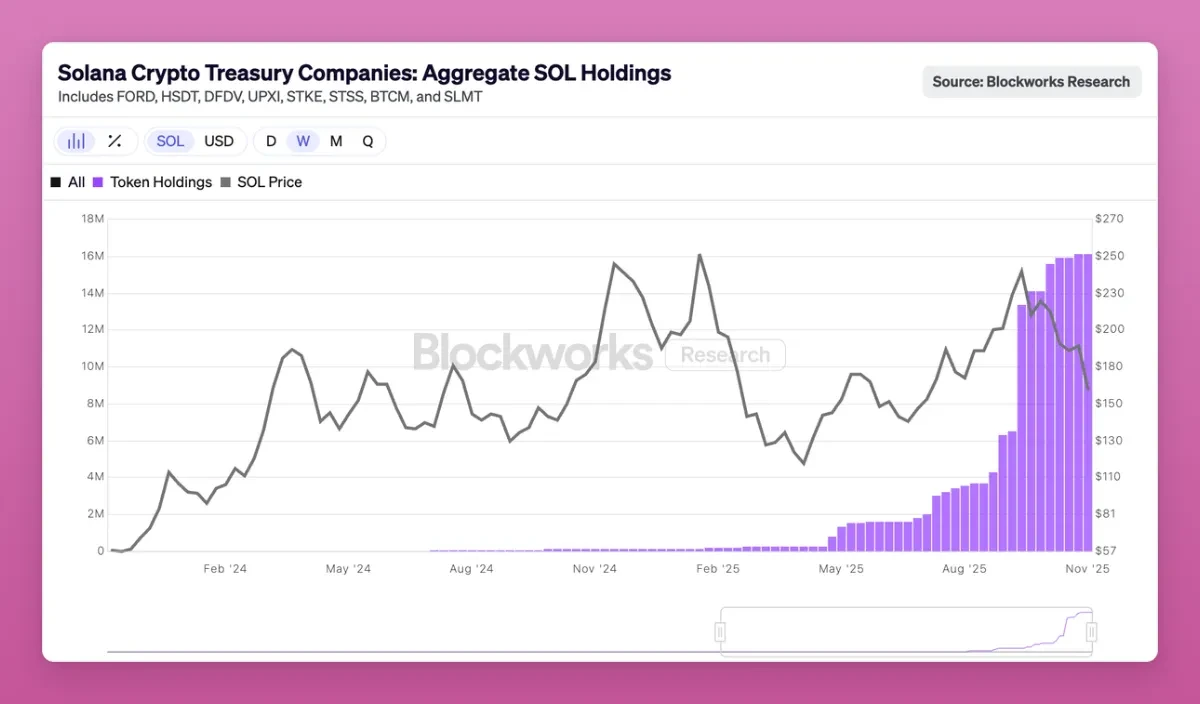
Currently, 2.9% of all circulating SOL is held by DAT companies, valued at $2.5 billion. More information about SOL DAT structure can be found in this article from Helius.
Thus, SOL now has the same TradFi infrastructure investors as BTC and ETH, including regulated funds and treasury companies, albeit on a smaller scale. SOL's on-chain data is chaotic but still concentrated among early insiders and venture capital wallets. These tokens are gradually flowing into the hands of new institutional buyers through ETFs and treasuries.
The great rotation has touched SOL, but it has occurred a cycle later.
Therefore, if BTC and, to some extent, ETH's rotation is nearing its end, with prices poised to rise at any moment, then the situation for SOL is not hard to predict.
What Happens Next
BTC's rotation ends first, followed closely by ETH, but SOL will take longer. So, where are we in this cycle?
In past cycles, the strategy was simple: first BTC skyrockets, then ETH, and the wealth effect gradually manifests. People profit from mainstream cryptocurrencies and turn to lower market cap altcoins, boosting the entire market.
This time is different.
BTC is stagnating at a certain stage of the cycle; even if prices rise, old players either shift to ETFs or cash out, ultimately improving their lives outside of crypto. There is no wealth effect, no spillover effect, only the PTSD brought by FTX, and the hard work continues.
Altcoins no longer compete for monetary status with BTC but instead compete in terms of utility, yield, and speculation. Most products fail to meet these criteria. The currently recommended categories include:
- - Blockchains that are truly in use: Ethereum, Solana, and perhaps one or two others;
- - Products with cash flow or actual value appreciation;
- - Assets with unique demand that BTC cannot replace (like ZEC);
- - Infrastructure that can attract fees and attention;
- - Stablecoins and RWA.
Innovation and experimentation in the crypto space will also abound, so I don't want to miss this new hotspot; everything else has turned into noise.
The activation of the fee switch by Uniswap is a key moment: it may not be the first, but it is the most prominent DeFi protocol to date, forcing all other protocols to follow suit and begin distributing fees (buybacks) to token holders.
Of the 10 lending protocols, 5 have already shared profits with token holders.
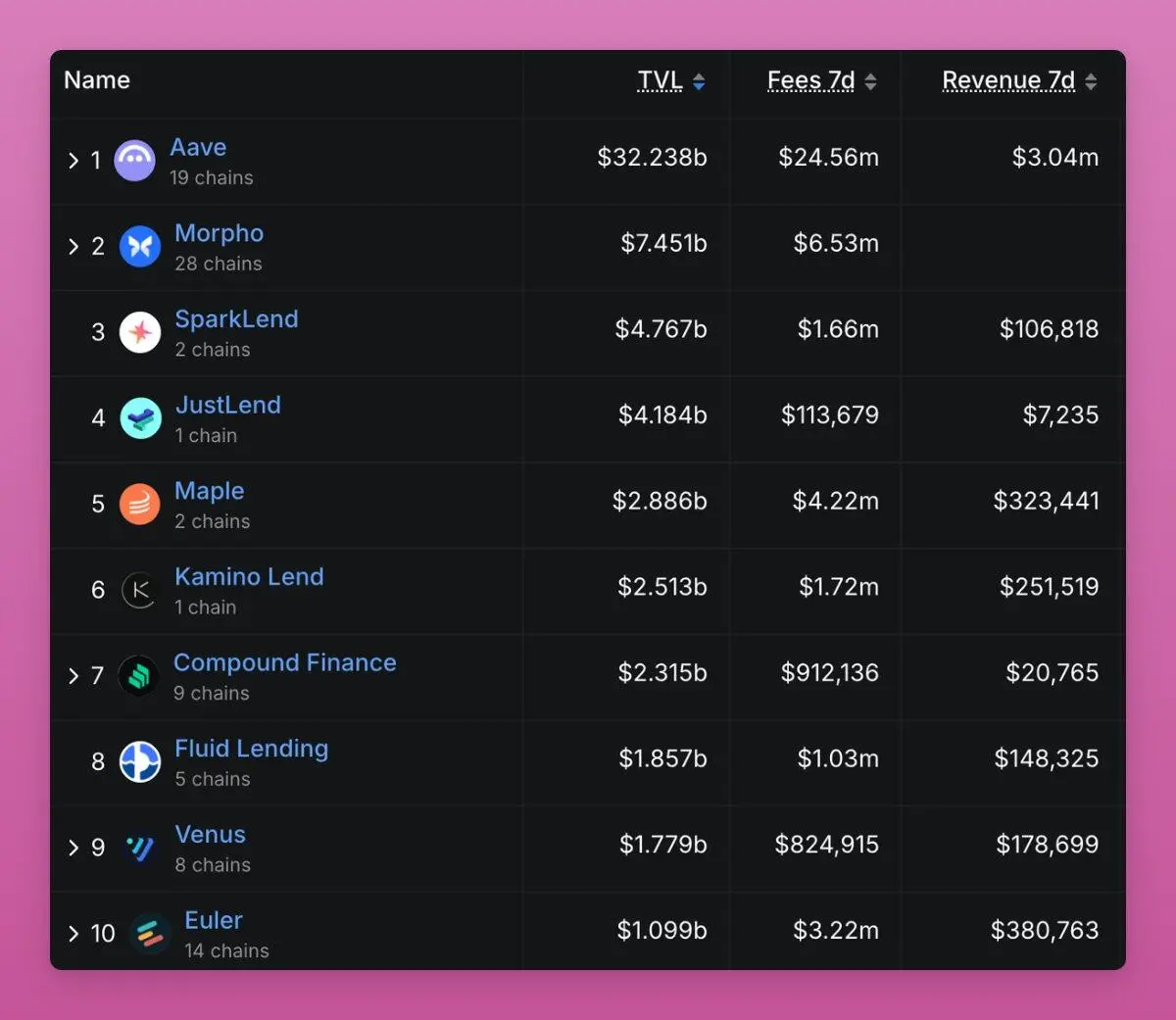
Thus, DAOs have transformed into on-chain companies, with the value of their tokens depending on the revenue they generate and redistribute, which will be the next rotation point.
 Risk warning Risk warning



Popular articles





