








TRON Industry Weekly: "Is the probability of interest rate cuts in December increasing?" or alleviating market downturns, detailed explanation of the ZK engine Orochi Network for achieving privacy DA
 Core Viewpoint

 TRON Industry Weekly Report
# I. Outlook
1. Macroeconomic Summary and Future Predictions
Last week, the U.S. macroeconomy continued to face pressure from a combination of "weak data + high uncertainty." The government shutdown has disrupted data collection, affecting the transparency of economic indicators. The October CPI and some employment data were officially canceled, forcing the market to rely on private institutions and high-frequency data for assessments of economic conditions. Consumer confidence has fallen to record lows, and retail activity and manufacturing momentum are weak, raising further concerns that the economy has entered a substantive slowdown phase. Meanwhile, Federal Reserve officials acknowledged that growth is under pressure but remain cautious about interest rate cuts, emphasizing the need to wait for data recovery before making policy judgments, with an overall tone leaning towards "wait-and-see but not in a hurry to ease."
Looking ahead, as the government is expected to resume normal operations by the end of the month and key economic data is set to be released, market focus will return to three core issues: "whether inflation will further cool, whether employment will begin to deteriorate, and whether interest rate cuts will come early." Overall, short-term volatility is expected to intensify, with the trend direction depending on the real economic performance after data recovery.
2. Market Changes and Warnings in the Cryptocurrency Industry
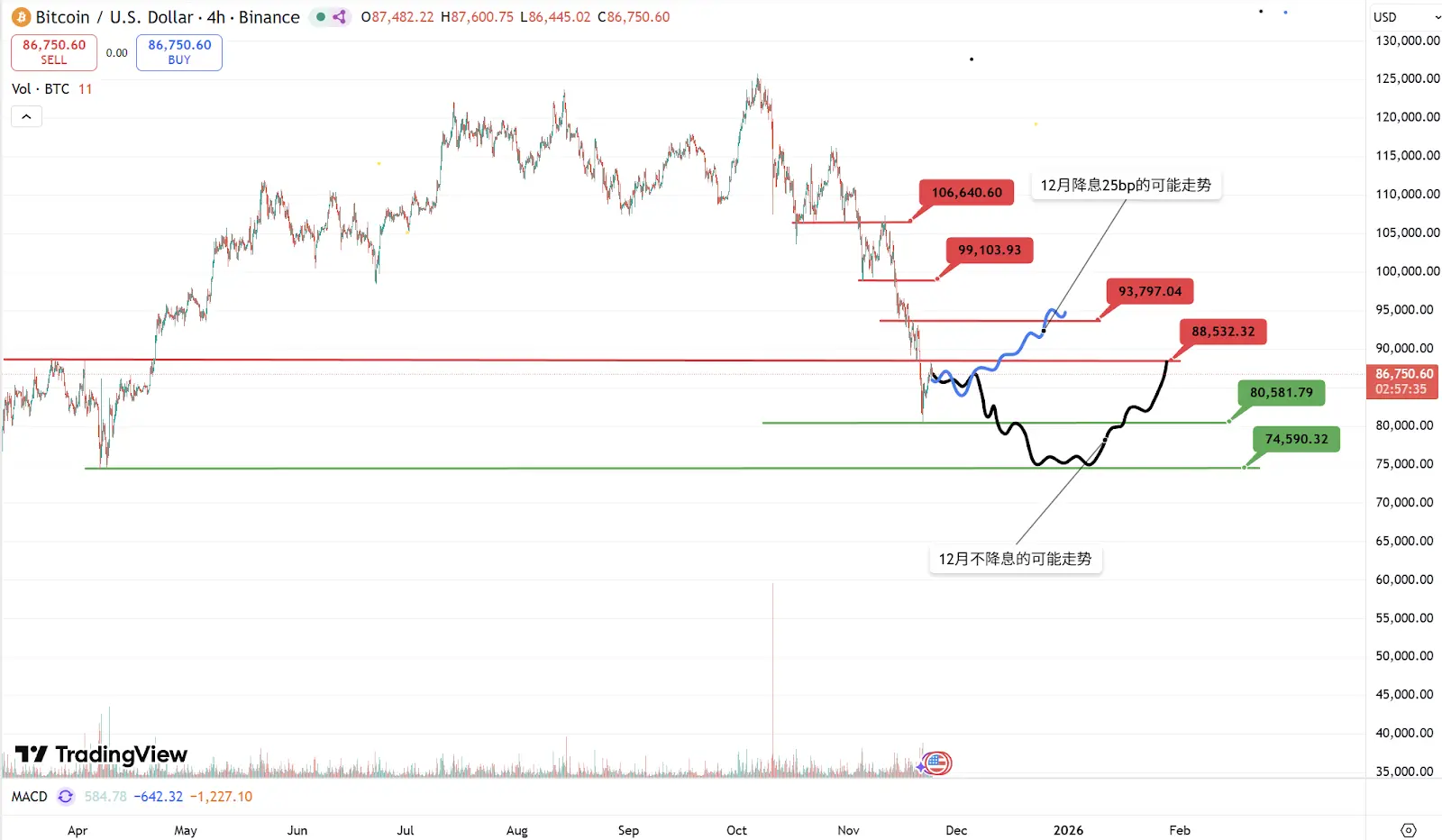
Last week, the cryptocurrency market continued to be heavily impacted, especially as Bitcoin fell below the $100,000 mark, triggering widespread panic. Bitcoin briefly dropped to around $80,000, hitting a new low in months; the entire cryptocurrency market cap has evaporated by over a trillion dollars since the peak in early October, with market sentiment plunging into extreme fear. Most investors were forced to reduce positions, and leveraged positions were severely liquidated, leading to an increase in the proportion of stablecoins and safe-haven assets, while altcoins and speculative sectors faced greater capital withdrawals.
Looking ahead, if Bitcoin cannot quickly rebound above $100,000 and hold that psychological support, the market may fall into a deeper bear market phase. Currently, three major risks need to be monitored: first, if expectations for macro policy easing are delayed, it will suppress cryptocurrency liquidity; second, if capital continues to withdraw and the scale of leveraged liquidations expands, it will further drive down prices; third, structural differentiation is intensifying, with leading coins having defensive measures, but smaller projects may become "pressure points for selling."
3. Industry and Sector Hotspots
Grass, a decentralized data layer led by Polychain with $10 million in funding, is designed specifically for artificial intelligence (AI) as a data layer (Data Layer) built in the form of a Sovereign Data Rollup; with a total funding of $50 million, the next-generation programmable cross-border payment layer Better Payment Network (BPN), led by YZilabs, is a programmable payments layer built natively on the BNB Chain, designed to achieve borderless, multi-stablecoin/multi-currency cross-border payments.
# II. Market Hotspot Sectors and Potential Projects of the Week
1. Overview of Potential Projects
1.1. Analysis of the Decentralized Data Layer Grass, Funded by Polychain with $10 Million
Introduction
Grass is a data layer (Data Layer) designed specifically for artificial intelligence (AI), constructed in the form of a Sovereign Data Rollup.
The network connects over 2 million users who contribute their underutilized network resources by running Grass Nodes, helping AI developers efficiently access data.
The Sovereign Data Rollup consists of Nodes, Routers, Validators, and ZK Processors, transforming unstructured network data into structured datasets, providing verifiable and high-quality data foundations for artificial intelligence.
This decentralized data aggregation method effectively prevents the centralization of AI power, allowing ordinary people to benefit from the development of artificial intelligence, promoting a fairer and more open AI ecosystem.
Protocol Architecture Overview
Grass is building the world's first Sovereign Data Rollup.
Through a globally distributed network of Grass nodes, Grass automates and structures the data acquisition and transformation processes, enabling artificial intelligence (AI) to universally and efficiently access organized network data.
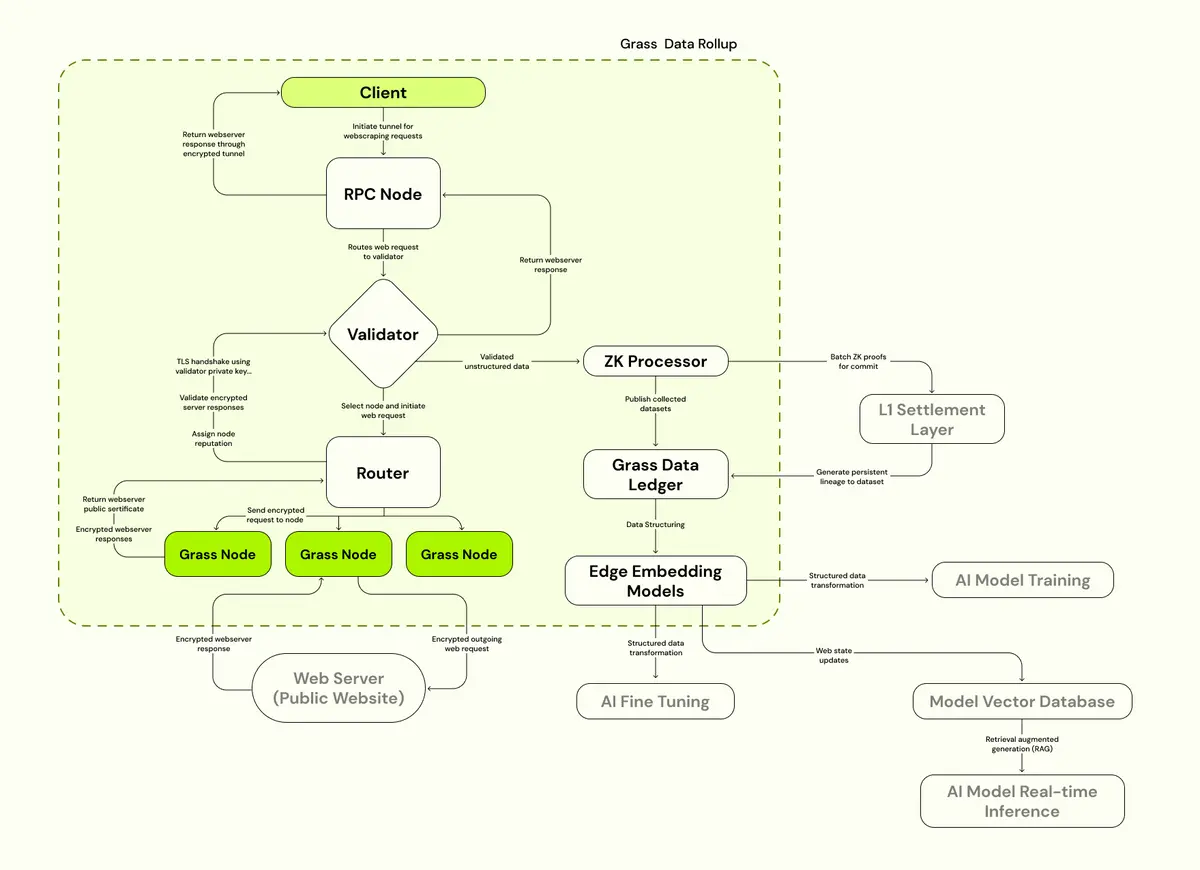
Sovereign Data Rollup Architecture
1. Validators
Validators are responsible for receiving, verifying, and processing batches of network transactions from routers.
They then generate zero-knowledge proofs (ZK Proofs) and record the checkpoint of session data on the blockchain.
On-chain proofs can be referenced for datasets to verify data provenance and track the entire lifecycle of the data.
The validator set initially adopts a centralized framework (with only a single validator) but will gradually transition to a decentralized multi-validator committee structure to achieve higher security and autonomy.
2. Routers
Grass routers serve as an intermediary layer connecting Grass Nodes and Validators.
Routers are responsible for:
Maintaining the traceability and reliability of the node network;
Forwarding network bandwidth;
Earning incentives and rewards based on the verified bandwidth proportion routed through them.
This mechanism ensures that traffic and data transmission within the network are verifiable and accountable, incentivizing routers to operate stably over the long term.
3. Grass Nodes
Grass Nodes utilize users' underutilized network bandwidth to help the network scrape public web data (excluding personal privacy data).
Running a node is free and simple, allowing anyone to contribute bandwidth to the network and earn corresponding rewards based on the data flow through the relay.
This mechanism enables millions of ordinary users to participate in the AI data ecosystem as "micro-nodes," becoming direct beneficiaries of the data economy.
4. ZK Processors
ZK Processors are responsible for batch processing the validity proofs of all web request session data and submitting these proofs to a Layer 1 blockchain.
This operation creates a permanent record on-chain for each data scraping action.
It lays the foundation for the traceability and total visibility of AI training data, ensuring that all data sources and uses are verifiable and auditable.
5. Grass Data Ledger
The Grass Data Ledger serves as a bridge connecting "scraped data" and the "Layer 1 Settlement Layer." This ledger is an immutable data structure,
Housing complete datasets;
Linking data to its corresponding on-chain zero-knowledge proofs.
Essentially, it is the data storage and tracking repository of the Grass network, ensuring the verifiability and non-falsifiability of data sources.
6. Edge Embedding Models
Edge embedding is the process of transforming unstructured network data into structured models. This includes all necessary steps for preprocessing raw data:
Data Cleaning
Normalization
Structuring
Ultimately generating a data format that meets AI model requirements, allowing the collected data to directly serve AI training and inference tasks.
Tron Comments
Grass's advantage lies in its innovative proposal of the "Sovereign Data Rollup" concept, transforming decentralized internet resources into structured data usable by AI through a decentralized node network, achieving a fully verifiable process for data collection, validation, storage, and provenance. It not only improves the quality and transparency of AI data but also allows ordinary users to directly participate in and benefit from the AI economy, combining technological innovation with social inclusivity.
The disadvantage is that its ecosystem is still in the early stages, with node quality, data compliance, ZK processing performance, and cost control needing validation; additionally, regulatory uncertainties regarding data scraping and privacy boundaries may pose significant risks for future expansion.
1.2. Interpretation of the Next-Generation Programmable Cross-Border Payment Layer Better Payment Network (BPN), Funded by YZilabs with $50 Million
Introduction
Better Payment Network (BPN) is a programmable payments layer natively built on the BNB Chain, designed to achieve borderless, multi-stablecoin/multi-currency cross-border payments.
Unlike traditional networks that rely on bridge-based cross-chain solutions, BPN interacts directly with native stablecoin liquidity and combines on-chain and off-chain clearing capabilities to support real-world foreign exchange and global payment orchestration.
This architecture allows BPN to achieve efficient, low-cost, and scalable cross-border fund circulation while maintaining decentralized security, providing a smarter and more open payment infrastructure for the global financial network.
Better Payment Network (BPN) Ecosystem
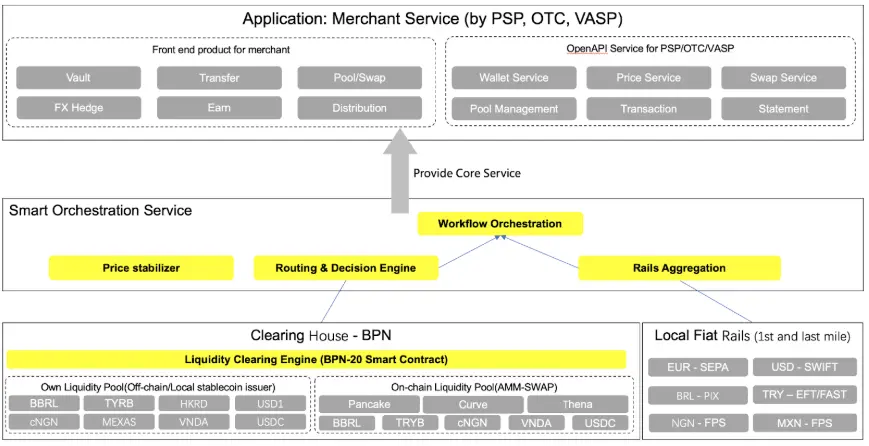
One Layer Architecture · One API Suite · Multiple Tokens and Use Cases
BPN is built on the concept of "lightweight yet infinitely scalable":
One Layer:
Using BNB Chain as the core foundational layer, ensuring industry-leading security, unified settlement logic, and minute-level operational efficiency.One API Suite:
Modular functional interfaces that can be assembled on demand, providing flexible payment solutions for users, wallets, payment service providers (PSPs), and e-commerce plugins.Multiple Tokens and Use Cases:
Redefining global payments, fund management, and foreign exchange trading experiences through a local stablecoin network, achieving borderless digital asset circulation.
1. Dual-Layer Clearing System
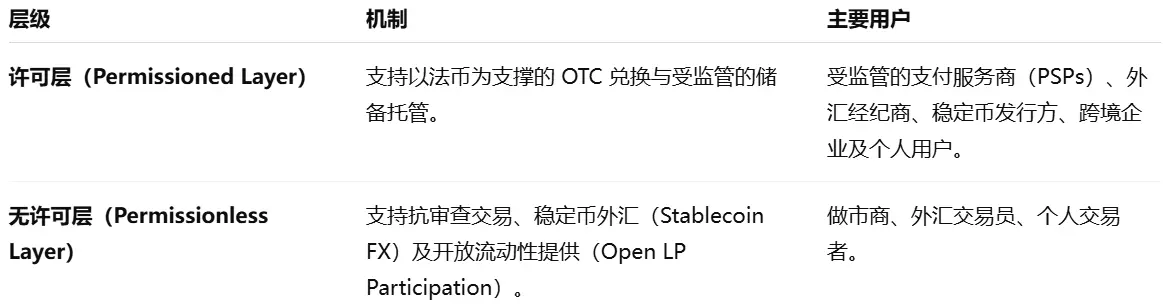
2. Liquidity Superhighway
BPN will transform the current fragmented liquidity landscape into a unified and deep liquidity system.
Its core driving mechanisms include:
Canonical Pools:
The protocol's own main stablecoin trading pair liquidity pools provide a stable and deep funding base for the network.Institutional Order Flow:
Directly integrated with traditional finance (TradFi) market makers to enhance liquidity and trading depth.Cross-Chain Aggregation:
Acquiring and integrating liquidity from multiple public chains such as BNB Chain and Ethereum to achieve a truly multi-chain interoperable payment infrastructure.
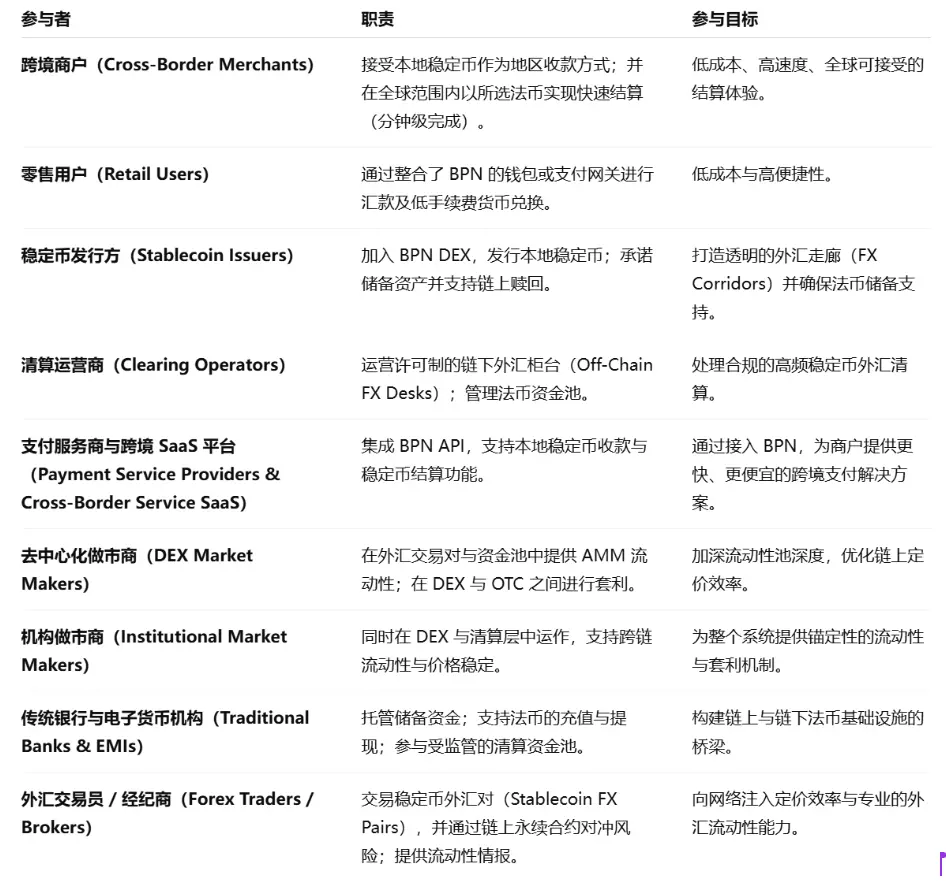
3. Participants in Better Payment Network (BPN)
BPN is permissionless at the protocol level, but it also provides compliance entry points structured by regulatory requirements in scenarios that need to meet compliance.
Economic Efficiency
1. Economic Flywheel
Cross-border payment demand → Stablecoin exchange → Foreign exchange trading → Derivatives layer
↑ ↘
More derivative demand ← Better price discovery ← Higher liquidity ← More market participants
This flywheel mechanism forms a self-reinforcing economic cycle:
Cross-border payment activities drive stablecoin usage;
Stablecoin exchanges generate foreign exchange trading demand;
Foreign exchange trading drives the development of the derivatives market;
Deeper liquidity and price transparency, in turn, attract more participants into the network, further expanding the scale and stability of the economy.
2. Value Capture
BPN's revenue sources include the following aspects:
Base Fee:
Charging a base fee for all on-chain and off-chain stablecoin transactions.Premium Charges:
Charging premiums for advanced features provided, such as earning (Earn), hedging (Hedge), distributing (Distribute), etc.Liquidity Leasing:
Renting out liquidity within the protocol to external protocols or institutions for profit.Stable Pairs Arbitrage:
Gaining price difference profits through stablecoin trading pair arbitrage operations.
These revenues collectively form a sustainable income loop for BPN, supporting protocol operations, ecosystem development, and incentive distribution.
3. Value Reinvestment
80% of the protocol's revenue will be redistributed for ecosystem incentives and sustainable growth:
Liquidity Providers:
Rewards for participants providing liquidity in stablecoin pairs and foreign exchange markets, ensuring market depth.Validators:
Incentives for nodes maintaining network consensus and clearing security.Ecosystem Development:
Supporting partner programs, product innovation, user growth, and developer funding, promoting long-term ecosystem construction for BPN.
Tron Comments
BPN's advantage lies in its innovative combination of a programmable payments layer with a dual-layer clearing mechanism, natively built on the BNB Chain, providing both decentralized flexibility and a compliance entry point to connect with the fiat world. Its design offers significant efficiency advantages in cross-border payments, stablecoin foreign exchange, liquidity aggregation, and multi-currency settlement, achieving a scalable global payment infrastructure through unified APIs and shared liquidity pools.
The disadvantage is that the ecosystem is still in the early stages, with uncertainties regarding integration with traditional financial systems, compliance implementation, and multi-country regulatory coordination; additionally, the network needs to balance security, liquidity depth, and user adoption to ensure long-term sustainable value capture.
2. Detailed Explanation of Key Projects of the Week
2.1. Detailed Analysis of Orochi Network, Funded with $20 Million, Led by the Ethereum Foundation and Co-Invested by MEXC—A Zero-Knowledge Engine for Verifiable Data Infrastructure
Introduction
Orochi Network is a verifiable data infrastructure that ensures data integrity and privacy protection through advanced cryptographic techniques.
Orochi Network provides a secure underlying architecture that enables data processing and verifiable proof without disclosing confidential information.
This mechanism, composed of cutting-edge cryptographic primitives, allows users to trust the system's output while protecting sensitive information.
Thus, Orochi Network becomes a powerful solution balancing transparency and confidentiality, particularly suitable for applications with high trust and privacy requirements.
Orochi Network is an innovative verifiable data infrastructure that is redefining data processing in the digital age.
With security and trustlessness as core principles, Orochi Network employs advanced cryptographic techniques, including zero-knowledge proofs (ZKP), fully homomorphic encryption (FHE), and trusted execution environments (TEE), to fundamentally ensure data integrity and privacy.
Whether for enterprises, developers, or individual users, Orochi Network offers a secure and robust platform for processing and verifying data without disclosing privacy, achieving a perfect balance between transparency and confidentiality. It provides a forward-looking foundational solution for a world increasingly reliant on trusted and private data systems.
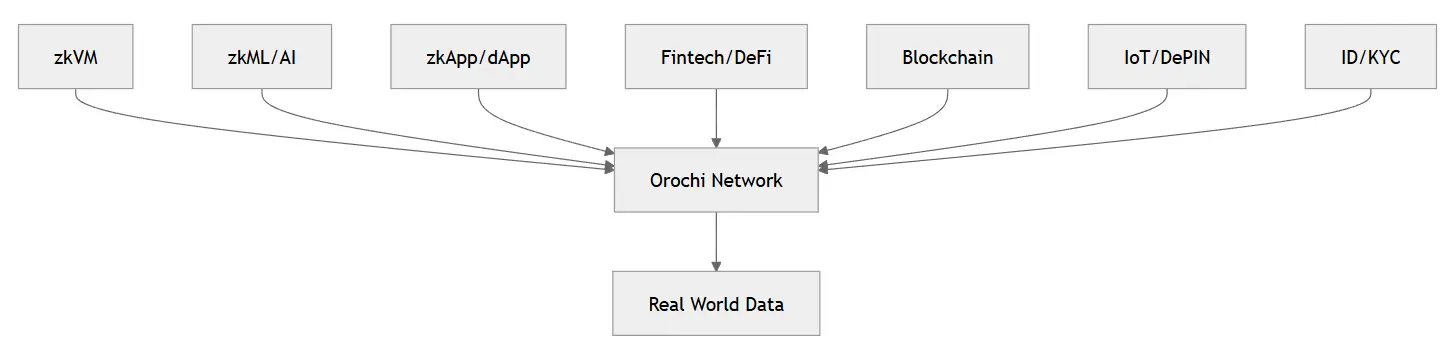
Image: Orochi Network transforms data into verifiable data, becoming the core support of the new generation of the internet.
Architecture Overview
Orochi Network provides robust support for various commitment schemes and proof systems, making it stand out in the field of secure data infrastructure.
The system employs mechanisms such as Merkle trees and polynomial commitments to ensure the efficiency and verifiability of data processing.
Additionally, Orochi Network integrates various advanced zero-knowledge proof systems, including Halo2, Pickles, ZK-STARK, and Plonky3.
These systems possess succinctness, scalability, and even post-quantum security features.
This diversity and flexibility significantly enhance the system's privacy, interoperability, and efficiency, making Orochi Network a powerful underlying solution for blockchain ecosystems and decentralized applications (dApps) when using cutting-edge cryptographic tools.
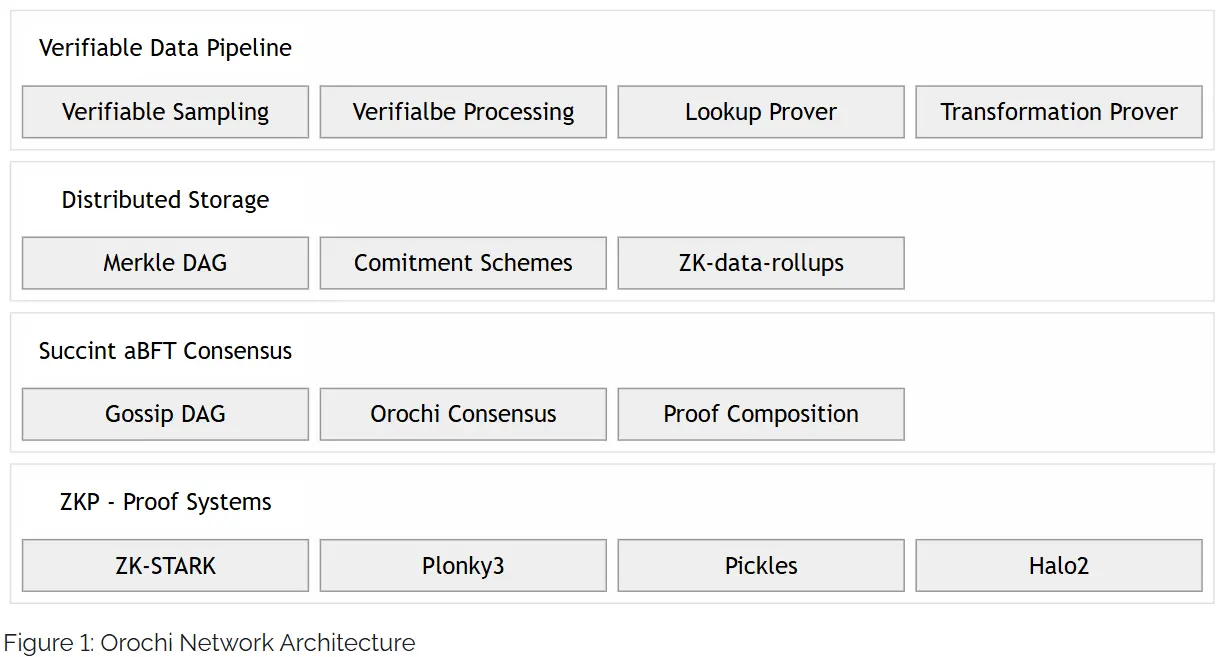
Verifiable Data Pipeline
Orochi Network not only provides data availability but also offers cryptographic proofs for every stage of data processing—from sampling to storage and retrieval—through its verifiable data pipeline.
This end-to-end verifiability greatly enhances trust and transparency in blockchain applications.
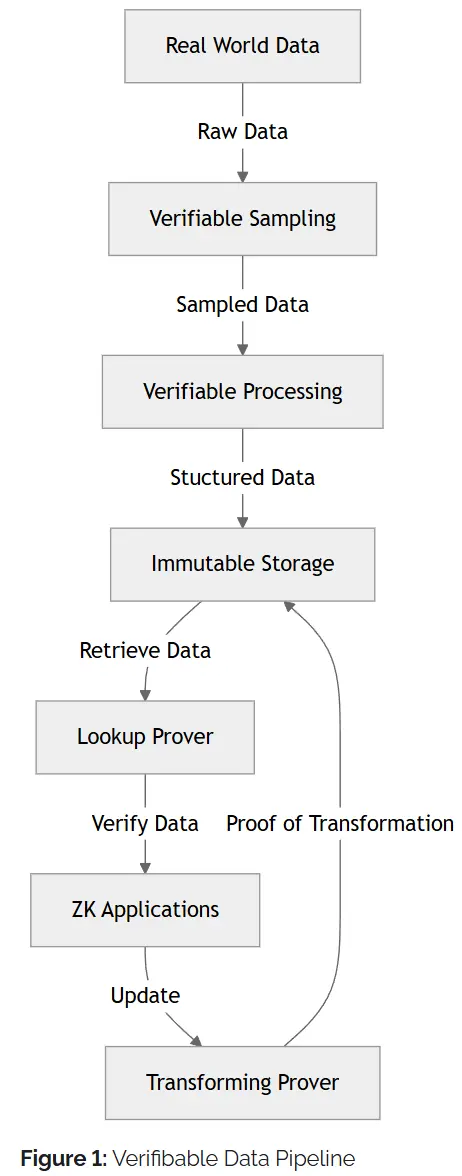
1. Verifiable Sampling
Proving the authenticity of data samples, which can originate from endpoints such as blockchains, APIs, or databases. The prover generates succinct proofs to verify the integrity of data samples (e.g., TLS certificate verification) and their compliance with specific sampling algorithms.
2. Verifiable Processing
In the subsequent steps after sampling, proving that the original data has been accurately transformed into structured data according to predefined algorithms.
3. Lookup Prover
Verifying whether lookup operations in BTree data structures are correct and combining them with membership proofs from commitment schemes (e.g., Merkle trees). Ensuring that the retrieved key-value pairs indeed exist in the committed dataset and generating succinct proofs that simultaneously verify lookup correctness and data inclusion.
4. Transformation Prover
Verifying the correctness of data updates and structural transformations. Ensuring that data records have been accurately modified (e.g., insertion, deletion, or format change) and conform to predefined data structure schemas, ultimately generating zero-knowledge proofs bound to commitment schemes (e.g., Merkle roots).
Distributed Storage
Distributed storage consists of three core components:
1. Merkle DAG
A hierarchical hash node structure that achieves content-addressed storage. By linking data through cryptographic hashes, it ensures data integrity and efficient retrieval across systems.
Each node can verify the correctness of its subtree, guaranteeing global consistency.
2. Commitment Schemes
Cryptographic tools such as Merkle trees or polynomial commitments used to bind data to a single value (e.g., root hash). This allows the prover to verify authenticity or membership without exposing the complete dataset, thereby establishing trust in a succinct manner.
3. Zero-Knowledge Data Rollups
A scalability solution utilizing zero-knowledge proofs (ZKP) to compress off-chain data updates into succinct on-chain proofs,
efficiently verifying storage operations while maintaining privacy, achieving a high-throughput decentralized storage system.
Succinct aBFT Consensus
Unlike traditional consensus mechanisms, Orochi Network's succinct asynchronous Byzantine fault-tolerant consensus (aBFT) achieves fast finality through asynchronous mechanisms.
This mechanism can quickly confirm transactions while tolerating faults and uses zero-knowledge proofs (ZKP) to cryptographically verify the integrity of the entire blockchain state in a succinct and verifiable manner.
- Gossip DAG
Used to record transactions and messages propagated between nodes. Information is disseminated through the Gossip protocol, organized into a tamper-proof directed acyclic graph structure, with each node's hash linked to preceding events, ensuring traceability and verifiability of network activities.
- Orochi Consensus
Orochi Network's dedicated asynchronous Byzantine fault-tolerant mechanism (aBFT) achieves consistency among distributed nodes even in adversarial network environments without synchronous time assumptions, combining high resilience and speed.
- Proof Composition
By aggregating multiple zero-knowledge proofs into a single succinct proof, the correctness of the entire consensus process and blockchain state can be efficiently verified, significantly reducing computational overhead for verifiers and users.
Zero-Knowledge-Centric Architecture
Orochi Network positions itself as the first verifiable data infrastructure, emphasizing zero-knowledge proofs (ZKP) as the core for efficient and verifiable data processing. This architecture is particularly suitable for applications with high privacy and trust requirements.
- Proof-System Agnostic
Orochi Network supports various zero-knowledge proof systems, such as Halo2, ZK-STARK, and Pickles, allowing developers to freely choose the most suitable proof scheme based on the scenario, providing high flexibility.
- Blockchain Agnostic
The network is designed to be blockchain-agnostic, enabling integration with different public chains to achieve cross-ecosystem compatibility and scalability.
- Succinct Hybrid aBFT Consensus
This consensus mechanism supports asynchronous finalization, significantly improving efficiency and throughput compared to synchronous architectures adopted by some competing projects.
Tron Comments
Orochi Network's advantage lies in its innovative combination of zero-knowledge proofs (ZKP), fully homomorphic encryption (FHE), and trusted execution environments (TEE) to build a verifiable and privacy-protecting data infrastructure. Its verifiable data pipeline and ZK-Data-Rollups achieve end-to-end verifiability of data from sampling, processing to storage, providing high security, transparency, and scalability for blockchain and decentralized applications.
The disadvantage is the high technical complexity, which poses a significant barrier for developers and node operators; additionally, the computational costs and performance optimization of ZKP and FHE remain industry challenges. How to balance privacy and efficiency will determine the speed of its ecosystem's implementation and large-scale adoption.
# III. Industry Data Analysis
1. Overall Market Performance
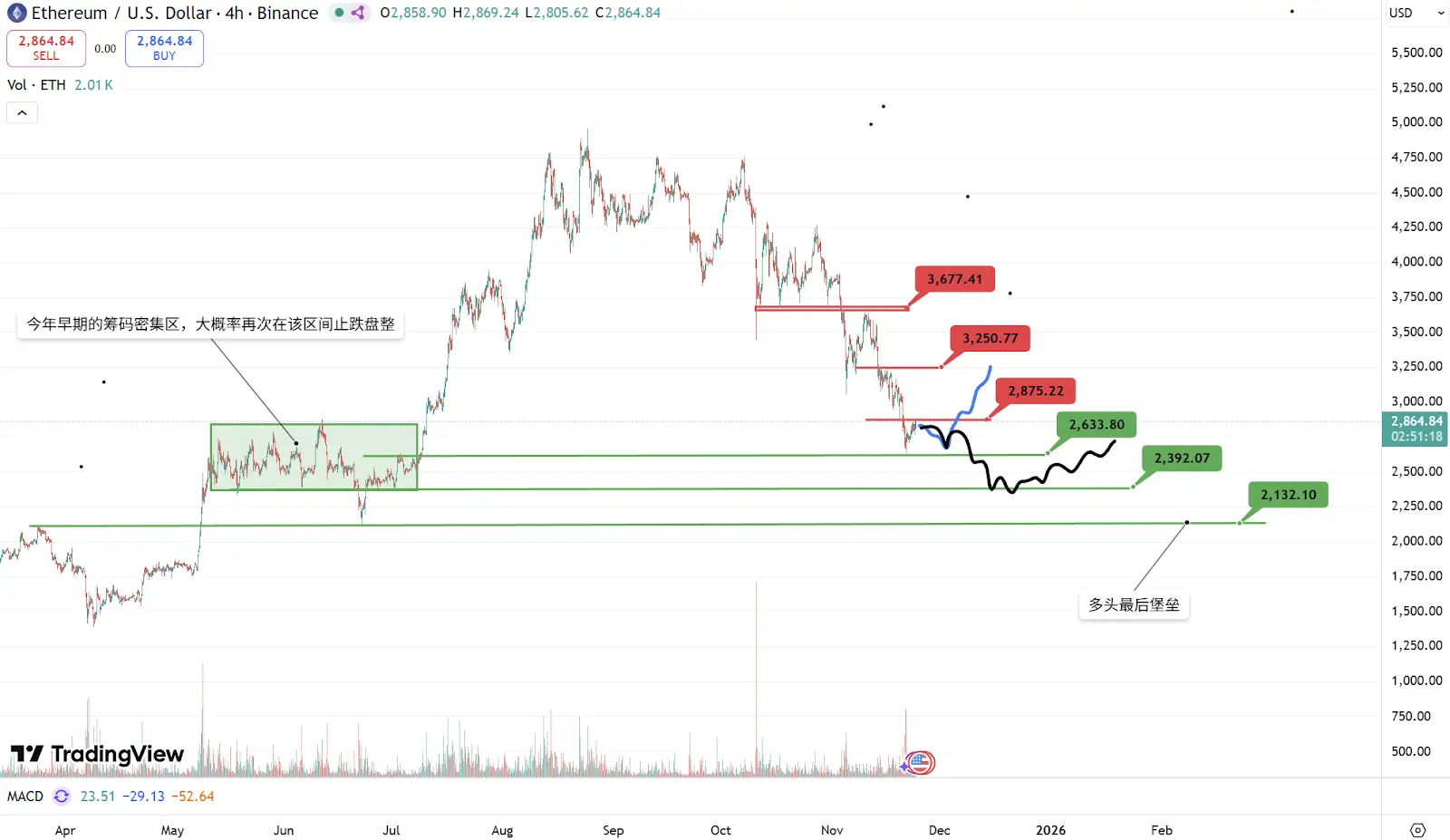
1.1. Price Trends of Spot BTC vs ETH
BTC
ETH
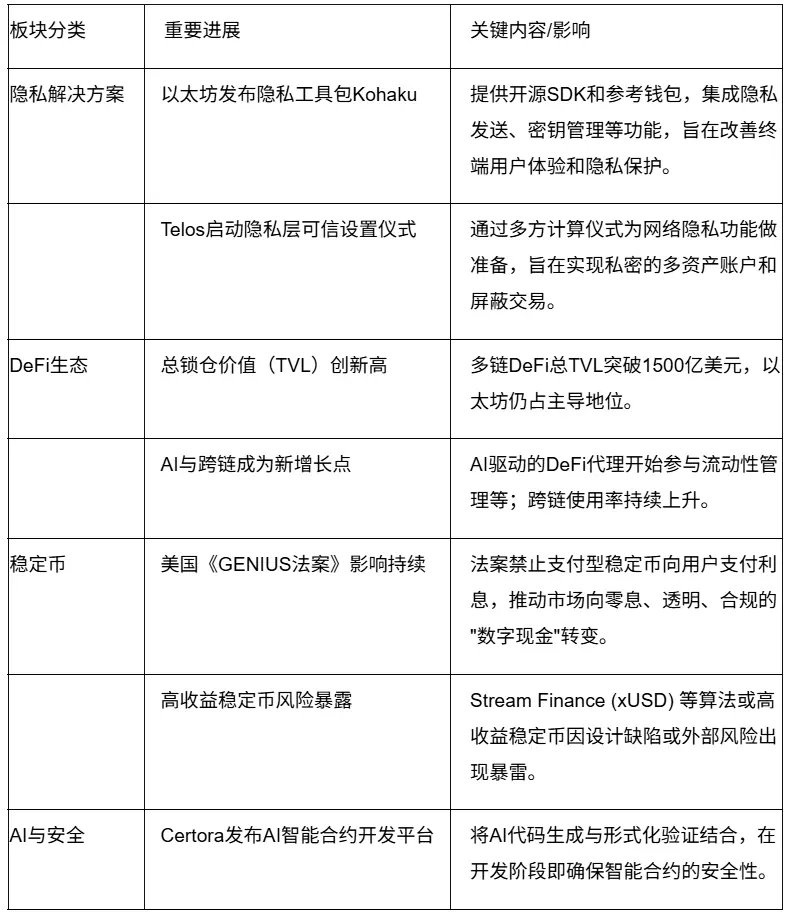
2. Summary of Hot Sectors
# IV. Review of Macroeconomic Data and Key Data Release Points for Next Week
Last week, the U.S. inflation and employment data for September released on November 20 showed a complex situation of "sticky inflation and weak employment": the September CPI year-on-year recorded about 3.0%, month-on-month 0.3%, with core CPI also at 3.0%. Although inflation was slightly below expectations, it remained significantly above the Federal Reserve's 2% target; at the same time, the non-farm payrolls added 119,000 jobs in September, exceeding market expectations, but the unemployment rate rose to 4.4%, reflecting weakened resilience in the labor market.
This set of data overall signals "prices are not going down, and employment is not strong," narrowing the Federal Reserve's policy space and suggesting that the path to interest rate cuts may be more cautious than previously expected by the market.
# V. Regulatory Policies
Global Cooperation
- G20 Group: At the 2025 summit, G20 leaders reached a declaration aimed at coordinating global cryptocurrency regulation, focusing on the standardization of stablecoins and decentralized finance (DeFi) to balance innovation and systemic risk mitigation.
United States
This week, the U.S. released multi-layered signals regarding cryptocurrency regulation.
Federal Regulatory Progress:
Office of the Comptroller of the Currency (OCC): Issued new guidelines allowing national banks to hold and use cryptocurrencies (e.g., for paying blockchain network fees) when necessary to support legitimate banking activities. This is seen as a relaxation of restrictions on banks' direct participation in cryptocurrency activities.
Commodity Futures Trading Commission (CFTC): Nominated Chairman Michael Selig promised at a Senate hearing that if authorized, he would establish a clear, principle-based regulatory framework for the digital asset spot market.
Securities and Exchange Commission (SEC): In its review priorities for the 2026 fiscal year, it did not mention cryptocurrencies, differing from previous years, which may reflect a shift in regulatory focus.
State-Level Policy Innovations:
New Hampshire: Approved the first Bitcoin-backed municipal pipeline bond, totaling $100 million. This structure allows borrowers to finance using over-collateralized Bitcoin while protecting investors through a clearing mechanism and isolating related risks from taxpayers.
Asia
Major countries and regions in Asia continue to refine their cryptocurrency asset regulatory frameworks.
Japan: The Financial Services Agency (FSA) proposed classifying 105 cryptocurrencies, including Bitcoin and Ethereum, as financial products, subjecting them to the same regulatory framework as stocks and bonds, and plans to amend tax laws to fix the tax rate on cryptocurrency gains at 20%.
Hong Kong: Building on the stablecoin framework launched in June, the Hong Kong Monetary Authority (HKMA) is considering extending anti-money laundering and counter-terrorism financing controls to self-custody wallets.
Singapore: The Monetary Authority of Singapore has made it clear that only fully regulated, reserve-backed stablecoins are eligible as settlement assets.
Thailand & Malaysia:
Thailand lifted the ban on "conflict of interest tokens" for internal use by exchanges but requires them to meet strict disclosure and monitoring requirements.
Malaysia launched a new "liberalized listing framework," allowing exchanges to list tokens without prior approval, provided they comply with enhanced governance and capital requirements.
South Korea: Is incorporating virtual asset companies into its risk enterprise ecosystem, enabling them to access risk financing and tax incentives.
 Risk warning Risk warning



Popular articles





