BTC $68,922.00 -3.86%
ETH $1,953.79 -2.50%
BNB $639.99 -1.95%
XRP $1.03 +0.43%
SOL $80.86 -0.18%
TRX $0.3132 -0.69%
DOGE $0.0659 +1.34%
ADA $0.1734 +2.54%
BCH $227.42 +0.51%
LINK $10.08 +2.02%
HYPE $74.09 +4.83%
AAVE $113.95 +0.60%
SUI $0.8207 +3.97%
XLM $0.1499 +4.49%
ZEC $960.29 -1.26%
AAPL $360.24 +0.55%
AMZN $268.77 -1.52%
GOOGL $301.74 +1.93%
MSFT $522.91 -0.52%
META $634.69 +1.39%
NVDA $162.31 -0.18%
TSLA $393.27 -0.39%
SNDK $882.63 -5.02%
INTC $59.10 -2.64%
SPCX $139.36 -2.84%
MU $778.58 -0.47%
AMD $547.03 -3.84%

server

All
Article
Flash

The super fusion spun off by Huawei has passed the review and plans to raise 8 billion yuan

The server manufacturer Super Fusion has passed the review of the listing committee of the Shenzhen Stock Exchange's Growth Enterprise Market for its IPO, planning to raise 8 billion yuan, setting a new high for the fundraising scale of companies going public on the Growth Enterprise Market this year. Super Fusion was formerly Huawei's x86 server business, which was spun off from Huawei in 2021 and is currently actually controlled by the Henan Provincial State-owned Assets Supervision and Administration Commission. According to IDC data, Super Fusion is expected to rank second in China's server market in terms of shipment volume by 2025, with a market share of 14.2%.The company's revenue for 2025 is projected to be 58.246 billion yuan. In the first half of 2026, revenue reached 37.286 billion yuan, with AI servers contributing approximately 19.852 billion yuan, accounting for 53.29% of the main business income. During the same period, net profit was 2.108 billion yuan, more than double that of the entire previous year. The net cash outflow from operating activities during the same period was 15.685 billion yuan, and short-term loans increased from 1.563 billion yuan at the end of last year to 18.026 billion yuan.The company stated that the growing demand for AI servers requires advance procurement of chips and components, suppliers demand quicker payments, while customer payments are relatively slow, leading to funds being tied up in inventory and accounts receivable. As of the end of June, the inventory balance was 35.662 billion yuan. During the review by the Shenzhen Stock Exchange, questions were raised about whether performance growth can be sustained, as well as risks related to cash flow, customer and supplier concentration, etc. Currently, the IPO has only passed the listing committee review and has not yet completed registration and issuance.

first_img AMD reveals its 2-nanometer server processor layout, aiming for mass production in 2027

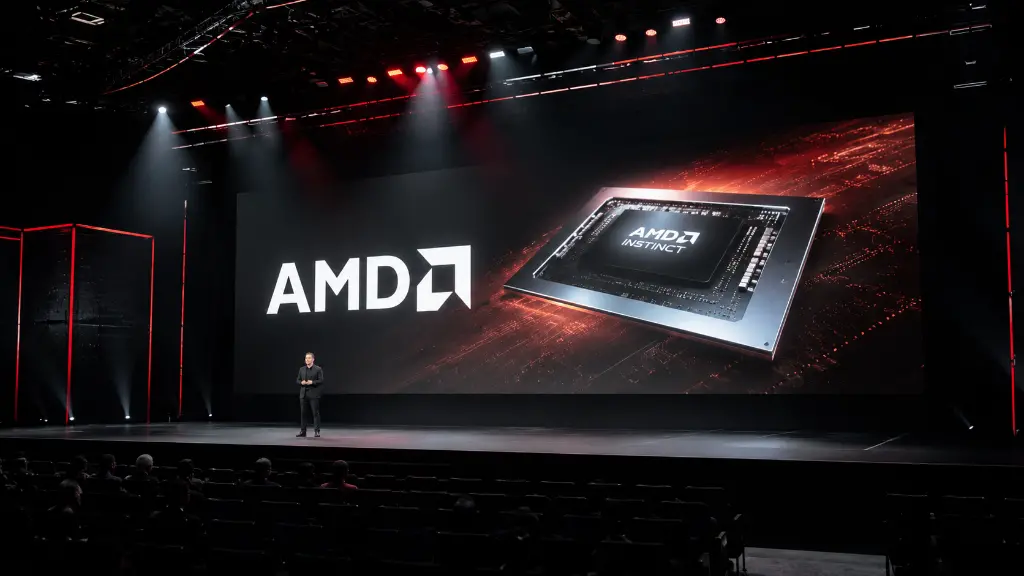
AMD disclosed server processor and die interconnect layout at the In Depth technology forum. Venice uses TSMC's N2 process and CoWoS-L advanced packaging, and introduces elevated fan-out bridge (EFB). The subsequent Verano will adopt the N2P process. AMD's server architecture head Mahesh Subramony stated that as the number of computing cores increases, more data needs to be transmitted between dies, and EFB reduces power consumption and latency through short-distance interconnects. AMD expects the data center CPU market size to grow from approximately $26 billion in 2025 to about $220 billion in 2030, with a compound annual growth rate of over 50%.In terms of packaging collaboration, ASE and SPIL are involved in the development and validation of wafer-level 2.5D bridge interconnects, and AMD has completed panel-level EFB interconnect validation with Powertech. AMD announced in May 2026 that it will invest over $10 billion in the Taiwanese industrial ecosystem to expand strategic cooperation and advanced packaging capabilities. Regarding product progress, the Venice SP7 platform has been shipped, with the SP8 aimed at the enterprise market expected to be supplied in the first half of 2027, and Verano and Venice-X scheduled for release in the second half of the same year, with related server processor products targeted for mass production in 2027.

BTCPay Server: Vulnerability in the old version led to theft of funds from hot wallets, users are advised to migrate immediately

The open-source Bitcoin payment processing tool BTCPay Server has received multiple reports of unauthorized fund theft from its Bitcoin and Litecoin hot wallets on the platform. The project team released an investigation update confirming that the attack targeted servers running BTCPay Server version 2.4.1 or earlier. The attackers exploited a vulnerability that was fixed in version 2.4.2 on August 7, gaining administrative access to the servers through various methods and draining the hot wallet funds.BTCPay Server founder Nicolas Dorier confirmed that only servers running versions prior to 2.4.2, particularly version 2.4.1, were affected; users running the latest version 2.4.7 have not reported any credible losses. Some affected service providers, including LunaNode, have automatically shut down at-risk older instances. The official recommendation for users still using version 2.4.1 or earlier is to immediately transfer any remaining funds in old hot wallets to a new wallet created with a completely new mnemonic, take the old server offline while retaining relevant logs, and then install the latest version on a new virtual machine and connect the new wallet, ensuring not to restore the old server entirely to the new machine.Simply updating the software version is not enough to eliminate the risk, as attackers may have gained persistent access to the old server. Funds stored outside the server, such as those in hardware wallets, were not affected by this incident. The vulnerability is related to a flaw fixed in August of this year, when attackers had manipulated nodes by obtaining LND administrative credentials. As of now, this vulnerability has not been assigned a CVE number and is not listed in CISA's known exploited vulnerabilities catalog.
app_icon
ChainCatcher Building the Web3 world with innovations.