BTC $64,897.96 +1.02%
ETH $1,819.68 +0.99%
BNB $591.77 +0.75%
XRP $0.9714 +2.31%
SOL $73.66 +3.84%
TRX $0.3062 +0.74%
DOGE $0.0593 +1.83%
ADA $0.1543 +2.06%
BCH $212.68 +3.63%
LINK $9.31 +2.50%
HYPE $69.45 +6.31%
AAVE $113.09 +5.12%
SUI $0.7349 +2.98%
XLM $0.1403 +2.77%
ZEC $947.45 +9.78%
AAPL $351.92 -1.61%
AMZN $259.01 -1.82%
GOOGL $282.62 -3.88%
MSFT $515.00 -2.00%
META $621.38 -2.83%
NVDA $157.38 -0.18%
TSLA $381.38 -1.18%
SNDK $816.32 -1.31%
INTC $54.77 -3.39%
SPCX $138.13 -0.27%
MU $727.67 -0.70%
AMD $512.46 +1.67%

goo

All
Article
Flash

first_img Ming-Chi Kuo: Google TPU shipment visibility extended to 2029

Tianfeng International Securities analyst Guo Mingqi stated that his latest industry survey shows that new orders from OpenAI and Anthropic will extend the visibility of Google TPU shipments to 2029, earlier than Nvidia GPU and other AI ASICs (most of which are from the fourth quarter of 2027 to the second quarter of 2028). He indicated that starting from 2028, v9 will become the main force of Google’s self-built computing power, thus orders for the v8 series (8t, 8i, or its design variants) can be seen as coming from OpenAI and Anthropic. The total demand from 2028 to 2029 is approximately 12 million units from OpenAI (8t designed by MediaTek) and 14 million units from Anthropic (8i designed by Broadcom), both of which will grow year by year; OpenAI will adopt a buyout model, while Anthropic will use both leasing and buyout.Guo Mingqi mentioned that the v10 product line has been adjusted from Icefish and Merope/Bladerunner to Quillfish, with mass production expected in 2029, and the design service order obtained from MediaTek. Icefish has been changed to v11, with mass production expected in 2030, and the design service order also obtained from MediaTek; Merope has lower visibility, with the supplier undecided, and it may also be canceled. MediaTek will be the sole design supplier for v9 (Humufish and Triggerfish) and v10 (Quillfish), accounting for approximately 45% to 50%, 50% to 55%, and 55% to 60% of total TPU supply from 2027 to 2029, respectively. Starting from v9, the new TPU models will adopt Intel EMIB-T advanced packaging; due to initial capacity constraints, the main shipments until 2029 will still be from the v8 series.Guo Mingqi stated that under supply chain constraints, the more reasonable TPU shipment estimates from 2027 to 2029 are 8 million to 9 million units, 14 million to 15 million units, and 16 million to 18 million units, respectively. He indicated that the market generally expects AI capital expenditures to peak in 2028, but the above plans show that TPU shipments will still grow in 2029, primarily driven by direct orders from OpenAI and Anthropic. He also mentioned that MediaTek has been the sole design supplier since v9, with high-margin 8t series shipment visibility extending to 2029; Broadcom leads the design of 8i, which has a higher profit margin than 8t, but its focus in the coming years will be on non-TPU XPU and AI network chips, with non-TPU revenue potentially exceeding TPU revenue as early as 2027.

Viewpoint: After Jensen Huang's absence, customers accelerate the evaluation of AMD and Google chips

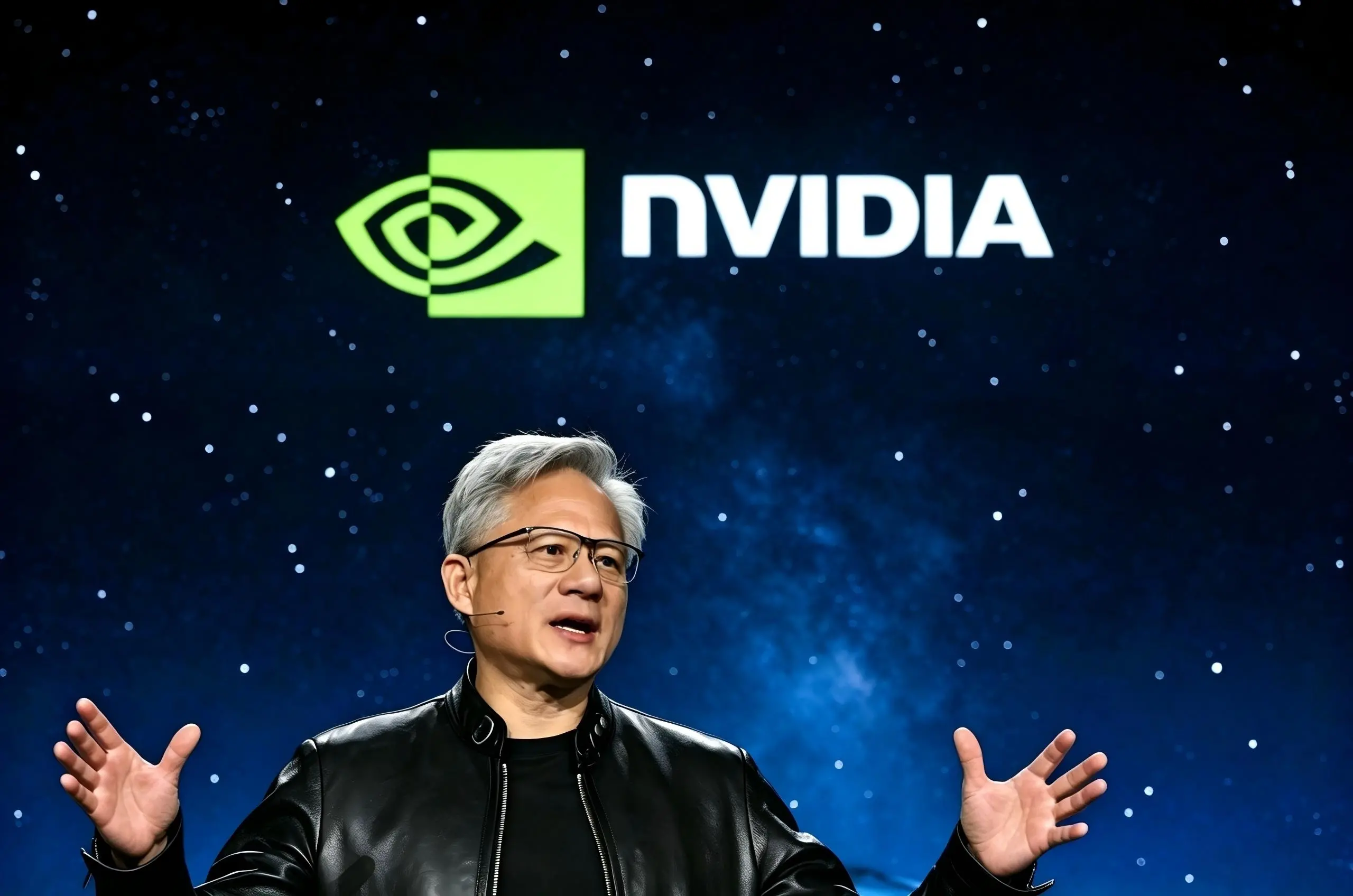
Semiconductor analyst Jukan forwarded a report from The Information and commented that an executive from a cloud provider purchasing NVIDIA chips stated that the uncertainty surrounding Jensen Huang is prompting the company to seriously evaluate other chip options, including products from Google and AMD. The executive mentioned that the company had previously considered diversifying to reduce dependence on NVIDIA hardware but refrained due to concerns about offending Jensen Huang; now there is greater worry that his absence could affect the quality and roadmap of future generations of NVIDIA chips, as he plays a crucial role in the company's technology and customer relationships.Jukan pointed out that preventing major customers from further diversifying to other chip manufacturers' AI servers will be one of the key challenges faced by interim CEO Colette Kress and her future official successor. Several customers also indicated that, at least in the short term, NVIDIA chips are still expected to be in short supply, and changes in the management team will not alter the market's perception of its AI server chips as "industry best." Additionally, Kress will need to manage the company's relationships in Washington, where Jensen Huang previously had a close relationship with Trump and actively promoted adjustments to export restrictions to China, but at the same time, he also made enemies in Washington, with some describing his style as combative and feeling pressured. Jukan believes that the uncertainty in leadership is beginning to loosen NVIDIA's lock-in effect on the customer side.
app_icon
ChainCatcher Building the Web3 world with innovations.