BTC $63,129.84 -0.99%
ETH $1,770.13 -0.84%
BNB $583.62 -0.49%
XRP $0.9806 +2.32%
SOL $73.67 +1.94%
TRX $0.3083 +0.59%
DOGE $0.0589 +0.67%
ADA $0.1519 +0.00%
BCH $207.98 +0.32%
LINK $9.09 -0.26%
HYPE $66.95 -2.37%
AAVE $109.02 -0.73%
SUI $0.7161 -0.44%
XLM $0.1395 +1.41%
ZEC $932.35 +0.45%
AAPL $353.97 +0.84%
AMZN $266.55 +3.52%
GOOGL $281.72 -0.19%
MSFT $504.43 +0.65%
META $616.52 -0.54%
NVDA $151.84 -1.06%
TSLA $384.60 +1.11%
SNDK $772.88 -1.80%
INTC $54.46 +1.28%
SPCX $144.61 +2.62%
MU $700.57 +0.63%
AMD $516.26 +5.54%

micron

All
Article
Flash

Reuters statistics show that 138 institutions cleared out their data center stocks in the third quarter

According to Reuters' statistics on nearly 6,400 13F filings, in the third quarter, 138 institutions completely liquidated their data center stocks, more than the 119 that opened new positions; 212 institutions liquidated in the power and utilities sector, while 96 opened new positions. Among the institutions that held semiconductor stocks for two consecutive quarters, 2,951 increased their positions, 2,584 reduced their positions, 77 opened new positions, and 69 liquidated their positions, with the number of institutions holding AI-related stocks increasing by 33.The next day, NVIDIA announced its fiscal quarter results for the period ending October 25, with revenue of $115.8 billion, a year-on-year increase of 103%, and data center revenue of $107.6 billion, a year-on-year increase of 110%. The guidance for the next fiscal quarter is $130 billion, excluding revenue from data center computing in China. The above 13F holdings cutoff date is September 30, and the statistical scope is based on the number of institutions rather than the amount, excluding short positions.The publicly available 13F shows that Leopold Aschenbrenner's Situational Awareness disclosed a total value decrease from $20.24 billion to $1.58 billion, with IREN reducing its holdings by 94.4% and liquidating 4.83 million shares of Micron. Renaissance Technologies reduced its holdings in NVIDIA from 7.09 million shares to 23,200 shares, while increasing its holdings in Micron by approximately 619% to 1.52 million shares. David Tepper's Appaloosa increased its holdings in NVIDIA by 31% to 2 million shares, Third Point established a new position of 1.5 million shares, and Tiger Global increased its holdings by 7% to 12 million shares.

Micron pauses its $4.5 billion factory plan in Taoyuan, labor disputes threaten AI storage expansion

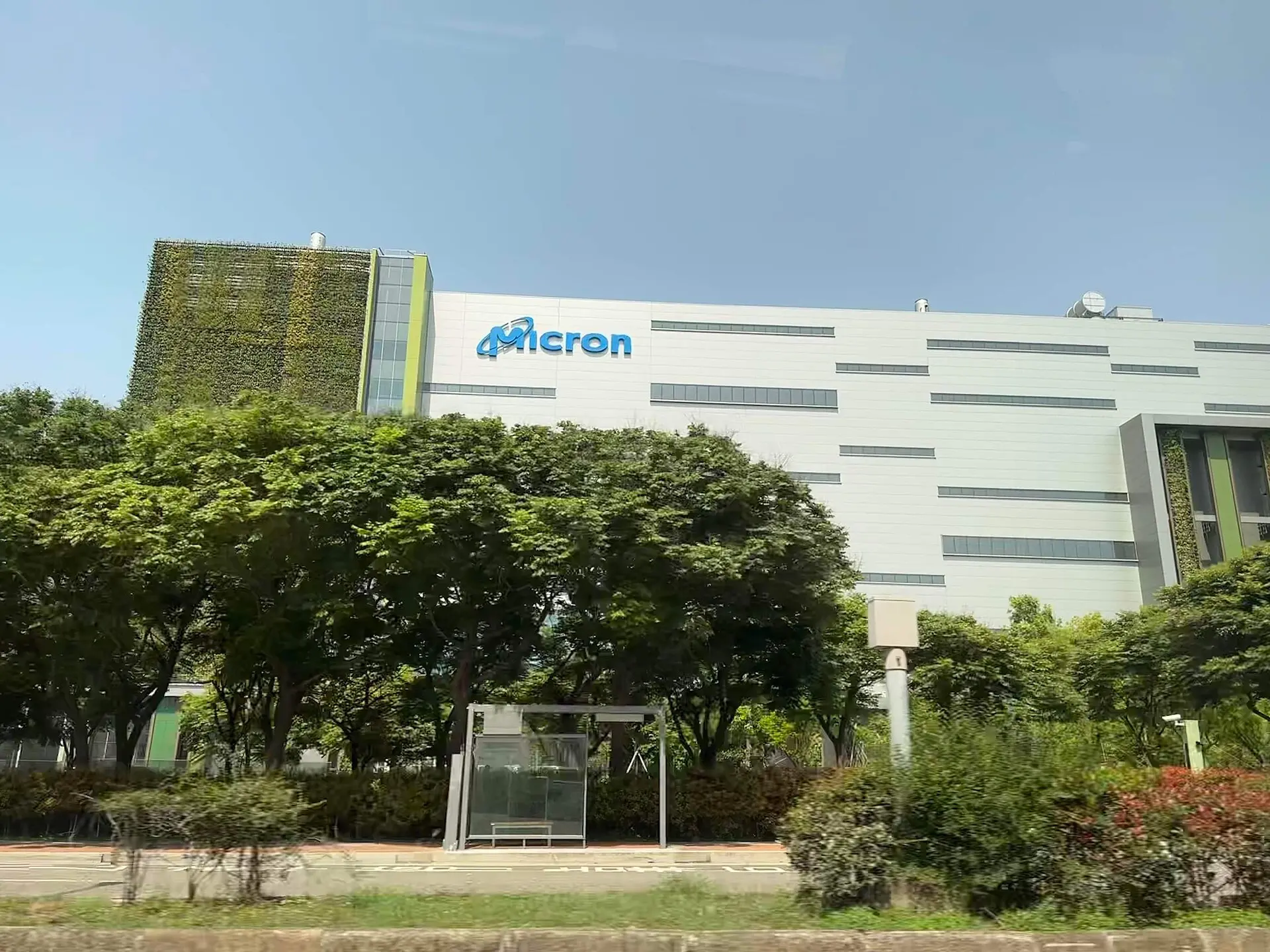
According to Bloomberg, due to ongoing labor disputes with employee unions, Micron Technology has essentially suspended its plans to build a new storage chip factory in Taoyuan, Taiwan, with a project investment budget of $3 billion to $4.5 billion, originally scheduled to start production in 2028. Sources indicate that Micron is concerned that the agreement reached with the union may be overturned, and currently only a small amount of site safety maintenance work is being retained, after which construction will be frozen.The dispute arises from employees' demands to share the profit growth brought by the AI boom. The Taoyuan union is requesting that Micron distribute 15% of its operating profits to global employees and hopes to receive a full cash bonus rather than a portion in stock. Although Micron reached an agreement with the larger Taichung union in October, some employees are dissatisfied with the terms of the agreement, and the Taoyuan union is attempting to expand its organization to push for renegotiation.The project was originally planned to produce high-bandwidth memory (HBM) and DRAM using ASML's advanced equipment. Taiwan currently contributes about 60% of Micron's DRAM output and is also an important production base for HBM, employing approximately 15,000 people. Micron responded that the company's existing operations in Taiwan are normal and will ensure business continuity for customers, but did not directly comment on the suspension of the Taoyuan project. Taiwan's economic department stated that the government will assist Micron in resolving differences with the union and promote the implementation of the investment plan.

first_img Micron is developing a physical AI-specific edge inference memory

Micron Technology Vice President Li Zhe stated at the Korea Semiconductor Exhibition SEDEX 2026 held at COEX in Seoul that the company is developing Edge Inference Memory (EIM) for physical AI. The industry expects this product to enter mass production in the second half of 2028. Micron is researching the use of EIM in LPDDR6 to meet the demand for low-power DRAM in applications such as autonomous driving and humanoid robots, and is in discussions with major customers regarding related products.According to a report by the Science and Technology Innovation Board Daily, EIM is positioned between AI chips and memory, utilizing a method of stacking LPDDR on logic chips to process inference data at high speed, although the computing architecture has not been fully disclosed. Li Zhe mentioned that current robotic AI models have about 1 billion to 2 billion parameters, with low bandwidth requirements; however, as more advanced visual language models emerge, LPDDR alone will not suffice, and HBM will eventually be used for humanoid robots. Micron anticipates that future high-performance humanoid robots will require approximately 200 GB of DRAM and 4 TB of storage, while current service robots require about 12 GB of DRAM and 256 GB of storage.Micron CEO Sanjay Mehrotra stated that the storage capacity of a single humanoid robot is about 10 times that of an ordinary L2+ passenger vehicle. The storage industry may enter a period of sustained demand growth for several decades around 2030, driven by the need to synchronize data from hundreds of sensors and run large models locally for millisecond-level control. Counterpoint Research predicts that global DRAM demand for humanoid robots will increase from approximately 8,300 Tbit this year to about 172,000 Tbit by 2030.

first_img Micron Technology's Taoyuan Union in Taiwan has received authorization for a strike, and the bonus dispute has escalated

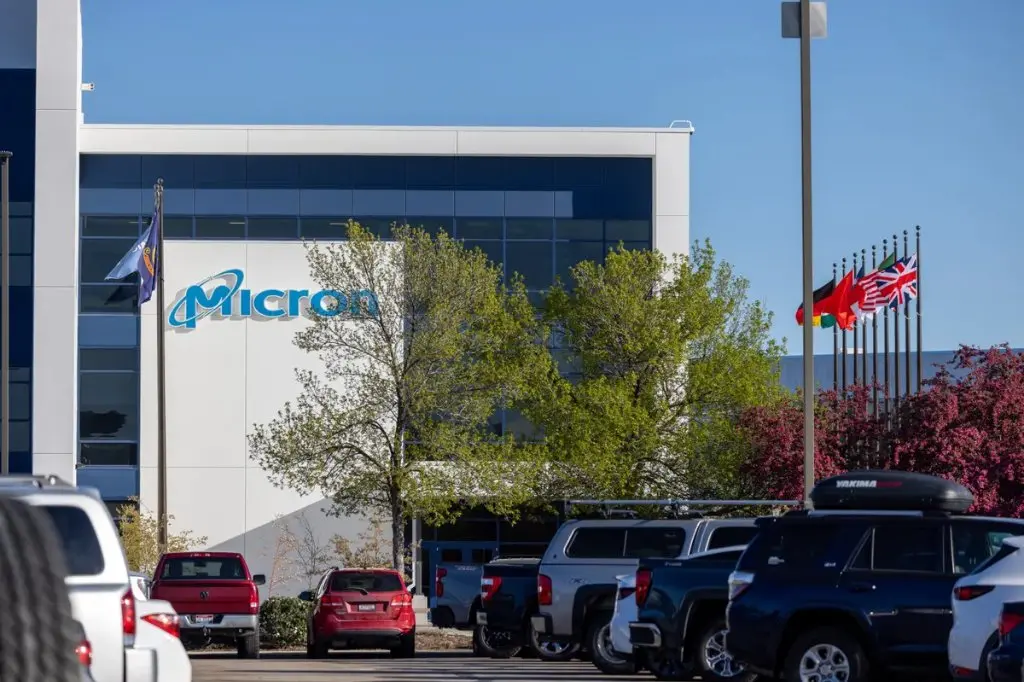
According to a report by Reuters, reprinted by Nikkei Asia, the union representing employees at Micron Technology's Taoyuan plant in Taiwan announced on Wednesday that it has obtained authorization for a strike, with the focus of the dispute being the company's bonus plan. The union stated that 1,994 members voted in favor of the strike, accounting for 99% of the voters, while details such as the timing of the strike are still under discussion. Micron has approximately 15,000 employees in Taiwan, with independent unions in Taoyuan and Taichung, and the two unions together represent over 80% of Micron's employees in Taiwan. Micron Taiwan is the company's largest manufacturing base.Taiwan is a key production site for Micron's DRAM and high-bandwidth memory, with related chips being important components for AI servers. Mediation with the Taoyuan union did not reach an agreement in September, and the Taichung union is still in negotiations. In September, Micron announced that it would distribute bonuses for the fiscal year 2026 to over 60,000 employees worldwide, stating that the company had experienced an "extraordinary year," with Taiwanese employees receiving a cash bonus of 1 million New Taiwan Dollars, approximately 31,400 US dollars. The Taoyuan union stated that the plan did not address the request for a permanent profit-sharing mechanism and criticized Micron for announcing the bonuses without first reaching an agreement with the union during the mediation period.
app_icon
ChainCatcher Building the Web3 world with innovations.