In-depth Interpretation of the Ethereum Roadmap: A Simple and Easy-to-Understand Guide to the Future
 Core Viewpoint

 This report aims to comprehensively interpret Ethereum's grand technological upgrade roadmap using the simplest language and relatable metaphors. This roadmap is not just a series of technical updates, but a strategic blueprint for Ethereum's evolution from the initial concept of a "world computer" to a secure, scalable, and decentralized "global digital ledger."
Abstract
This report aims to comprehensively interpret Ethereum's grand technological upgrade roadmap using the simplest language and relatable metaphors. This roadmap is not just a series of technical updates but a strategic blueprint for Ethereum's evolution from the initial concept of a "world computer" to a secure, scalable, and decentralized "global digital ledger." We will analyze the six core phases of the roadmap one by one—The Merge, The Surge, The Scourge, The Verge, The Purge, and The Splurge.
In each phase, we will explain what real-world problems it addresses, what key technologies are employed, and delve into the design trade-offs and challenges behind it. You will see that Ethereum is undergoing a thoughtful transformation: evolving from a single highway (L1) that attempts to handle all computing tasks to a modular architecture centered around a "bridge network" (L2 Rollups). In this blueprint, the highway (L1) focuses on providing the most robust security and data foundation, while countless bridges (L2) carry massive applications and transactions. This evolution aligns with the new trend of returning to the simplicity and long-term stability of the protocol itself, aiming to create a truly trustworthy and neutral underlying infrastructure for the global decentralized digital economy. 
Introduction: The Genesis and Expansion Blueprint of the Infinite Garden
The Initial Dream: A "World Computer" Accessible to All
The birth of Ethereum stemmed from a grand vision. In 2013, founder Vitalik Buterin envisioned a general-purpose blockchain that transcended Bitcoin's payment functionality—a "world computer." At its core is the Turing-complete Ethereum Virtual Machine (EVM), which allows any developer to create and run decentralized applications (dApps) on it. In 2015, this vision became a reality as a global network capable of executing code was officially launched. This gave rise to the subsequent initial coin offering (ICO) boom and decentralized finance (DeFi), proving for the first time that blockchain could serve as a universal computing platform.
The Real Bottleneck: The Congested "Digital Highway"
However, the vision of a "world computer" soon encountered real-world bottlenecks. With the explosive growth of the application ecosystem, the Ethereum mainnet (Layer 1) began to buckle under pressure.
High Gas Fees: Network transactions are like driving in a city during rush hour, with limited roads and numerous vehicles. To pass quickly, one must pay high "tolls" (Gas fees). Have you ever abandoned a transaction due to high fees? This is the dilemma faced by thousands of users every day.
Slow Transaction Speeds: During peak times, Ethereum can only process about 15-30 transactions per second (according to blockchain explorer statistics). This is far from the thousands of transactions per second that mainstream payment networks can handle, severely limiting its application scenarios.
Centralization Risks and Environmental Issues: The original proof-of-work (PoW) mechanism, while secure, consumes enormous energy, and specialized "mining" equipment leads to a gradual concentration of computing power, posing a potential threat to decentralization.
Strategic Shift: From "Widening the Main Road" to "Building a High-Speed Network"
In the face of congestion, Ethereum's strategy underwent a transformation. Instead of letting the main highway (L1) bear all the traffic pressure, it was upgraded to an extremely secure and reliable "global settlement center," while encouraging the construction of countless "overpasses and elevated roads" (i.e., Layer 2 networks, L2) to divert traffic.
In this modular blueprint known as "Rollup-centric," the role of L1 has become the "world ledger." It is no longer the place where everyone drives directly but serves as the core hub providing security and data recording services for all L2 overpasses. L2s handle thousands of transactions on their elevated roads and then package the final results back to L1 for final confirmation and archiving. This way, the throughput of the entire traffic network (the Ethereum ecosystem) is greatly enhanced, while all transactions ultimately enjoy L1 highway-level security.
This shift redefines Ethereum's value. It no longer competes with other blockchains on the speed of its main road but rather on who can become the safest and most decentralized global settlement center, attracting the most "overpasses" to settle here.
Chapter 1: The Merge: A Completed Green Revolution
1.1 Why "Merge"? A Dual Revolution of Environmental Protection and Security
"The Merge" is the most significant upgrade in Ethereum's history, successfully completed on September 15, 2022.
Previously, Ethereum operated like a massive engine relying on burning large amounts of gasoline (proof-of-work, PoW), producing loud noise and consuming high energy. The "Merge" is akin to changing the gasoline engine to a highly efficient, quiet electric motor (proof-of-stake, PoS) without stopping or turning off the car. 
This "engine swap" was primarily driven by two reasons:
Environmental Protection: The "gasoline engine" (PoW) required "miners" to engage in extensive mathematical competitions to "mine," consuming astonishing amounts of electricity. After the "Merge," Ethereum's energy consumption plummeted by over 99.95%, addressing the most criticized environmental issues.
Enhanced Security: In the new "electric motor" (PoS) model, the network's security no longer depends on who has the most computing power but rather on the amount of ETH staked by "validators." If validators act maliciously, their staked funds will be confiscated (i.e., "slashed"), introducing a direct economic penalty mechanism that provides stronger security guarantees.
1.2 Technical Insights: The Precise Operation of Dual Chain Integration
The technical implementation of "The Merge" is extremely sophisticated. It was not an upgrade out of thin air but involved running a brand new PoS chain—the Beacon Chain (consensus layer)—in parallel with the existing PoW mainnet (execution layer) for nearly two years. At the moment of the merge, it was like two parallel tracks finally converging, with the history and state of the original mainnet being fully "integrated" into the Beacon Chain, which now takes full responsibility for the network's consensus under the PoS mechanism.
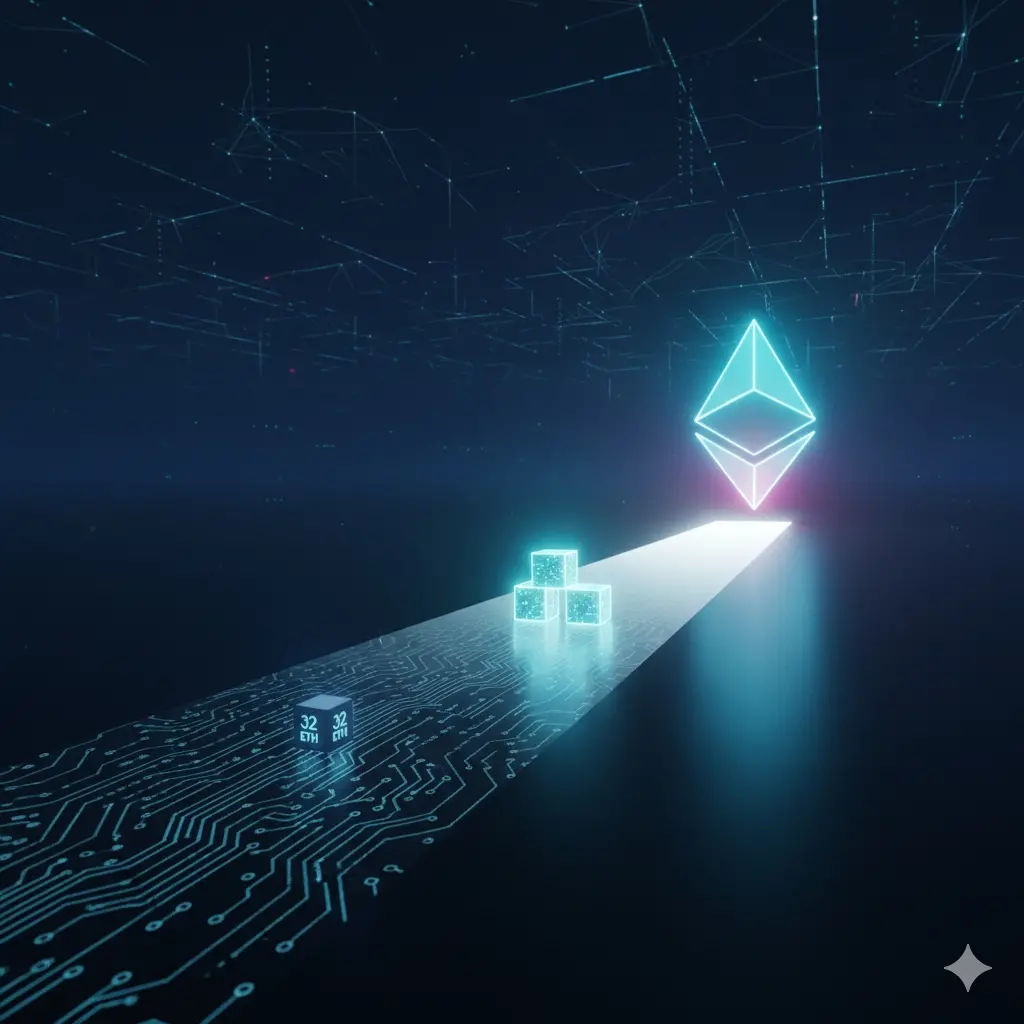
Under the PoS mechanism, "validators" replace "miners." Anyone who stakes 32 ETH can become a validator, participate in proposing and validating blocks, and earn "interest" (block rewards). The subsequent "Shapella" upgrade opened the withdrawal feature for staked ETH, marking the complete transition to PoS.
1.3 Far-reaching Impact: Paving the Way for Future Upgrades
"The Merge" itself did not directly lower Gas fees or increase transaction speeds, but it is the foundation for all subsequent upgrades.
Economic Model Transformation: The issuance of ETH has significantly decreased, and combined with the transaction fee burning mechanism (EIP-1559), ETH has even entered a deflationary state during certain periods, altering its economic model.
Unlocking Scalability: The predictable block time of PoS (one every 12 seconds) and a clear validator system are the technical prerequisites for subsequent scalability upgrades (such as sharding).
Ongoing Research:
Single Slot Finality (SSF): Currently, a transaction takes about 13 minutes to achieve "finality" (i.e., irreversibility). The goal of SSF is to shorten this time to within a single slot (12 seconds), allowing for "instant confirmation" of transactions, greatly enhancing user experience and L2 efficiency.
Chapter 2: The Surge: Building the Transportation Network
2.1 Grand Goal: The Path to 100,000 TPS
The goal of the "Surge" phase is very clear: to increase the processing capacity of the Ethereum ecosystem from the current tens of TPS to over 100,000 transactions per second (100,000+ TPS). This does not mean widening the L1 main road itself but rather providing massive, inexpensive "building materials" (data space) for the L2 "overpasses."
2.2 Core Technology: How Rollup "Moves Ants"
Rollup is the core technology for achieving scalability. If Ethereum L1 is a congested main road in the city center, then Rollup is like countless elevated bridges (L2). They process hundreds of thousands of vehicles (transactions) on their elevated roads and then send a bus (a compressed data packet) carrying all the travel records (transaction data) to the city center's archive (L1) for filing. This both alleviates the traffic pressure on the main road and ensures that all travel records receive official certification.

Currently, there are two main types of Rollup technology:
Optimistic Rollup: Such as Optimism and Arbitrum. They "optimistically" assume that all transactions are valid and directly submit the results to L1. However, they leave a "challenge period" (about 7 days) during which anyone who discovers cheating can submit a "fraud proof" to report it. If the report is successful, the fraudulent transaction will be revoked.
Zero-Knowledge Rollups: Such as zkSync and Starknet. They use advanced cryptographic techniques to generate a "validity proof" for each batch of transactions. This proof is like an encrypted "notarization," allowing L1 to instantly confirm the validity of the entire batch of transactions without needing to check each one individually.
2.3 Key Protocol: EIP-4844 and Data Availability Sampling (DAS)
The biggest cost of Rollup is publishing data back to L1. To reduce this cost, Ethereum will introduce EIP-4844 (Proto-Danksharding) in the Dencun upgrade in March 2024.
Previously, when L2 submitted data to L1, it was like piling goods (data) directly on the highway surface (CALLDATA), permanently occupying space, making it expensive. EIP-4844 introduces a dedicated "delivery box" (data Blob) for the highway. These packages are temporarily stored in roadside "delivery boxes," which will be cleared out after about a month, not permanently occupying the main road space, thus significantly reducing costs.
Future research direction: Data Availability Sampling (DAS): This is the ultimate form of scalability. In the future, validators will no longer need to download the entire data package to confirm its existence.
Imagine a huge encyclopedia; to confirm that the book is complete, you do not need to read the entire book. Through DAS, you only need to randomly flip through a few pages to determine with high probability that the entire book has no missing pages. This will enable Ethereum to safely handle massive amounts of data, providing L2 with nearly unlimited cheap data space without overburdening validators.
Chapter 3: The Scourge: Establishing a Legal System
3.1 The Invisible "Tax": What is Maximal Extractable Value (MEV)?
The "Scourge" phase aims to address a tricky issue within the Ethereum network—MEV (Maximal Extractable Value).
Validators act like matching engines in a stock exchange. They can see all the pending buy and sell orders. MEV is like this matching engine leveraging its informational advantage to earn extra profits by adjusting the order of transactions or inserting their own small orders between two large ones. This "cutting in line" or "front-running" behavior is MEV.
The pursuit of MEV can lead to centralization risks, as only technically and financially strong players can build the most complex algorithms to capture MEV, squeezing out smaller validators and harming the network's decentralization.
3.2 Solution: Proposer-Builder Separation (PBS)
To solve the centralization issues brought about by MEV, the core solution of the "Scourge" is Proposer-Builder Separation (PBS).
PBS is like separating the powers of "baking the cake" and "dividing the cake."
Builders: They are professional "bakers" responsible for researching how to create the most delicious and valuable cake (block) using various ingredients (transactions). They compete with each other.
Proposers: They are ordinary validators, acting more like "food critics." They do not need to know how the cake is made; they simply select the cake with the largest "bonus" from all the submissions by bakers, stamp it with a "certification" seal, and recommend it to the entire network.

This separation simplifies the work of validators, eliminating the need for complex hardware and algorithms, thereby protecting the network's decentralization. Currently, an external solution called MEV-Boost has implemented the idea of PBS, with future goals of directly embedding it into the Ethereum protocol (ePBS).
3.3 Trade-offs and Challenges: New Risks of Censorship
However, while PBS addresses the centralization issues of MEV, it also introduces new risks: a few powerful "bakers" (builders) may collude to refuse to include certain "ingredients" (transactions) in the cake, leading to transaction censorship.
Inclusion Lists: To combat this censorship, the community is exploring an "inclusion list" mechanism. It allows "food critics" (proposers) to specify certain "ingredients" (transactions) that must be included, regardless of whether the "bakers" like them, ensuring the censorship resistance of transactions.
Centralization of Liquid Staking: Large staking service providers like Lido control a significant number of validators, posing centralization risks. The "Scourge" phase is also exploring how to limit the excessive expansion of such platforms through protocol rules.

Chapter 4: The Verge: Empowering Citizen Oversight
4.1 The Burden of "State": An Increasingly Bulky Ledger
Ethereum's "state" contains all account balances, contract codes, and other information. Each validating node must store the complete state data to validate new blocks. As the network develops, this "ledger" is becoming increasingly thick (currently over 135 GB), raising the hardware requirements for nodes. Over time, only data centers will be able to run nodes, severely threatening the network's decentralization.
4.2 Core Technology: From Merkle Trees to Verkle Trees
The core of the "Verge" phase is the introduction of a new data structure called Verkle Trees to replace the existing Merkle Trees.
If Ethereum's "state" is the entire Encyclopedia Britannica, verifying a transaction requires reading the whole encyclopedia to confirm a fact. In the future, you will only need to obtain a stamped page from the notary office (Verkle proof) to verify the truth of this fact without needing to hold the entire set of books. For a ledger with a billion entries, the proof size can be reduced from several thousand bytes to less than 150 bytes.
4.3 Trade-offs and Challenges: Technical Choices Under Quantum Threats
While Verkle Trees are efficient, the cryptographic technology they rely on (elliptic curves) is not "quantum-safe" and may be broken by quantum computers in the future. This raises an important technical trade-off:
Option One: Adopt Verkle Trees (more pragmatic): The Verkle Tree technology is relatively mature, and the community has invested heavily in research, allowing for faster implementation of stateless clients to address the current state bloat issue. However, this may be a temporary solution, requiring further upgrades in the future to address quantum threats.
Option Two: Directly adopt STARKed Trees (more long-term): STARKs are a hash-based cryptographic technology that is naturally resistant to quantum attacks. Directly adopting STARKed Trees can permanently solve quantum safety issues. However, this technology is more cutting-edge, and implementation is more complex, potentially delaying the deployment of stateless clients.
Currently, the community leans towards implementing Verkle Trees first, as it can bring decentralization benefits more quickly while buying time for the maturation of more long-term quantum-resistant technologies.
4.4 Ultimate Goal: Stateless Clients
Tiny proofs are key to achieving statelessness.
A "stateless client" is like a librarian who does not need to memorize all the books in the library. When someone asks whether a certain book exists, the inquirer will provide both the book and an "index card" (Verkle proof). The librarian only needs to verify this card to immediately confirm that the book indeed belongs to the library, without needing to search the shelves.
This will greatly lower the hardware threshold for running validating nodes, allowing even mobile phones to participate, thus significantly enhancing the network's decentralization. 
Chapter 5: The Purge: Cleaning Up City Archives
5.1 The Burden of History: Data and Technical Debt
The goal of the "Purge" phase is to conduct a "spring cleaning" for Ethereum, clearing away the historical data and technical debt accumulated over the years. Currently, nodes are required to store all historical blocks since 2015 by default, which not only occupies a large amount of hard drive space but also makes it very time-consuming for new nodes to join the network.
5.2 Core Protocol: EIP-4444 and Historical Data Expiration
The core of the "Purge" phase is EIP-4444, which introduces a historical data expiration mechanism.
A company no longer requires every department to keep all documents since its establishment. According to EIP-4444, each department (node) only needs to keep documents from the last year. Older historical documents will be entrusted to specialized "archives" (such as The Graph, Portal Network, and other decentralized storage networks) for safekeeping. This way, each department's office (the node's hard drive) will not be overwhelmed by piles of documents, allowing it to remain "slim" and efficient.
5.3 Protocol Simplification: Removing Outdated Functions
In addition to cleaning up data, the "Purge" also aims to simplify protocol code, such as removing outdated and security-risk features (like the SELFDESTRUCT opcode) and simplifying the Gas fee calculation mechanism. This is akin to removing unused features from an old software program, making its code more concise, secure, and easier to maintain.

Chapter 6: The Splurge: Urban Renovation and Upgrades
6.1 Farewell to Mnemonics: The Revolution of Account Abstraction (AA)
"The Splurge" focuses on improving the user and developer experience, essentially conducting "fine decoration" for Ethereum's digital garden city. The most significant upgrade is
Account Abstraction (AA): Traditional Ethereum accounts (EOA) are like a safe with only one physical key; if the key is lost, everything inside is gone. Account abstraction upgrades this safe to a smart safe (smart contract wallet).
Through the ERC-4337 standard, this smart safe can implement many new features:
Social Recovery: No longer relying on that annoying mnemonic phrase. You can designate a few trusted friends or family members as "guardians," who can help you reset access if you forget your password.
Pay Any Token as Gas Fees: You can use USDC or even other tokens to pay transaction fees, or have application developers pay on your behalf, achieving a "no Gas" experience.
Advanced Security Settings: You can set daily transfer limits, multi-signatures (requiring multiple approvals to transfer), etc.
Transaction Batching: One signature can complete multiple operations, such as "approve + swap."
These features make the Web3 wallet experience much closer to what we are familiar with in online banking, significantly lowering the entry barrier for new users. Future proposals like EIP-7702 aim to make existing ordinary accounts easily accessible to these smart features.
6.2 Upgrade Engine: Improvements to the EVM (EVM Object Format)
Another important task of "The Splurge" is to upgrade Ethereum's "engine"—the EVM. EOF is a collection of EIPs that introduces a new, more standardized format for smart contract code. This is like setting standardized sizes and interfaces for the parts of a car engine, making the engine safer, easier to inspect, and upgrade. 
6.3 Looking to the Future: Preparing for Quantum Computing
The "Splurge" phase also looks to the long-term future, including research into quantum-resistant cryptography. Although it will take many years for quantum computers to break existing encryption systems, Ethereum is already taking precautions, exploring and testing new cryptographic algorithms (such as hash-based cryptography) that can withstand quantum attacks, ensuring the network's security for decades to come.
Deep Reflections and Future Outlook
Chapter 7: Challenges and Trade-offs Behind the Roadmap
The evolution of Ethereum has not been smooth sailing; every step is filled with profound thoughts and difficult trade-offs.
7.1 Modular vs. Monolithic: A Debate on Architectural Philosophy
Ethereum's choice of a "modular" path (L1 responsible for security, L2 responsible for execution) stands in stark contrast to the "monolithic" architecture of other high-performance blockchains (like Solana).
- Monolithic Architecture: Handles execution, consensus, and data availability all in one layer.
Advantages: Simpler development experience, strong composability between applications, and users do not need to switch between different layers, leading to a smoother experience.
Disadvantages: To pursue high performance, it places extremely high hardware requirements on validating nodes, which may lead to centralization; the entire system is highly coupled, and a bug in one module could cause the entire network to crash.
- Modular Architecture: Processes different functions in layers.
Advantages: L1 can focus on decentralization and security, while L2 can flexibly optimize for different applications, making the entire ecosystem more resilient and scalable.
Disadvantages: User experience and liquidity are fragmented across different L2s, creating new challenges.
Ethereum's choice sacrifices some native smoothness in exchange for long-term decentralization and security, which is at the core of its positioning as a global settlement layer.
7.2 The "Side Effects" of L2: Liquidity Fragmentation
With the flourishing development of the L2 ecosystem, a severe challenge has emerged: liquidity fragmentation.
A city builds dozens of overpasses (L2) to alleviate traffic. While each bridge is smooth, they are not interconnected. To get from Bridge A to Bridge B, you must first exit the bridge back to the congested city center (L1) and then get onto another bridge, which is time-consuming and costly. Similarly, DeFi funds (liquidity) are scattered across various L2s, forming "liquidity islands," leading to increased transaction slippage, reduced capital efficiency, and a poorer user experience.
Addressing this issue is one of the core tasks of the current ecosystem, with solutions including developing more efficient cross-chain bridges, building unified liquidity layers, and using technologies like "chain abstraction" to hide the complexity of cross-chain interactions from users.
Chapter 8: The Invisible Hand: Ethereum's Community Governance
The execution of the technical roadmap relies on its unique decentralized governance model.
Ethereum's governance is not like a company with a CEO making decisions; it resembles an open city planning committee. Anyone can submit a "city construction plan" (i.e., EIPs, Ethereum Improvement Proposals).
The process generally unfolds as follows:
Public Discussion: Proposers need to publicly publish their ideas on community forums (like Ethereum Magicians) and accept inquiries and suggestions from everyone.
Core Developer Meetings (ACD Calls): The most important technical decisions occur in regular "All Core Developers" conference calls. Here, developers from different client teams (like Geth, Nethermind) discuss the technical feasibility, urgency, and potential impact of core EIPs.
Achieving "Rough Consensus": Decisions are not made through voting but rather through "rough consensus." If, after sufficient discussion, there are no strong technical objections and most core developers believe a certain direction is correct, then that EIP will be included in future upgrade plans.

This model, while sometimes slow, ensures the openness, transparency, and technical robustness of decision-making, which is key to maintaining Ethereum's decentralized spirit. However, as the protocol becomes increasingly complex, how to enable more people to effectively participate in governance and avoid excessive concentration of decision-making power in the hands of a few builders remains an ongoing challenge.
Chapter 9: Vitalik's Latest Thoughts on the Roadmap—Building a "Lean" and Sustainable L1
9.1 Narrative Return: From "L2 First" to "Strengthening L1"
Recently, there has been a significant shift in Ethereum's narrative: refocusing on Layer 1 (L1) itself. This does not mean abandoning L2 but rather emphasizing that a more powerful, efficient, and streamlined L1 is the foundation for the prosperity of the entire ecosystem while acknowledging the importance of L2. To this end, the community plans to increase L1's capacity by about ten times over the next year to better support the L2 ecosystem.
9.2 The "Lean Ethereum" Philosophy: Learning from Bitcoin's Simplicity
In a significant article titled "Simplifying L1" published in May 2025, Vitalik proposed a core idea: Ethereum should learn from the "elegance of simplicity" of the Bitcoin protocol. Overly complex protocols increase the risk of vulnerabilities, raise maintenance costs, and make it difficult for ordinary people to understand and participate in governance. "Less is more" is vividly illustrated here.
The vision of "Lean Ethereum" embodies this philosophy. Its long-term goals include:
Simpler Consensus: Simplifying the current consensus process with mechanisms like "3-slot finality."
Simpler Virtual Machine: Exploring the use of minimalist virtual machines like RISC-V or the recently proposed leanVM to replace the complex EVM. leanVM is a minimalist virtual machine designed for zero-knowledge proofs, aiming for a tenfold improvement in recursive speed, making the protocol more efficient and easier to verify.
9.3 Implications for Users and Developers
All these grand technical narratives will ultimately translate into tangible experiences for ordinary users and developers:
For users: Transaction fees will continue to decline, and confirmation speeds will increase. With account abstraction, using wallets will become as simple and secure as using ordinary apps, eliminating concerns about losing mnemonic phrases.
For developers: A simpler, more powerful L1 means a more robust development platform. Optimizations to the EVM and the maturity of the L2 ecosystem will enable the construction of more complex and high-performance applications.
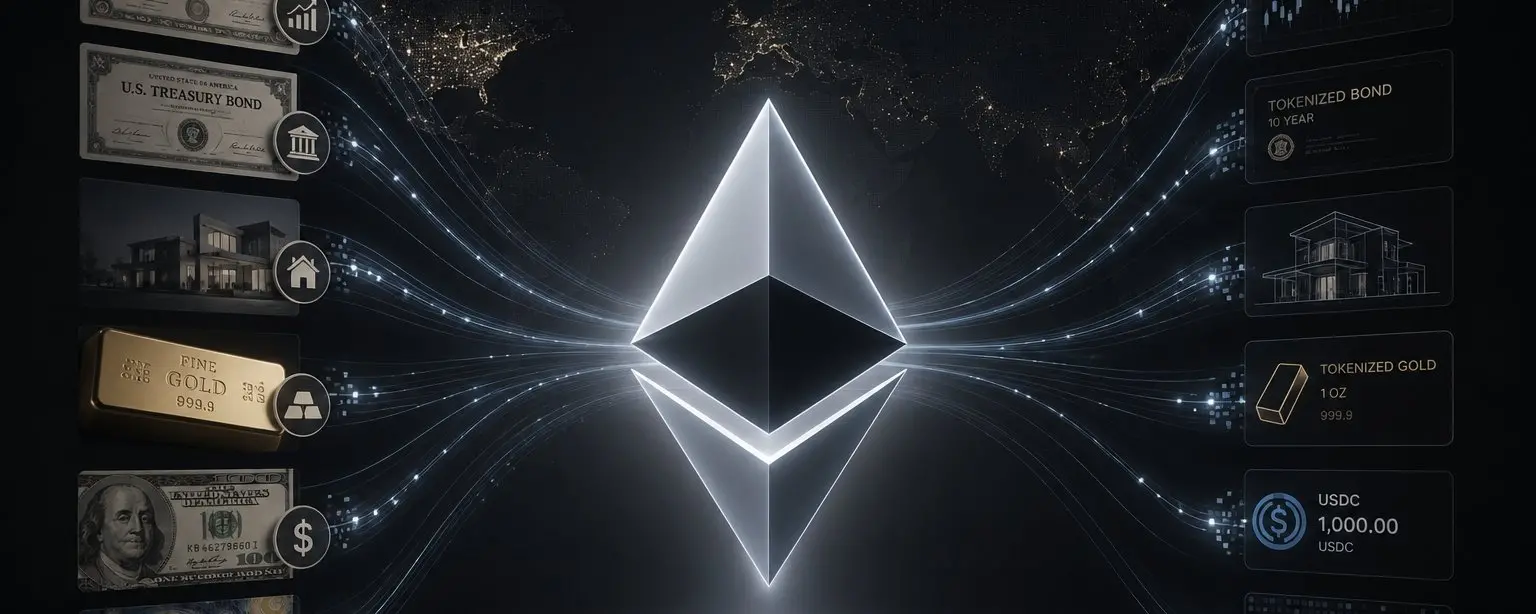
Ethereum's evolutionary path is transitioning from a grand dream of a "world computer" to becoming a pragmatic, robust "global settlement layer" serving the entire digital economy. This journey is filled with challenges and trade-offs, but its ultimate goal remains unchanged: to create a fairer, more open, and permissionless digital future.
Finally, everyone is welcome to read in detail in the book "Possible Futures of the Ethereum Protocol." "Possible Futures of the Ethereum Protocol" is the Chinese version of the Ethereum protocol book I developed while working in the LXDAO working group.
Appendix: Core Terminology Introduction
Layer 1 (L1): The main network of a blockchain, such as the Ethereum mainnet. It is responsible for final security and settlement.
Layer 2 (L2): Networks built on top of L1, aimed at improving transaction speed and reducing costs. They handle most transactions and submit results back to L1 for security.
Proof-of-Work (PoW): A consensus mechanism that protects network security through computation (mining), with high energy consumption.
Proof-of-Stake (PoS): A consensus mechanism that protects network security through staking cryptocurrency, with extremely low energy consumption.
Rollups: A mainstream L2 technology that executes transactions off-chain and compresses their data before publishing it to L1 to achieve scalability.
MEV (Maximal Extractable Value): The profit that validators can earn beyond standard block rewards and Gas fees through their power to order and package transactions.
PBS (Proposer-Builder Separation): A mechanism aimed at mitigating the negative impacts of MEV by separating the roles of block construction and block proposal.
Statelessness: A concept that allows validating nodes to verify the network without storing the complete blockchain state, significantly lowering hardware requirements.
Account Abstraction (AA): A technology that allows user accounts (wallets) to have smart contract functionalities, greatly enhancing flexibility and user experience.
EVM (Ethereum Virtual Machine): The computing engine that executes Ethereum smart contracts.
References
Official Documentation
Possible futures of the Ethereum protocol, part 1: The Merge https://vitalik.eth.limo/general/2024/10/14/futures1.html
Possible futures of the Ethereum protocol, part 2: The Surge https://vitalik.eth.limo/general/2024/10/17/futures2.html
Possible futures of the Ethereum protocol, part 3: The Scourge https://vitalik.eth.limo/general/2024/10/20/futures3.html
Possible futures of the Ethereum protocol, part 4: The Verge https://vitalik.eth.limo/general/2024/10/23/futures4.html
Possible futures of the Ethereum protocol, part 5: The Purge https://vitalik.eth.limo/general/2024/10/26/futures5.html
Possible futures of the Ethereum protocol, part 6: The Splurge https://vitalik.eth.limo/general/2024/10/29/futures6.html
Simplifying the L1: https://vitalik.eth.limo/general/2025/05/03/simplel1.html
Scaling Ethereum L1 and L2s in 2025 and beyond: https://vitalik.eth.limo/general/2025/01/23/l1l2future.html
Ethroadmap: https://ethroadmap.com/
Lean Consensus R&D Progress: https://leanroadmap.org/
Mainnet Merge Announcement: https://blog.ethereum.org/2022/08/24/mainnet-merge-announcement
Danksharding: https://ethereum.org/roadmap/danksharding/
Based rollups---superpowers from L1 sequencing: https://ethresear.ch/t/based-rollups-superpowers-from-l1-sequencing/15016/1
EIP-4844: Shard Blob Transactions: https://eips.ethereum.org/EIPS/eip-4844
EIP-4444: Bound Historical Data in Execution Clients: https://eips.ethereum.org/EIPS/eip-4444
Account abstraction: https://ethereum.org/roadmap/account-abstraction/
The Ethereum Proof-of-Stake Merge: https://ethmerge.com/
PSE Roadmap: 2025 and Beyond: https://ethereum-magicians.org/t/pse-roadmap-2025-and-beyond/25423
Professional Media and Industry Analysis
10 Years of Ethereum: From World Computer Dreams to DeFi, Memes & Everything In Between: https://www.ccn.com/education/crypto/ethereum-10-year-anniversary-defi-memes-evolution/
Ethereum Promised a 'World Computer'--- But Here's What It Actually Became: https://www.ccn.com/education/crypto/ethereum-world-computer-reality-financial-infrastructure-of-web3/
Ethereum Price Prediction 2025: New Highs Likely Soon: https://www.ccn.com/ethereum-eth-price-prediction/
Ethereum's Merge: What Has Changed Two Years Later?: https://www.ccn.com/education/crypto/ethereums-merge-anniversary-two-years-later/
The Ethereum Roadmap Cheat Sheet: https://www.bankless.com/major-ethereum-upgrades-cheatsheet
[Infrastructure] Ethereum's Efforts to Solve MEV Centralization: the Scourge #1: https://medium.a41.io/infrastructure-ethereums-efforts-to-solve-mev-centralization-the-scourge-1-9ced45411f89
Ethereum Foundation Unveils Bold Privacy Roadmap For Blockchain: https://evrimagaci.org/gpt/ethereum-foundation-unveils-bold-privacy-roadmap-for-blockchain-500080
Ethereum Staking's Double-Edged Sword: Explosive Growth Meets Decentralization Dilemma: https://markets.financialcontent.com/wral/article/marketminute-2025-9-9-ethereum-stakings-double-edged-sword-explosive-growth-meets-decentralization-dilemma
VERKLE TREE → THE 'VERGE' PART OF ETHEREUM: https://medium.com/ethereum-stories/verkle-tree-the-verge-part-of-ethereum-9b3d59926ee9
Statelessness series --- Part3: Verification of Verkle Tree: https://medium.com/@chaisomsri96/statelessness-series-part3-verification-of-verkle-tree-7b9207790c49
Account abstraction: A beginner's guide to Ethereum's ERC-4337 standard: https://cointelegraph.com/learn/articles/account-abstraction-guide-to-ethereums-erc-4337-standard
Vitalik wants to make Ethereum 'as simple as Bitcoin' in 5 years: https://cointelegraph.com/news/vitalikbuterin-ethereum-simplification-bitcoin-inspired-redesign
US SEC's crypto task force urged to quantum-proof digital assets: https://cointelegraph.com/news/sec-crypto-task-force-quantum-proof-digital-assets
Splurge --- Everything else: https://medium.com/coinmonks/6-splurge-everything-else-b05cf293d050
Community-Driven Education and Aggregation Resources
Ethereum: The Rise of the World Computer: https://dev.to/githaiga22/ethereum-the-rise-of-the-world-computer-14fl
The State of Ethereum Scalability: Comparing Ethereum Scaling Solutions: https://skale.space/blog/the-state-of-ethereum-scalability-comparing-ethereum-scaling-solutions
Ethereum's Supply Chain, Part 1: https://www.umbraresearch.xyz/writings/ethereum-supply-chain-part-1
Ethereum's Supply Chain, Part 2: https://www.umbraresearch.xyz/writings/ethereum-supply-chain-part-2
Understanding the Ethereum Development Roadmap: https://evrimagaci.org/gpt/ethereum-foundation-unveils-bold-privacy-roadmap-for-blockchain-500080
State of MEV Report - Request for Comments: https://collective.flashbots.net/t/state-of-mev-report-request-for-comments/3133/1
Verkle Trees for Statelessness: https://verkle.info/
What is Account Abstraction (ERC-4337)?: https://www.alchemy.com/overviews/what-is-account-abstraction
Research Reports from Exchanges and Financial Institutions
Guide to Ethereum: https://www.coinbase.com/developer-platform/discover/protocol-guides/guide-to-eth
Ethereum faces challenges with scalability and pressure from competitors: https://www.bitget.com/news/detail/12560604850627
Ethereum Blockchain Performance and Scalability: https://www.osl.com/hk-en/academy/article/ethereum-blockchain-performance-and-scalability
Ethereum Investment Thesis: https://www.fidelitydigitalassets.com/sites/g/files/djuvja3256/files/acquiadam/Fidelity%20Digital%20Assets%20-%20Ethereum%20Investment%20Thesis.pdf
Ethereum's New Role: From World Computer to World Ledger: https://support.token.im/hc/en-us/articles/49125015791385-Ethereum-s-New-Role-From-World-Computer-to-World-Ledger
What is the Merge? Ethereum's transition to Proof of Stake: https://www.cointracker.io/learn/the-merge
What is The Ethereum Merge?: https://www.kraken.com/learn/ethereum-merge-explained
Understanding the Merge, Surge, Verge, Purge, and Splurge: https://volt.capital/blog/the-merge
Ethereum Reveals Plans for the Next 10 Years - Will Focus on Two Things: https://www.binance.com/en/square/post/27706515747042
The Shanghai Upgrade: What Comes Next for Ethereum?: https://usenobi.com/en/nobi-learn/the-shanghai-upgrade-what-comes-next-for-ethereum/
Click to learn about job openings at ChainCatcher
Recommended Reading:
DeFi Iconic Tokens MKR and DAI Officially End, How Will SKY Recarry Market Expectations?
NAKA's Stock Price Plummets 54% in One Day, Is the Market Growing Tired of DAT?
Is Base Chain About to Launch Tokens? 6 Projects Worth Watching
 Risk warning
 Risk warning