








When gold no longer serves as a safe haven, and Bitcoin continues to panic
 Core Viewpoint

 The whole world is waiting for the Strait of Hormuz to reopen. Why not guess which type of asset will return to pre-war levels first?
Author: Zhou, ChainCatcher
In chaotic times, buying gold has been one of the deeply ingrained logics in every investor's cognition over the past few decades. However, in the past few weeks, this logic has completely failed.
Spot gold has fallen for nine consecutive trading days, recording the largest weekly decline since 1981 last week, and has now erased all gains made this year.
Meanwhile, global stock markets have declined, the cryptocurrency market is still in panic, and industrial metals like copper, aluminum, and zinc have not been spared.
Almost all assets are being indiscriminately sold off, with only crude oil rising.
When the valuation logic of various assets collapses simultaneously, the boundary between safe-haven assets and risk assets disappears.
1. From Inflation to Recession: What is the Market Pricing?
It has been nearly four weeks since the outbreak of the US-Iran war, and the market's pricing logic for this conflict is undergoing a fundamental shift.
In the early stages of the conflict, the mainstream expectation was: oil prices would rise, inflation would be pressured, but the war would end quickly, and the economic fundamentals would not be fundamentally shaken. Following this logic, some assets maintained resilience in the early stages of the conflict.
However, the blockade of the Strait of Hormuz has continued to this day, and this expectation has begun to waver.
Under normal circumstances, about 20 million barrels of crude oil pass through this strait daily, but since the blockade, the actual flow has plummeted by over 97%. International oil prices have surged nearly 50% in just over a month, with Brent crude returning above $110 per barrel.
Investment bank Macquarie stated that if the Strait of Hormuz remains closed until the end of April, Brent crude prices could still reach $150 per barrel.
"Even in the case of a potential easing of tensions (referring specifically to Trump's statement on Monday), it is still expected that oil prices will bottom out at $85 to $90 per barrel and will soon naturally rebound to the $110 range until the Strait of Hormuz is fully reopened."
Persistently high oil prices are transforming a geopolitical conflict into a systemic economic threat.
At the March interest rate meeting, the Federal Reserve announced that the policy rate would remain unchanged, with the dot plot indicating only one rate cut in 2026, and seven officials believe there is no room for rate cuts this year. Powell clearly stated that the room for rate cuts is very limited, and the committee even discussed the possibility of rate hikes.
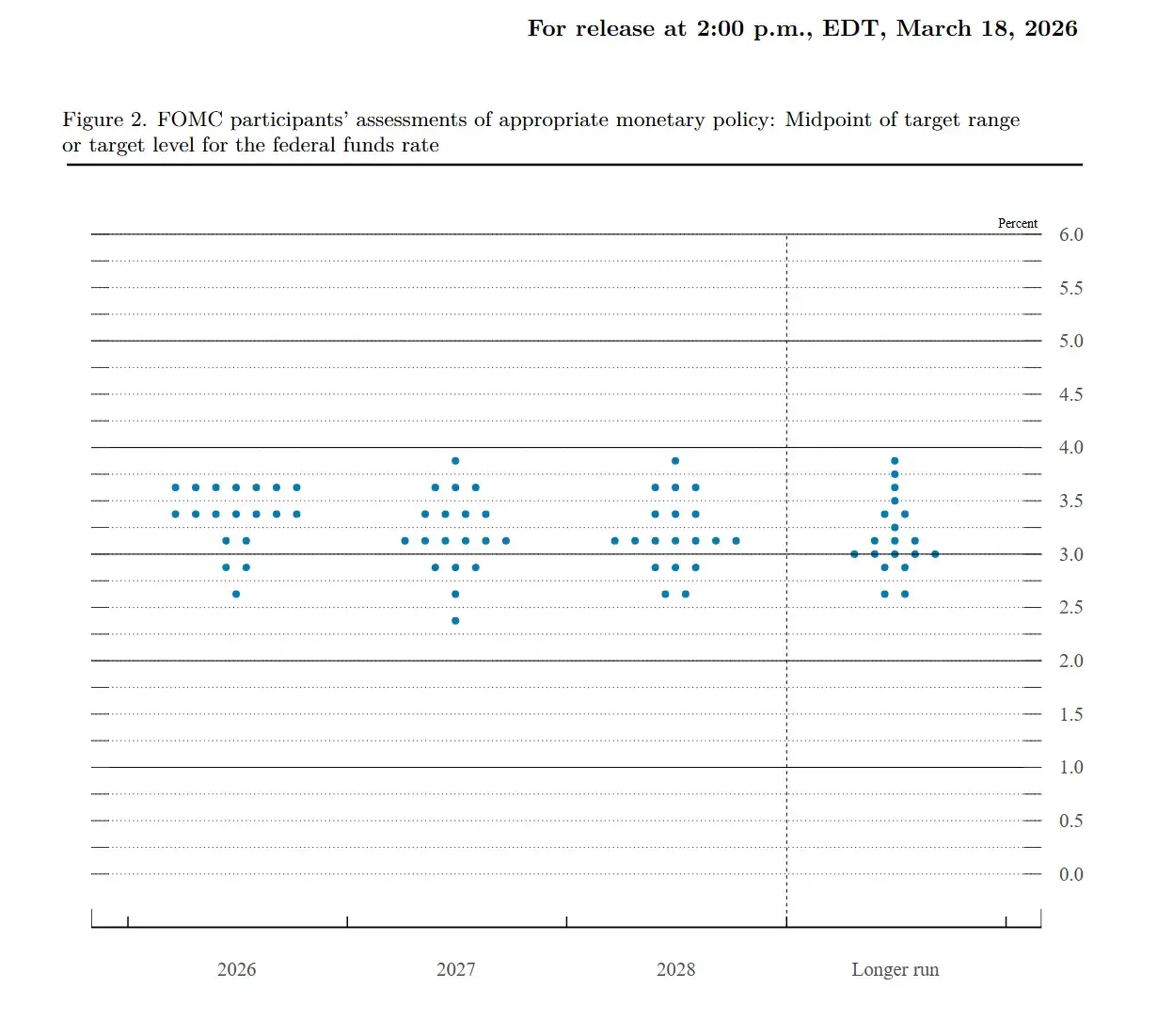 According to the CME FedWatch Tool, the market predicts that the probability of a rate hike by the Federal Reserve before the end of 2026 has exceeded 30%, while the probability of a rate cut is only 6.1%. A few months ago, the market generally believed there would be at least two rate cuts this year. The European Central Bank and the Bank of England have also successively signaled the earliest rate hikes in April.
Goldman Sachs warned in its latest report that the current global assets have only fully priced in the "inflation shock," completely ignoring the devastating impact of high energy costs on global economic growth.
Once the market's blind optimism about the "short-term end of the war" is falsified, "growth downturn (recession)" will become the second shoe to drop, at which point global asset pricing will experience an extremely violent reversal.
This is precisely the core narrative shift in the market over the past week: from "trading inflation" to "trading recession."
When growth itself is threatened, all asset classes will be repriced, which is the fundamental reason why copper, aluminum, and zinc have been severely hit, and emerging market indices have reached new lows for the year.
On the evening of March 21, Trump issued a 48-hour ultimatum, demanding Iran open the Strait of Hormuz within the deadline, or it would strike and destroy all its power plants.
However, before the deadline expired, Trump posted on social media, stating that the US and Iran had engaged in "very good and productive" dialogue over the past two days.
Iran, however, firmly denied this, stating that there had been no direct or indirect contact with the US, and that Iran's position on the Strait of Hormuz issue had not changed.
Iranian state media characterized Trump's statement as "psychological warfare," claiming its purpose was to manipulate financial and oil markets.
Meanwhile, the Iranian Revolutionary Guard continued to launch a new round of missile and drone strikes against Israeli and US military bases in the Middle East on the early morning of March 24. The Pentagon is also evaluating plans to deploy ground troops to the Iranian oil export hub of Khark Island.
In the capital markets, influenced by Trump's statement, US stocks rebounded last night, oil prices briefly plummeted over 10%, and gold experienced a sharp fluctuation with an initial drop followed by a rebound.
However, Iran's denial returned market sentiment to chaos, and the capital markets experienced a brief technical rebound, but the core contradictions remained unresolved.
2. Gold: When Safe-Haven Attributes Encounter Rate Hikes
Gold's performance in this round of sell-off is the most perplexing part for the market.
According to traditional logic, geopolitical shocks should drive funds into gold. But this time, gold not only failed to maintain its gains after the outbreak of war, but last week recorded the largest weekly decline since 1981, erasing all gains made this year.
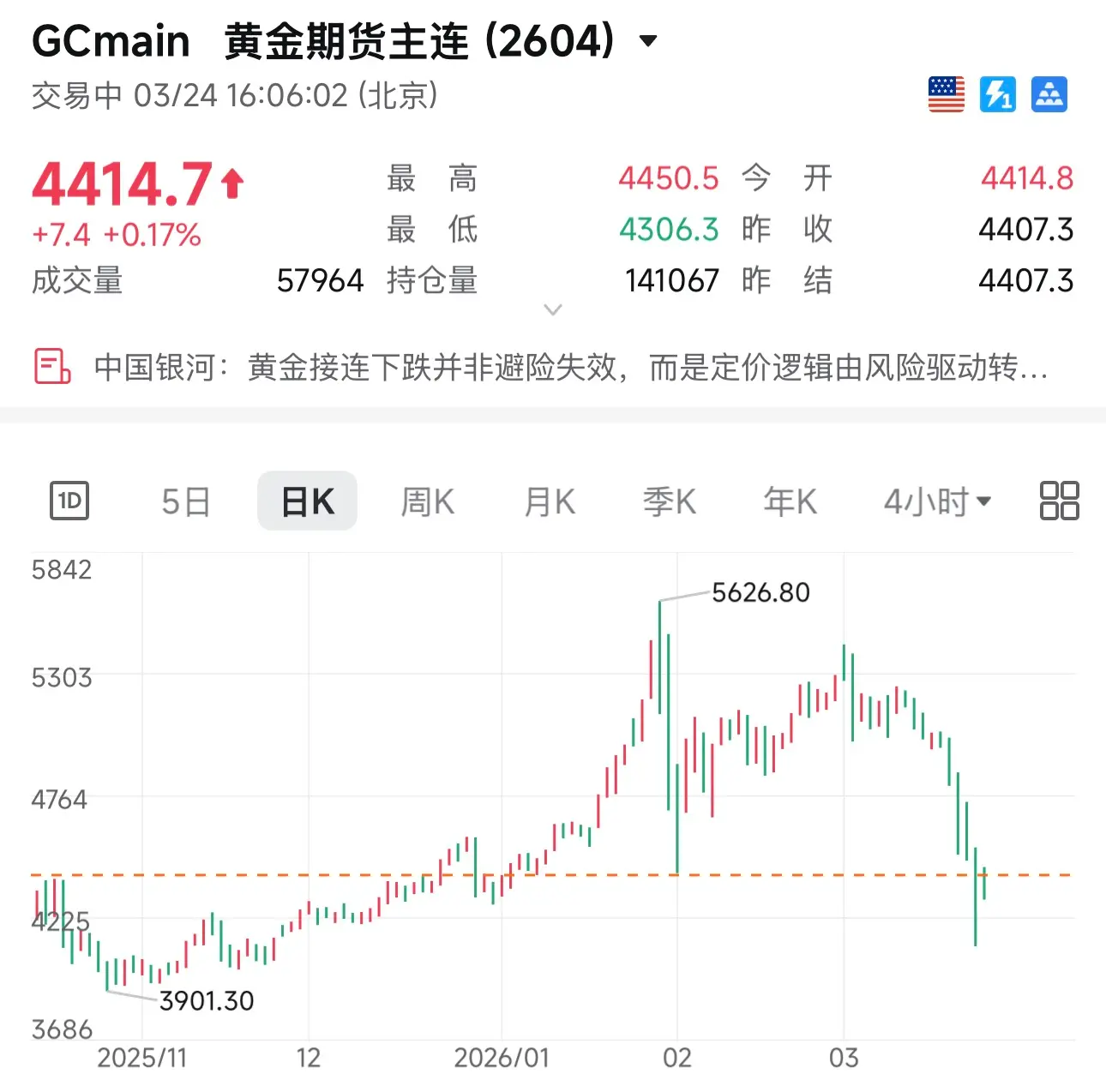 The safe-haven attribute of gold has a premise that is often overlooked: monetary easing, or at least a downward trend in interest rates.
This time, the transmission chain is exactly the opposite. The war raises oil prices, oil prices raise inflation, inflation forces global central banks to turn hawkish, and real interest rate expectations rise, the opportunity cost of holding non-yielding gold skyrockets. Funds no longer need gold; they can rest easy in US Treasuries yielding 4.39%. The safe-haven logic of gold has been short-circuited by the rate logic.
At the same time, highly leveraged long positions accumulated at high levels concentrated on closing positions after the expectation reversal, further accelerating the decline.
Another factor is that the market has begun to speculate that sovereign wealth funds from Gulf countries may also be participating in the sell-off, although this has not been confirmed, it is not a baseless assumption. Behind the 20% weekly plunge in gold in 1983 was the large-scale liquidation of gold reserves by oil-producing countries in the Middle East. At that time, falling oil prices led to a sharp decline in income, forcing them to sell gold for cash.
Although the current situation is different, with high oil prices but the blockade of Hormuz preventing crude oil from being exported, Gulf countries are also facing a sharp decline in income, while also bearing the costs of defense spending and infrastructure reconstruction brought about by the war. However, the motivation to liquidate assets is similar.
Research from CICC shows that there are actually many factors affecting gold prices, gold is highly volatile and is not a safe asset.
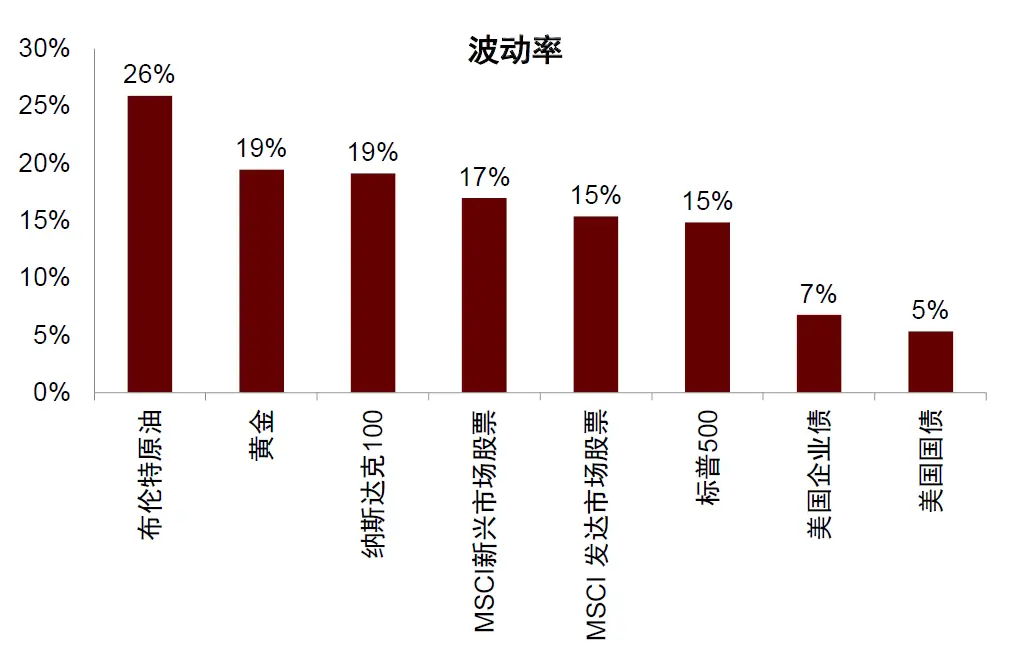 However, this does not mean that gold's long-term logic has been destroyed.
Shaokai Fan, the global central bank director of the World Gold Council, stated that gold, as a tool to hedge against de-dollarization and geopolitical risks, is expected to prompt central banks that have previously been absent from the market to buy this precious metal this year.
At the same time, most institutions still maintain a high target price for gold this year, analyzing from the perspectives of the US dollar, US Treasuries, and changes in funds, some analysts expect that there will still be rebound demand for London gold in the second quarter.
However, in the current interest rate environment, gold is primarily a highly interest rate-sensitive asset, and only secondarily a safe-haven tool.
In a tightening liquidity environment, this ranking is important.
3. Bitcoin: The Narrative of Digital Gold is Being Rewritten by Institutionalization
Bitcoin has also not become a safe haven; it has fallen alongside gold.
For cryptocurrency investors, this round of decline carries a more significant signal that deserves attention.
Bitcoin once had its own independent logic. Early supporters positioned it as "digital gold"—limited in supply, decentralized, and unaffected by central bank monetary policy, capable of moving independently of other assets during turmoil in the traditional financial system.
This narrative was partially valid in the early days of the cryptocurrency market, with Bitcoin's correlation with US stocks remaining low for a long time. However, over the past two years, the foundation of this logic has been quietly shifting.
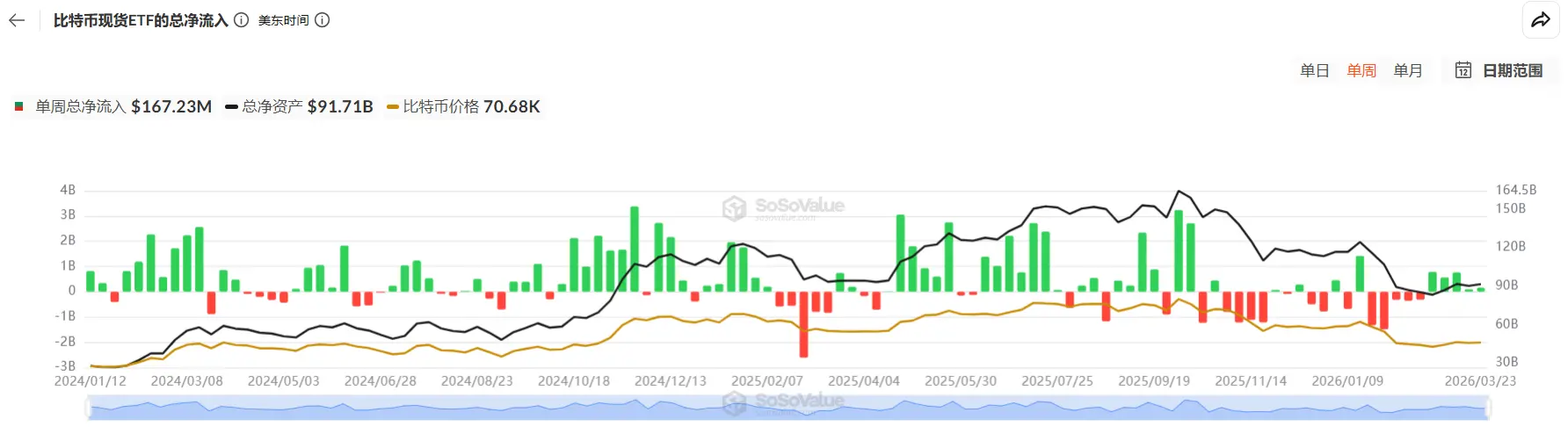
The approval of spot Bitcoin ETFs, along with corporate treasuries and sovereign funds gradually incorporating BTC into their balance sheets, has allowed institutional funds to enter the cryptocurrency market on an unprecedented scale. This initially drove prices up and allowed the entire industry to feel the benefits brought by institutionalization.
 The problem is that as institutional funds enter, they also bring along the behavioral logic of traditional financial markets.
Institutions manage risk budgets, and when the macro environment deteriorates and risk appetite shrinks, their operating manual has only one rule: reduce exposure to high-volatility assets. Bitcoin happens to be among the most volatile.
In this round of decline, Bitcoin ETFs have seen continuous net outflows, with a significant increase in correlation with the Nasdaq.
Even the most steadfast Bitcoin bulls saw a 95% drop in buying amounts last week; although they increased their holdings by $76.6 million to 1,031 BTC, bringing total holdings to 762,099 BTC, this represents a significant contraction compared to previous buying rates, and the buying pace of other DAT companies has nearly come to a halt.
At the most liquidity-tight moments, even strategic holders are showing clear restraint.
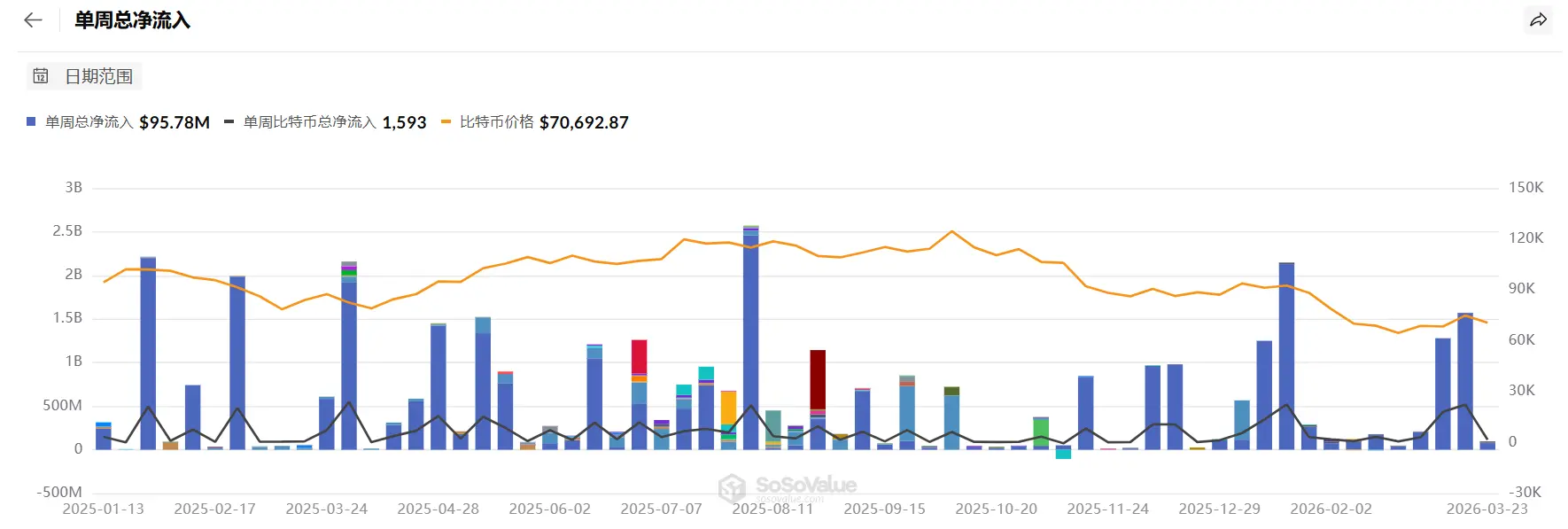 Since the historical high in October last year, Bitcoin's maximum drawdown has approached a halving, and it is currently fluctuating around $70,000. It is becoming a high beta version of the Nasdaq—rising more sharply when liquidity is ample and falling deeper when liquidity contracts.
The narrative of "digital gold" may not have completely disappeared, but in a market structure dominated by institutional pricing, Bitcoin is primarily a risk asset; it must first pass the liquidity test.
Conclusion
Overall, the uniqueness of this round of all-asset sell-off lies in the fact that the forces triggering it are acting on the pricing system at the most fundamental level, binding almost all assets together in one chain.
The actual degree of navigation recovery in the Strait of Hormuz is upstream of all issues. Only when the oil supply gap is filled can there be room for oil prices to fall, inflation pressures can ease, and the hawkish stance of central banks may marginally soften. Whether Trump and Iran's negotiations make substantial progress is the most critical observation window in the near term.
The Federal Reserve's statements are the second key signal. If the situation tends to ease and the Strait of Hormuz reopens, the Federal Reserve may cut rates again within the year. If the conflict prolongs, the Federal Reserve will likely prioritize stabilizing inflation, and any marginal changes in policy narrative will directly affect the valuation logic of all risk assets.
For cryptocurrency investors, the weekly fund flows of Bitcoin spot ETFs are a key indicator worth tracking; positive fund flows often lead price stabilization. The trend of the US dollar index is a direct window to observe whether the global liquidity environment is improving.
Market fears are never without reason. In the current situation, understanding what it fears is more meaningful than guessing when it will stop fearing.

 Risk warning


Popular articles





