BTC $63,278.35 +0.44%
ETH $1,892.53 +0.67%
BNB $603.49 -0.63%
XRP $0.9973 -0.38%
SOL $75.28 -0.09%
TRX $0.3328 +0.60%
DOGE $0.0702 +0.65%
ADA $0.1746 -1.40%
BCH $204.67 +0.38%
LINK $9.40 -0.34%
HYPE $59.23 +3.20%
AAVE $85.89 -0.01%
SUI $0.6752 -0.31%
XLM $0.1573 +0.25%
ZEC $509.43 +4.41%
BTC $63,278.35 +0.44%
ETH $1,892.53 +0.67%
BNB $603.49 -0.63%
XRP $0.9973 -0.38%
SOL $75.28 -0.09%
TRX $0.3328 +0.60%
DOGE $0.0702 +0.65%
ADA $0.1746 -1.40%
BCH $204.67 +0.38%
LINK $9.40 -0.34%
HYPE $59.23 +3.20%
AAVE $85.89 -0.01%
SUI $0.6752 -0.31%
XLM $0.1573 +0.25%
ZEC $509.43 +4.41%

leasing

All
Article
Flash

hot_img The five major tech giants have not started their data center leasing commitments, accumulating a total of $1.09 trillion, which is nearly four times their confirmed liabilities

According to an analysis by Reuters of LSEG data and company filings, Microsoft, Meta, Oracle, Amazon, and Alphabet have committed to future payments of approximately $1.09 trillion in uncommenced lease obligations, primarily for AI data centers, which is about four times their confirmed lease liabilities (approximately $285 billion). These commitments have not yet been included on the balance sheet but have been disclosed in the notes to the financial statements. Among them, Microsoft disclosed the largest amount, reaching $329.1 billion; Meta disclosed $278.99 billion and signed an additional $68 billion in new leases in July; Oracle disclosed $260 billion, nearly seven times its confirmed liabilities, with lease terms generally ranging from 15 to 19 years, and the company has warned that it may face risks if customers do not renew or are unable to fulfill their obligations; Alphabet and Amazon disclosed $85.2 billion and $137.21 billion, respectively.The analysis points out that if the demand for AI computing power continues to grow, these facilities will support the next phase of cloud business expansion; if demand falls short of expectations, companies may be forced to pay high costs for large amounts of long-term idle capacity. S&P Global Ratings has included the uncommenced leases of companies like Oracle in its adjusted debt forecasts. This data highlights the potential long-term financial pressure that the expansion of AI infrastructure brings to tech giants.

Interlace and BlockSec held the "Next Decade of Payments" summit, releasing the AI Agent Payment White Paper

On July 17, Interlace and BlockSec jointly held the summit "The Next Decade of Payments: Digital Currency, AI Agents, and the New Global Financial Order." The event brought together industry guests from AI, Web3, security, and payments to discuss the development trends of stablecoin payments, security compliance, AI agents, and global payment infrastructure.BlockSec co-founder Zhou Yajin and Interlace founder and CEO Michael Wu delivered keynote speeches on "Security and Compliance in Crypto Payments" and "Agentic Payment and the New Infrastructure of Global Finance," respectively, sharing their latest observations on the development trends of digital asset payments. As the scenarios for stablecoin payments continue to expand, the security compliance system and the construction of a new generation of payment infrastructure are becoming key supports for driving industry development. In the future, payment infrastructure will not only serve the function of capital flow but will also further evolve into a programmable, trusted, and verifiable value transfer system, providing underlying support for the connection between digital assets and real-world commerce.At the event, Interlace also officially released the white paper "The Value Transmission Layer of the AI Economy: From Concept to Implementation." The white paper was jointly initiated with ecosystem partners such as Bitget, BlockSec, Cobo, Conflux, Stable, Xagent, and Hetu, systematically defining the architecture, standards, and implementation paths of Agentic Payment infrastructure, providing a reference for value transfer in the era of the AI economy.

SpaceX was officially included in the Nasdaq 100 index this week, with historical warnings indicating volatility after the inclusion; TeraWulf's Q1 HPC leasing revenue first exceeded the annual high-margin mining revenue of $630 million

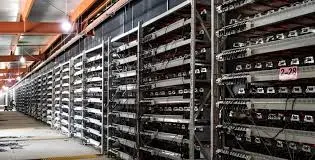
According to BBX data, yesterday marked a milestone for the global largest IPO completion index, with a historic turning point in the valuation logic of AI transformation in mining companies. The core dynamics are as follows:SpaceX, Inc. (NASDAQ: $SPCX) reported on July 7 that the company was officially included in the Nasdaq 100 index this week, becoming the first in history to have the largest single IPO ($75 billion) included in the Nasdaq 100. CoinDesk also issued a historic warning: "The last two largest new constituents added—Palantir ($PLTR) in December 2024 and Strategy ($MSTR) in early 2025—both experienced a phase decline after inclusion, rather than starting a new round of increases"; analysts pointed out that passive funds tracking the Nasdaq 100 complete "forced buying" at the time of inclusion, and if there are no new fundamental catalysts afterward, stock prices often pull back after technical buying subsides. Specific risks currently facing SpaceX include: a net loss of approximately $4.27 billion in Q1 2026 (mainly due to xAI integration expenses), a $2 billion bond issuance plan, and a 3.4% equity dilution from the $60 billion acquisition of Cursor/Anysphere; Morningstar maintains a fair value estimate of $62 per share, indicating about a 70% implied downside from the current market price. For the market holding SpaceX Bitcoin (18,712 coins, approximately $1.2 billion, held in Coinbase Prime), the inclusion in the Nasdaq 100 will trigger a larger scale of SPCX holdings by passive funds, further bridging the gap between traditional index investors and indirect exposure to Bitcoin assets.TeraWulf Inc. (NASDAQ: $WULF) according to the latest analysis, the company's high-performance computing (HPC) leasing revenue in Q1 2026 reached $21 million, accounting for about 62% of the total revenue of $34 million, surpassing Bitcoin mining revenue for the first time—this marks TeraWulf's first historic revenue structure reversal after transitioning to an AI/HPC infrastructure company, with a 117% increase from the $9.7 million HPC revenue in Q4 2025. The company has currently signed over 522 megawatts of AI/HPC leases with Core42 and Fluidstack, with an expected annual high-margin revenue of approximately $630 million; the energy structure consists of nuclear power + hydropower, with an average electricity cost of about $0.035 per kilowatt-hour, one of the lowest among similar mining companies. The company is also developing a new campus in Kentucky, adding approximately 480 megawatts of grid access capacity; analysts have significantly raised their target price ranges, with Keefe Bruyette & Woods raising from $23 to $37, Clear Street from $26 to $38, Jefferies initiating coverage with a Buy rating and a target price of $37, and BTIG raising at the same time. The company's stock price has increased by approximately 88% year-to-date in 2026, leading the gains in the mining sector.

Analysis: The number of unemployed in the United States has reached a 17-year high, releasing positive signals for Bitcoin bulls

According to market news, the number of planned layoffs in the U.S. surged to 108,435 in January, the highest level since January 2009, representing a month-on-month increase of 205% and a year-on-year increase of 118%. This data contrasts with the still-resilient official non-farm payroll report and is seen as an early signal of a rapid cooling in the labor market.Human resources firm Challenger, Gray & Christmas noted that layoff plans are largely set for the end of 2025, reflecting employers' increasingly pessimistic outlook for 2026. At the same time, the blockchain-based real-time inflation indicator Truflation shows that the U.S. inflation rate has plummeted to below 1%, far lower than the official CPI data. These unofficial indicators collectively suggest that economic growth is slowing, which may prompt the Federal Reserve to shift towards interest rate cuts to support the economy.Analysts have differing expectations regarding the Federal Reserve's subsequent policies. JPMorgan expects interest rates to remain unchanged until 2027, while other banks predict at least two rate cuts this year. Some economists anticipate that Kevin Warsh, the Federal Reserve chair nominee by Trump, may cut rates by 100 basis points before the midterm elections in November.The market believes that a potential shift in monetary policy could provide support for risk assets like Bitcoin. The price of Bitcoin has currently fallen nearly 50% from its historical high of over $126,000 last October.
app_icon
ChainCatcher Building the Web3 world with innovations.