BTC $63,044.22 +0.21%
ETH $1,883.27 +0.14%
BNB $610.20 +0.77%
XRP $1.00 -0.54%
SOL $75.44 -0.26%
TRX $0.3310 -0.49%
DOGE $0.0700 +0.24%
ADA $0.1787 -0.30%
BCH $204.43 +1.56%
LINK $9.49 +7.15%
HYPE $56.67 +1.82%
AAVE $86.94 +0.85%
SUI $0.6827 +0.91%
XLM $0.1584 -0.83%
ZEC $489.69 +0.35%
BTC $63,044.22 +0.21%
ETH $1,883.27 +0.14%
BNB $610.20 +0.77%
XRP $1.00 -0.54%
SOL $75.44 -0.26%
TRX $0.3310 -0.49%
DOGE $0.0700 +0.24%
ADA $0.1787 -0.30%
BCH $204.43 +1.56%
LINK $9.49 +7.15%
HYPE $56.67 +1.82%
AAVE $86.94 +0.85%
SUI $0.6827 +0.91%
XLM $0.1584 -0.83%
ZEC $489.69 +0.35%

buffett

All
Article
Flash

Berkshire's first major portfolio adjustment revealed, spending $17 billion in the second quarter to bet on Google

Berkshire Hathaway submitted its 13F holdings report for the second quarter of 2026 to the U.S. SEC. The data shows that in the second quarter after Warren Buffett stepped down, the company's investment portfolio underwent significant adjustments, with a large purchase of Google’s parent company Alphabet, while reducing positions in the financial and consumer sectors.As of June 30, 2026, the total market value of Berkshire's stock holdings rose to $29.9 billion, up from $26.3 billion in the previous quarter. In the second quarter, the company added one new position, increased holdings in seven stocks, reduced holdings in six stocks, and completely sold out of one target, with the top ten holdings accounting for as much as 88.74%.Among them, Alphabet became the biggest highlight. In the second quarter, Berkshire cumulatively increased its holdings of Alphabet Class A and Class C shares by approximately 48.1 million shares, with the new holdings valued at over $17 billion, pushing Google to replace Bank of America as Berkshire's fourth-largest holding. Currently, its top five holdings are Apple, American Express, Coca-Cola, Alphabet, and Bank of America. In addition to Google, Berkshire also slightly increased its holdings in Delta Air Lines, Lennar, and Macy's. The increase in Delta Air Lines has attracted attention, as the market believes this move may reflect the company's optimism about the recovery of air travel demand and improvement in corporate operations.On the reduction side, Berkshire focused on cutting positions in the financial and consumer sectors in the second quarter. Among them, Bank of America saw a reduction of about 30.2 million shares, with the holding ratio decreasing by 5.89%, corresponding to a market value of about $1.72 billion, making it the largest reduction target; First Capital Financial reduced about 4.2 million shares, with the holding ratio decreasing by about 58%; at the same time, it reduced about 11 million shares of Kroger, with the holding size decreasing by about 22%.The market believes that Berkshire ended a streak of 14 consecutive quarters of net stock selling in the second quarter and net bought nearly $20 billion in stocks, indicating that the new leader Greg Abel is pushing the portfolio towards a technology growth direction, marking a shift in asset allocation in the "post-Buffett era."

first_img Buffett on Wall Street's speculative frenzy: The current market is like a church with a casino attached, which could lead to a long-term high in asset prices

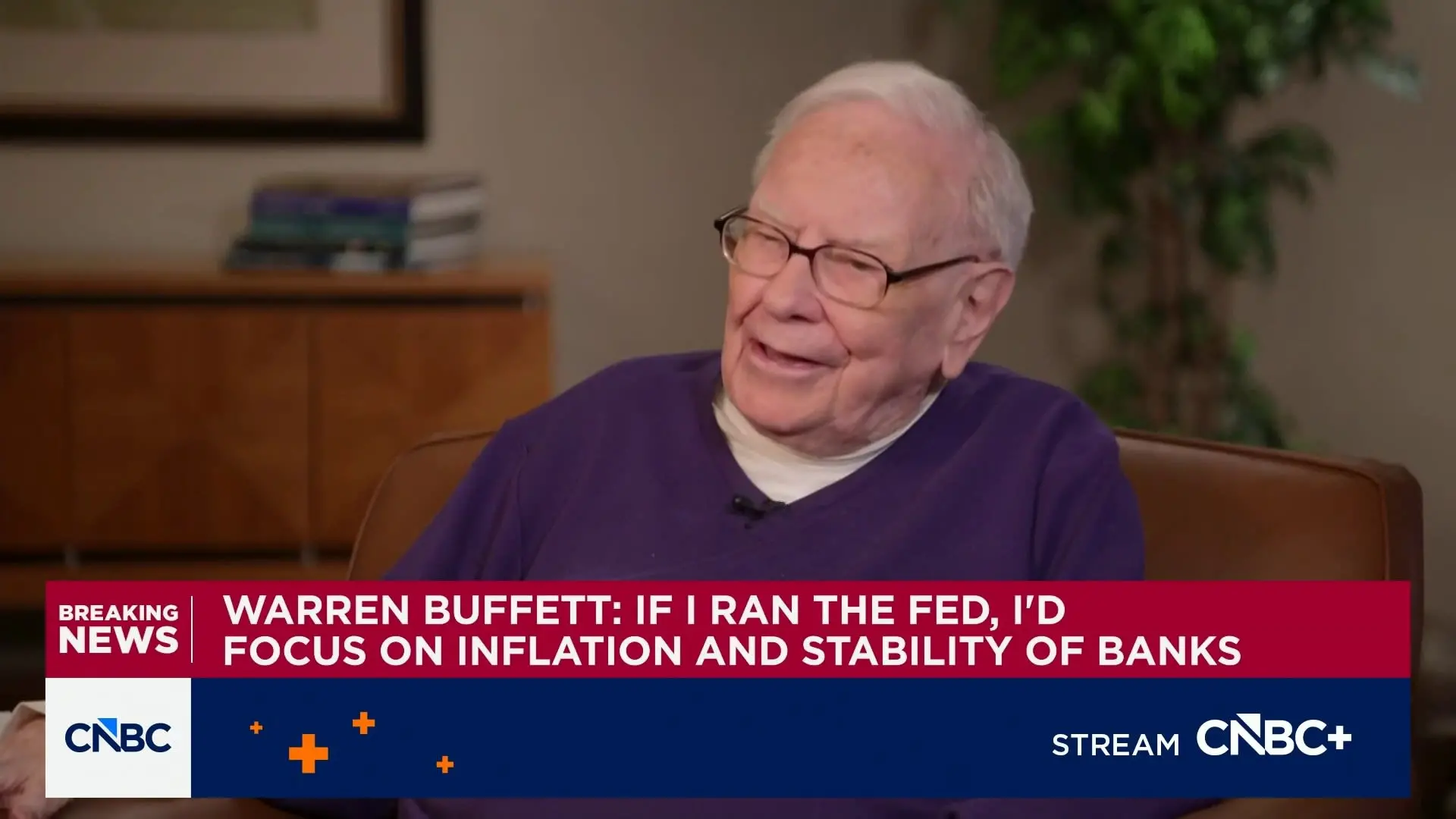
According to Gelonghui, Buffett responded in an exclusive interview with CNBC regarding "Berkshire currently holding about $380 billion in cash, and the market is highly concerned about why it has not made large-scale acquisitions or investments": the prices are too high, and there are too few targets.Buffett stated, "Now is not our ideal environment for deploying cash for Berkshire." He emphasized that the company has the right management team to selectively choose opportunities: "Sometimes we do nothing, but sometimes we are very active."When discussing the current macro stock market environment, Buffett used the metaphor of "a church with a casino" to describe the speculative atmosphere on Wall Street. People can move between the church and the casino, with more people in the church than in the casino, but the casino has become very attractive to people.He pointed out, "If you are buying and selling single-day options, that is not investing, nor is it speculation; it is outright gambling." Referring to a recent case where a U.S. soldier used confidential information about military operations in Venezuela to profit $400,000 in the prediction market, he said: unless one knows when we will strike into Venezuela like that person, no one can explain why they would buy a one-day option; the number of such occurrences is astonishing.We have never encountered a crowd with a greater propensity for 'gambling' than now. Buffett further noted that the surge in gambling enthusiasm does not necessarily mean the market will collapse, but it will lead to a long-term high price for many assets.
Berkshire's cash reserves surged to a record $397 billion, while U.S. stock valuations reached historically high levels during the same period

In the first quarter of Greg Abel's tenure as CEO, Berkshire Hathaway's cash reserves surged to a record high of $397 billion. At the end of last year, the company's cash reserves had slightly decreased, but they increased significantly in the first quarter due to a net sale of $8.1 billion in stocks during the period.Additionally, Berkshire Hathaway A (BRK.A.N) reported Q1 2026 revenue of $93.675 billion, compared to $89.725 billion in the same period last year, with market expectations of $89.274 billion; net profit was $10.106 billion, compared to $4.603 billion in the same period last year, with market expectations of $11.762 billion. The fair value of fixed-income securities held by Berkshire Hathaway at the end of Q1 2026 reached $17.669 billion, compared to $17.816 billion in the same period last year.Buffett has always viewed cash as "a necessary but undesirable asset," often likening it to oxygen, which is crucial for businesses but not a good investment in itself. Buffett repeatedly emphasizes that Berkshire will never prefer holding cash equivalents over quality businesses; cash is merely a war chest waiting for "super good opportunities." When market valuations are too high and there are no attractive investment targets, he prefers to hoard cash rather than force a purchase; but once a great opportunity arises, he will deploy this ammunition without hesitation. In Buffett's view, cash can provide safe returns in a high-interest-rate environment, but in the long run, it is far less valuable than investing in excellent companies.While Berkshire's cash holdings reach a new high, despite the S&P 500 and Nasdaq indices recently hitting historical highs, there are still multiple risk hazards behind the market, and valuations are in a historically high range. Data shows that as of April, the rolling price-to-earnings ratio of the S&P 500 is about 24 times (historical average is about 16 times), and the Shiller price-to-earnings ratio (cyclically adjusted) has risen to over 37 times, at a historically high level, second only to the internet bubble period. This combination of "valuation + high expectations" means that the market has very limited room for error. Furthermore, the current rise in U.S. stocks is built on optimistic assumptions such as "AI-driven profits, falling inflation, declining interest rates, and controllable risks," and any deviation in these variables could trigger amplified shocks in the market.
app_icon
ChainCatcher Building the Web3 world with innovations.